Voters handed Democrats control of both the House and the Senate in the November 3 midterm elections, according to race calls by the Associated Press, a resounding repudiation of President Donald Trump that will end Republicans' two-year monopoly on elected power in Washington.
Anger over the cost of living, the war with Iran, and corruption in government shaped the 2026 U.S. midterm elections, and Democratic gains reached into states that Republicans had held for decades, including places Trump carried by double digits in 2024. The losses came even though Trump held rallies almost daily during the campaign's final month.
Texas Democrats Shatter A 32-Year Republican Lock
Nowhere was the shift starker than in Texas. Before November 3, Democrats had not won a statewide race there in 32 years. By the end of the night, they had captured both a U.S. Senate seat and the governor's office, The New York Times reported.
In the Senate contest, Democrat James Talarico beat Ken Paxton, the Republican state attorney general whose tenure has been dogged by scandal. Trump's endorsement had carried Paxton past incumbent Sen. John Cornyn in the primary, over objections from Republican officials who feared the nomination would prove expensive.
In the governor's race, Democrat Gina Hinojosa ousted Gov. Greg Abbott, who was seeking an unprecedented fourth term and had looked all but unbeatable only months earlier. Hinojosa will be the first Hispanic governor in the state's history.

"Talarico is a symbol. Gina is an earthquake," Garry Mauro, a former Texas land commissioner whose 1994 win was among the last statewide victories for Texas Democrats, told The Times. "It's a tsunami. The world has changed. The political maps will never be the same again."
Senate Upsets Stretch From South Carolina To Maine
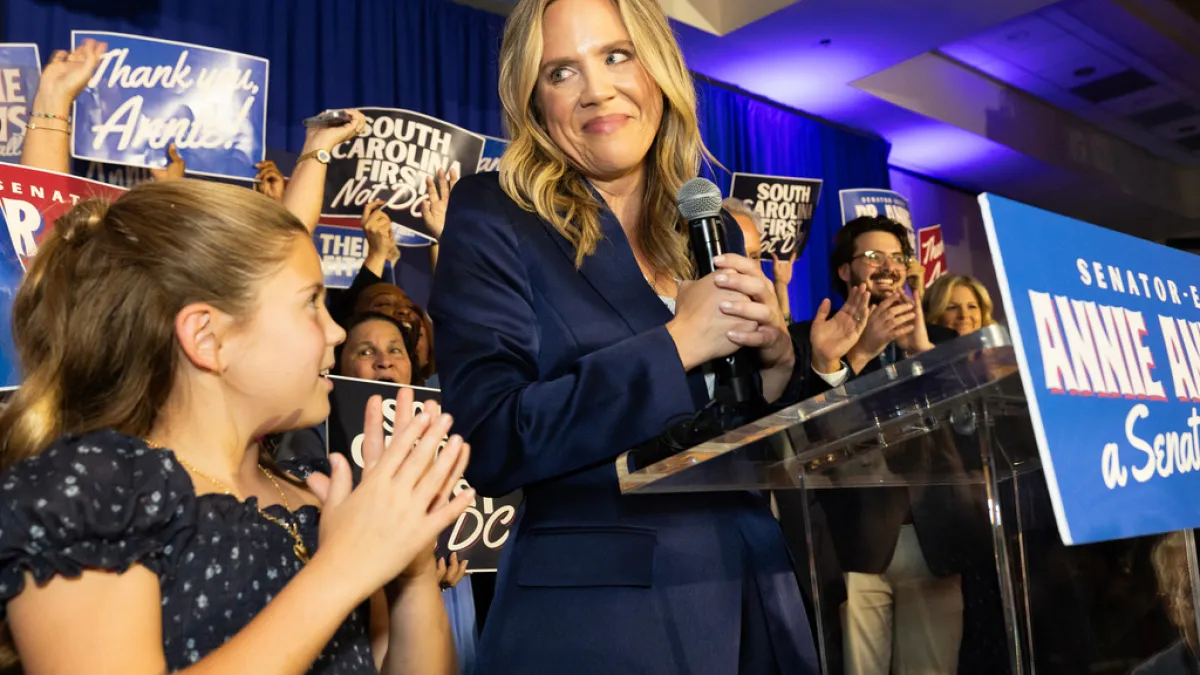
South Carolina produced another upset. Democrat Annie Andrews defeated Sen. Darline Graham, who had Trump's backing even though some Republicans questioned whether she was suited to succeed her brother, Sen. Lindsey Graham, after his sudden death in July, AP reported.
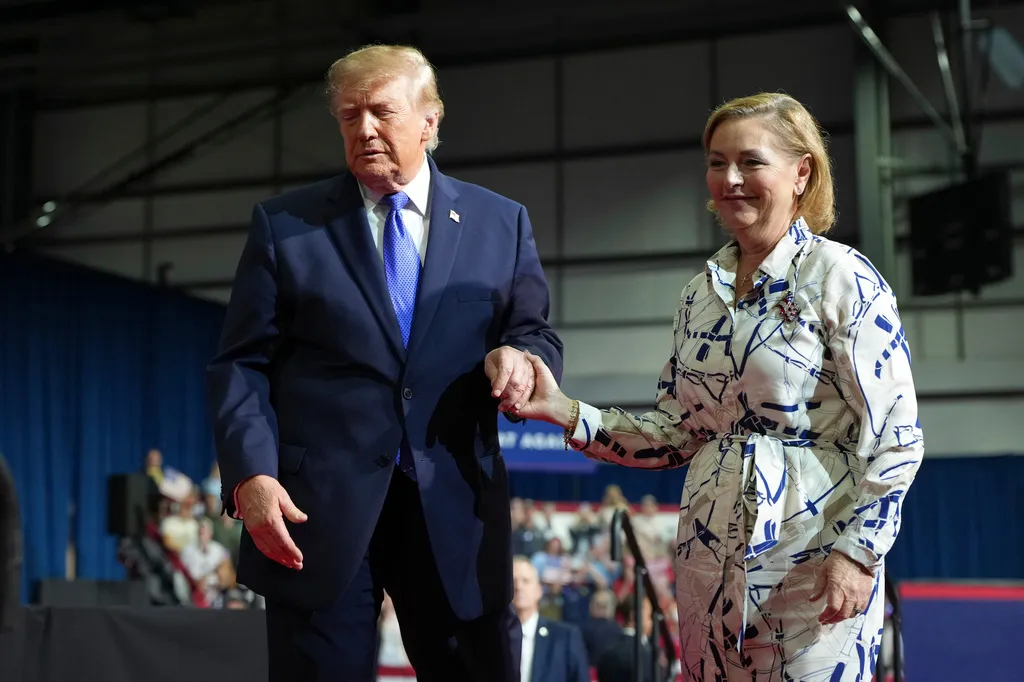
The Democratic advance also reached Kansas, where Adam Hamilton unseated Sen. Roger Marshall and gave the state its first Democratic senator since 1932. Josh Turek won Iowa's Senate race over Republican Rep. Ashley Hinson, and in Maine, Democrat Troy Jackson defeated Republican Sen. Susan Collins, who had weathered many hard-fought reelection campaigns before.
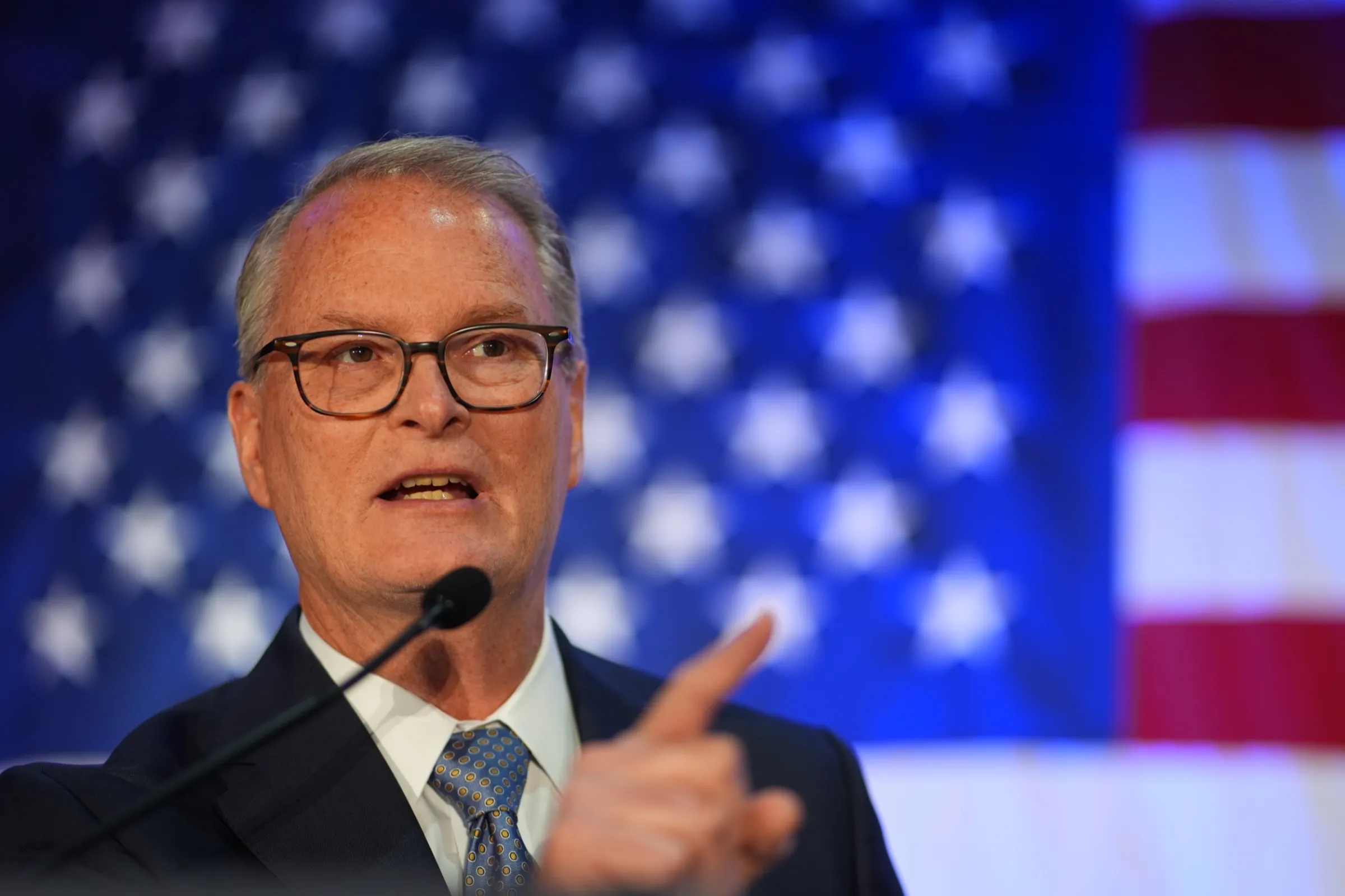
In Ohio, former Democratic Sen. Sherrod Brown returned to the Senate by beating Republican Sen. Jon Husted. Former Gov. Roy Cooper captured North Carolina's open seat, left vacant by Republican Sen. Thom Tillis, a target of sharp criticism from Trump who did not run again. In two races Democrats had been favored to win, Sen. Jon Ossoff kept his Georgia seat against Republican Rep. Mike Collins, and Rep. Chris Pappas defeated former Sen. John Sununu for the New Hampshire seat held by retiring Democratic Sen. Jeanne Shaheen.
Senate Democratic Leader Chuck Schumer described the outcome as a "generational remake of the Senate map."
Democrats Win House Seats From Iowa To Utah
Democratic House gains extended well beyond the usual swing districts. The party flipped several seats each in Iowa, Texas, Florida, and Pennsylvania and added seats in Kentucky, Missouri, Nebraska, Ohio, and Utah, according to AP. In Iowa, where Republicans held every congressional seat going into the election, Democrats will now represent three districts.
Republican incumbents who lost included Rep. Mike Lawler of New York and Rep. Tom Kean of New Jersey, who missed four months of House votes this year while being treated for depression.
Republicans had counted on newly redrawn congressional maps to offset the losses the party holding the White House usually suffers in midterms. That bet failed in Florida and Texas, where the party aimed to gain up to nine seats, as Democrats won districts Republicans had targeted. A late wave of Republican spending, amounting to tens of millions of dollars in states and districts Trump won comfortably in 2024, also failed to slow Democratic momentum.
AP Voter Poll Shows Prices And Corruption Drove The Vote
The AP Voter Poll captured an electorate in a gloomy mood. Roughly three in four voters described themselves as "angry" or "dissatisfied" with where the country is heading. Discontent was strongest in Democratic-leaning states, yet majorities in Republican-leaning states were also at least dissatisfied.
Two years after the economy helped return Trump to the White House, about three in four voters rated it "not so good" or "poor." Around 8 in 10 said inflation had put their households under "severe" or "moderate" financial hardship.
Roughly half of voters called corruption in government and the cost of living "crucial" to their choice for Congress, putting both ahead of immigration enforcement, the Iran war, and artificial intelligence data centers. About 6 in 10 said Trump puts his own interests ahead of the nation's.
Voters did not embrace Democrats wholesale, though. A little under half viewed the Democratic Party favorably, only modestly better than the roughly 4 in 10 who said the same of Republicans.
Trump Shifts Blame And Promises A Wall Of Vetoes
Trump began deflecting responsibility before polls on the West Coast had closed, despite having urged voters for weeks to cast their ballots as if he were a candidate. "I wasn't on the Ballot and if I was, we would have won IN A LANDSLIDE!" he posted on his social media platform.
He also signaled he would block Democratic bills, posting a picture of a red cap printed with the word "VETO" in the style of his signature "Make America Great Again" hats.
Shortly before 10:30 p.m. Eastern time on November 3, as returns came in at the White House, Trump spoke briefly with The New York Times, which described him as subdued. "I'm just looking at these results as I'm talking," he said. "I see that Darline lost. Wow, that's amazing. How do you think Lindsey would have done if he ran?" Trump said he thought Lindsey Graham would probably have held the seat.
He nonetheless told The Times he had no regrets about the first half of his second term. "I consider it to be the most successful two-year period in the history of any president," he said. In a late-night phone call with Fox News, Trump said he did not view the outcome as a personal defeat, arguing that voters "didn't like the candidates," AP reported.
Democrats had prepared for a fight over the results, given Trump's earlier claims that noncitizens would vote in large numbers and his lawsuits in Alaska and California. But he told Fox he would accept the outcome.
Senate Majority Leader John Thune promised resistance. "Senate Republicans will not stand idly by as the far-left, socialist wing of the Democrat Party attempts to unwind everything we've done," he wrote on X, adding that Republicans would work with Trump "to stop the worst impulses of Democrat extremism."
Investigations Loom Over Trump's Final Two Years
With Congress in Democratic hands, Trump's legislative plans face steep obstacles for the rest of his term. House Democratic Leader Hakeem Jeffries, poised to become the first Black speaker in the chamber's history, said "the American people are crying out for transformational change."
Democratic leaders have indicated they will use their majorities to open investigations into senior administration officials and to examine how Trump has enriched his family, according to AP. They have not ruled out impeachment proceedings against Trump or members of his Cabinet. Those who could face scrutiny include Defense Secretary Pete Hegseth and Elon Musk, the billionaire who previously served as a top Trump adviser.
Musk spent hundreds of millions of dollars this cycle helping Republican congressional candidates, and the Texas Senate race that Paxton lost was his single largest investment, CBS News reported. His first public reaction after the results came in was a post on X: "Data centers in space looking pretty appealing right now."