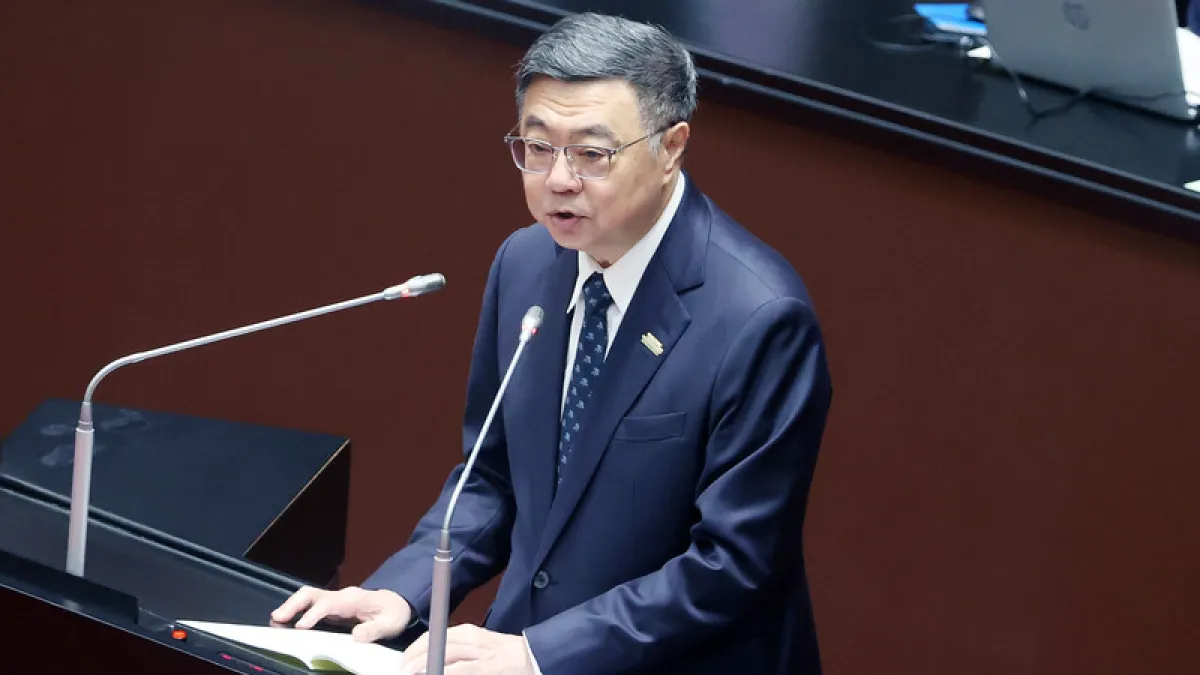
Taiwan's Premier Cho Jung-tai on November 3, 2026, would neither confirm nor deny a Nikkei Asia report that Taipei and Tokyo could sign a comprehensive economic agreement as early as the end of this year, saying only that deepening trade ties with Japan is a priority for his government.
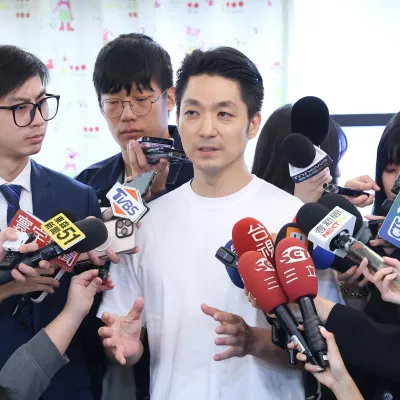
Speaking to reporters at the Legislative Yuan, Taiwan's parliament, before briefing lawmakers on a supplementary budget, Cho said Taiwan and Japan keep stable channels of communication open on many issues and are still developing a number of shared agendas. As for the media report itself, he said, the Executive Yuan, Taiwan's cabinet, had nothing further to add.
A deal would mark a notable upgrade for two close economic partners that have no formal diplomatic relations. Japan, like most countries, recognizes Beijing rather than Taipei and has long been cautious about building formal frameworks with Taiwan, partly out of concern for its relationship with China.
The report comes as ties between Tokyo and Beijing remain frosty. The chill set in after Japanese Prime Minister Sanae Takaichi told her country's parliament in November 2025 that a Taiwan emergency involving the use of force could constitute a "survival-threatening situation" for Japan, the legal threshold that would allow its military to act.
Five Proposed Areas Mirror Taiwan's British Trade Deal
Nikkei Asia reported on November 2, citing two senior sources familiar with the negotiations, that the agreement would cover five areas: economic resilience and innovation, industrial cooperation on disaster prevention, digital trade, trade facilitation, and sustainable development.
Its format could follow the Enhanced Trade Partnership (ETP) arrangement Taiwan signed with the United Kingdom in 2023, a framework that falls short of a full free trade agreement but commits both sides to closer cooperation. According to Radio Taiwan International's account of the report, one source said the UK arrangement set a precedent that would let Taipei and Tokyo pursue sector-specific agreements later, lowering the political sensitivity of the talks.
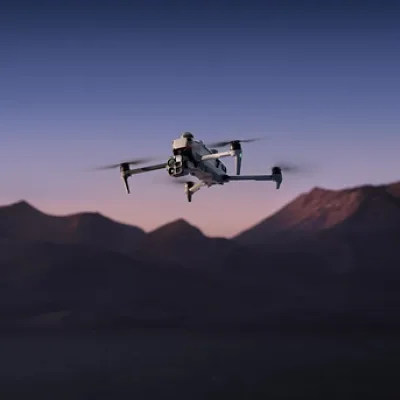
The sources also said the pact could deepen cooperation on semiconductors and critical supply chains, and that its disaster prevention component includes the use of drones after earthquakes and other natural disasters. Taipei hopes a deal with Japan would prompt other countries to follow suit, they added, particularly Canada and the Philippines, which could then move ahead with their own economic agreements with Taiwan.
Foreign Minister Upbeat As Trade Office Declines Comment
Foreign Minister Lin Chia-lung struck a more welcoming tone when asked about the report on the afternoon of November 2. He said the economic frameworks Taiwan has built with the United States, the United Kingdom, and other countries were all worth drawing on.
Taiwan and Japan have already signed nearly 100 cooperation agreements and memorandums of understanding, Lin noted, but his ministry would be glad to see any more structured and comprehensive initiative on bilateral economic cooperation. He described trade and investment ties between the two as very close, pointing to the factories Taiwan's semiconductor industry has built in Japan, and said that industrial partnership has already helped safeguard supply chains and economic security.
Later that evening, the Executive Yuan's Office of Trade Negotiations called Japan an important economic and trade partner and said deepening ties and expanding mutually beneficial cooperation had always been the government's goal. It offered no response on the trade agreement itself.
The office said the two sides had met repeatedly over the past year to discuss shared trade concerns and exchange views on the global economy. Those meetings included the Taiwan-Japan Trade and Economic Conference, talks on cooperation in third-country markets, and two rounds of the Taiwan-Japan Economic Partnership Committee.
Opposition Lawmaker Presses Premier Over TSMC's Kumamoto Plant
Cho faced more pointed questions once the legislative session began. Lai Shyh-bao, a lawmaker from the opposition Kuomintang (KMT), challenged the government's reticence. "Signing a Taiwan-Japan trade agreement shouldn't be classified, should it?" he said.
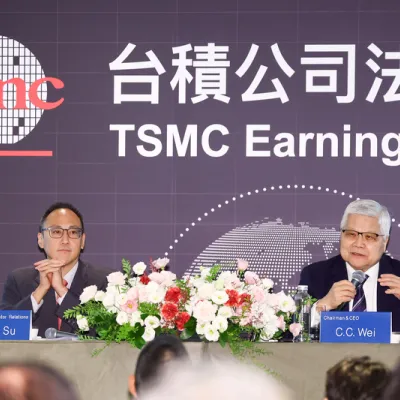
Lai said the areas cited in the Nikkei report included continued Taiwanese investment in Japan's semiconductor industry, and questioned whether more was needed. "We already have Kumamoto. Do we still need to invest more? Will there be another fab?" he asked, referring to the chip plant run by Taiwan Semiconductor Manufacturing Co. (TSMC) in Kumamoto Prefecture on Japan's southern island of Kyushu.
Lai pointed out that fewer than two months remain before the year-end timeline cited in the report. Taiwan's investment in Japan has already topped US$20 billion, he said, and although that money comes from the private sector, the government plays a very important role.
Cho repeated that deepening economic ties with Japan is an important matter for Taiwan, that channels between the two sides are very stable, and that both share issues they are frequently discussing and negotiating. "But regarding the case the legislator mentioned, the government currently has no further comment," he said. "On this issue and this report, we have no response."
On Kumamoto, Cho said the government hopes TSMC's investment there goes smoothly. "As for what comes next, we have no further response at this point," he said.
TSMC's first Kumamoto fab began mass production in late 2024, and a second plant in the prefecture is under construction.