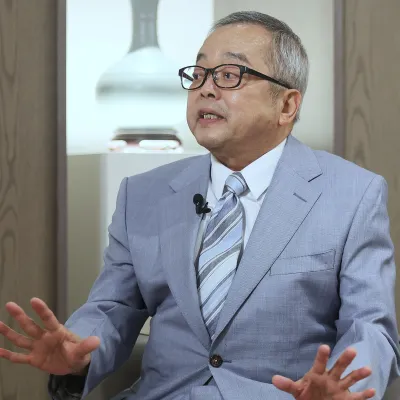
Macronix International founder Miin Wu said on November 2, 2026, that people who keep using their own judgment will not be replaced by AI, and that the same principle guides how the Taiwanese memory chipmaker hires.
Speaking after Macronix received an IEEE Milestone for its sNOVA production data platform, Wu, who is also the company's chairman and CEO, kept steering questions about AI back to human thinking. Even when AI offers what looks like a complete answer, he said, people still have to judge whether it can be trusted and choose their own direction.
"I keep encouraging everyone to use their brains. The more you use your brain, the less you will be replaced," Wu said.
AI Answers Still Need Human Judgment
Asked whether AI will meet so many human needs that many jobs no longer require people, Wu did not dwell on how fast the technology is advancing. Instead, he warned that getting an answer is not the same as understanding the problem.
"You have to use your brain to judge whether what it tells you is real or fake," he said. He pointed to medicine, contrasting a system that produces information from whatever is fed into it with a doctor who closely observes an individual patient.
He also turned the question on the reporters in the room. Reading someone else's article and rewriting it, he said, is a different kind of work from understanding an event yourself and finding the questions in it. As tools make text easier to produce, the ability to evaluate content and form your own view needs more practice, not less.
His concern is not only that AI answers may be wrong, but that people who grow used to accepting answers will gradually stop thinking. Tools can supply more information, but choosing a direction and making trade-offs remain human work. A Nobel laureate has made a similar warning, telling The Storm Media that unregulated AI risks hijacking human cognition.
Strategy Starts With Your Own Thinking
Wu applies the same view to business decisions. "We have to use our own brains to think about which direction to go, so that we have a chance," he said.
Running a company, he added, means combining your own experience with an understanding of how hard a technology is to put into practice, rather than jumping in simply because others are doing something.
Macronix Hires For Logic, Not Grades
That thinking shapes his hiring standards. Wu said he reminds colleagues not to judge candidates by their academic records alone. "Don't look at the transcript. ... Examine the logic," he said. Drawing on his own experience as someone who was not good at exams, he said doing well on tests is not the same as being able to come up with new methods.
His own path crossed disciplines, from electrical engineering to materials, and after founding Macronix he brought in statisticians. sNOVA, the system honored by the IEEE, grew out of people from different fields tackling manufacturing problems together. For Wu, crossing disciplines is not about picking up a few more technical terms but about looking at an old problem from a new angle.
He also urged students he met that day to break out of established frameworks and not confine themselves to a single field. People from different backgrounds working together may find solutions no single specialty would have imagined, he said, and a willingness to ask questions says more about the potential for innovation than familiarity with standard answers.
A Winning Formula Can Become A Trap
Finding a method that works is no reason to stop changing, Wu warned. Once people believe they have a formula for success, they tend to keep repeating it, while competitors trying to catch up keep looking for new ideas and can eventually overtake the leader.
Whether the subject is AI, hiring, or innovation across fields, Wu's message comes back to one skill: active thinking. Tools and markets may change quickly, but understanding problems, questioning methods, and choosing a direction are, in his view, work that people have to keep doing themselves.