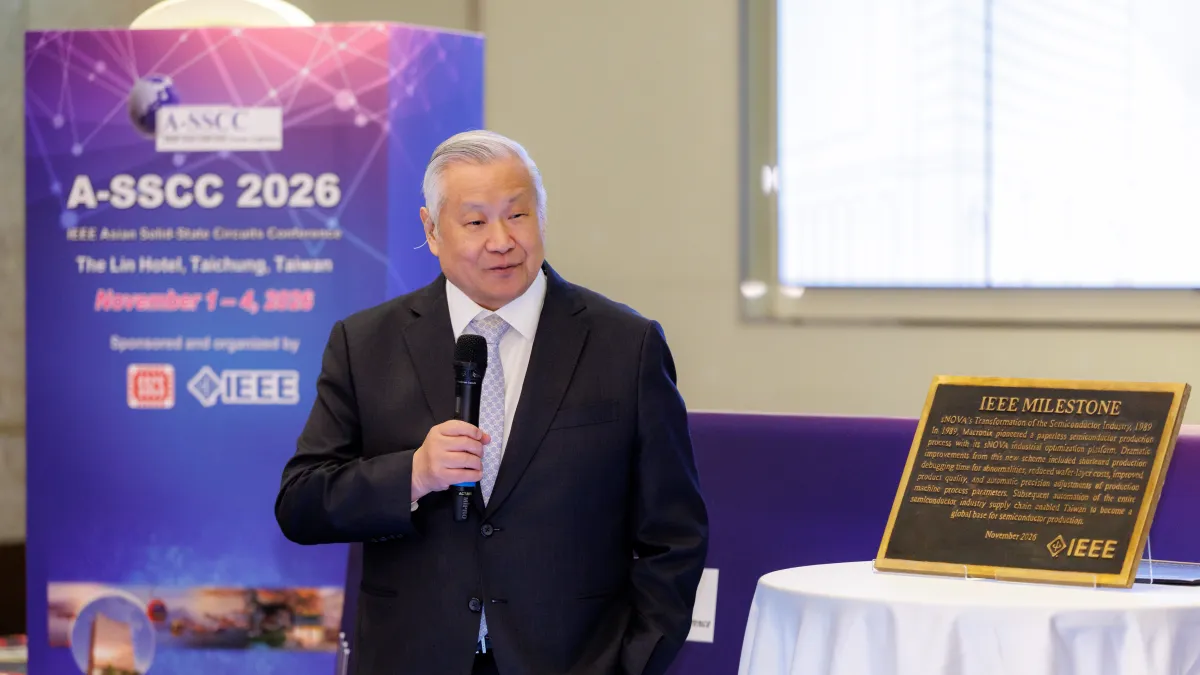
Macronix International Chairman and CEO Miin Wu said on November 2, 2026, that the Taiwanese memory chipmaker's output is limited, so it decides where to send supply based not only on price but on where reliability matters most, including space, medical devices, and data centers.
"My output is limited," Wu told reporters after Macronix received an IEEE Milestone for its sNOVA factory data platform. "I want to sell out, and sell at the best price, but I also want to contribute to society."
His comments come as AI demand squeezes memory supply worldwide, with US rival Micron saying supply will stay tight through 2028. For Wu, allocating Macronix's capacity is not just a matter of specifications and price quotes. The environment a chip will work in, the quality it requires, and the role it plays in a customer's product all shape the decision.
Why Reliability Outweighs Price In Orbit
Wu used space as an example. Memory sent into orbit must withstand low temperatures and radiation. For customers, he said, the purchase price is only part of the cost: once a chip is built into a system and launched, whether it keeps working matters far more than whatever was saved at the procurement stage.
He returned several times to the risk of choosing unsuitable parts to save money, noting that a later system failure can cost far more. That is why he believes quality capability should be reflected in a product's value. What customers buy, in his view, is not only memory capacity but the ability to keep operating in a specific environment.
Wu tied that reliability to sNOVA. Analyzing production data, he said, is how Macronix finds problems among its equipment, processes, and products and keeps improving quality. For high-reliability markets, control over the manufacturing process is a key foundation for meeting customer needs.
Medical Devices Fit A "Protect People" Mission
Medical applications connect to a goal Wu has recently promoted: turning Macronix into a "sacred mountain that protects people," a twist on the "sacred mountain that protects the nation," as TSMC is often called in Taiwan. Wu said he is willing to support products that protect and help people, and that as medical equipment and new kinds of devices develop, memory will need to fit different uses and quality requirements.
Medical demand is no longer limited to large hospital equipment, he said, as new devices are creating additional needs. Even so, Macronix will only enter an application based on the quality and product capabilities it can offer, not simply because a market is hot.
Data Center Demand Drives Higher-Capacity Products
Wu also discussed memory demand from data centers and Macronix's move toward higher-capacity products. Rather than pushing existing products into a new market, he said, the company watches how customers' systems are evolving and then assesses what products they will need.
He touched as well on shifting demand for NOR flash, a type of memory commonly used to store the code devices need to start up, and for larger capacities, focusing on how to match customer needs with suitable product solutions. Product development, application demand, and supply capacity have to be weighed together rather than separately, he said.
Supply Contracts And Tool Shortages Limit Flexibility
Customers asking for supply contracts does not mean Macronix will sign them, Wu said. Contracts come with constraints, so each one has to be evaluated. With output limited, how much flexibility to keep for future demand and the product mix is a question management must weigh carefully.
Equipment supply is another constraint. Wu described chipmakers around the world competing to secure production tools, a sign that even when demand is visible, new capacity cannot come online right away and still depends on equipment and other production conditions falling into place.
Across space, medical, and data center markets, Wu's argument comes back to the role memory plays inside a customer's system. For Macronix, the value of limited capacity depends not only on today's price but on whether its chips can hold up in the environments where they are used.