Taiwan's top science official said on November 2, 2026, that the government will strengthen AI computing infrastructure in next year's budget so that industries beyond semiconductors, from robotics to biotech, can share in the gains of the chip boom.
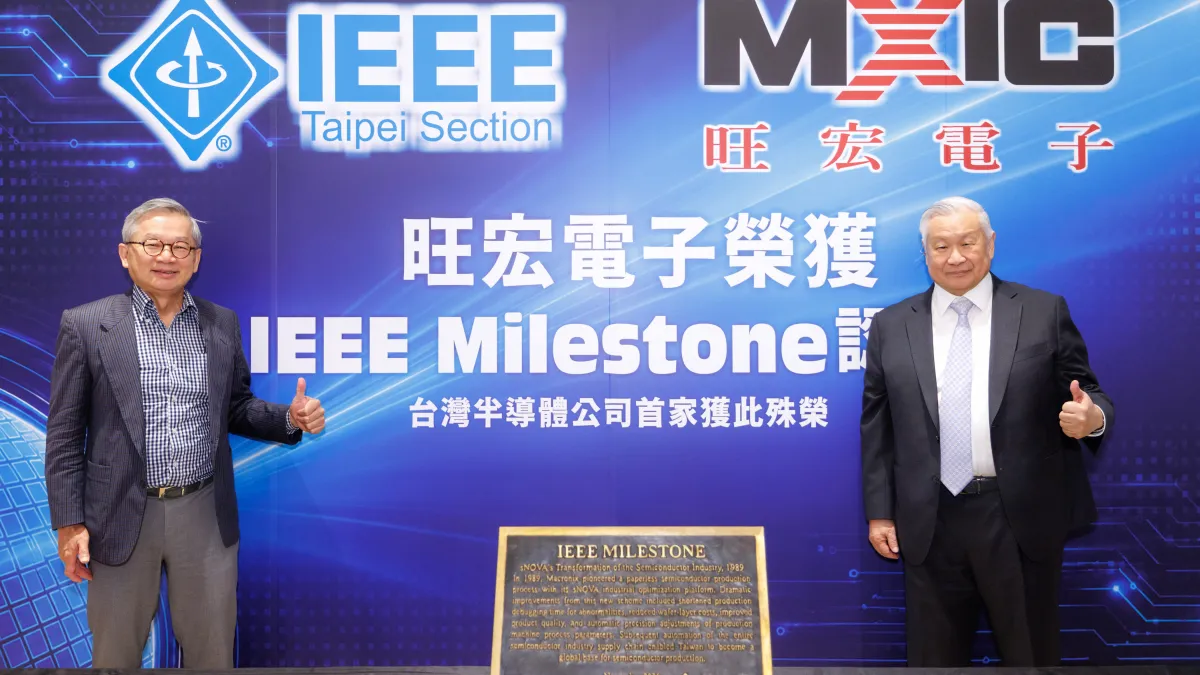
Wu Cheng-wen, minister of the National Science and Technology Council (NSTC), the cabinet agency that sets Taiwan's science and technology policy, spoke to reporters after memory chipmaker Macronix International received an IEEE Milestone for its sNOVA manufacturing data platform.
The semiconductor and AI boom has concentrated talent and capital in a handful of high-tech sectors, raising questions about how the rest of Taiwan's economy benefits. Wu said the government's aim is not simply to grow the chip industry but to use Taiwan's existing strengths to build up other emerging technology industries.
Chips Should Serve As A Tool For Other Industries
Asked whether Taiwan's technology policy is still too focused on semiconductors, Wu said: "Because today is a semiconductor event, I talked more about semiconductors. But I did mention that the third point of my policy is to use our semiconductors to develop other emerging technology industries."
Semiconductors and AI, he said, should be tools that help other industries raise their value, rather than leaving the opportunities confined to a few high-tech fields.
Wu also cautioned that chip development cannot focus only on advanced process nodes. Much of society's demand and many industrial applications still rely on mature, reasonably priced chips, he said, and chasing only a few high-margin markets would leave many products and services without the support they need.
Silicon Photonics Links Computing To Real Applications
Wu pointed to silicon photonics and optical communications as an example. Taiwan is developing these technologies to support high-speed computing and data transfer between systems, with demand extending from inside server racks to data centers and beyond. Taiwanese researchers have already pushed single-fiber AI bandwidth to new records.
The policy goal, Wu said, is not to produce one standalone component but to connect computing, communications, and applications so that each strengthens the others.
Robots Open New Markets For Traditional Manufacturers
Robotics was the sector Wu returned to most often. As the robotics industry builds a fuller ecosystem, he said, it will need not just chips and software but also metals, plastics, composite materials, chemicals, and a wide range of equipment, all areas where Taiwan's established manufacturers have long built expertise.
Metalworking is one example. Parts made for ordinary hardware and parts made for robots or tech equipment face very different demands for precision, performance, and operating conditions, and can command very different value, Wu said. He hopes existing companies will shift their technology and workers into these new applications, easing the pressure of competing in low-margin markets and raising the value of their employees' work.
Biomedicine and health care, space, and next-generation communications were also on his list. All of these industries need materials, equipment, electronics, and systems integration. Semiconductors can provide a shared technical foundation, Wu said, but turning that into usable products and services will still depend on expertise from each industry.
Wu noted that private investment in the chip industry far outstrips what the government puts in. The state's role, he said, is to use the resources built up by the high-tech sector to help other industries. The central government's general budget for next year, now under review, will reflect a push to strengthen AI computing infrastructure that other industries can also use, he said.
To explain how AI can help, Wu drew on chipmaking. Front-end wafer processing and advanced packaging involve complex equipment whose monitoring points generate far more data than people can analyze by hand. Equipment makers and manufacturers therefore need to jointly design how data is captured, which analysis models are used, and how control methods feed the results back into the process to improve stability, quality, and output.
Because Taiwan both manufactures AI chips and supplies AI systems, Wu said, it has a chance to understand early what the technology is good for and bring it into its own industries. That experience of combining technology, data, and real-world problems, he said, offers a model for making other sectors smarter.
Whether the plan works will depend less on how much Taiwan spends on AI and more on whether metalworkers, chemical makers, and medical device firms find concrete uses for it and turn their manufacturing skills into higher-value products.