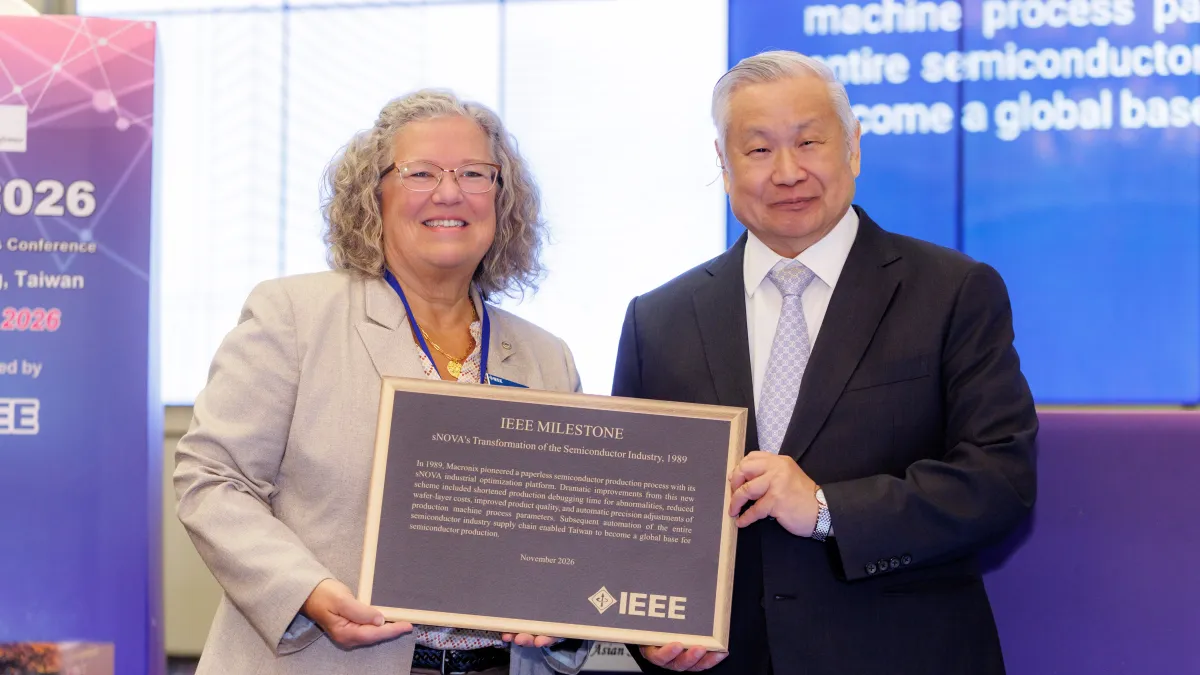
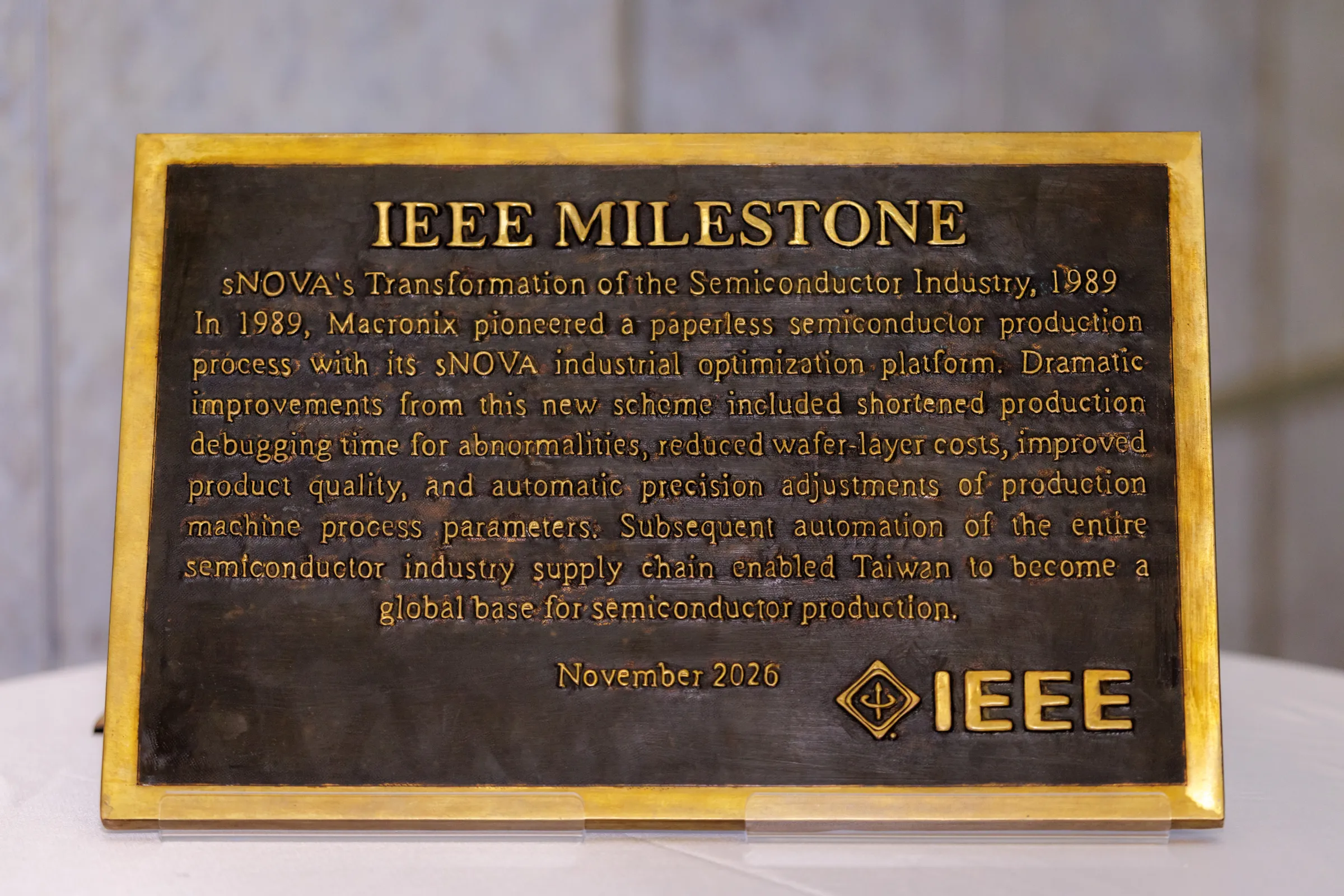
Taiwanese memory chipmaker Macronix International received an IEEE Milestone on November 2, 2026, for sNOVA, an in-house production optimization platform it began building in 1989, becoming the first semiconductor company in Taiwan to win the recognition.
Jill Gostin, the 2026 President-Elect of IEEE, the global engineering and technology professional association, presented the plaque. Macronix founder, Chairman and CEO Miin Wu accepted it, with Wu Cheng-wen, minister of Taiwan's National Science and Technology Council (NSTC), in attendance.
IEEE Milestones honor historic achievements in electrical and electronic engineering that have proved their value over decades, rather than new products. The plaque credits Macronix with having "pioneered a paperless semiconductor production process" through sNOVA, and says the later automation of the industry's supply chain "enabled Taiwan to become a global base for semiconductor production."
A Fab Built To Close The Gap With Japan
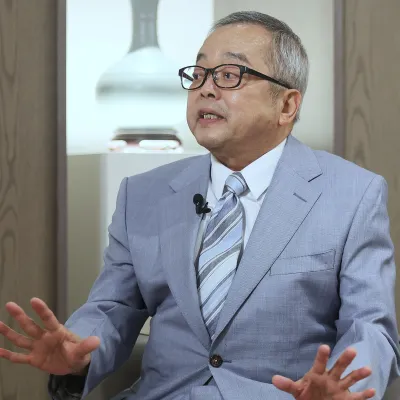
Miin Wu traced sNOVA's origins to a question he faced when he returned to Taiwan 37 years ago: how could a newcomer compete with Japanese chipmakers, which then set the global standard for quality and manufacturing discipline?
"It was to compete with Japanese semiconductor companies. Back then, the only competitors were Japanese companies," Wu recalled. Closing that gap, he said, took more than asking workers to be more disciplined. It meant changing how production itself was managed.
In 1989, Wu led more than 40 senior engineers from Silicon Valley back to Taiwan to found Macronix. The company computerized its factory and went paperless, which soon raised another question. "Since we already had computerization, and it could collect all the data, why couldn't we use that data?" he said.
Statisticians Joined Engineers On The Factory Floor
Macronix answered by hiring statisticians and pairing them with semiconductor engineers to build a data analysis team and system. Wu said buying tools from well-known equipment makers does not guarantee a smooth process, because machines and process steps interact in complex ways. Only analysis can pinpoint the problems behind quality and yield losses.
According to Macronix, sNOVA, developed between the company's founding in 1989 and 1997, shortens the time needed to debug abnormal products, lowers wafer-layer costs, improves product quality, and fine-tunes the process parameters of production equipment. The system has since grown from factory computerization and statistical analysis into AI and big data applications, all aimed at turning accumulated production data into a basis for engineering decisions.
The company said the platform helped it tighten defect measurement from parts per million (PPM) to parts per billion (PPB), a sign of how fine-grained its quality control has become.
Science Minister Says The Know-How Spread Across Taiwan
Wu Cheng-wen said Macronix led the way in applying statistical methods to manufacturing data on a large scale, improving efficiency, reliability, and yield. As other companies recruited engineers trained at Macronix, those practices spread across the industry. The recognition, he said, gives the world a clearer view of Taiwan's contribution to global chip manufacturing.
Gostin praised sNOVA for helping engineers make sense of complex information and act on it, saying it showed the foresight to anticipate a need before new technologies became widespread. Turning engineering data into meaningful insight, she said, remains a foundation of innovation today.
That idea is back at the center of Taiwan's chip industry, where AI is now being used to squeeze more out of factory data, as in TSMC's "FabTwin" work with NVIDIA.
An Unpatented Idea And A New Mission
Miin Wu told reporters that Macronix never filed a patent for the technology. Winning international recognition for it, he said, carries a meaning that operating results cannot, because it shows the world what Taiwan has achieved through its own innovation.
He also sees the next step for the company's quality capabilities as going beyond commercial performance. TSMC is often called Taiwan's "sacred mountain that protects the nation," a nod to its strategic weight. Macronix has adapted the phrase, saying it wants to become a "sacred mountain that protects people" by putting its chip technology behind medical and other lifesaving products.
For Macronix, the plaque shows how far a tool built to catch Japan has traveled. Its methods have become part of how Taiwan's chip industry runs, and the company now wants to aim the same quality discipline at products where reliability can affect people's lives.