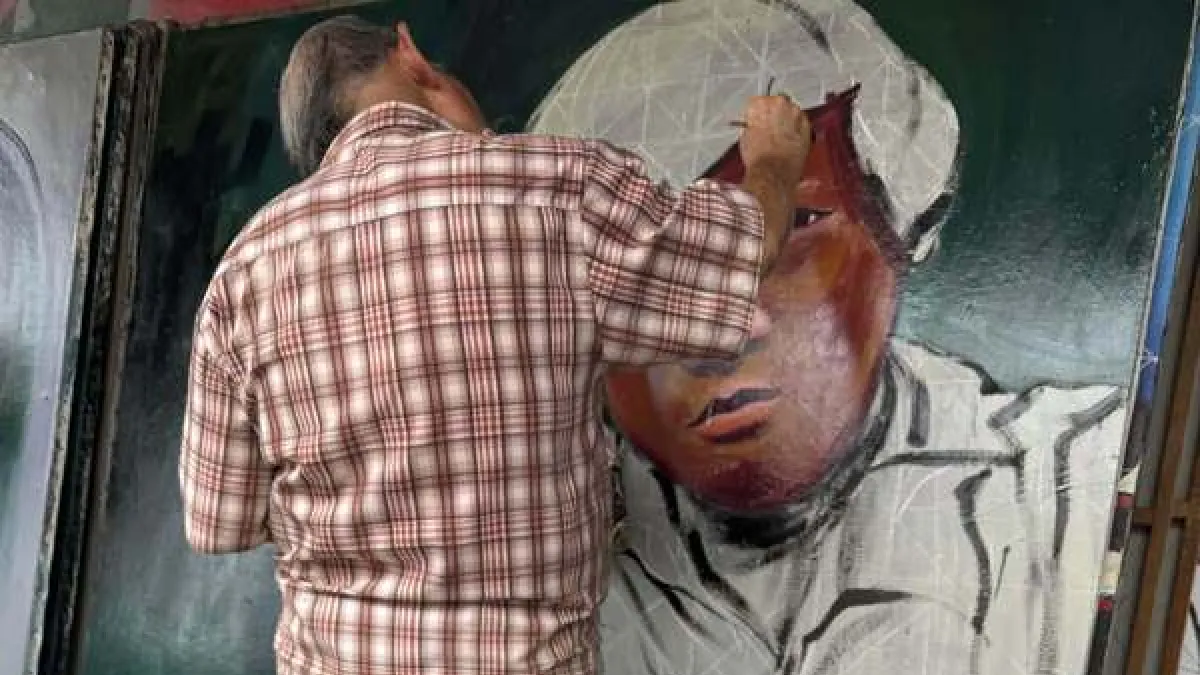
Yen Chen-fa still paints movie billboards by hand for the Chuan Mei Theater in Tainan, Taiwan's oldest city, keeping alive a trade that digital printing has wiped out of almost every other commercial cinema on the island.
The billboards on the theater's facade stand two to three stories tall. Every face and title on them is brushed in house paint rather than printed on vinyl, which is why so many visitors to Tainan's West Central District stop on the sidewalk to photograph them. Oscar-winning director Ang Lee watched films at the Chuan Mei as a high school student in Tainan and has called it the place where his dream of making movies began, Taiwanese broadcaster SETN reported.
How A Tiny Photo Becomes A Towering Billboard
In the 1960s, 1970s, and 1980s, before online trailers and when color printing was costly and small, a cinema's giant painted billboard was its main tool for turning passersby into ticket buyers. Producing one demanded a set of skills that took years to master.
A painter usually started with nothing more than a 4x6 inch publicity still. To keep the actors' features in proportion, he covered the photo with a fine grid, then chalked the same grid at full scale across wooden panels fitted together into one huge board.
Paint was its own craft. Billboards hung outdoors through months of sun and rain, so painters learned how house paints and pigments behaved and mixed their own colors to stay bright without fading.
The final strokes were made from ladders or swaying scaffolding. Standing inches from the board, a painter could not see the whole picture, so he relied on his sense of space and long experience to capture a star's likeness one brushstroke at a time.
Apprentices Raced Release Dates In The Golden Age
When cinemas lined Taiwan's city streets, the days before a blockbuster opened were a race against the clock. A master painter typically ran a crew of three or four apprentices, who washed brushes, mixed paint, laid down base coats, and nailed boards together.
The master kept the work that sold the film for himself: the lead actors' faces, the play of light and shadow, and the hand-lettered title. When a movie ended its run, nothing went to waste. Apprentices scraped the old image off, whitewashed the boards, and handed them back for the next release.
Inkjet Printers Erased A Profession From The 1990s
The decline began in the 1990s, when large-format digital inkjet printers spread through the industry. A computer file could be turned into a sharp, waterproof vinyl banner in tens of minutes, at a fraction of the cost and time of a painted board.
Multiplex chains moving into department stores sealed the trade's fate. They wanted standard formats and fast changeovers between films, and hand painting could not keep up. Many veteran painters switched careers, taking on temple murals or signs painted on roller shutters, while many more simply put down their brushes and retired.
Tainan's Billboard Master Has Painted For Half A Century
Yen is one of the few still working. He left school during junior high because of family hardship, SETN reported, and became an apprentice billboard painter in his teens. He has now painted for more than 50 years and has produced over 1,000 movie billboards, according to the Taipei Times.
For years he has worked under the covered arcade across the street from the Chuan Mei, turning Hollywood blockbusters and animated films into billboards that carry the visible energy of the hand. Long hours of close work have taken a toll. SETN reported that his right retina is damaged, that he has had laser surgery on his left eye, and that he now paints mainly with his left eye.
When the Taipei Film Festival announced in April 2024 that it would honor him, Yen said he would keep painting until he could no longer see, the Taipei Times reported.
BBC Coverage And Gucci And Coldplay Commissions Followed
Yen's work has drawn attention far beyond Tainan. BBC Travel profiled him in 2018 as Taiwan's last film poster painter, with photos and video of him at work.
Brands and musicians have followed. Gucci invited him to paint one of its Art Wall murals on Yongkang Street in Taipei, and in 2019 he painted a wall advertisement for a Coldplay album in Taipei's Ximending entertainment district, CommonWealth Magazine's Crossing platform reported.
At home, the Taipei Film Festival presented him with its Outstanding Contribution Award at its awards ceremony on July 6, 2024, when he was 71, according to Taiwan's Central News Agency (CNA).
A Painted Tribute For A Restored Taiwanese Classic
In summer 2026, Yen returned to the scaffolding for a film with special meaning in Taiwan. Dull-Ice Flower, a 1989 drama directed by Yang Li-kuo, written by Wu Nien-jen, and adapted from a novel by Chung Chao-cheng, tells the story of a gifted boy from a poor family who never gets the chance to pursue his talent for painting. The film won two Golden Horse Awards, for best supporting actress and best film song.
A 2K digital restoration by the Taiwan Film and Audiovisual Institute (TFAI) was the only Taiwanese title selected for the Cannes Classics section of the 2026 Cannes Film Festival. The restored version returned to Taiwanese cinemas on July 8, 2026, and had passed NT$6.5 million at the box office by early August, CNA reported.
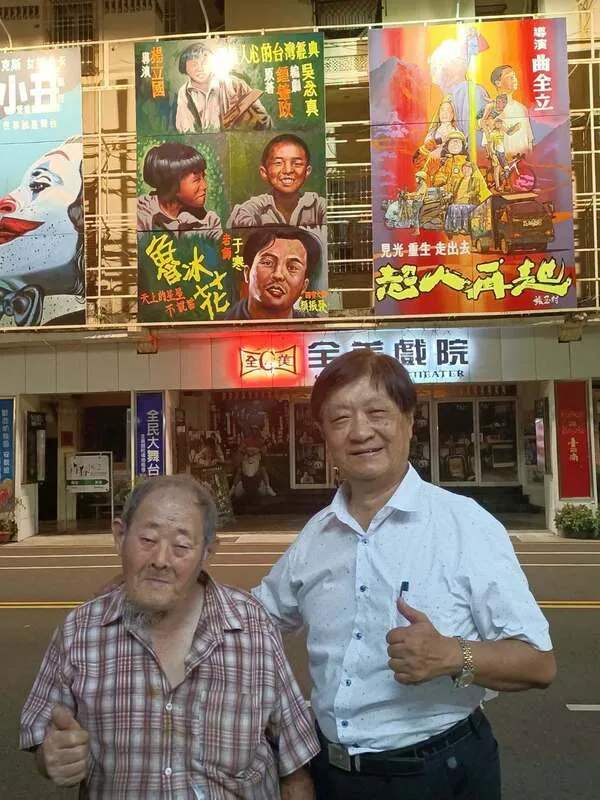
Yen painted the film's billboard while still recovering from cellulitis, according to SETN. The theater's operator, Wu Chun-han, persuaded him to take the job by pointing out how closely the story mirrored Yen's own life, and TFAI Chairman Chu Ming-jen had suggested pairing the restored film with traditional hand-painted billboards, SETN reported. When the finished work went up, the theater welcomed back "Master Yen," saying he had fought off illness and risen from the ashes.
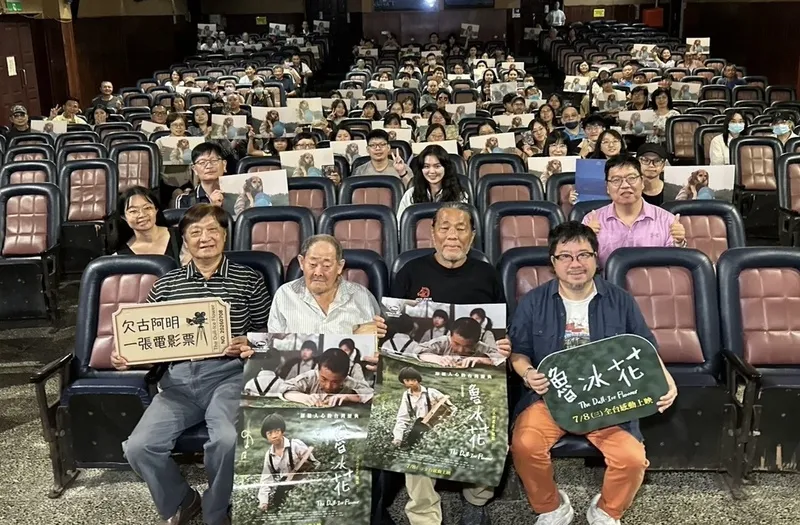
On August 16, the Chuan Mei hosted a special "Back to 1989" screening of the restored film, attended by Wu, Yen, the film's cinematographer Mark Lee Ping-bing, and Chu, CNA reported.
Hand-painted billboards may have disappeared from Taiwan's mainstream cinemas, but on one street in Tainan, the faces Yen paints still preserve the warmth of a golden age of Taiwanese moviegoing.
Tainan's Hand Painted Movie Billboards: Key Facts
Who paints the movie billboards at Tainan's Chuan Mei Theater?
Yen Chen-fa, a billboard painter who began as a teenage apprentice and has painted for more than 50 years. He is widely regarded in Taiwan as a national treasure of the craft.
Why did hand-painted movie billboards disappear in Taiwan?
From the 1990s, digital inkjet printing produced banners faster and far more cheaply than painters could, and multiplex chains demanded standardized formats and quick changeovers between films.
How do painters enlarge a small photo into a giant billboard?
They draw a grid over a small publicity still, chalk the same grid at full scale onto large wooden boards, and paint square by square so the actors' proportions stay true.