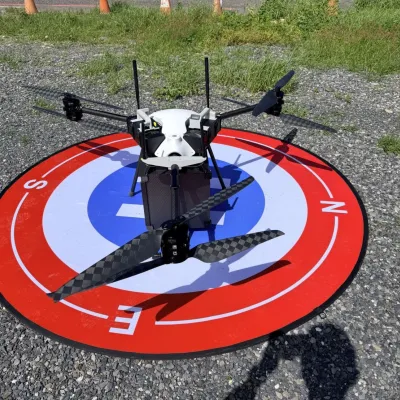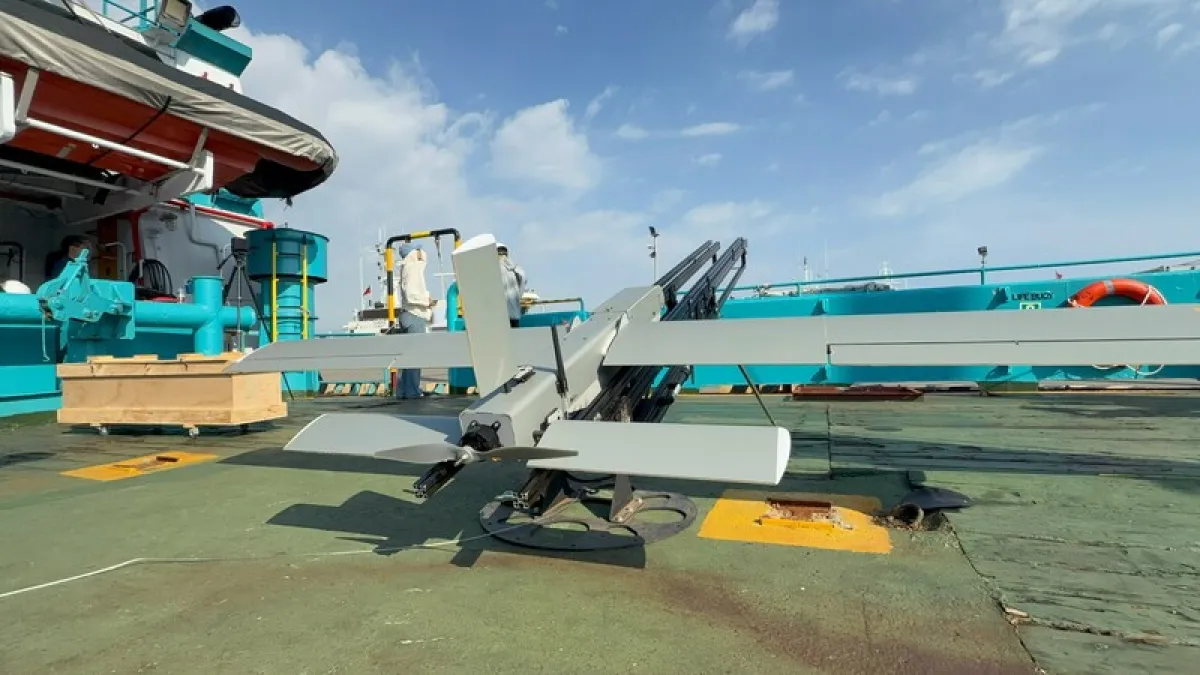
Taiwan's Ministry of National Defense has reportedly completed the first wave of a force restructuring centered on "asymmetric capabilities" and is preparing a second phase. Under the new plans, the drone battalions already set up within each army corps' artillery command are expected to be adjusted again, further raising the importance of drones in artillery units. One military official has even said that in modern warfare, "a drone should be seen as a gun."
The military is clearly right to stress the importance of drones in modern artillery. On the battlefield in Ukraine, Kyiv's "drone artillery combined brigade" model has not only eased its shortage of long range precision shells but also allowed older guns with shorter range than Russia's to remain useful. That offers valuable lessons for how Taiwan's artillery could fight in the "littoral and beach combat" and "in depth combat" phases of a future war.
How Ukraine's Drone Artillery Brigades Fight
Because it has far fewer shells than Russia, Ukraine's artillery rarely relies anymore on massing large numbers of guns to blanket enemy positions with barrages to knock out firing points, communications networks, command posts and ammunition depots. Instead, it uses first person view (FPV) drones for precision strikes, which are both highly lethal and far cheaper.
For example, using 20 FPV drones to destroy several selected targets within an enemy position costs only about $20,000. Achieving the same effect with conventional shells might require dozens or even more than a hundred rounds. That is not only more expensive, at about $3,000 to $4,000 for each unguided high explosive shell, but also easily reveals the guns' positions and invites devastating Russian counterfire.
High tech precision guided shells could achieve the same result with the same number of rounds or fewer, but they cost $80,000 to $150,000 each, and production is hard to scale. By contrast, the FPV drones widely used by Ukraine's drone artillery brigades are made by Ukrainian manufacturers or hand assembled in frontline workshops from commercial off the shelf and open source parts. A basic model costs about $300 to $500, while upgraded versions with night vision or thermal imaging cost about $800 to $1,500.
In other words, these FPV drones can achieve roughly the same lethal effect as precision guided shells at less than one sixtieth of the cost. And because they are so easy to make, they can even be produced in small workshops just behind the front line.
On today's battlefield, Ukraine's drone artillery brigades mostly use drones for precision strikes and deep suppression, while guns focus on fire support for infantry and suppressing Russian assault waves. Even when guns are firing, Ukraine uses drones wherever possible to find, mark and correct targets, improving accuracy so that each fire mission can be cut to fewer than 10 rounds before the guns immediately relocate. More importantly, many of Ukraine's older towed guns, which are significantly outranged by Russian artillery, can still play a meaningful role in fire support and suppression with drone assistance.
Taiwan's artillery will be reinforced with 111 HIMARS multiple rocket launchers and 60 M109A7 self propelled howitzers. But until 2035, a sizable number of older self propelled guns, such as the M109A2 and A5, and towed artillery will remain in service, all of them less automated and shorter ranged than the guns currently fielded by the People's Liberation Army. With limited sources and high costs, it will also be difficult for Taiwan to acquire large numbers of precision guided shells before 2035. Ukraine's experience therefore offers many lessons for Taiwan's artillery.
Drones Still Cannot Replace Artillery
But concluding that drones can largely or even completely replace artillery would be an exaggeration.
Social and traditional media are full of footage of drones hunting tanks, armored vehicles, military trucks and strongpoints. Yet data analysis shows that while drones, especially FPV kamikaze drones, now account for a large share of frontline losses, they usually work alongside artillery and other conventional weapons.
About 66% of the tanks Russia has lost in Ukraine have been attributed to drones. But closer analysis shows that only about 15% to 20% were destroyed by drones alone from start to finish. In most cases, Russian tanks were first immobilized by Ukrainian mines, anti tank missiles or conventional artillery, and Ukraine then sent cheap drones to finish them off, preventing Russia from towing them back for repair.
Ukrainian frontline artillery commanders also note that drone operations are often disrupted by weather and ground vegetation. As Russia has deployed electronic countermeasures on a large scale, the share of radio guided drones failing to complete their missions has risen markedly. Slow flying FPV drones are also increasingly being shot down by well trained infantry with suitable ammunition. In those conditions, artillery's physical resilience against weather and jamming comes to the fore.
In addition, while drones can deliver precision strikes at very low cost, they are far less destructive than artillery shells and often cannot destroy hardened fortifications. Their limited payload, small blast radius and lack of all weather capability also mean they cannot suppress enemy forces across a wide area in defense or attack, or provide sustained fire support to friendly troops at the front.
In short, drones can greatly increase the lethality of artillery, but they cannot yet replace conventional guns.
The author is an assistant research fellow at the Division of Defense Strategy and Resources of the Institute for National Defense and Security Research. This article is republished with permission from the Helio Forum. (Related: Taiwan Could Be America's Next Trusted Drone Factory But Three Supply Chain Mountains Stand In The Way | Latest )