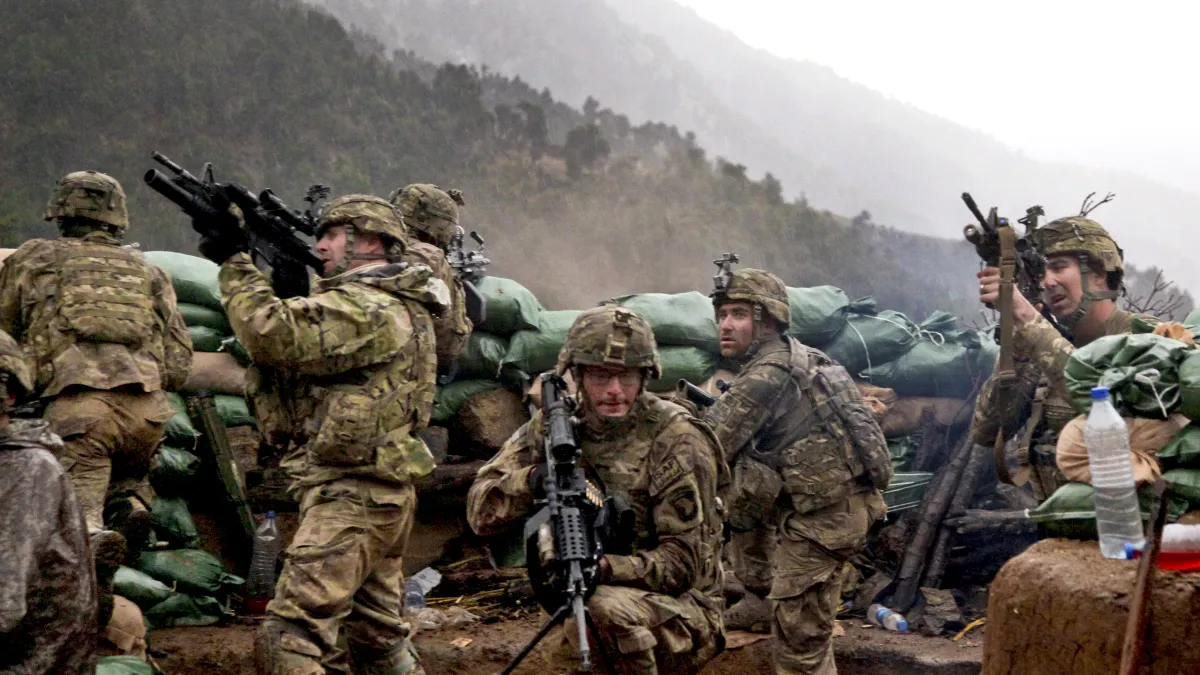
The US military is widely regarded as one of the most powerful forces in the world, but its veterans have paid a hidden price. Suicide rates among American veterans are higher than among civilians, and over the two decades of the war on terror from 2001 to 2021, roughly four times as many service members and veterans died by suicide as were killed in combat.
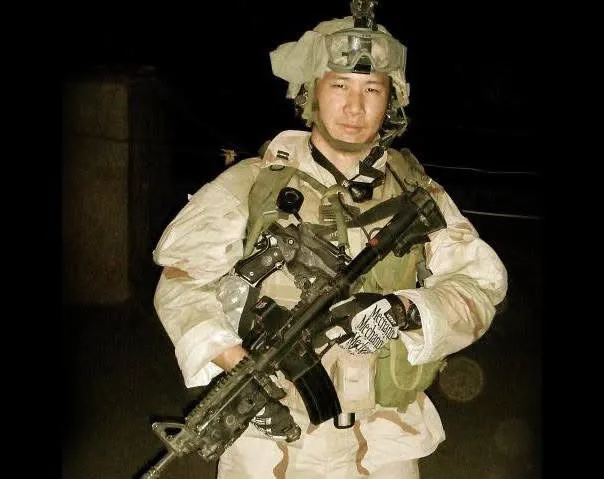
Gene Yu (余靖), a former major in the US Army Special Forces, known as the Green Berets, spent years struggling after leaving the military before finding his footing. In an online interview with Storm Media, he said veterans from combat units tend to fare worse than those from non combat roles, mainly because they lose the identity the military gave them, struggle to fit into civilian life and live with varying degrees of post traumatic stress disorder (PTSD).
How A Hostage Rescue Pulled Gene Yu Out Of His Lowest Point
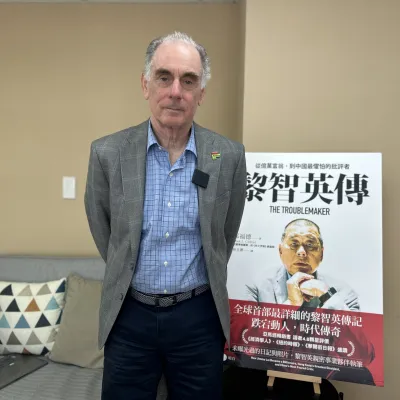
Yu, who turns 47 this month and is a nephew of former Taiwanese President Ma Ying-jeou, recently published the Chinese edition of his memoir, "The Second Shot," in Taiwan. The book recounts the more than 30 days in 2013 when he was asked to help plan the rescue of Chang An-wei (張安薇), a Taiwanese woman kidnapped by militants and held in the Philippines. It also traces the years between his 2009 departure from the Green Berets as a major and his founding of the cybersecurity company Blackpanda in 2015, a period of repeated lows before he found new purpose.
When the kidnapping case reached him in 2013, Yu writes, he was at rock bottom. His transition to civilian life had gone badly. He felt lost and directionless, was nearly broke and was searching for places to sleep for free.
"After I left the army so suddenly, everything I had built came crashing down. I was overwhelmed by wave after wave of guilt, because I had left the military in the prime of my life," he writes. He was 30 when he left in 2009. "Americans were still fighting on the battlefield, and I was wasting my skills, knowledge and abilities. Every night I drank to drown my sorrows, sinking deeper and deeper until I completely lost control."
That is why, Yu says, when he successfully helped bring Chang to safety from the Philippines in 2013, she was not the only one rescued. He felt he had been saved too, from the lowest point of his life.
What The Numbers Show About Veteran Suicide
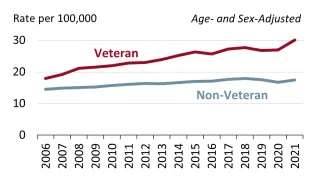
According to a June 2024 update from the Congressional Research Service on veteran suicide prevention, Department of Veterans Affairs data show that from 2006 to 2021, the suicide rate among veterans was consistently higher than among non veteran Americans, and the gap kept widening. By 2021, the veteran suicide rate was more than 70% higher than that of non veterans, equivalent to an average of 17.5 veteran suicides a day.
Research published in 2021 by Brown University's Costs of War Project found that about 7,000 US troops were killed in combat in Iraq and Afghanistan during the 2001 to 2021 war on terror, while more than 30,000 active duty personnel and veterans died by suicide over the same period, four times as many.
The reasons, beyond the loss of identity and PTSD, include the sheer length of the war on terror, which lasted far longer than World War II; the fact that it was carried by a very small share of professional soldiers deployed again and again, unlike the mass conscript armies of World War II; and veterans' easy access to firearms.
Why Combat Veterans Face A Deeper Identity Crisis
Yu believes the problem is worst among Army and Marine Corps veterans, and more pronounced among those from combat units than non combat ones.
"I think the high suicide rate among veterans is mainly because they lose their identity after leaving the military, especially veterans of the war on terror," he said. "American society holds veterans in very high esteem, so when you're in the military, your only identity is being a soldier, especially if you have combat experience."
"Professionally speaking, serving without ever seeing combat is like a medical student training in surgery who never operates on a real patient, or a lawyer who never argues a case in court. So in the era of the war on terror, soldiers felt that only if they had fought had they truly served their country and earned the public's respect," he said.
"But that is also why, when soldiers from combat units leave the military, they are prone to a huge identity crisis. You ask yourself, what do I do next? If you're no longer a soldier, a big pillar inside you is gone, and that psychological void often ends in suicide," he said. "Of course PTSD is also a major factor, but at its root it comes down to losing the identity of being a soldier."
The toll is personal. "I probably see news every six months that another West Point classmate has taken his own life," Yu said. "It's really terrible."
Still Dreaming Of The Army 17 Years Later
Yu has now been out of the military for 17 years and has spent longer in business than he did in uniform. "But almost every night when I sleep, I dream about my old military life," he said.
"My inner identity is still deeply tied to the military. Military life is etched into my heart, because the identity and experience of being a soldier are so unique," he said. "We are all human, but when you're in the military, it's as if you're on another planet. The culture and the society are just different. Military culture is a warrior culture, you could even call it a warrior class, and that warrior society is separate from society as a whole."
If you or someone you know is struggling, help is available. In the United States, veterans and their loved ones can reach the Veterans Crisis Line by dialing 988 and pressing 1. In Taiwan, the 24 hour suicide prevention hotline is 1925.