
Americans vote on November 3 in midterm elections that will decide whether President Donald Trump's Republican Party keeps control of Congress for the final two years of his second term. With Trump's approval at record lows and fuel prices near record highs, forecasters expect Democrats to win the House of Representatives, while the Senate remains a toss-up.
Every House Seat And 35 Senate Seats Are Up
Midterms fall halfway through a president's four-year term. Trump is not on the ballot, but the vote is widely read as a verdict on his performance. Voters will fill:
- All 435 seats in the House of Representatives, whose members serve two-year terms.
- 35 of the 100 Senate seats: 33 regular contests plus special elections in Ohio and Florida for the seats vacated by Vice President JD Vance and Secretary of State Marco Rubio.
- 36 governorships, along with seats in state legislatures in nearly every state.
More than 100 million people are expected to vote. Spending is at record levels: more than $3.8 billion had gone to political ads by October 12, according to ad tracker AdImpact, and Elon Musk alone has spent about $366 million backing Republicans, Reuters reported, citing campaign finance records. The new Congress takes office on January 3, 2027.
Democrats Need Four Seats In Each Chamber
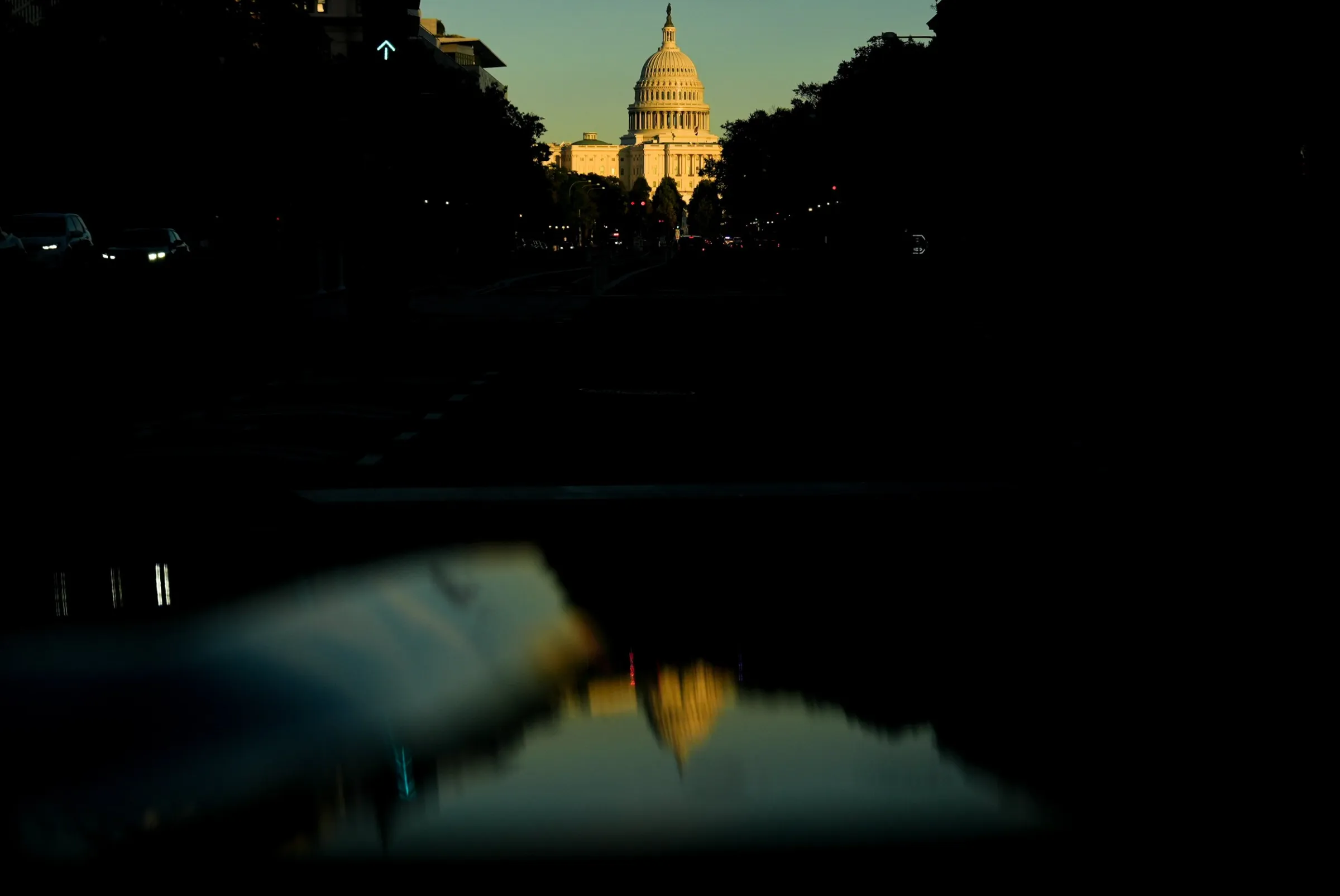
Republicans hold the House 218 to 214, with two vacancies and one independent who sides with Republicans, and the Senate 53 to 47, counting two independents who vote with Democrats. Democrats need a net gain of four seats in each chamber to take control, according to Reuters. A 50-50 Senate would stay Republican because Vance, as vice president, casts tie-breaking votes.
History is on the challengers' side. The party holding the White House usually loses ground in midterms: Republicans gained 63 House seats under President Barack Obama in 2010, and Democrats gained 40 during Trump's first term in 2018.
The polls point the same way. A Reuters/Ipsos poll put Trump's approval at 31%, the lowest of his political career, and showed Democrats leading by 12 points when voters were asked whether they would back a generic Democrat or Republican for Congress, Al Jazeera reported on October 19. An NBC poll found 71% of Americans think the country is on the "wrong track." Still, a Democratic landslide is not assured, Reuters noted, citing lingering skepticism toward Democrats and a Republican spending advantage.

Fuel Prices And The Iran War Dominate
Rising living costs are the biggest issue, and fuel sits at the center. Since the United States and Israel began striking Iran on February 28, Tehran has largely closed the Strait of Hormuz, which normally carries about 20% of the world's oil and gas. U.S. diesel hit a record $6.52 a gallon in September, and 7 in 10 Americans in a Washington Post/ABC News/Ipsos poll said gasoline is becoming "unaffordable."
Trump has scrambled to bring prices down before the vote, announcing a deal with Russian President Vladimir Putin on October 9 to release Russian diesel to the global market despite U.S. sanctions, Al Jazeera reported.
A Democratic House Would Mean A New Speaker
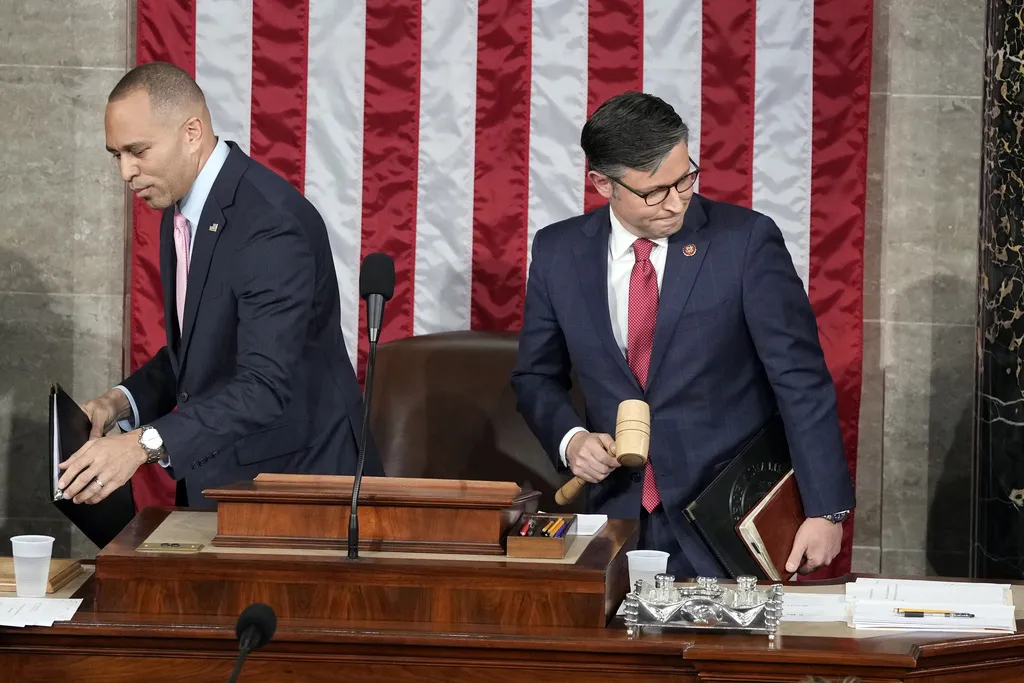
If Democrats win the House, their leader Hakeem Jeffries of New York is likely to become speaker, second in line to the presidency after the vice president, and the first Black American to hold the post. He could direct committees to investigate what he calls "unprecedented levels of corruption" in the Trump administration. Jeffries has also attacked Trump's dealings with Moscow, writing on X on October 14 that Trump "is a Putin super fan" who "cannot be trusted to do the right thing in defense of Ukraine."
A Republican win would keep the gavel with Speaker Mike Johnson or another Republican. The Senate, meanwhile, confirms cabinet members and federal judges, so losing it would make it far harder for Trump to fill top posts. Even a Senate majority has limits: most bills need 60 votes to overcome a filibuster, a procedural delaying tactic.
A Fight Over District Lines Shapes The House
The House race is also being fought over the maps. Congressional districts are normally redrawn once a decade after the census, but in 2025 Trump urged Republican-led states to redraw them early to protect his majority. Texas, Missouri, North Carolina and Ohio drew new Republican-friendly maps, while California voters approved a Democratic counter-map in November 2025, PBS reported. Overall, Republican-controlled legislatures tilted about eight more seats in their favor than Democrats gained through their own efforts, after a Supreme Court decision this spring weakened the Voting Rights Act and a court threw out Virginia's new Democratic map, Foreign Policy Journal reported.
The fight is on some ballots, too. In Maryland, Question 3 would remove the state's requirement that congressional districts be compact, letting the Democratic legislature redraw a map that could eliminate the state's only Republican-held seat. A University of Maryland, Baltimore County poll found 53% of likely voters opposed it and 25% supported it, CBS News reported.
The Senate Races To Watch
The Senate battle has moved beyond the traditional presidential swing states into Republican territory that Trump won easily in 2024. Democrats look strongest in North Carolina and must flip at least three more seats while holding their own, including Michigan and Georgia. Key contests:
- North Carolina: Roy Cooper (D) leads Michael Whatley (R) for an open seat.
- Texas: James Talarico (D) vs. Ken Paxton (R). No Democrat has won here since 1988.
- Ohio: Sherrod Brown (D) vs. Sen. Jon Husted (R).
- Maine: Troy Jackson (D) vs. Sen. Susan Collins (R).
- Iowa: Josh Turek (D) vs. Ashley Hinson (R), open seat.
- Alaska: Mary Peltola (D) vs. Sen. Dan Sullivan (R).
- Kansas: Adam Hamilton (D) vs. Sen. Roger Marshall (R). No Democrat has won here since 1932.
- Michigan: Abdul El-Sayed (D) vs. Mike Rogers (R), an open seat Democrats must defend.

What It Means For Taiwan
The majority party in each chamber chairs the committees that oversee foreign and defense policy, including the Senate Foreign Relations Committee, which reviews U.S. arms sales to Taiwan. Support for Taiwan in Congress has long been bipartisan, but control of the committees shapes how closely lawmakers scrutinize the administration's dealings with Beijing.
When Results Will Be Known
The first polls close at 7 p.m. Eastern time on November 3, which is 8 a.m. on November 4 in Taiwan. Many House races may be called on election night, but Senate control could take days: Maine and Alaska use ranked-choice voting, which can delay final counts by a week or more if no candidate wins a majority outright.
Election officials are also bracing for disputes. Trump has insisted since 2020, without evidence, that cheating is widespread in U.S. elections, and state officials and congressional Democrats have been preparing for legal challenges to any attempt by his administration to intervene in a vote run by the 50 states.