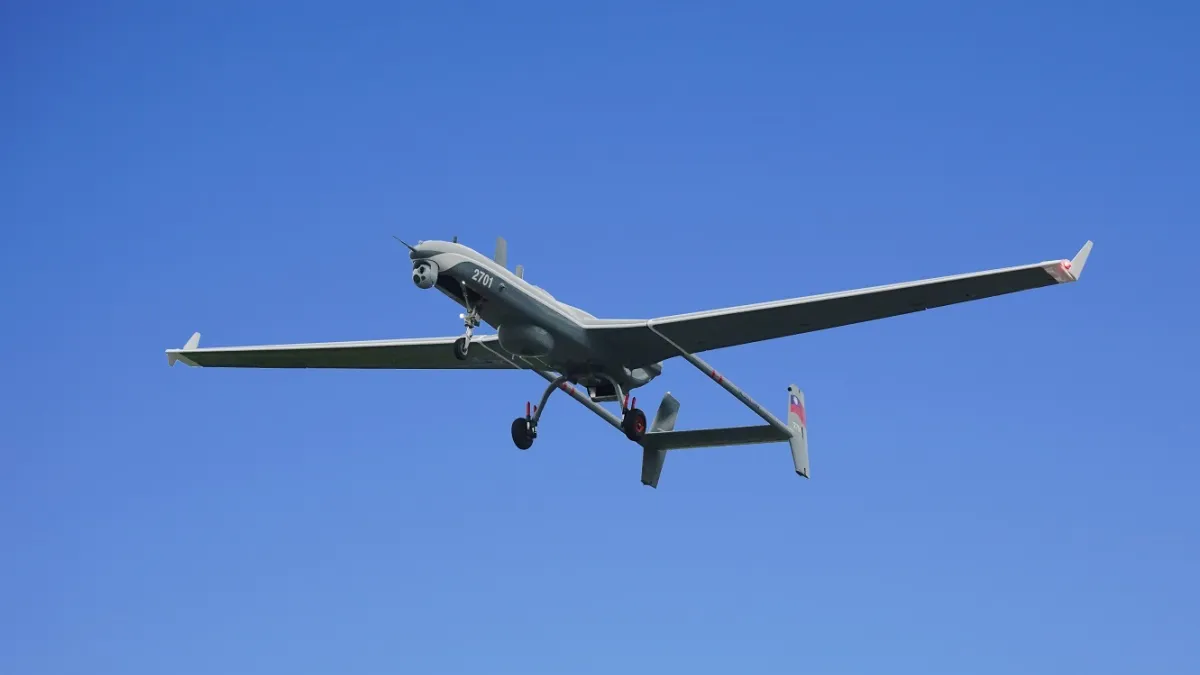
Taiwanese drone maker Carbon-Based Technology Inc. said on October 22 that it has delivered, on schedule, all of the Albatross II unmanned aircraft it was contracted to build for the National Chung-Shan Institute of Science and Technology (NCSIST), Taiwan's state-run military research institute, and is now preparing for mass production and scouting sites for a new factory.
The Taichung-based company said demand from Taiwan's push for defense self-reliance and from the global market for unmanned vehicles keeps rising. Besides the NCSIST contract, it is speeding up work on domestic and foreign drone and unmanned surface vessel projects, as well as overseas orders.
Albatross II Shifts From Local Build To Combat Capability
The Albatross II, known in Chinese as Rui Yuan II, is a large military drone developed by NCSIST. According to Carbon-Based, it offers long endurance, long-range command and control and the ability to carry a range of mission payloads, allowing it to conduct maritime intelligence, surveillance and reconnaissance as well as target acquisition. The company said this improves visibility over distant sea areas and strengthens joint operations.
The program matters beyond a single aircraft, Carbon-Based said. In its view, it shows Taiwan's large military drones moving from being "independently manufactured" to providing "independent combat capability." As reconnaissance, sensing, communications, command and control and mission systems are integrated step by step, the company said, military drones have evolved from standalone flying platforms into key nodes in a combat network.
The drone has not had a smooth path to large-scale procurement. The Global Taiwan Institute, a Washington think tank, noted in September that the Executive Yuan's original special defense budget bill included a first production order for the Albatross II, describing it as a turboprop, radar-equipped maritime reconnaissance and strike drone, but that the Legislative Yuan, Taiwan's parliament, removed it from the list of domestic purchases.
NCSIST Brings Private Firms Into Military Production
From research and development to testing, verification and delivery, the Albatross II reflects a maturing domestic defense supply chain, Carbon-Based said. NCSIST led the core technology development and system integration, using national projects to connect the military's needs with Taiwanese industry and bring private companies into military-standard development, certification and production.
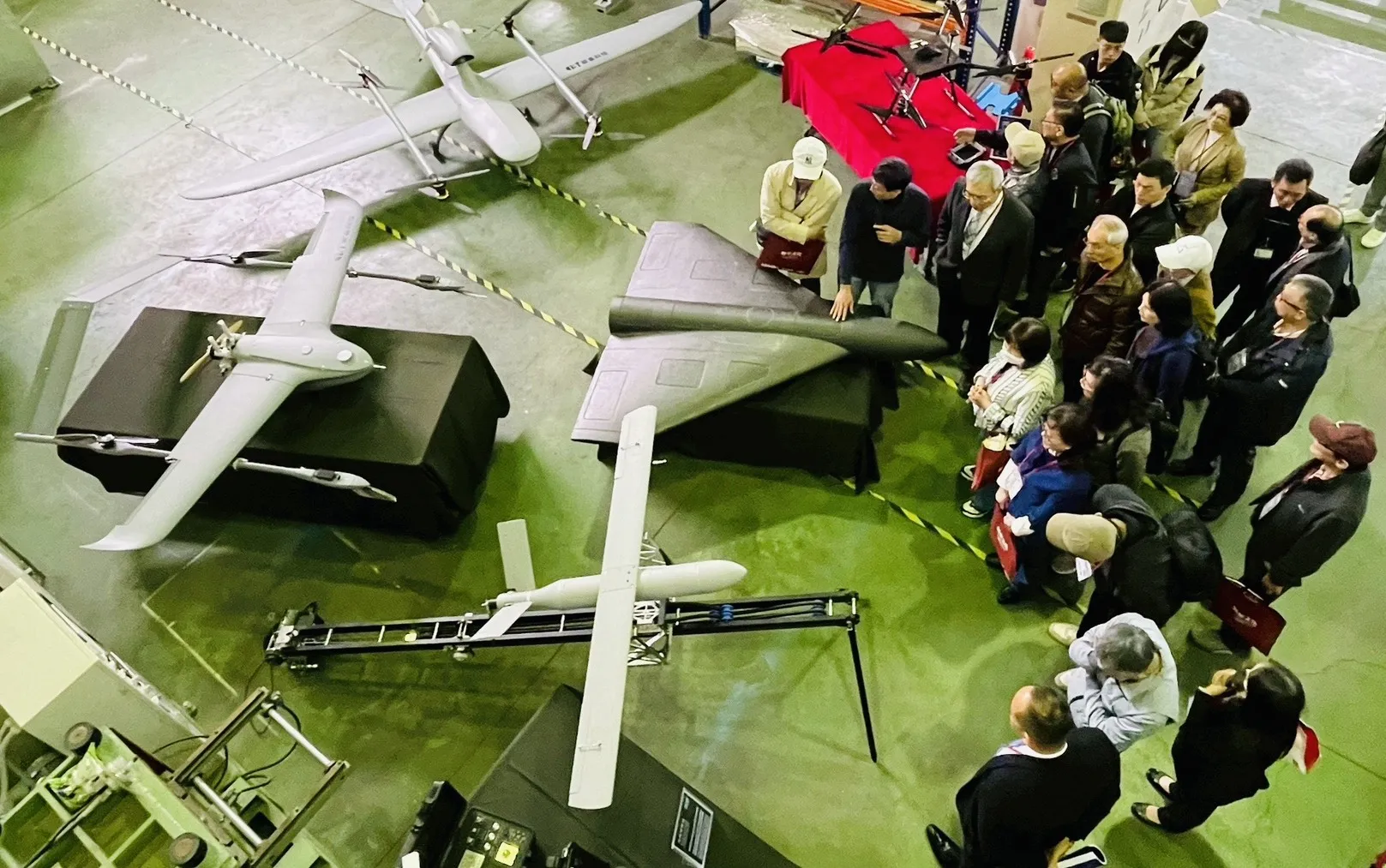
Carbon-Based contributed its long experience in aerospace-grade composite materials, military drone airframe manufacturing and volume production, adding to its record of building and delivering large military drones. The company has worked on military drones for 19 years, and several of its employees previously worked at Aerospace Industrial Development Corp. (AIDC), Taiwan's main military aircraft maker, and at NCSIST, Taiwan News reported in May, citing the Central News Agency.
Chairman Chen Wen-hung said the core of defense self-reliance is not simply localizing individual pieces of equipment. What matters more, he said, is keeping key technologies, engineering talent, manufacturing capability and the supply chain in Taiwan through continuous development and mass production, building an industrial base that can keep iterating and upgrading.
Chen said the military-grade manufacturing, quality management and mass production experience gained from national drone projects would form an important foundation for expanding the company's own products, contract manufacturing business and international sales.
Order Book Stretches Into 2028
With dual-use unmanned vehicles, its own products and contract drone projects all advancing, Carbon-Based said its focus is shifting from "R&D and project delivery" to "scaled-up mass production." Beyond its existing defense projects, the company is accelerating production and delivery of overseas orders. Its business covers self-developed drones and unmanned surface vessels, dual-use unmanned vehicles and several contract drone development and manufacturing projects.
Chen said visibility on orders and projects in hand now extends into 2027 and 2028, and he expects production demand to stay high over the next two years. To meet it, the company is actively looking for and negotiating a suitable new factory site, while planning to expand production equipment, staffing and testing capacity. The aim is to strengthen an integrated process covering development, verification, mass production and delivery for both drones and unmanned boats, so it can serve multiple models, projects and customers at home and abroad at the same time.
Chen said that over the past two years, the company's challenge has shifted from developing products to producing them quickly and delivering them reliably. In the next phase, he said, the company will deepen its work in aerospace composites, drones, unmanned surface vessels and autonomous systems, and pursue four tracks in parallel: defense projects, its own products, overseas markets and contract manufacturing.