When a streetlight gains communications, sensing and computing capabilities, a city gains another way to understand what is happening on the ground. Yet building an intelligent urban neural network from individual nodes involves far more than installing equipment. Which applications should take priority? How can data be used across departments? Who will operate and maintain the systems? And how can local industries build new competitive strengths through deployment?
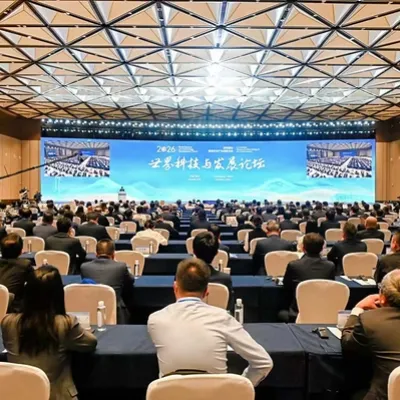
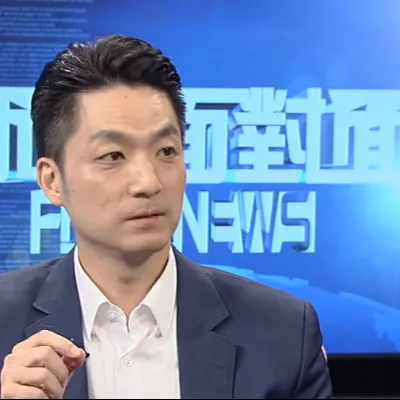
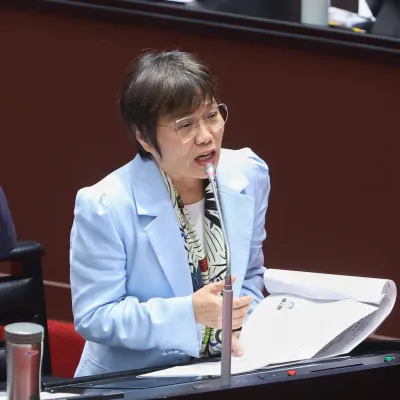
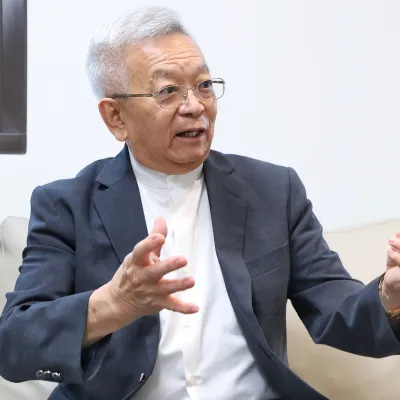
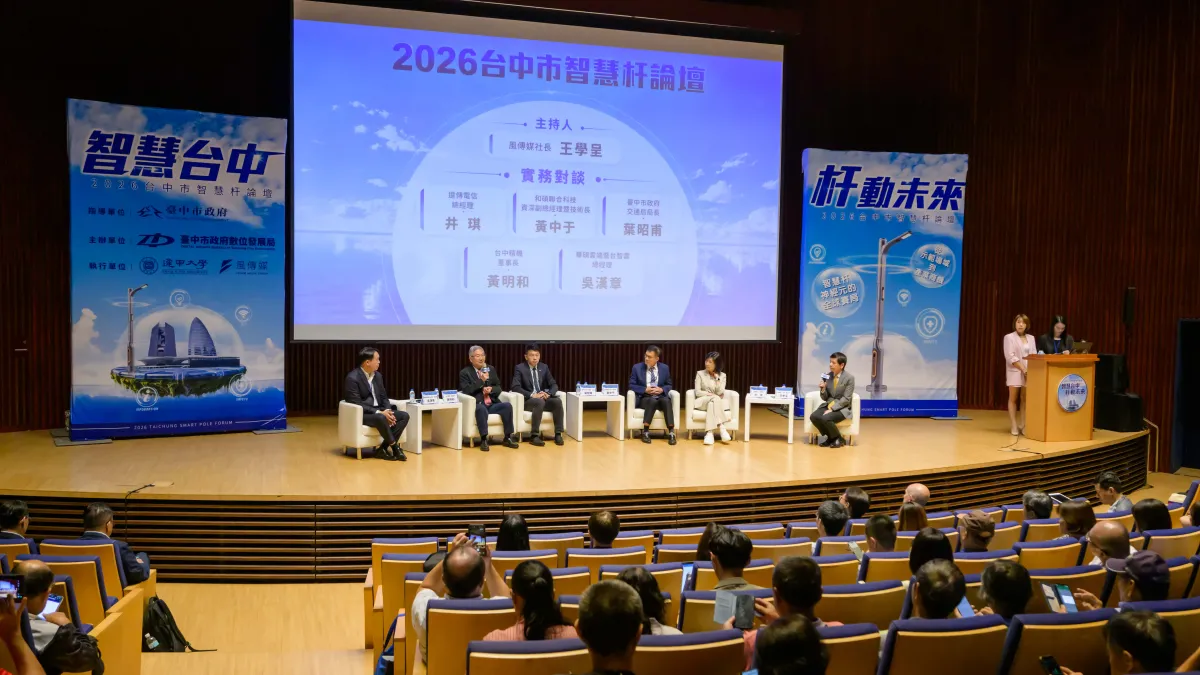
On October 2, the “Smart Taichung: Poles Driving the Future” forum held a practical panel discussion titled “Building an Intelligent Urban Neural Network: Smart Poles Leading Taichung Toward a New Era of 5G Smart Cities.” Moderated by Wang Hsueh-cheng, President of The Storm Media, the panel brought together Huang Ming-ho, Chairman of Victor Taichung Machinery Works; Yeh Chao-fu, Director-General of Taichung City’s Transportation Bureau; Chee Ching, President of Far EasTone Telecommunications; Wu Han-chang, General Manager of ASUS Cloud and Taiwan AI Cloud; and Huang Chung-yu, Senior Vice President and Chief Technology Officer of Pegatron Corporation. They explored the conditions needed to put smart poles into practice from the perspectives of manufacturing, transportation, telecommunications operations, AI and systems integration.
Wang framed the discussion around the role of smart poles as core urban nodes, connecting questions of collaboration among AI, 5G and edge computing with application priorities and the local industrial ecosystem. The exchange pointed toward an approach in which cities first define concrete problems, then combine industrial capabilities with long-term operations to gradually turn pilot-project experience into sustainable public services.
Chairman Huang Ming-ho’s Industrial Perspective: Connecting Precision Manufacturing with Urban Needs
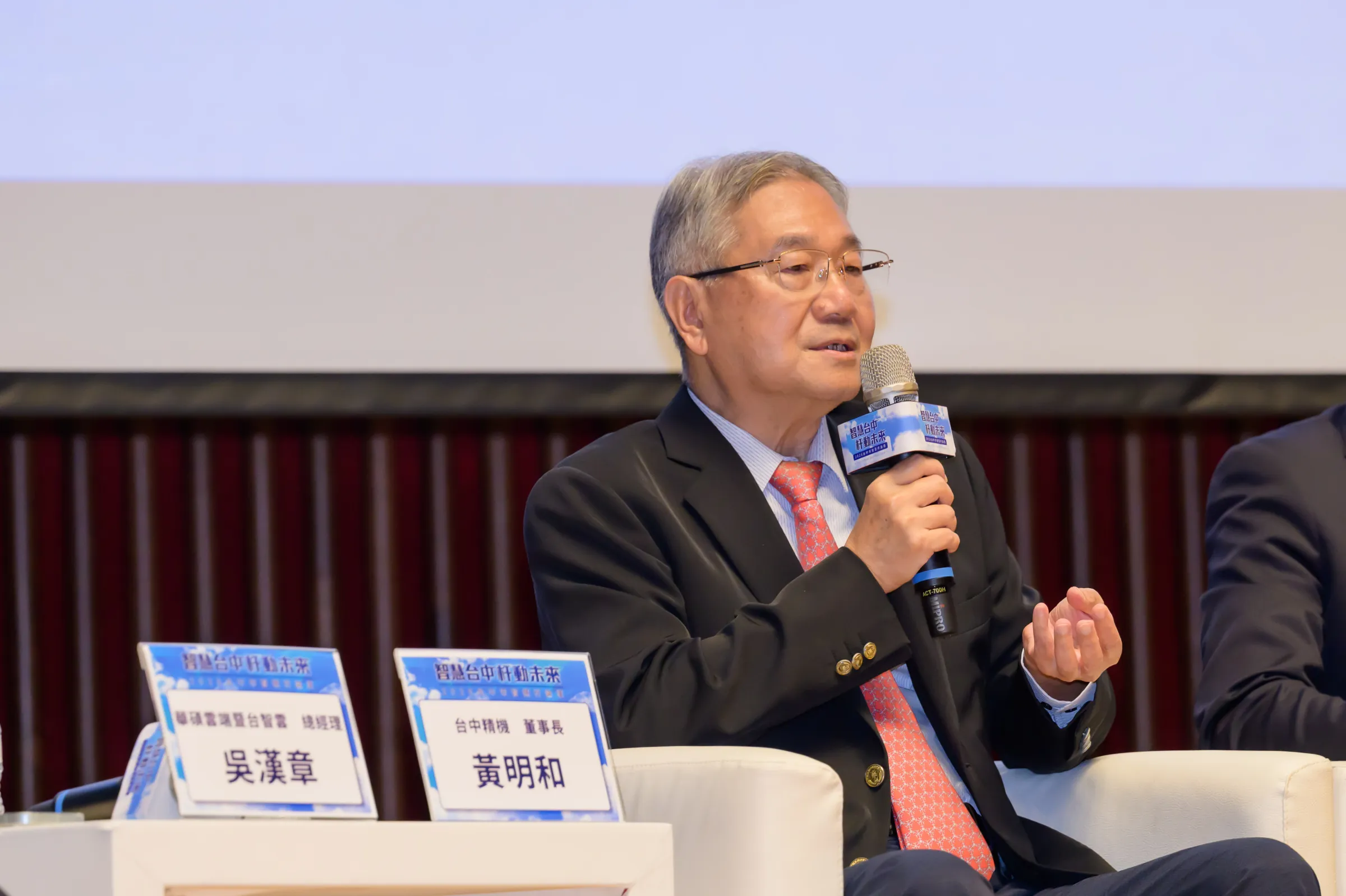
The discussion began with Taichung’s manufacturing strengths. Huang explained that Victor Taichung Machinery Works has been rooted in the city for many years and has established a smart machinery factory in the Precision Machinery Innovation Technology Park, reflecting central Taiwan’s foundation in smart manufacturing. Looking back on the factory’s development from planning to launch, he stressed that industrial upgrading requires sustained investment and local support.
Huang also noted that machine tools are a cornerstone of manufacturing. The development of Taiwan’s laptop, mobile phone and systems industries has likewise depended on cooperation with machine-tool and component suppliers in central Taiwan. Taichung’s accumulated manufacturing expertise could extend into emerging technology applications.
From machine tools and components to AI server racks and sheet-metal parts, digital technology still relies on physical manufacturing capabilities. Huang pointed out that although smart-pole components are relatively small and require precision, expanding digitalization and AI applications will continue to require precision machining and manufacturing services.
Smart poles therefore offer Taichung manufacturers an opportunity to enter the urban technology market. Local suppliers that understand demand and strengthen their products and processing capabilities may become part of the smart-city supply chain. Wang also recalled the development of Taichung’s machine-tool industry, emphasizing the vital industrial foundation it has long provided for manufacturing in Taiwan.
Director-General Yeh Chao-fu’s Transportation Perspective: Starting with Residents’ Everyday Problems

Yeh said transportation is one of the most suitable real-world settings for digital technologies. Residents are particularly concerned about congestion, buses and parking. With land resources limited, traffic congestion cannot be addressed simply by continually widening roads; intelligent management is also needed to improve road-use efficiency.
Using bus services as an example, he described the progression from unreliable arrival information to GPS, electronic bus-stop displays and integrated mobile apps, all of which have gradually improved the passenger experience. Parking management has likewise evolved from geomagnetic sensors to camera-based license-plate recognition and electronic payment, moving toward real-time, paperless services.
Yeh noted that smart poles create an opportunity for integration across municipal departments. Existing streetlight poles managed by public works agencies could accommodate traffic-flow detection as well as water-management and environmental monitoring devices, reducing the need for separate installations by individual departments.
Such projects must also demonstrate their overall benefits to budget authorities and deliver improvements that residents can feel in daily life, thereby building public support. The value of technology depends not only on equipment functions but also on whether it addresses residents’ needs.
He also raised the question of government procurement models. Purchasing equipment solely through capital budgets can lead to replacement needs and performance gaps over time. In the future, service-based procurement could be considered, allowing public agencies to budget according to service outcomes and providing greater flexibility for technology upgrades and adoption.

Chee argued that smart-city development requires government and industry to solve problems together. Where governments face constraints on capital budgets, companies could consider funding initial construction, with public agencies making annual payments through service budgets.
She emphasized that the value of smart poles lies not in the poles themselves but in subsequent system management, connectivity and long-term services. Far EasTone’s “Big Data, AI and IoT” framework integrates big data, artificial intelligence and the Internet of Things, with smart poles serving as local IoT nodes.
By integrating sensors such as cameras and audio devices, smart poles can help cities collect information and develop applications. Deploying nodes at appropriate locations could also gradually form a digital safety network and improve governance efficiency.
Chee added that participation in government projects is not merely part of business operations but also relates to corporate social responsibility and shared benefits. As smart poles and their applications expand, whether residents genuinely experience greater convenience and safety will be a key measure of service value.
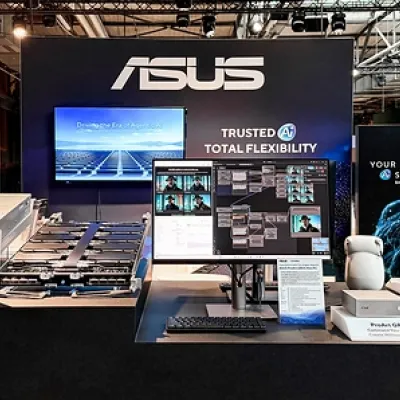
General Manager Wu Han-chang’s AI Perspective: Bringing Computing Power Closer to Where It Is Needed
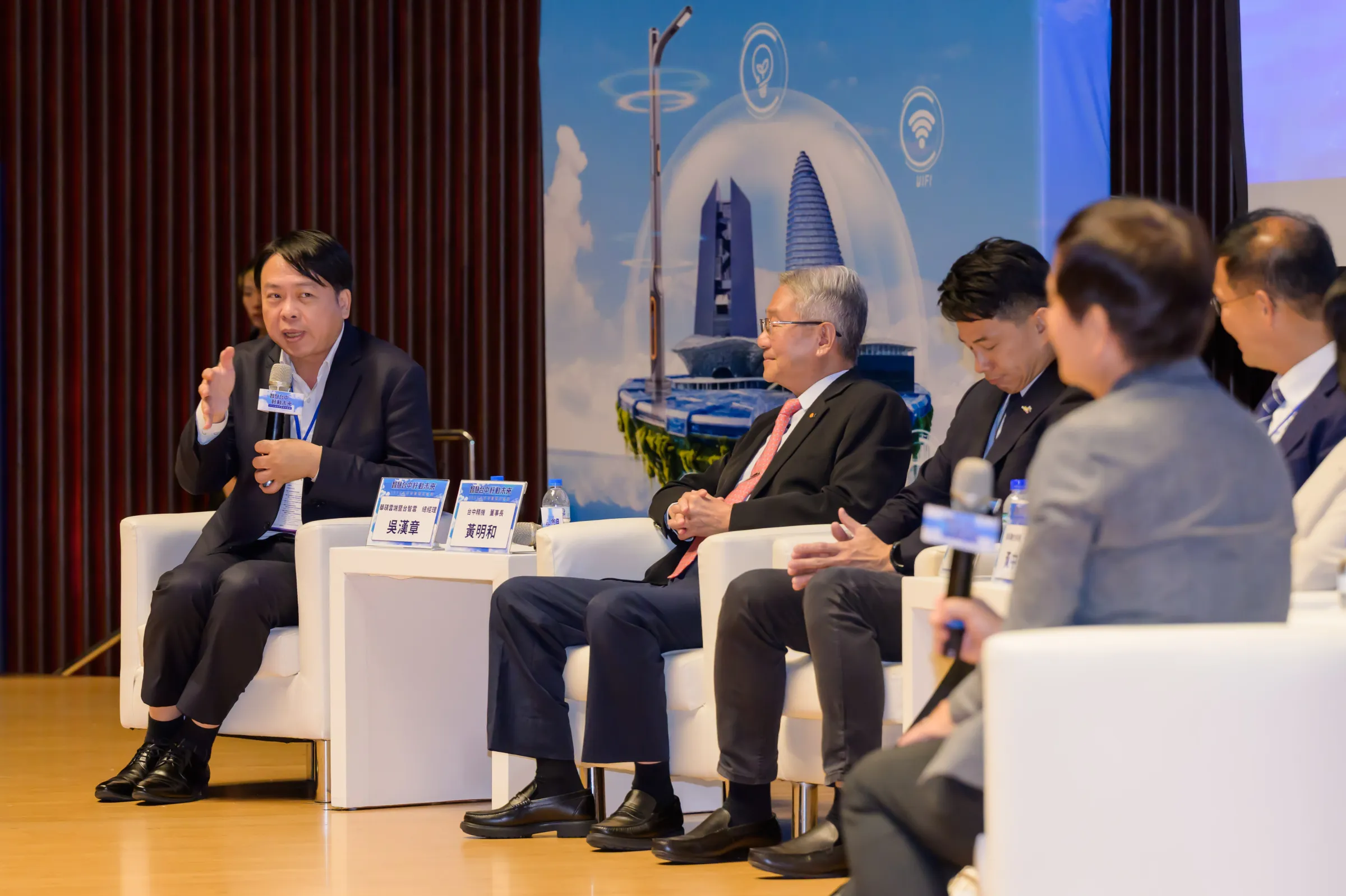
Wu noted that earlier efforts to deploy air-quality sensors and roadside parking services often encountered difficulties with cabling and power supply. Shared smart poles can provide a common base for public facilities and help address some of these deployment challenges.
In the AI era, computing power is increasingly a basic capability for public services, and not all processing needs to take place in large data centers. Depending on local requirements, smart poles can serve as edge-computing nodes that process some data on site, lowering barriers to application development and deployment.
Wu also proposed viewing smart poles as public infrastructure akin to “information roads.” He suggested considering dedicated AI assistants for civil servants to improve administrative efficiency and better address staffing and operational needs in the public sector.
CTO Huang Chung-yu’s Application Perspective: Integrating Infrastructure, Sensors and Edge Computing

Drawing on practical experience, Dr. Huang outlined several advantages of smart poles: their roadside locations, the ability to consolidate devices and improve streetscapes, shared communications and power lines, and on-site edge computing. Combining bus information systems, surveillance cameras, lighting and communications equipment can reduce the proliferation of separate structures along streets.
Sharing communications and power infrastructure can also reduce repeated construction and road excavation. Depending on the site, devices can perform image recognition, traffic counting and air-quality data analysis, reducing the need to transmit large volumes of raw data to a central platform.
Dr. Huang shared an observation from smart-sensing data: PM2.5 concentrations may rise not only during the evening traffic peak but also around 5 a.m. He explained that lower early-morning temperatures and moisture may cause suspended particles to accumulate closer to the ground. Such on-site observations show how data analysis can enrich our understanding of the environment.
For information collected by smart poles to support transportation, environmental management or public services, its intended uses, division of responsibilities and follow-up procedures must be clearly defined. Technology provides new ways to observe a city; governing agencies must decide how to respond to the information, collaborate and evaluate service outcomes.
Taichung’s Next Step: Turning Industrial Strengths into Services Residents Can Feel
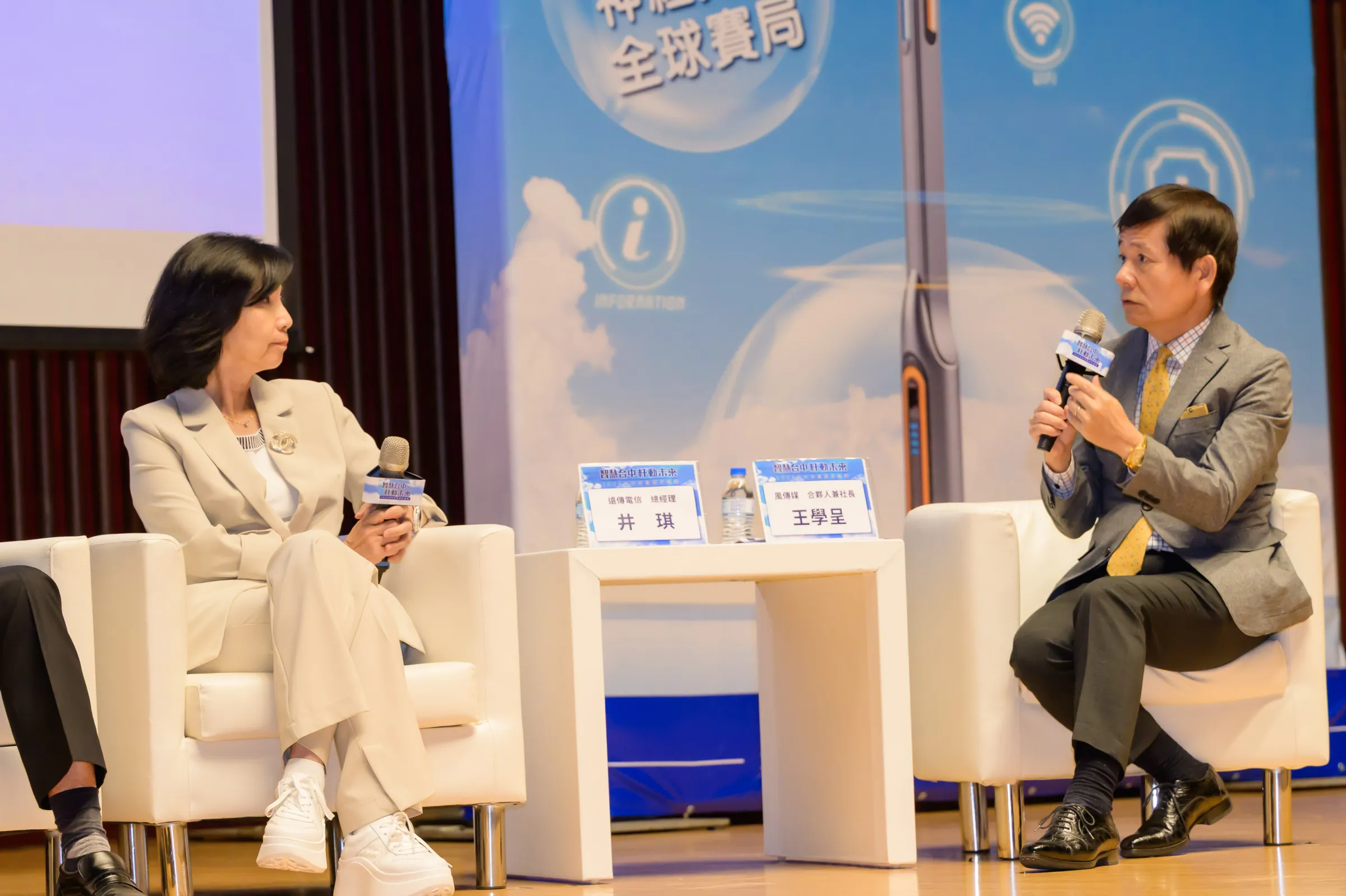
Taken together, the panelists’ views suggest that effective smart poles require manufacturers to supply equipment and integration capabilities, government agencies to identify real needs, private operators to provide connectivity and long-term services, and AI and edge computing to support data processing. The central task of cross-sector collaboration is to connect infrastructure, data and service workflows.
The discussion also highlighted the importance of execution in turning technological ideas into tangible urban results. Cities can build experience in settings with clearly defined needs while continuously reviewing service effectiveness, financial models and interdepartmental cooperation.
When technology addresses everyday problems and is jointly sustained by industry, government and operating teams, smart poles can become public infrastructure that supports better urban governance and industrial transformation—gradually turning Taichung’s industrial strengths into services that residents can truly experience. (Related: From a Streetlight to a City That Thinks:How Smart Poles Are Reshaping Urban Governance and Opening New Business Opportunities | Latest )
[Advertisement — Digital Development Bureau, Taichung City Government]