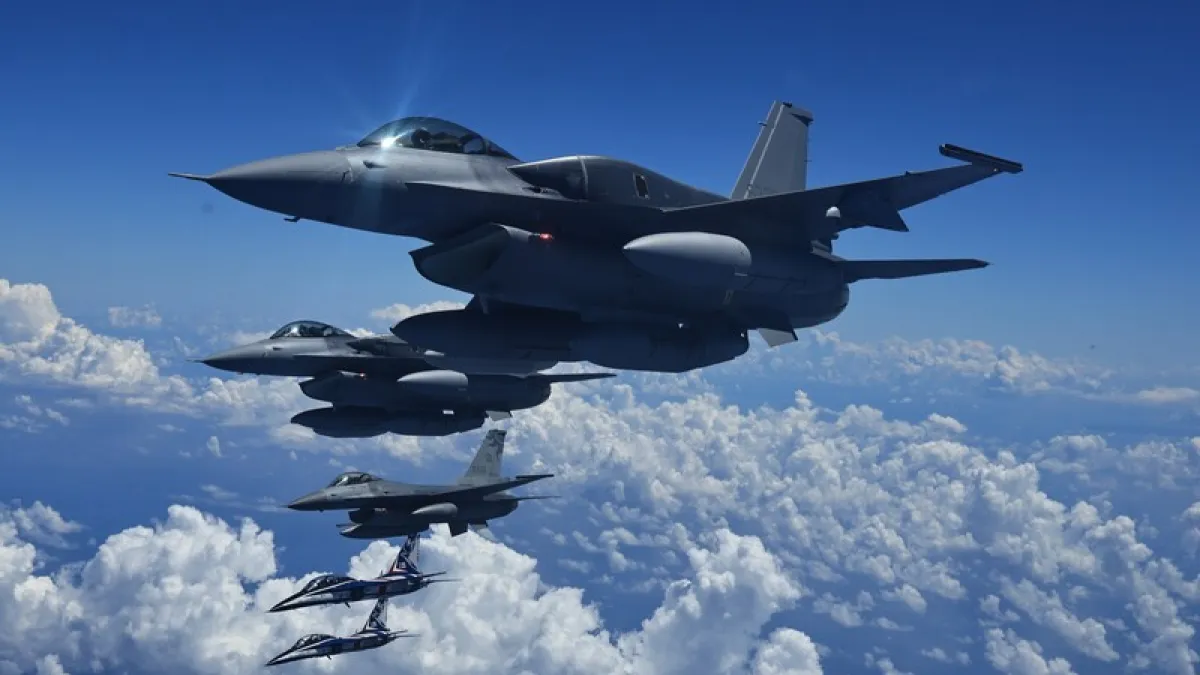
Taiwan's air force is about to field the world's largest fleet of F-16V fighters, but air force and military sources told Storm Media that the jets are being sent into an increasingly lopsided missile duel with China, carrying medium-range missiles that reach barely half as far as Beijing's PL-15.
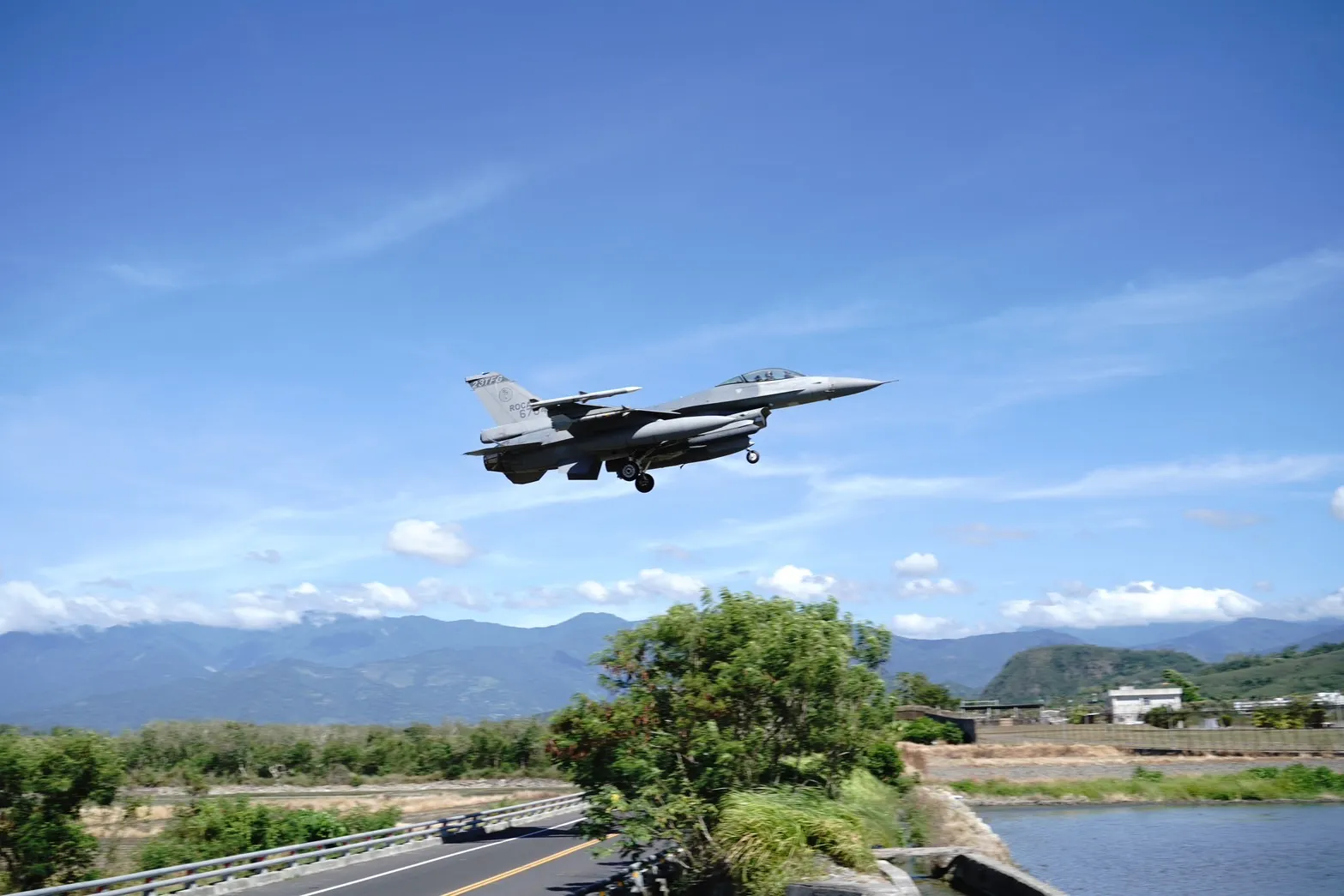
The first two of the 66 new F-16 Block 70 jets Taiwan ordered from the United States landed at Chihhang Air Base in Taitung on October 2, seven days after the September 25 summit between US President Donald Trump and Chinese President Xi Jinping. The jets had left Lockheed Martin's plant in Greenville, South Carolina, on August 17, then sat in Hawaii for roughly a month and a half, a delay that fueled political speculation and conspiracy theories in Taiwan before the aircraft finally arrived via Guam.
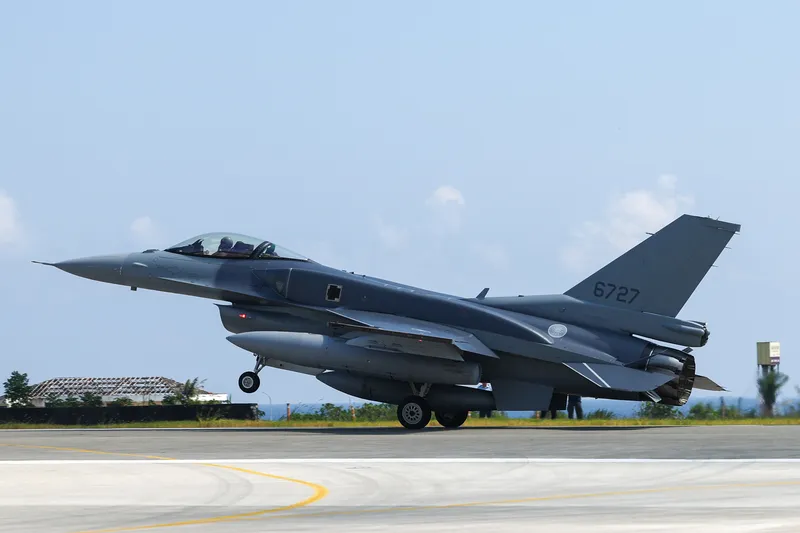
New Jets Arrived Without Their Electronic Shield
The first Trump administration approved the sale in 2019, with Taiwan budgeting NT$247.2 billion for the program. Deliveries were originally due to begin in 2023 but slipped because of the Covid-19 pandemic and systems integration problems, and the air force does not expect to have all 66 jets in hand until 2028.
The two aircraft also arrived incomplete. Their Viper Shield all-digital electronic warfare suite has yet to pass final US military integration testing and operational evaluation, so the jets were accepted without it, with the system to be fitted once it clears testing.
Even so, the Block 70 is the first brand-new frontline fighter Taiwan has received since the 1990s. It carries an AN/APG-83 active electronically scanned array (AESA) radar, the JHMCS II helmet-mounted cueing system, a high-thrust GE F110 engine, and conformal fuel tanks. Some pundits aligned with the ruling Democratic Progressive Party have hailed it as a game changer able to overpower China's J-10C and J-16 fighters and hold its own against the stealthy J-20 and J-35.
An air force source who has flown Taiwan's frontline fighters said the Block 70 is a clear step up from the F-16V Block 20, the upgraded version of Taiwan's older F-16A/Bs. Once all 66 Block 70s are in service alongside the existing 139 Block 20s, Taiwan will operate 205 F-16Vs, the largest fleet of the variant anywhere in the world.
The source said the air force is not especially worried about the missing electronic warfare suite, which he described as a matter of integration and testing that the US contractor will resolve in time. The two problems that are already eroding combat power, he said, are the steady loss of veteran pilots and medium-range air-to-air missiles that have fallen behind China's.
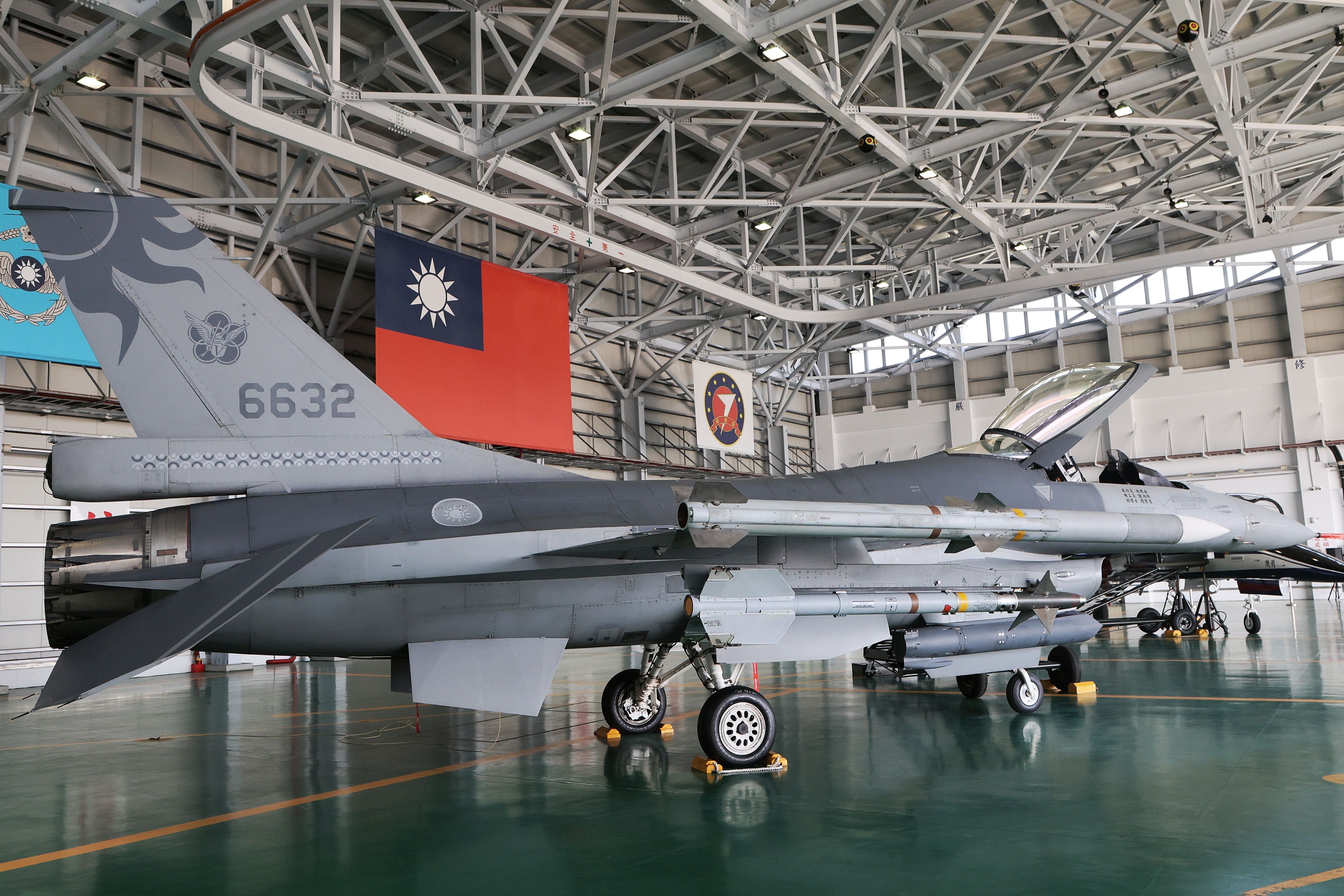
Veteran Pilots Are Leaving As New Jets Arrive
To absorb the new fighters, the air force plans to stand up a new fighter wing at Taitung, which will require at least 107 additional pilots. Yet just as the jets arrive, more experienced aviators are retiring, the source said.
Taiwan's crew ratio, the number of pilots per cockpit, is below 1.5, compared with more than 2.0 in the US Air Force. That means Taiwan has roughly four pilots for every three aircraft, while the US has at least six. As senior pilots leave, junior and newly trained aviators lose the mentors who pass on experience, making it harder to maintain training standards.
Pilot shortages can be eased with higher pay, better benefits, and lighter duty loads, the source said, which makes them a problem Taiwan can control. The missile gap is different: it decides who wins an air battle, and it can only be closed by buying abroad, with all the uncertainty over availability, quantity, and delivery that entails.
He compared the F-16V to a warrior on a fine horse wearing strong armor, its AESA radar and electronic warfare pods, but carrying a spear far shorter than the enemy's. "In a fight, he can easily lose because he cannot reach his opponent," the source said.
China's PL-15 Outranges Taiwan's AIM-120s
In modern beyond-visual-range combat, the side that detects and fires first usually wins. During the India-Pakistan air clash on May 7, 2025, a Pakistani J-10C reportedly downed an Indian Rafale with a Chinese-made PL-15 missile fired from about 180 kilometers away, one of the longest-range air-to-air kills on record.
A military intelligence source said the combat-proven PL-15 is now standard on China's J-20 and J-16 fighters. He said it has a range of 200 to 250 kilometers, an AESA radar seeker that is highly resistant to jamming, a two-way datalink, and a dual-pulse motor that lets it keep up speed while chasing a target.

Taiwan's F-16Vs still rely mainly on the AIM-120C-5 and C-7, which the source said have a range of about 105 kilometers, roughly half that of the PL-15, and lack a two-way datalink. That means another aircraft cannot take over guidance after launch. The F-16V's own radar must steer the missile toward the target, and the pilot cannot break away too early or the missile flies blind and is easily evaded.
Pilots also cannot always be sure the missile has locked on. If it has not, and the jet lingers in contested airspace, it risks being shot down in return. Against a long-range PL-15 that is hard to jam and still flying at close to Mach 3 in its final phase, the source said, both Block 20 and Block 70 F-16Vs are highly vulnerable.
Only 200 Advanced Missiles For 205 Jets
Taiwan's defense leadership recognized the problem. In March 2023, Washington approved the sale of 200 AIM-120C-8 missiles, the export version of the AIM-120D, as part of a US$619 million munitions package for Taiwan's F-16s. The air force source said the C-8 extends range by about 50% to 160 kilometers, up to 180 kilometers in certain conditions, and adds a two-way datalink and upgraded electronics. Although its seeker still uses a mechanically scanned radar, he said, its overall performance can match the PL-15.
The missiles have begun arriving and are going first to F-16Vs of the 4th Tactical Fighter Wing in Chiayi, which flies the heaviest load of Taiwan Strait patrol and alert missions. Deliveries should speed up as more Block 70s arrive, the source said.
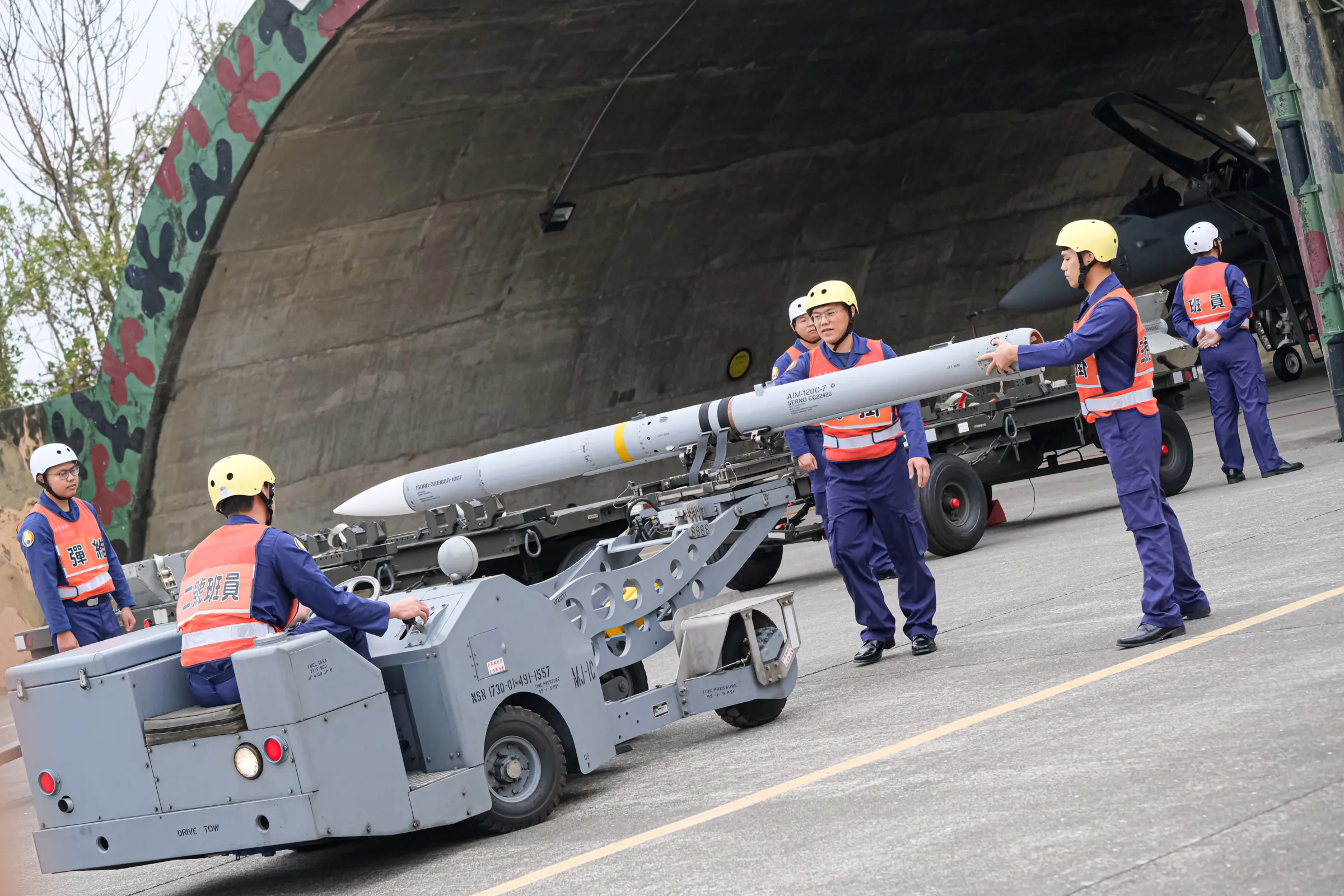
But he acknowledged that the number already delivered is small compared with a fleet of 205 F-16Vs. Jets flying missions today mostly carry AIM-120C-5s and C-7s, with at most one C-8. That is enough to handle accidental clashes arising from China's gray-zone operations, he said, but in a high-intensity air war over the Taiwan Strait, "even if all 200 AIM-120C-8s were delivered, they could be used up in a day or two."
How A PL-15 Ambush Over The Strait Would Unfold
Using the tactics Pakistan's air force employed against India as a template, since it learned its system from the Chinese air force, the source sketched how a future long-range air battle over the Taiwan Strait might unfold.
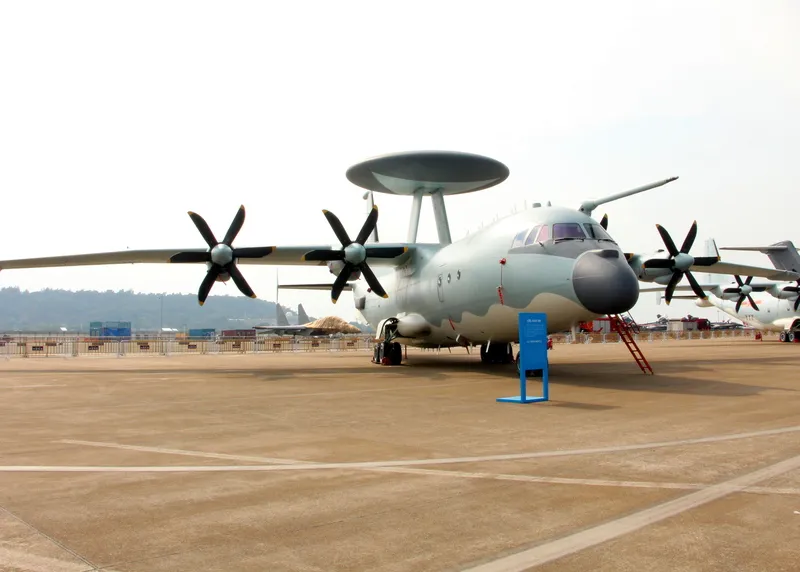
China's KJ-500 airborne early warning aircraft, with a detection range of 400 to 500 kilometers, could orbit over Fujian province and track Taiwanese fighters around the clock as they operate over the strait or take off from bases in western and eastern Taiwan. Using datalinks, it could cue J-20s and J-16s lying in wait off the Fujian coast to fire PL-15s from 150 to 200 kilometers away.
F-16Vs armed only with AIM-120C-5s and C-7s would be unable to strike back and would have to rely on electronic warfare to evade, the source said. Jets carrying AIM-120C-8s, supported by advanced electronic warfare systems, ground-based radar, and early warning aircraft, might survive the attack and still shoot down their attackers.
Germany Got Nearly Five Times As Many
Another military intelligence source questioned why Taiwan bought only 200 C-8s, fewer than the number of F-16Vs it will fly, when Washington had already agreed to sell them. The air force has held at least 400 to 500 AIM-120C-5s and C-7s since 2000, he said, and replacing them all at once would be reasonable and not especially expensive. "Was it the Americans who were unwilling, or was the military too conservative?" he asked.
He pointed out that in July 2023, four months after the Taiwan sale, the US approved up to 969 AIM-120D-class missiles for Germany. Germany hosts US troops and faces a less immediate threat than Taiwan, he said, and its fighter fleet of 138 Eurofighter Typhoons plus 35 F-35As on order is smaller than Taiwan's 205 F-16Vs. Yet Germany secured nearly five times as many advanced missiles, leaving Taiwan's air force with powerful aircraft that are, in effect, "a tiger without teeth."
Washington Releases Weapons To Taiwan Slice By Slice
A military source familiar with arms procurement said the bottleneck lies in Washington. Taiwan's military would gladly buy everything it needs in one go, he said, but the US has always sold arms to Taiwan "salami-slice" style, with close attention to the cross-strait military balance.
Before 2020, he said, Chinese fighters mainly carried PL-12 and Russian-made R-77 medium-range missiles with effective ranges of only 60 to 70 kilometers, little better than Taiwan's domestically built Tien Chien II used on its Indigenous Defense Fighters. The AIM-120C-5 and C-7 could handle that threat. Taiwan's old F-16A/B radars also could not use the C-8, so Washington saw no need to sell it until the upgrade to F-16V standard was complete in 2023.
Selling in batches is the norm for US transfers of advanced weapons to Taiwan, the source said. The AIM-120D family remains the most advanced medium-range air-to-air missile in US service, and production must first meet the needs of US forces and NATO allies. Had China not fielded large numbers of J-20s and J-16s with PL-15s as standard, tilting the air balance over the strait toward Beijing, Washington might not have sold Taiwan the C-8 at all. "Getting 200 is already not bad," he said. With more than NT$100 billion now budgeted for the purchase, he expects the C-5s and C-7s to be replaced faster in the coming years.
Taiwan Will Eventually Need The AIM-260
The missile the US is really counting on to counter the PL-15, the source said, is not the AIM-120D but the AIM-260 Joint Advanced Tactical Missile (JATM), which has completed development and entered low-rate production, with a range of 200 to 260 kilometers. Taiwan is unlikely to get it soon, he said, but once the US solves the AIM-260's integration and full-rate production challenges, it will have room to release more AIM-120C-8s to Taiwan.
A military intelligence source cautioned that arming every F-16V with the C-8 should be treated only as a short-term, minimum goal. Beyond the PL-15, China also has the PL-16 and PL-17, long-range air-to-air missiles he said perform no worse than the AIM-260. To keep a credible deterrent over the Taiwan Strait, he said, Taiwan's air force must press hard to buy the AIM-260.