China is quietly rebuilding its economy to keep running through a war, and some of its plans echo the massive inland relocation of industry that Mao Zedong ordered in the 1960s, a Washington-based expert on China's economy and technology told a conference in Taipei on October 20.
Jimmy Goodrich, a senior fellow at the University of California Institute on Global Conflict and Cooperation (IGCC), said that since the Covid-19 pandemic and Russia's 2022 invasion of Ukraine, Beijing has been preparing for what its leaders call "extreme scenarios." The goal, he said, is a "fortress economy" that can keep functioning at a moderate level under the most severe conditions, through coordinated military, economic, and social measures. For Taiwan, he warned, the implications are significant.
Xi Has Repeatedly Warned Of Extreme Scenarios
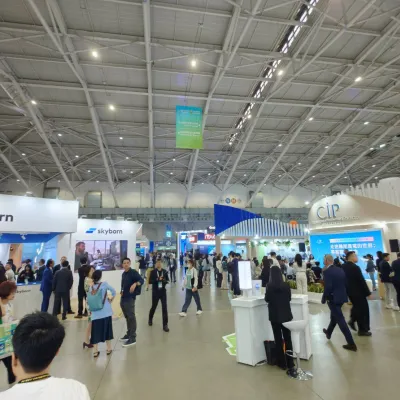
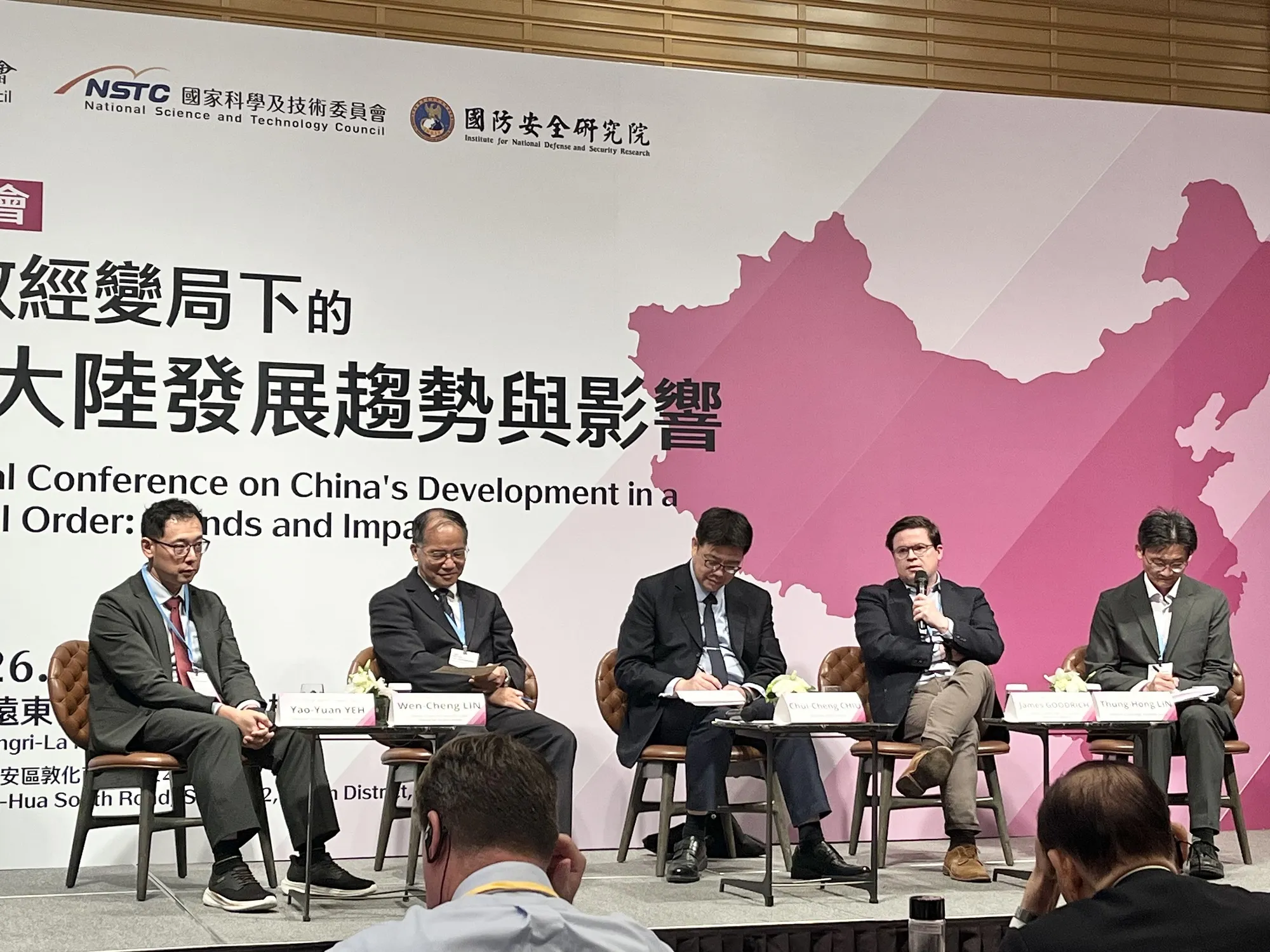
Goodrich was speaking at an international conference on trends in China's development amid global political and economic upheaval, co-hosted by the Institute for National Defense and Security Research, a think tank funded by Taiwan's Ministry of National Defense, together with the National Science and Technology Council and the Mainland Affairs Council, Taiwan's cabinet-level agency for China policy. He presented a paper titled "The Dawn of Big Science in China" and later joined a roundtable discussion.
Speaking in fluent Mandarin at the roundtable, Goodrich said the push for a fortress economy took shape after the pandemic and the war in Ukraine. "Since the 20th Party Congress, the central leadership has kept saying it must prepare for so-called extreme situations," he said, referring to the Chinese Communist Party's national congress in 2022. "Xi Jinping himself has said many times: 'We must be ready to face some extreme situations.'"
"There is no clear definition of what an extreme situation is, but some Chinese scholars have said it means a situation of war," Goodrich said. "Within that framework, Xi Jinping, Li Qiang, and many other Chinese leaders have said China needs to maintain a moderate level of economic activity under extreme conditions, build up national reserves in energy, food, and other areas, and draw up strategies for economic security and a fortress economy."
Beijing's Five-Year Plan Prepares For The Worst
Goodrich said Beijing's 15th Five-Year Plan, which covers 2026 to 2030, already contains policies along these lines. They include building a large national reserve system suited to a strong nation, and what he described as a plan to relocate critical industries to the hinterland, moving key industries and factories from China's southeastern provinces to inland regions.
"That is actually a bit like Mao Zedong's Third Front policy," he said.
"All the signs show that China is making these preparations, building a national economic, industrial, and security system to cope with extreme situations. What kind of crisis it is preparing for, everyone can guess," Goodrich said. "We realize that mainland China is preparing on every front, not only militarily and in national policy but also in industry, and this will have a major impact on Taiwan's overall security situation."

Pandemic Lockdowns Taught Beijing How To Survive A Blockade
Goodrich said China is preparing to keep the country running in extreme conditions, particularly under a blockade, and that its pandemic experience has been invaluable. "In handling city lockdowns and pandemic controls, mainland China learned how to keep the key industries of the national economy going in complicated circumstances," he said.
Those lessons, he added, will be folded into policies on "peacetime-wartime conversion," allowing Beijing to shift rapidly from normal conditions to a footing for extreme scenarios.
Mao's Third Front Moved Industry Into The Mountains
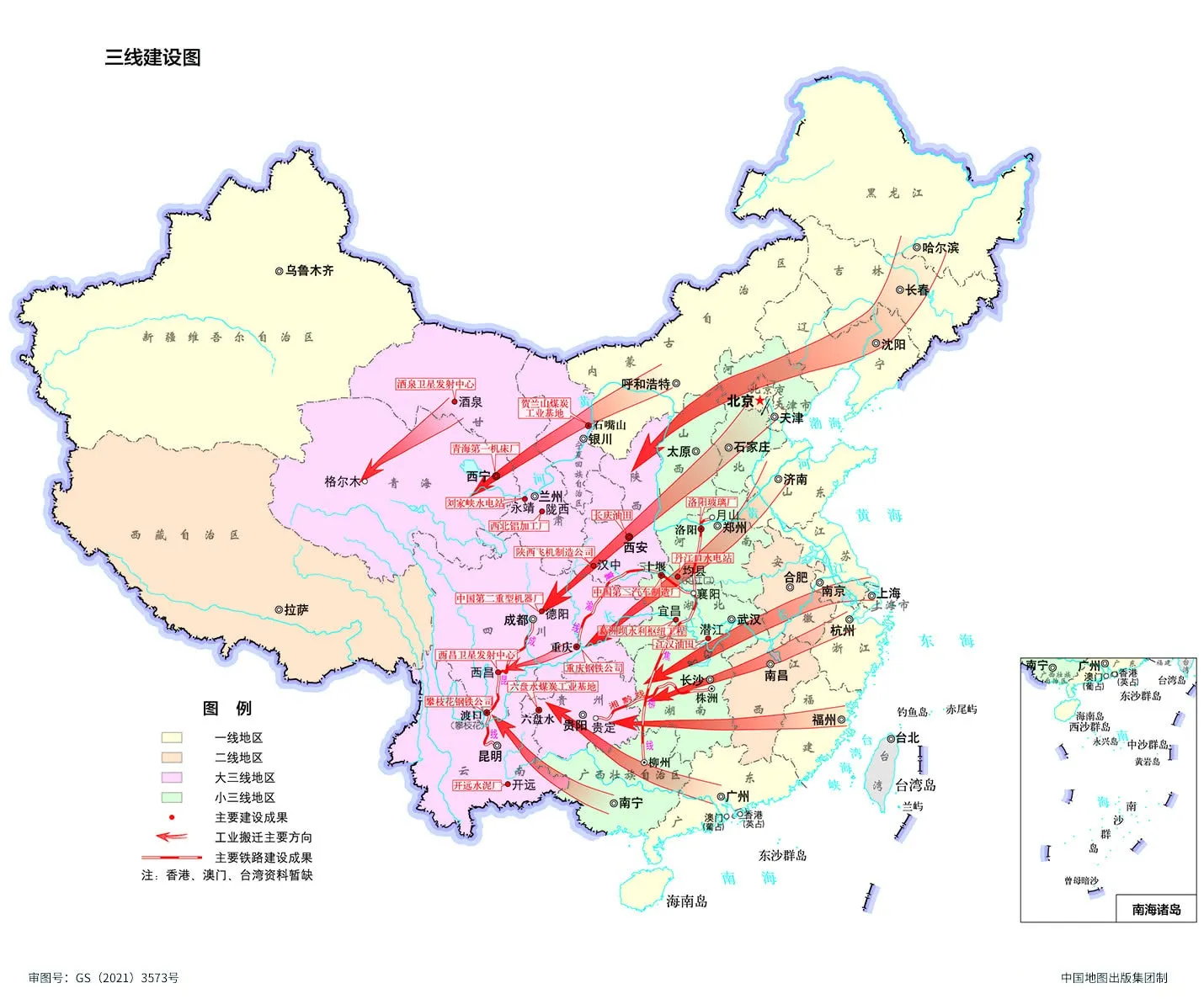
The comparison Goodrich drew points to one of the largest construction campaigns in the history of the People's Republic. According to the Chinese Communist Party's official history, the Third Front program that Mao launched in 1964 was guided by the slogan "prepare for war, prepare for famine" and spanned defense, science and technology, heavy industry, power generation, and transportation infrastructure.
Facing a tense international environment, the Sino-Soviet split, and mounting pressures at home and abroad, Mao ordered factories and strategic facilities built across 13 provinces and autonomous regions in central and western China. Sites were chosen according to the principle of being "close to mountains, dispersed, and concealed," placing plants deep in remote ranges far from major cities and transport arteries.
For the defense industry, Beijing centered the effort on Panzhihua in Sichuan province and extended it along new lines such as the Chengdu-Kunming railway toward Chongqing and surrounding areas, forming major military-industrial bases in China's southwest and northwest. The program ran roughly from 1964 to 1980.
China Has Written War Mobilization Into Law
Beijing's preparations are also taking legal form. In late August, the Standing Committee of China's National People's Congress passed a revised National Defense Mobilization Law, which took effect on October 1. The revision defines mobilization as ensuring a rapid switch between peace and war and turning economic and social strength into defense capability.
In early September, Chuang Jui-hsiung, the whip of the ruling Democratic Progressive Party's caucus in Taiwan's legislature, said that China is Taiwan's biggest threat and that writing peacetime-wartime conversion into law shows national security is no longer a matter for the defense ministry alone. Taiwan, he said, must strengthen its overall defense resilience, including military force building, asymmetric capabilities, and public awareness of national security.
"When the country that poses the greatest threat writes peacetime-wartime conversion into law so it can step up the mobilization of resources in wartime, the threat to Taiwan is in fact rising," Chuang said. "Of course we must raise our overall defense resilience and national security awareness. That is the right response."
(Related:
Exclusive | China's New Defense Mobilization Law Puts Taiwanese Investments At Risk
|
Latest
)