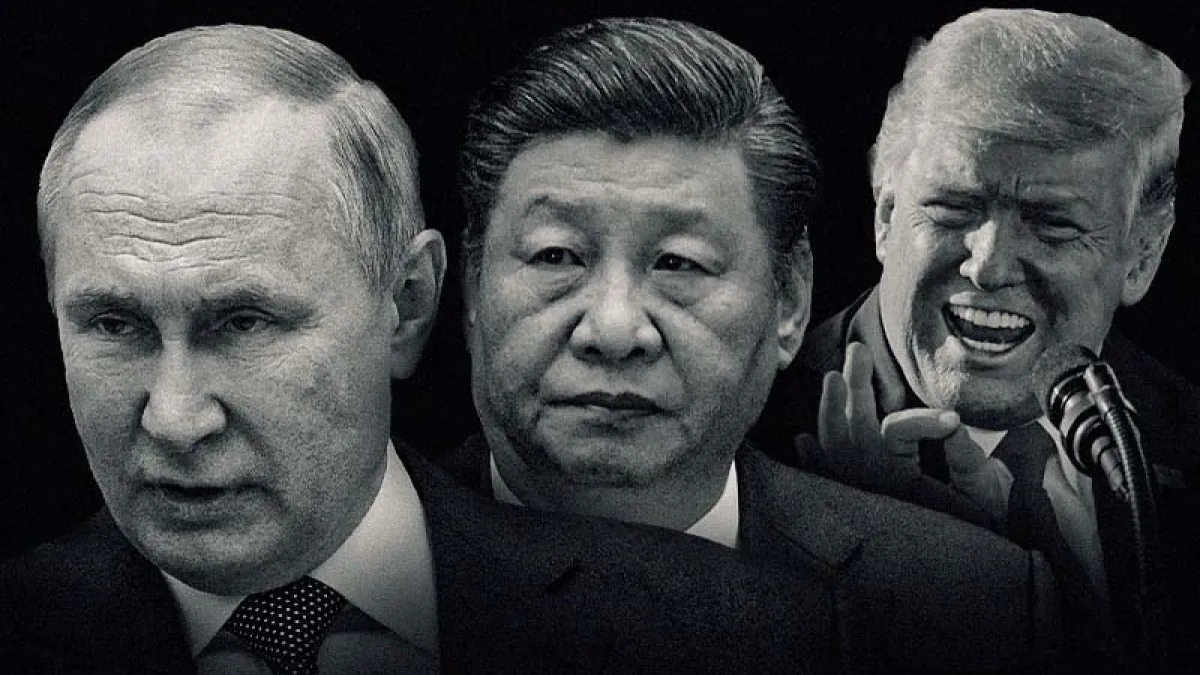
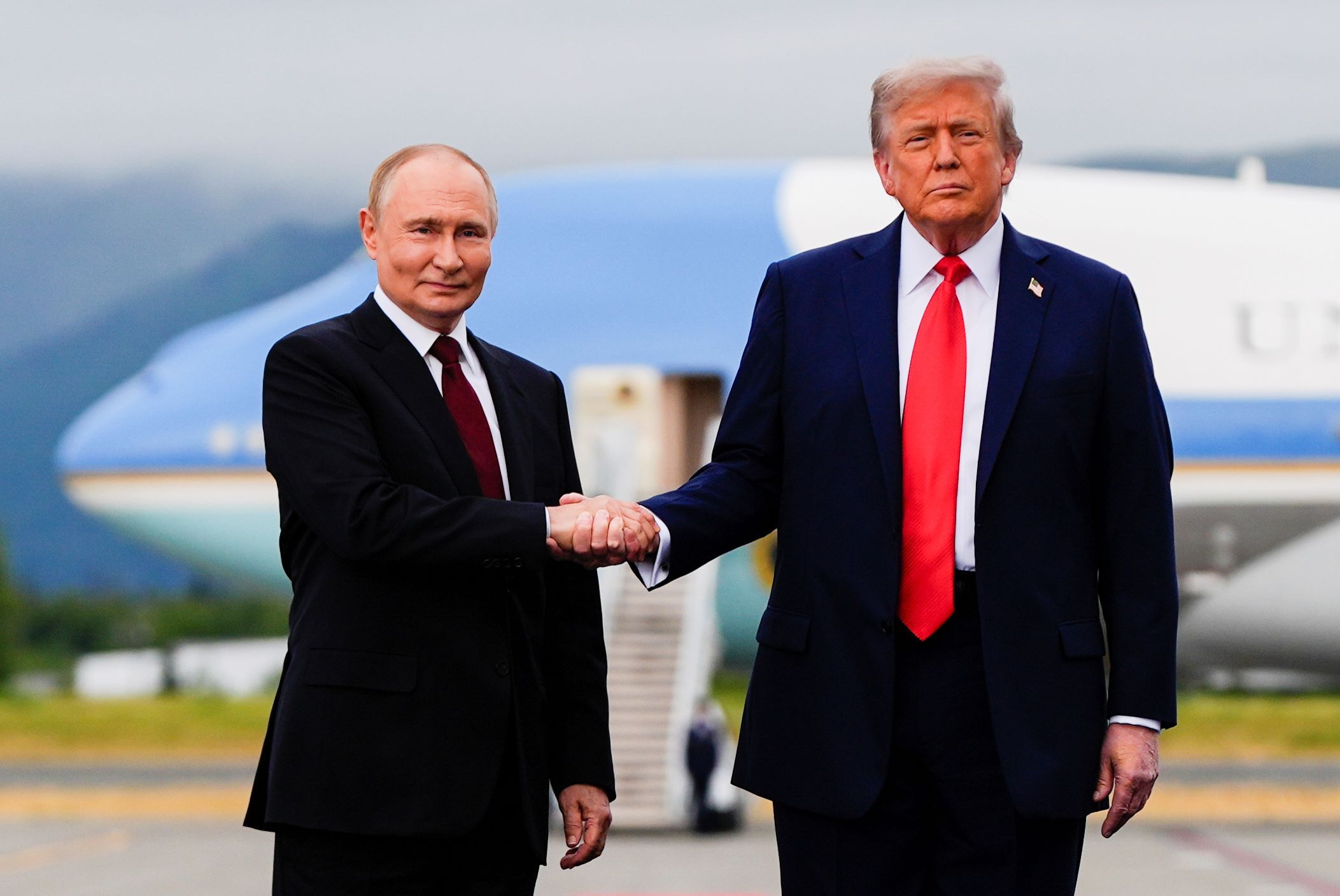
Russian President Vladimir Putin wants to settle the war in Ukraine at a three-way summit with US President Donald Trump and Chinese President Xi Jinping, and Ukraine is not on the guest list. For Taiwan, the proposal is a warning that the era of great powers carving up the world over the heads of smaller nations may be returning.
According to an exclusive report by The Wall Street Journal, Putin floated the idea during an October 9 phone call with Trump, and the Kremlin has suggested holding the meeting on the sidelines of the Asia-Pacific Economic Cooperation (APEC) leaders' summit in Shenzhen, China, on November 18 and 19. Neither Ukrainian President Volodymyr Zelensky nor any European leader would have a seat at the table.
Trump did not dismiss the idea. Asked on October 19 whether such a summit could help end the war, he said: "I would do it, not so much for Ukraine, we would have it to talk about denuclearization." In a single sentence, the country under invasion became a side issue at talks about its own future.
Ukraine Has Become A Bargaining Chip
The spectacle should alarm anyone in Taipei. When major powers decide to divide the world into spheres of influence, the countries absent from the negotiating table are the ones served up as concessions. Putin has wrapped his proposal in the language of peace, yet its central premise is that the fate of a sovereign nation can be decided without it.
Critics in the United States have reached similar conclusions. In a recent essay for The Atlantic, columnist Tom Nichols accused Trump of wavering on Ukraine in ways that serve Putin and discard the rules that have governed international conduct since 1945. Nichols went so far as to suggest that Joseph Stalin, could he see what Washington and Moscow are building today, might conclude that the Soviet Union's darkest ambitions had been right all along.
Yalta Shows What Happens To Absent Nations
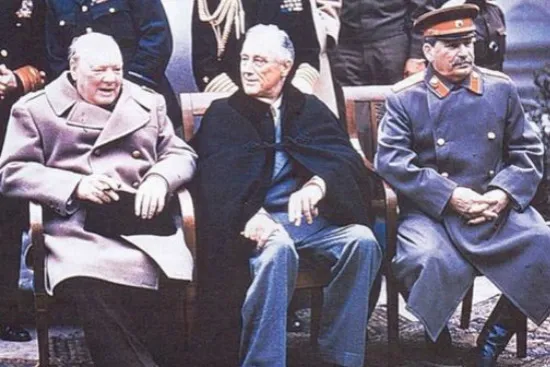
History offers an uncomfortable precedent. In February 1945, Roosevelt, British Prime Minister Winston Churchill, and Stalin met at Yalta, a resort on the Crimean Peninsula. To secure Soviet entry into the war against Japan, Washington and London agreed to hand Moscow southern Sakhalin and the Kuril Islands, along with privileged rights over the port of Lushun, then known as Port Arthur, and the Manchurian railways. They also acquiesced to a Soviet-backed government in Poland and accepted the status quo in Outer Mongolia, paving the way for its formal break from China.
The two countries that paid the highest price, the Republic of China and Poland, were never invited into the room. The Republic of China is the government that later retreated to Taiwan, and it still governs the island today.
Putin's proposed trilateral framework is a 21st-century version of that bargain: great powers raise their glasses behind closed doors while smaller states wait outside for the verdict. If "the strong decide and the weak comply" becomes the new norm, Taiwan has little reason to believe it would be spared.
Washington Is Quietly Squeezing Kyiv
Nor should anyone assume that a superpower's promises guarantee safety. Former US Secretary of State Henry Kissinger put it bluntly: "It may be dangerous to be America's enemy, but to be America's friend is fatal."
Ukraine is learning what that means. In mid-October, Ukrainian forces reported that their access to Starshield, the military satellite communications network SpaceX built for the US government, had been throttled, cutting guidance links to fast-moving drones. SpaceX founder Elon Musk said any such limits were decided by the US military and "ultimately POTUS." Zelensky has also said Kyiv received no warning from partners before a major Russian drone and missile strike, while Trump insists Washington is still sharing intelligence.
Meanwhile, Trump has waived sanctions on Russia and declined to impose the tougher penalties Congress has pushed for, and during the October 9 call the two leaders agreed on supplies of Russian diesel to the United States. The deal comes as high fuel prices weigh on Republicans ahead of the November midterm elections.
Taiwan Hears About Its Own Deals From Washington
Ukrainian soldiers are paying in blood while Washington trades with Moscow over votes and energy. Trump has shown what transactional politics looks like in practice: no commitment is permanent if the price is right. Taiwan would be naive to think it is exempt.
The signs are already visible. In an interview with Time magazine published on October 1, Trump volunteered that "the great chip company from Taiwan is spending $500 billion" in the United States. Two weeks later, at an October 14 rally in Wasilla, Alaska, he announced that Taiwan had agreed to buy 30% of the output of the planned Alaska LNG pipeline over 20 years and to invest $4.4 billion in the project. Taiwan's Ministry of Economic Affairs later confirmed an investment of up to $4.4 billion and plans to buy six million metric tons of Alaska LNG a year. Taiwanese citizens, in other words, are learning about commitments made in their name from a US president's microphone.
In Trump's ledger, Taiwan carries three labels: the island that took America's chip business, a wealthy client expected to pay for its protection, and a distant outpost too far from American shores to be worth much risk. Set against that, the Six Assurances, the pledges President Ronald Reagan's administration gave Taipei in 1982, including a promise not to consult Beijing on arms sales to Taiwan, look increasingly fragile.

The Silicon Shield Is Wearing Thin
Taiwan's semiconductor industry has long been called its "silicon shield," the reason the world cannot afford to let the island fall, and it remains Taipei's most valuable card in negotiations with Washington. But as advanced manufacturing and supply chains are pushed step by step to the United States, that shield grows thinner. A Taiwan left with little more than research centers would have far less deterrent power than it does today.
Once Taiwan loses the industrial value that makes it irreplaceable, it will have little left to put on the table when Chinese missiles are aimed across the Taiwan Strait. Taipei should not wait until the leaders of the United States, China, and Russia gather in another historic city to discover that it has already lost the right to choose.
Strategic Autonomy Is Taiwan's Real Insurance
What makes this moment a new Yalta is not simply that three great powers want to sit down together. It is that the nation whose future is at stake has no say in the outcome.
The survival and dignity of small states have never rested on the goodwill of large ones. They rest on being irreplaceable and on the capacity to make independent strategic choices. If Taiwan fails to use the leverage it still holds and settles for the role of a passive tributary in great power bargaining, it risks becoming the card that gets played when the next Yalta is quietly struck.