China has replaced the top Communist Party officials in six provinces and regions within two days and quietly swapped two senior posts at its Taiwan Affairs Office, putting a veteran of Taiwanese business affairs back in charge of the office's economic portfolio ahead of the party's fifth plenum.
The changes, announced in quick succession, touch Gansu, Qinghai, Tibet, Anhui, Henan, and Fujian. A turnover of provincial party chiefs on that scale in such a short window is unusual, and it comes as the 20th Central Committee prepares to convene its fifth plenary session on October 26.
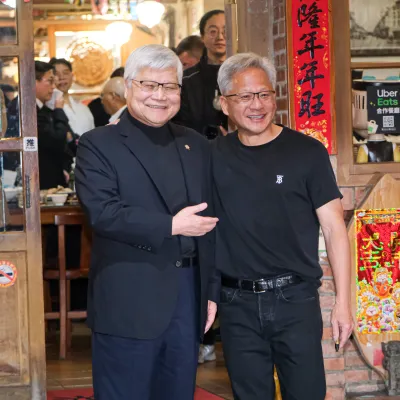
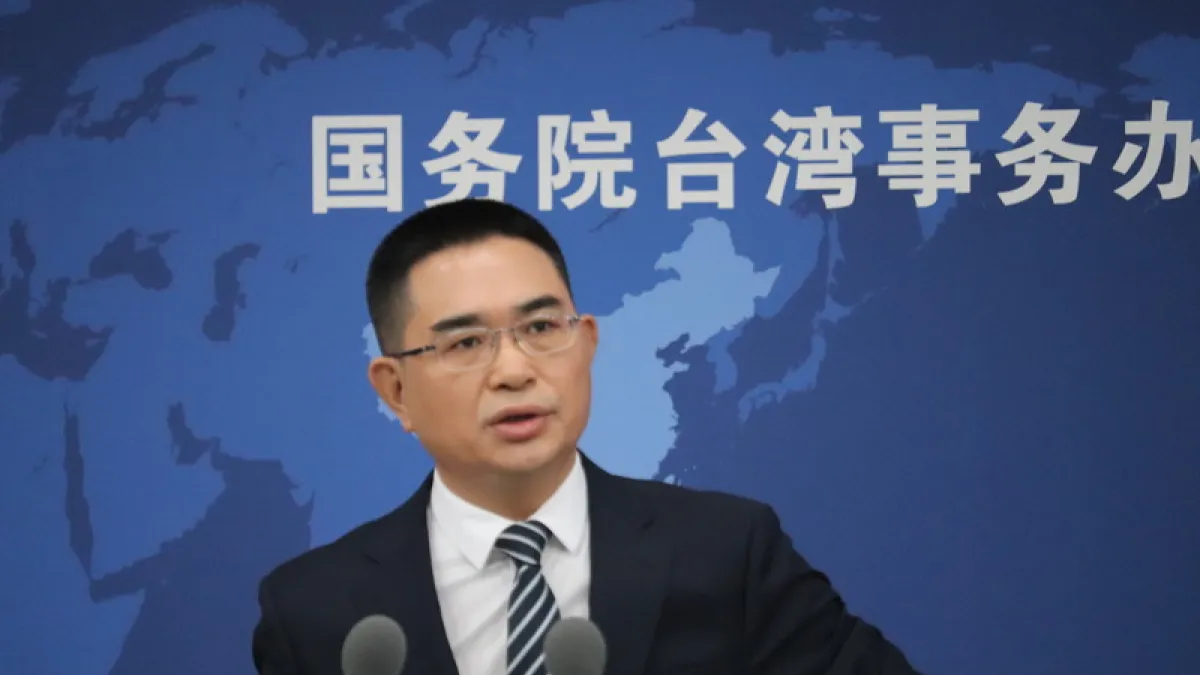
For Taiwan, the more telling move happened inside the Taiwan Affairs Office (TAO), the State Council body that runs Beijing's policy toward the island. Chen Binhua, one of the office's best known faces, is leaving the top job at its news bureau to run the economic bureau, a post that has sat without a publicly named head for most of this year.
A Familiar Spokesman Takes Over Taiwan Business Affairs
Under the swap, Chen moves from the TAO's news bureau, known internally as the Fourth Bureau, to the economic bureau, or Fifth Bureau. His old post goes to Zhang Han, director of the Hong Kong and Macao bureau (Sixth Bureau), who also serves as a spokesperson. Both moves are lateral transfers of equal rank, and Chen will keep his role as a TAO spokesman.
The new assignment returns Chen, 55, to familiar ground. A native of Zhao'an county in Fujian province and a graduate of Xiamen University's Chinese department, he began his career as a reporter for the state news agency Xinhua. In 2001, he was among the first mainland journalists allowed to be stationed in Taiwan, and he reported from across the island.
He later served as deputy director of the TAO's cross-strait research center, deputy head of its research bureau, and deputy head of the very economic bureau he will now lead. In 2023, he was promoted to run the news bureau and became a spokesman. During his earlier stint on the economic side, he dealt with coordination among Taiwanese businesspeople in China, investment disputes, and efforts to attract Taiwanese capital, and he has had contact with some leaders of the Taiwanese business community.
Economic Bureau Vacancy Filled After Eight Months
The appointment also closes a gap. Peng Qing'en, the previous head of the economic bureau, was promoted to TAO deputy director in February 2026, and no successor was publicly announced. Deputy bureau chiefs Tu Xiong and Zong Wen largely handled the bureau's work in the interim.
Putting a seasoned spokesman with business ties in the job could signal that Beijing intends to lean harder on economic outreach to Taiwanese companies and investors, an approach often described as economic united front work. Storm Media's analysis notes that the significance of the swap lies less in who is leaving the news bureau than in who is returning to the economic one.
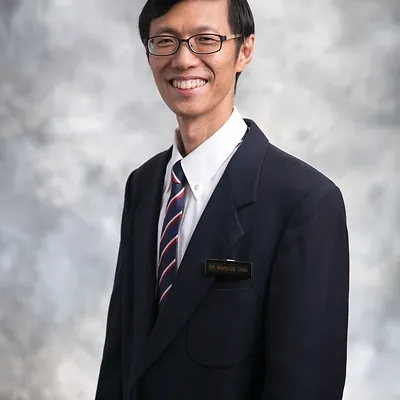
Zhang Han brings a different profile to the news bureau. She previously worked in the communication bureau of the Communist Party's International Department, where she rose to head of its news division and then deputy bureau chief, building experience in foreign propaganda and press briefings. She joined the TAO in 2024 and hosted her first press conference as a spokesperson in November 2025. Her appointment has been read as an effort to integrate Beijing's Taiwan messaging more closely with its handling of Taiwan related affairs in Hong Kong and Macao.
The changes have not yet been reflected publicly. As of this writing, the TAO website still lists three spokespersons, Chen Binhua, Zhu Fenglian, and Zhang Han, with no updated titles, suggesting the reshuffle remains at an internal stage.
Fujian and Henan Leadership Moves Show Beijing's Priorities
Among the provincial changes, the linked moves in Fujian and Henan stand out. Zhou Zuyi, the party secretary of Fujian, has been transferred to lead Henan, while Fujian Governor Zhao Long has been promoted to party secretary of the same province.
Fujian, which faces Taiwan across the strait, is Beijing's frontline province for cross-strait policy, and promoting from within keeps its leadership stable and continuous. Henan, one of China's most populous provinces and a major economy, appears to have been handed an experienced leader with strong coordinating skills.
Storm Media has previously reported that the reshuffles in Tibet, Qinghai, and Gansu reflect not only economic considerations but also Beijing's campaign against what it calls separatism in its western frontier regions.
A Younger Generation Positions for the 21st Party Congress
The reshuffle also accelerates a generational shift. China now has nine provincial party secretaries born in 1965 or later, among them Zhou Zuyi, Wu Xiaojun, Luo Dongchuan, Li Lecheng, and Zhao Long. Several have held full ministerial rank for five years, making them potential contenders for seats on the Politburo at the next party congress.
The latest round of appointments combines routine retirements of officials reaching the age limit with room being cleared for younger cadres who have served in more than one province. With the 21st Party Congress expected in 2027, the posts these officials secure over the coming year will begin to sketch the outline of China's next leadership lineup.
(Related: Beijing Watch | China's Fifth Plenum Becomes A Military Purge Tribunal As Seven In Ten Generals Are Ousted | Latest )