Japan will finance up to US$21 billion in new chip fabs for U.S. foundry GlobalFoundries (GF) in Malta, New York, turning part of the investment pledge Tokyo made to win lower tariffs from President Donald Trump into factories on American soil. GF announced the plan on October 14.
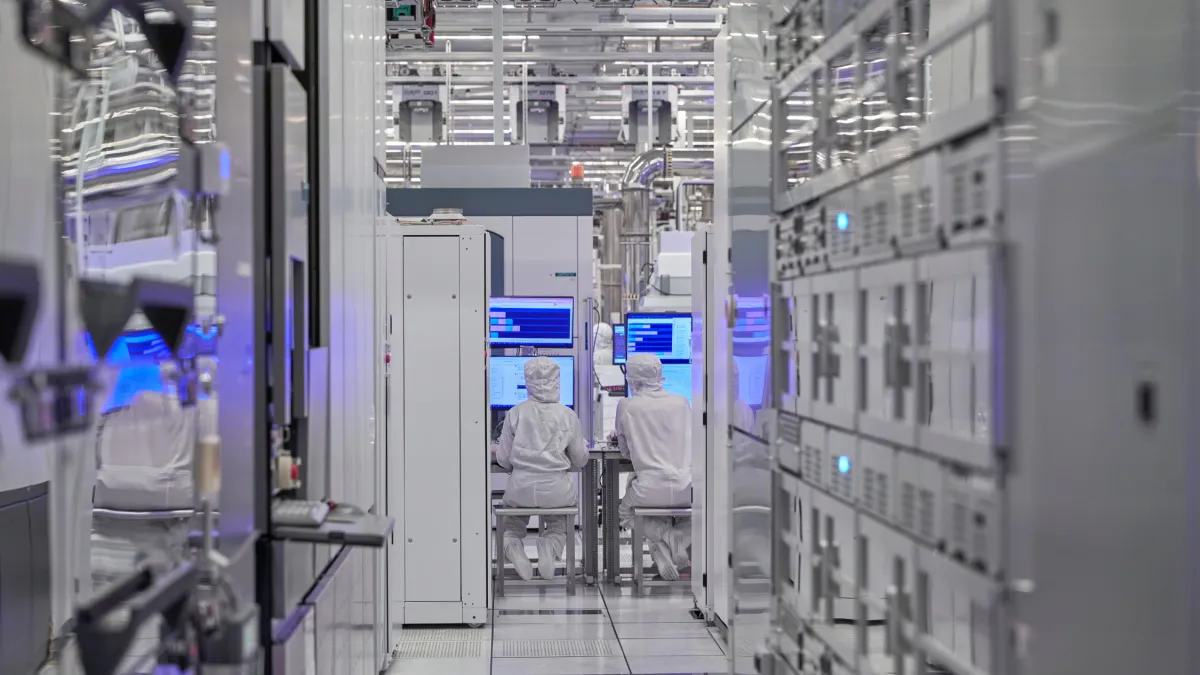
The project calls for as many as two 300-millimeter (12-inch) wafer fabs at GF's existing Malta campus. Japan will provide the capital, the plants will be jointly owned by the U.S. government and Japanese interests through a project company, and GF will supply the manufacturing technology and run the fabs. Each fab is expected to add about 900,000 wafers of annual U.S. capacity when fully operational. GF said the project will create about 27,000 construction and ecosystem jobs and more than 1,000 high-skilled manufacturing jobs in New York's Capital Region.
First Malta Fab Targets 2029 Production
Only the first fab is firmly committed. It is valued at about US$10 billion, and GF expects to break ground at the permitted, shovel-ready Malta site later this year, with the fab coming online in 2029.
A second fab, also worth about US$10 billion, is still an option. Japan, the United States, and GF expect to decide by the end of 2028 whether to build it, which makes the US$21 billion figure a ceiling rather than a confirmed total.
Tariff Deal Turns Japanese Pledges Into Factories
The fabs grow out of the 2025 trade agreement between Tokyo and Washington. The United States cut tariffs on most Japanese goods, including cars, to 15%, and Japan in return pledged up to US$550 billion in U.S. investment across sectors such as semiconductors, energy, and pharmaceuticals.
That money is not a cash transfer from the Japanese government. Under the framework, Japan's state-backed policy finance institutions mainly provide equity, loans, or guarantees. The specific financing terms for the GF project have not been disclosed.
The GF fabs are the third batch of projects under the framework and the first involving semiconductor manufacturing. The first two batches were largely power plants and other energy facilities.
Tokyo Electron, TOK, and Renesas Line Up For Business
Tokyo expects its own companies to profit from the money it puts up. Japan's Minister of Economy, Trade and Industry Ryosei Akazawa said on October 15 that the two countries can cooperate in semiconductors, a strategic field for economic security, to build a resilient supply chain. According to TV Asahi's ANN news network, he also said the project would bring major benefits to Japanese companies.
The Nikkei reported that Tokyo Electron is interested in supplying manufacturing equipment, Tokyo Ohka Kogyo (TOK) in supplying materials such as photoresists, and Renesas Electronics in buying chips from the new plants. GF CEO Tim Breen told Reuters that Renesas and Apple will be among the fabs' initial customers, and that GF has "a strong interest in the Japanese equipment suppliers to be part of it."
"We are planning around GF's new capacity in New York as an extension of Renesas' own production footprint, trusted U.S.-based manufacturing backed by a strong U.S.-Japan partnership," Renesas CEO Hidetoshi Shibata said in GF's announcement. Tokyo Electron President and CEO Tony Kawai said the company has supported GF's manufacturing operations "across its global sites for many years" and is "pleased to contribute to expanding advanced semiconductor production capacity in the United States."
U.S. customers also lined up behind the project. Apple Chief Operating Officer Sabih Khan said GF produces "essential chips for Apple products right here in the United States," while Cirrus Logic and General Motors also issued statements backing the new Malta capacity.
Washington Raises Its GlobalFoundries Stake To 7%
The deal also deepens the U.S. government's role as a GF shareholder. Under a separate agreement, the Commerce Department will receive equity of approximately 4% in the company, bringing the government's total holding to about 7%. GF also agreed with the Commerce Department to amend its existing CHIPS and Science Act award, reallocating US$955 million to speed investments in silicon photonics, silicon-germanium (SiGe), and advanced packaging at its Malta and Burlington, Vermont, facilities.
GF will not pay to build the fabs. Instead, it will earn fees for licensing its technology, managing construction, and operating the plants, revenue the company expects to last at least 20 years.
Why GF's Fabs Pose Little Threat To TSMC AI Orders
For Taiwan, the immediate question is what the project means for Taiwan Semiconductor Manufacturing Co. (TSMC), the world's largest contract chipmaker. The two companies serve largely different markets in the United States.
TSMC's Arizona operations focus on advanced AI chips. Its first Arizona fab is in volume production on 4-nanometer technology, while 3-nanometer and 2-nanometer output will come from later fabs. GF's Malta expansion targets chips for automotive, industrial, and communications applications, which typically rely on mature and specialty processes rather than the leading edge. That makes it unlikely GF will win the AI chip orders Nvidia and AMD place with TSMC in the near term.
GF Will Also Make Silicon Interposers For TSMC
The relationship between the two foundries is also becoming more intertwined. Days before the Japan-funded fabs were announced, GF signed a five-year, US$2 billion agreement to produce silicon interposers for TSMC at Malta. An interposer is a thin slab of silicon that sits beneath the GPU and its high-bandwidth memory (HBM) stacks and carries signals between them. GF said Malta is expected to become the first U.S.-based source of silicon interposers for TSMC's CoWoS (Chip on Wafer on Substrate) advanced packaging.
That leaves GF competing with TSMC for customers in some specialty processes while also manufacturing components for it. Volume production of the interposers is expected to begin ramping in the first half of 2028.
A Fuller U.S. Chip Supply Chain Takes Shape
Taken together, the pieces point to Washington's broader goal of bringing the entire semiconductor supply chain onshore. TSMC makes advanced AI chips in Arizona, GF makes automotive, industrial, and communications chips in New York while supplying interposers to TSMC, and Japanese firms are positioning to provide equipment and materials.
More U.S. suppliers mean TSMC's Arizona fabs can source more of the parts they need inside the country, with interposers as one example. The same suppliers also give chips that do not require leading-edge processes a U.S. manufacturing option other than TSMC. The first Japan-funded Malta fab is scheduled to begin production in 2029.
Original Article In Chinese (Related: Japan Floats U.S. Listing for Rapidus as It Chases TSMC on 2nm | Latest )