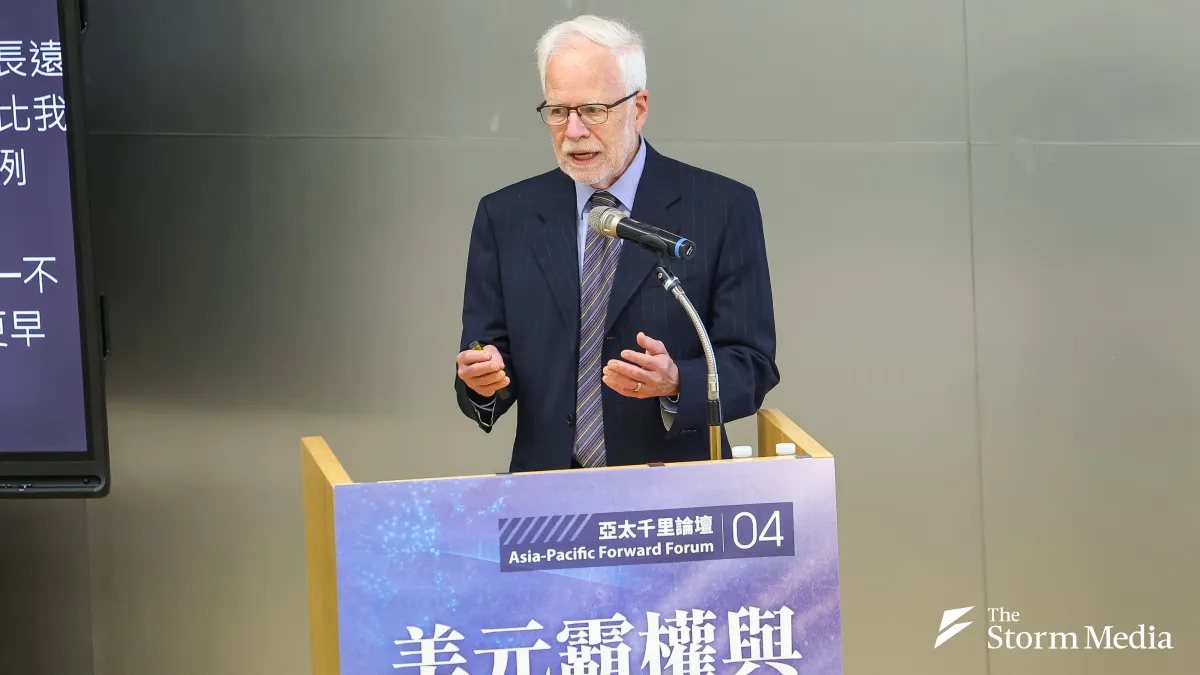
The biggest danger to the U.S. dollar's global dominance is coming from Washington, not Beijing, University of California, Berkeley economist Barry Eichengreen told a Taipei audience, pointing to ballooning federal debt, President Donald Trump's tariffs, and political pressure on the Federal Reserve.
Eichengreen, one of the world's foremost historians of the international monetary system, said a gradual slide in the dollar's standing would be manageable. What worries him is a sudden collapse in confidence that strikes before any rival currency is ready to step in, leaving the world economy starved of liquidity.
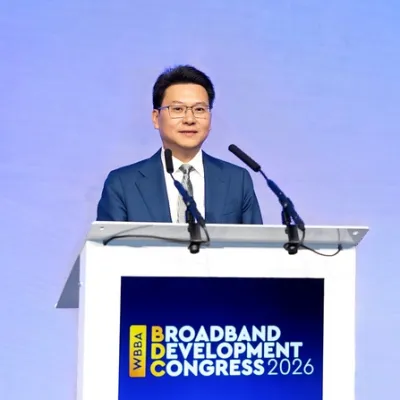
He delivered the warning at the fourth session of the Asia-Pacific Forward Forum, which this time focused on dollar hegemony and the contest for influence in the Asia-Pacific.
A Currency Built On Trust As Much As Size
By Eichengreen's count, the dollar is on one side of roughly 90% of all foreign exchange transactions worldwide, and more than half of the reserves held by central banks and governments sit in dollar securities and deposits. Most global exports and imports are also invoiced and settled in dollars, including trade that never touches the United States.
Part of the explanation is scale. The U.S. is the world's largest economy, and its roughly $40 trillion Treasury market is the single largest and most liquid securities market in the world, fully open to foreign investors. Habit does the rest: because so many traders and investors already use dollars, newcomers do the same.
But Eichengreen stressed that economic heft and a central bank able to backstop markets are only part of the story. Reserve currency status also rests on political foundations: the separation of powers and the rule of law at home, and strong alliances abroad. Those are precisely the pillars he sees under strain.
Frustration with the system is not new. When foreign finance ministers voiced their complaints in 1971, then-Treasury Secretary John Connally famously replied, "It's our currency but your problem." What has changed, Eichengreen said, is that alternatives now exist. Some erosion is already visible in the dollar's share of global reserves, in the share of Treasuries held by foreign investors, and in the disappearance of the "convenience yield" that once let Washington borrow more cheaply. So far the decline has been gradual, he said, but it could accelerate.
Washington's Debt Math Alarms Foreign Creditors
Eichengreen cited fiscal projections showing that interest payments could swallow one third of all federal revenue by 2050. In other words, roughly $1 of every $3 the government collects would go to servicing its debt.
The numbers alone are not the core problem, he argued. Deep political polarization makes it hard for Congress to agree on tax increases or spending cuts, which feeds a fear among foreign investors that the U.S. will eventually inflate away the real value of its debt. For a foreign central bank, a Treasury bond that pays interest and principal on time can still lose real value if inflation erodes the dollar's purchasing power.
Trump's Tariffs Weaken A Key Reason To Hold Dollars
Because a currency's global role depends in part on trade ties, Eichengreen said, Trump's tariffs raise doubts about America's commitment to open commerce. He summed up the question other governments may now be asking: "If America is not going to trade with us, why should we hold dollars?" China, he noted, has already trimmed its dollar holdings.
That does not mean higher tariffs will dethrone the dollar overnight, given the size of U.S. financial markets and the reach of dollar payment networks. But as trading relationships shift, countries may gradually rebalance their reserves and payment arrangements.
Washington's growing use of financial sanctions adds to the pressure. The "weaponization" of the dollar against Russia and others, Eichengreen said, is widely expected to intensify the search for alternatives. Data he presented showed that talk of "dedollarization" in the world's newspapers is concentrated in countries not aligned with the U.S., and that such talk has been associated with the fading of the Treasury market's convenience yield.
Pressure On The Fed Strikes At The Dollar's Core
Compromising the independence of the Federal Reserve, Eichengreen warned, could damage the confidence of foreign investors. If they come to believe interest rate decisions are driven by politics rather than inflation and growth, they may reprice the risk of holding dollar assets.
He pointed to the Justice Department subpoenas served on the Fed earlier this year in a probe targeting then-Chair Jerome Powell, an investigation that was later dropped. He also cited continuing efforts to remove Fed Governor Lisa Cook and proposals to change how the presidents of the regional Federal Reserve Banks are appointed.
Financial regulation is another concern. According to Eichengreen, the Fed has cut back its supervisory staff, "lightened" its periodic bank stress tests, and proposed lowering the supplementary leverage ratio for the largest banks, even as risks build in corners of the market such as private credit.
Alliances Are The Dollar's Hidden Pillar
History, Eichengreen argued, shows that governments prefer to hold the currencies of their security partners. In the 1960s, West Germany and Japan supported the dollar partly because they valued their defense alliances with the United States. In the 1970s, Saudi Arabia agreed to recycle its oil export earnings as dollar deposits in New York in exchange for American security guarantees.
He questioned whether such bargains could survive U.S. threats to withdraw from NATO. The point carries particular weight in Asia, where Taiwan, Japan, South Korea, and other U.S. partners hold large dollar reserves and depend on American security commitments. If trust between Washington and its allies weakens, more of them may choose to diversify their reserves and payment channels.
No Rival Is Ready To Replace The Dollar
Eichengreen was blunt about the alternatives. The euro, he said, has been "something of a damp squib," held back by existential doubts and a shortage of safe, liquid assets. China's renminbi, despite being the currency of the world's leading trading nation, accounts for barely 2% of global reserves and less than 4% of cross-border payments, and its share of foreign exchange trading is not even one tenth of the dollar's. China's financial markets are still not fully open to the world.
Gold has made a comeback because it is safe from sanctions when stored at home, but its price is volatile, it pays no interest, and it is clumsy for actual payments. Nontraditional reserve currencies have absorbed about three quarters of the reserve share the dollar has lost over the past 25 years, yet they lack the scale to replace it.
Project mBridge, a shared digital currency platform run on a single blockchain by a group of central banks, had logged about 4,000 transactions worth a cumulative $55 billion by November 2025, the latest data available. A Bank of China estimate puts about 95% of those transactions in renminbi, worth roughly $44 billion. That is a drop in the bucket next to the more than $5 trillion that moves through SWIFT every day. Eichengreen added that the members still have to agree on who regulates the platform and how votes are weighted, and that China would likely insist on voting by country size. That would reinforce the impression that mBridge is a China-led project and make U.S. participation unlikely.
Eichengreen Warns Of A 1930s Style Liquidity Squeeze
Eichengreen closed by laying out two scenarios. In the first, the dollar's dominance keeps eroding slowly, the constraints holding back the euro, renminbi, and other currencies gradually ease, and the global system has time to become more multipolar.
In the second, confidence in the dollar breaks abruptly, and official and private holders flee before alternatives are ready. Central banks holding fewer reserves would have less capacity to steady exchange rates or act as lenders of last resort in foreign currency, making credit for trade and investment more expensive. The result, he warned, could be a global liquidity shortage reminiscent of the 1930s, one that would put globalization as we know it at risk.
He raised the 1930s comparison as a question about an extreme case rather than a forecast. "Let's hope for the first scenario," he said.
The larger takeaway, in his telling, is that the dollar's future depends less on when the renminbi might catch up than on whether Washington can keep the world's trust in its fiscal policy, its central bank, and its alliances. (Related: US Treasury Doubles Bond Buybacks as Bessent Battles Rising Yields | Latest )
Original Article In Chinese: 不是人民幣!美元霸權最大威脅竟來自「它」?柏克萊教授揭「3大隱憂」:美債只是其中之一