China's decision to sanction two serving cabinet ministers from Taiwan's diplomatic allies marks an escalation in Beijing's campaign to isolate Taipei, but its own track record suggests the penalties will bite far less than they bark.
On October 12, Beijing labeled Paraguay's Minister of Information and Communication Technologies Gustavo Villate and Belize's Foreign Minister Francis Fonseca "anti-China politicians." Under China's Anti-Foreign Sanctions Law, any assets the two hold in China are frozen, Chinese organizations and individuals are barred from dealing with them, and both are refused visas and entry to mainland China, Hong Kong, and Macau. It is the first time Beijing has targeted sitting ministers of Taipei's allies. Neither man is likely ever to have planned a trip to China.
Beijing Has Run Out Of Allies It Can Easily Poach
The sanctions are best understood as the product of diminishing returns. Since the Democratic Progressive Party (DPP) took power in 2016, Beijing has waged a sustained campaign to strip Taiwan of formal recognition, cutting its roster of diplomatic allies from 22 to 12, a pace of defections far faster than under former President Chen Shui-bian. It has also shut Taiwan out of international bodies and pressed countries without formal ties to rename "Taiwan" representative offices as "Taipei" offices.
Zero-sum games eventually hit a ceiling. The governments that could be persuaded to switch sides have largely switched. Those that remain are the hard cases, and every additional defection costs more. US President Donald Trump's "America First" posture has raised that price sharply in the Western Hemisphere. Washington now treats Latin America as its own backyard, applying pressure on everything from the Panama Canal to Chinese-funded port projects across Central and South America.
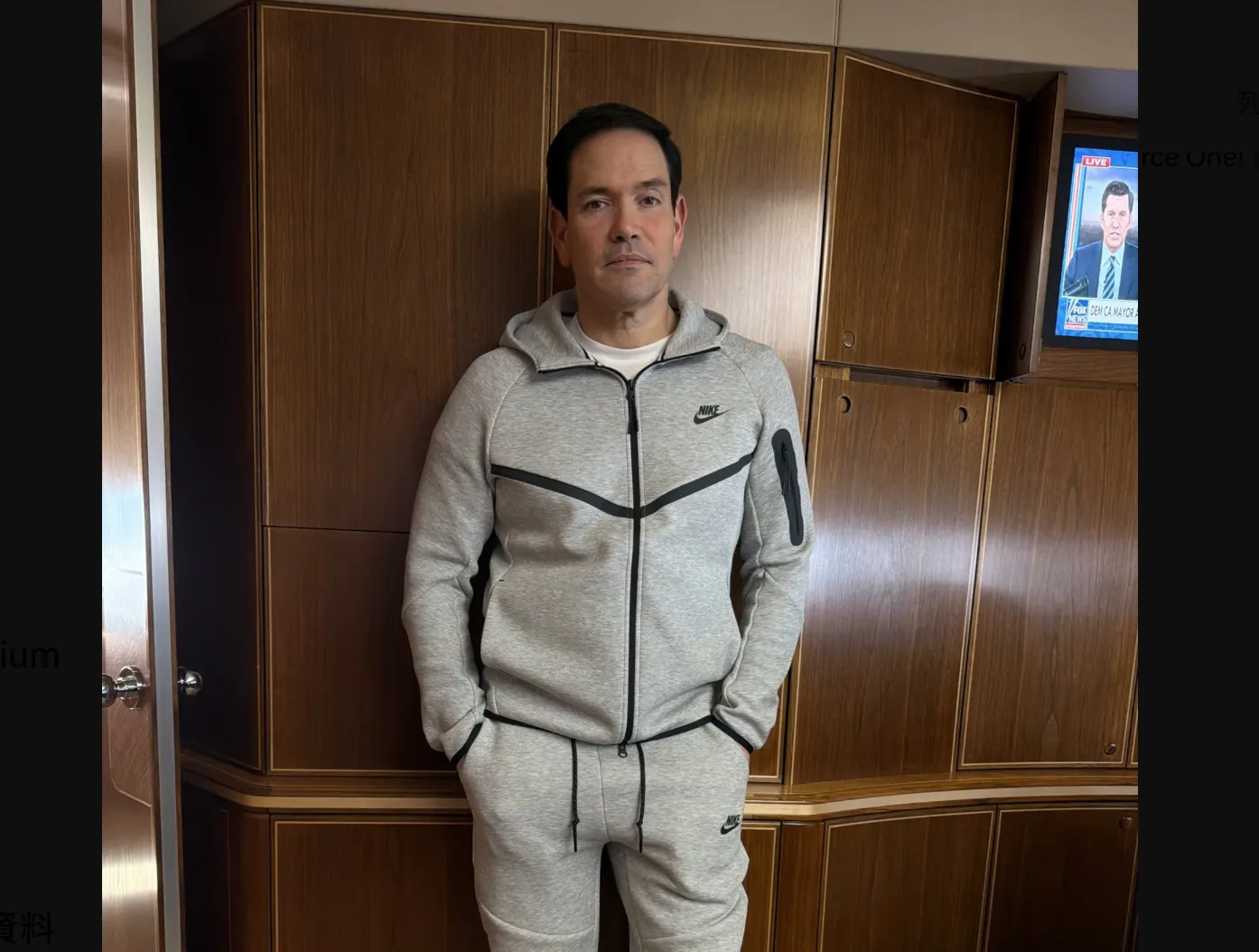
A Renamed Rubio Walked Straight Into Beijing
With whole countries harder to win over, Beijing has turned to what it calls precision sanctions against individuals. The toolkit has grown steadily since the Anti-Foreign Sanctions Law took effect in 2021. In 2024, Beijing issued 22 guidelines on punishing "diehard Taiwan independence separatists," and it has placed figures including Vice President Hsiao Bi-khim, former Foreign Minister Joseph Wu, and DPP lawmaker Puma Shen on its blacklists, complete with bounties and wanted notices. Extending that reach to foreign cabinet ministers looks like an upgrade in deterrence. In practice, it reflects a diplomatic toolkit that is running low.
The record of these measures is thin. US Secretary of State Marco Rubio was sanctioned by Beijing twice and should, by its own logic, be persona non grata. Yet when Trump led a large delegation to Beijing, Rubio walked through the front door with everyone else, dressed in the same style of gray tracksuit Venezuelan leader Nicolás Maduro was wearing when he was captured. Faced with its own sanctions order, Beijing quietly changed the first Chinese character used to transliterate his surname in official documents, as if a new spelling made the sanctioned man disappear. It was a piece of self-deception worthy of Ah Q, the hapless antihero of Lu Xun's classic satire.
Shen's Family Business Kept Trading Through A Shell
The case of Puma Shen, now the DPP's candidate for Taipei mayor, is more pointed still. Beijing has branded him a diehard separatist and threatened him repeatedly. Ta Kung Wen Wei, a pro-Beijing media outlet in Hong Kong, went further, reporting that Shen's father had profited handsomely from business in China.
The irony lies in the outlet's own findings. According to the report, after Beijing sanctioned the father's company, the business simply set up an offshore shell company and kept trading with mainland China without interruption. Between January 2022 and March 2026, that trade totaled about US$1.29 million. If Beijing cannot enforce sanctions against the family of its most loudly denounced target, it is hard to see how they will constrain ministers in Asunción or Belmopan.
Why Beijing Timed The Move Around Taiwan's National Day
If the practical damage is so slight, why stage the show at all? Three calculations stand out.
The first is deterrence aimed at the next generation of leaders. Beijing cannot quickly change how allied states are governed, but it can cast a shadow over the careers, business prospects, and family interests of politicians who back Taipei. The message is meant less for Villate and Fonseca than for ambitious figures in Paraguay, Belize, and other allies who hope to tap the Chinese market: supporting Taiwan comes with a personal price.
The second is timing. Villate had just posted warm congratulations on social media for Taiwan's National Day on October 10, and Belize's embassy had just marked the 37th anniversary of diplomatic ties with Taipei. Striking at that moment fits Beijing's habit of choosing sensitive dates to amplify intimidation and drown out allies' goodwill with political noise.
The third is a test of international tolerance. This is lawfare on trial. If Paraguay and Belize absorb the blow quietly, and if Washington looks away, cross-border long-arm jurisdiction could become a routine instrument, extended next to officials in other allied states, to pro-Taiwan legislators in Europe and the United States, and eventually to leaders of nongovernmental organizations that work with Taiwan.
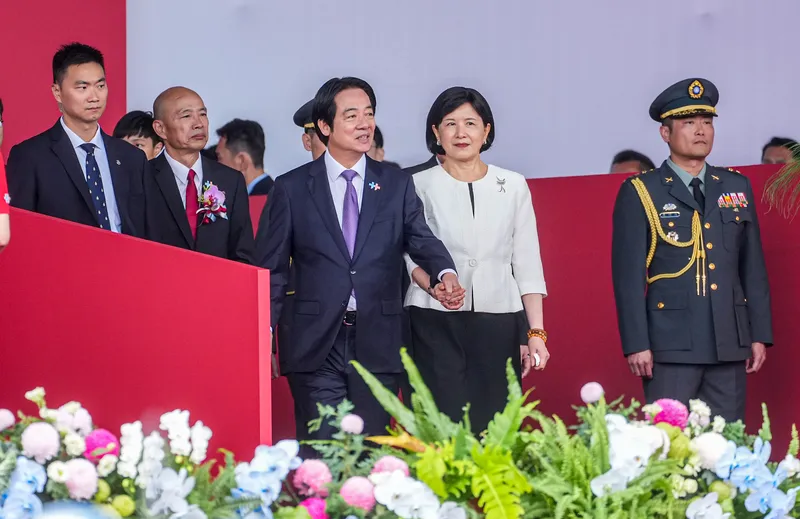
Four Tests Will Show Whether The Pressure Works
How Paraguay and Belize respond. Whether the two governments swallow the insult or publicly defend their sovereignty will shape how other small allies weigh the risks of standing with Taiwan.
Paraguay's 2028 election. Paraguay is Taiwan's only diplomatic ally in South America, and its opposition has repeatedly floated switching recognition to Beijing. Expect China to invest heavily in that contest over the long term.
Whether Honduras returns. Honduras cut ties with Taipei in 2023. If it were to restore them, it would break the assumption that a switch to Beijing is irreversible and deal a sharp blow to China's One China principle.
Bargaining between Washington and Beijing. The DPP government tends to frame every Chinese move as transnational repression and then hurry to Washington for support. But Trump speaks the language of transactions. If the United States and China strike a deal on trade or technology, Taiwan could once again find itself treated as a bargaining chip.
Coercion Will Push Taiwan's Partners Toward De-Risking
The ancient Chinese philosopher Han Feizi warned that a state "small yet unwilling to humble itself, weak yet unafraid of the strong, discourteous to its great neighbor, and greedy, stubborn, and clumsy in diplomacy, may perish." The warning applies to small states. But a great power that abuses its strength and bullies its way past international norms can also be undone by the recoil of its own tactics.
Turning domestic law into a weapon against serving foreign officials may project the image of a great power, but it is likely to produce the opposite of what Beijing intends. Personalizing political coercion in this way will not win over Taiwan's friends. It will instead put the United States, Europe, and like-minded democracies further on guard and accelerate their efforts to de-risk from China.
Diplomacy rests on attraction, not intimidation. A power that sustains its prestige by freezing assets that do not exist and banning visits that were never going to happen is not displaying strength. Its sweeping campaign of containment looks instead like a cover for strategic anxiety.