More than three in four Japanese adults worry that China could use force around Taiwan, yet only 9.9% want their Self-Defense Forces (SDF) to fight alongside U.S. troops if it does, a new national poll shows.
The Japan Press Research Institute, a public-interest foundation, released its 19th national media survey on October 10. Fieldwork ran from July 17 to August 16, with 2,676 valid responses from 5,000 adults aged 18 and older sampled nationwide. The institute summed up the Taiwan findings in one line: about 80% of respondents are negative on SDF involvement in a Taiwan contingency.
Yonaguni Drills And Taiwan Defense Talks Press Ahead
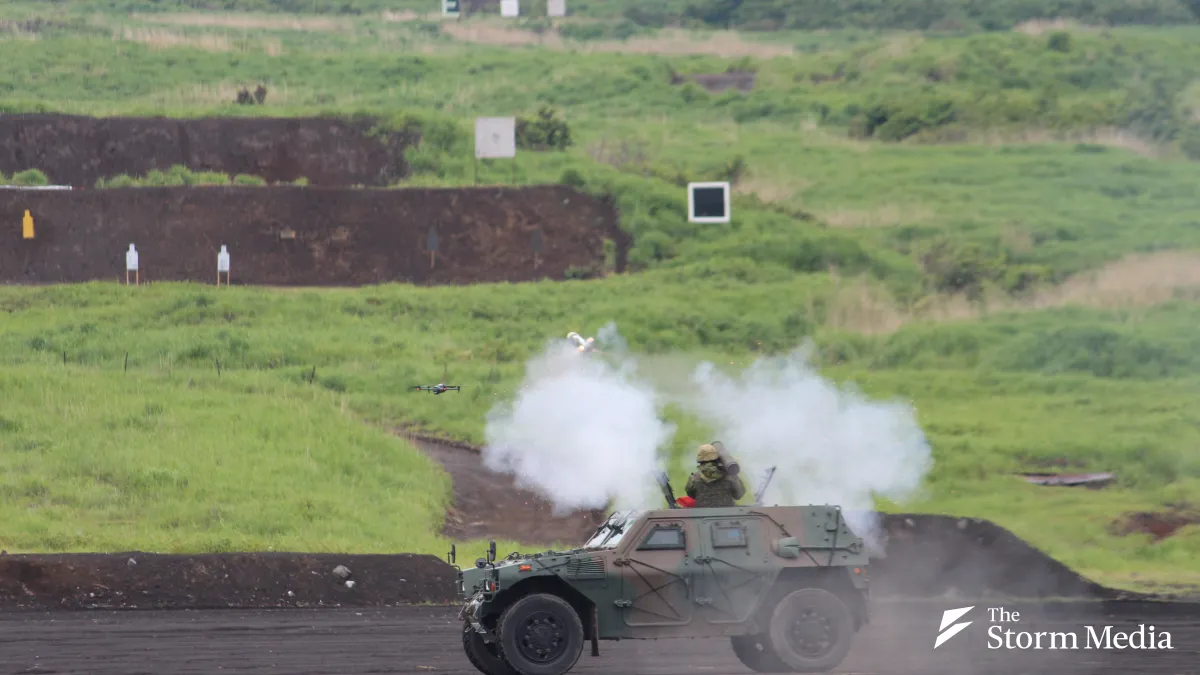
The poll lands as Japan's military preparations near Taiwan gather pace. From October 19 to 29, Japan and the United States will hold the Keen Sword 27 exercise, which involves about 45,000 Japanese personnel. On Yonaguni, an island roughly 110 kilometers from Taiwan, the U.S. Marine Corps will bring its NMESIS anti-ship missile system and MADIS air-defense system ashore for the first time, with about 60 American personnel taking part.
According to plans the Japanese Defense Ministry presented to local officials, neither system will fire live rounds, and a joint Japan-U.S. coordination center will be set up at the Yonaguni garrison for island-defense training.
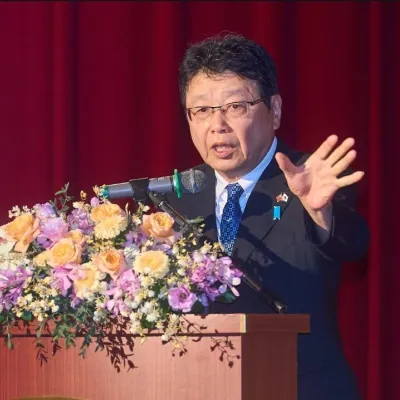
Political groundwork is moving too. Keiji Furuya, a Liberal Democratic Party lower house member who leads a cross-party group of pro-Taiwan lawmakers, told reporters in Taipei on October 11 that such lawmakers have set up a project team on Japan-Taiwan defense cooperation. He had met President Lai Ching-te the day before.
Furuya said Tokyo has no firm plan yet on how to advance defense cooperation, but that discussion should continue. He singled out drones, where he said Taiwan is moving faster and Japan holds an advantage in components, and urged quicker collaboration in semiconductors, artificial intelligence, robotics and drones. For now these remain proposals from lawmakers' groups, and the Japanese government has not announced any new Japan-Taiwan defense cooperation agreement.
83.1% Reject Direct Combat For Japan's Troops
Respondents were asked how far Japan should go if China attacked Taiwan. The largest group, 30.2%, chose no military involvement of any kind, including keeping U.S. forces from using their bases in Japan. Another 26.9% would let the SDF stay out of the fighting while supplying U.S. forces with weapons, ammunition and other logistical support, and 26.0% would allow U.S. forces to fight from Japanese bases as long as the SDF does not take part.
Those three options add up to 83.1%, and all of them rule out direct SDF combat against Chinese forces. Only 9.9% backed the SDF and U.S. forces fighting China together.
Opinion has also drifted in that direction over time. Support for joint combat slid from 13.3% in 2023 to 9.9%, and backing for logistics-only support fell from 31.2% to 26.9%. Over the same period, the share wanting Japan to stay out entirely rose from 26.9% to 30.2%, and the share allowing only U.S. use of bases climbed from 23.3% to 26.0%.
Source: Japan Press Research Institute national media surveys (16th in 2023, 17th in 2024, 19th in 2026). The Taiwan contingency question was not asked in the 18th survey in 2025.
Alarm Over China Coexists With Support For The SDF
Public caution about fighting does not amount to complacency. The same survey found 76.7% of respondents feel a sense of crisis over the possibility that China could use force around Taiwan, and 67.5% support writing the SDF's existence into Japan's constitution, with 21.6% calling it necessary and 45.9% somewhat necessary.
China was also named most often as the greatest threat to world peace, at 32.5%, ahead of the United States at 26.8%, according to Taiwan's China Times. The results describe a public that is alarmed about Taiwan and supportive of keeping a capable military, but wary of sending it into combat.
Taiwan's Ruling Party Urges Stronger Defense
Fan Yun, secretary-general of the Democratic Progressive Party (DPP) caucus in the Legislative Yuan, Taiwan's parliament, said she respects the range of views in the poll. She noted that the same survey ranks China as the biggest threat to world peace, and argued that Taiwan can secure peace and economic prosperity only by continuing to strengthen its defenses.
The DPP caucus added that defending Taiwan is Taiwan's own responsibility. Caucus whip Chuang Jui-hsiung said China's growing security pressure on its Indo-Pacific neighbors has pushed countries to bolster their deployments, and that Taiwan must be able to protect itself.
(Related:
What Is a 'Taiwan Contingency'? A Timeline of the Japan-China Standoff Over Takaichi's Remarks
|
Latest
)