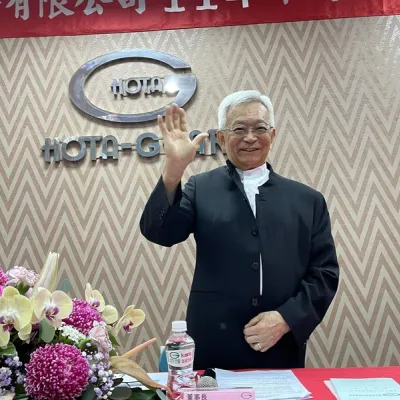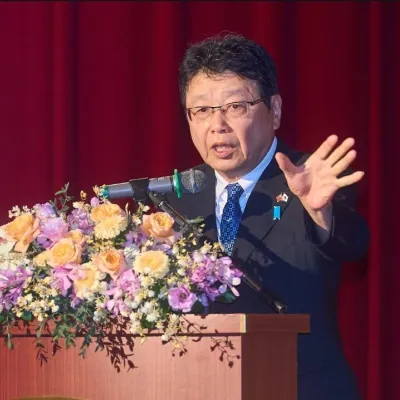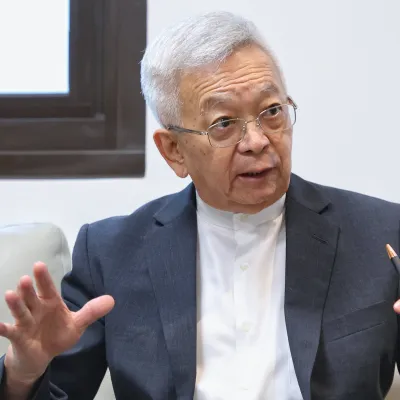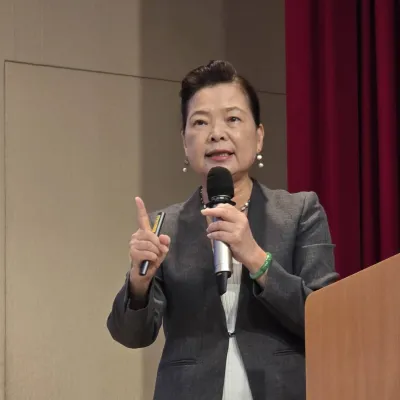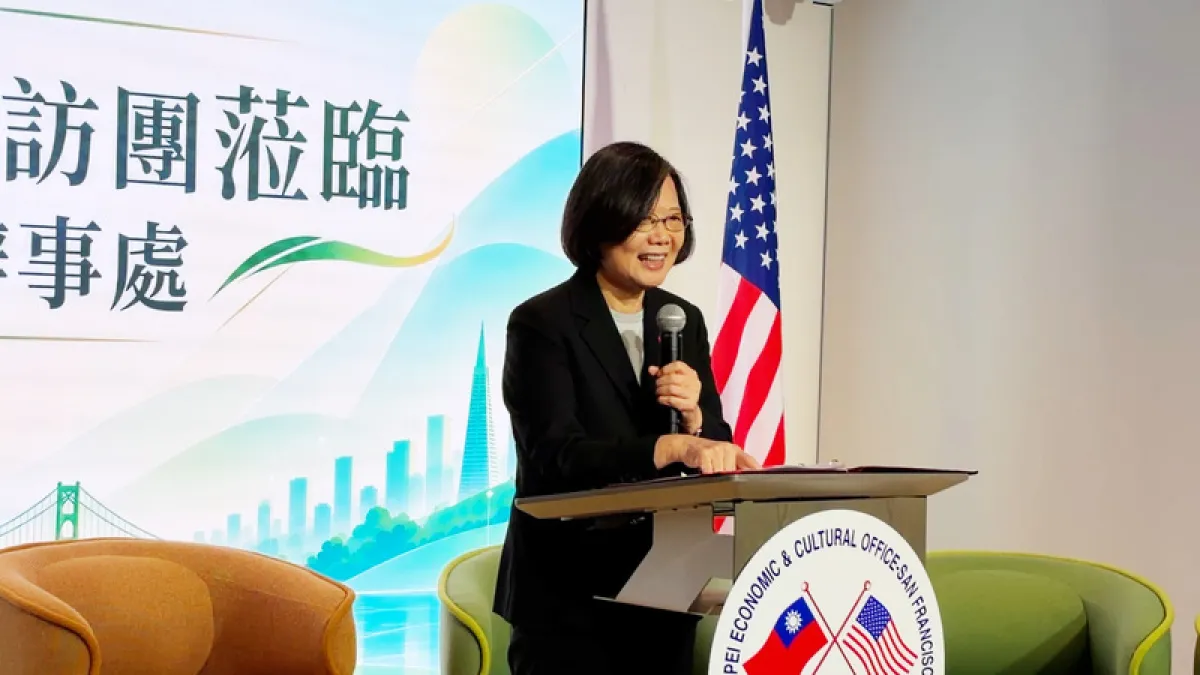
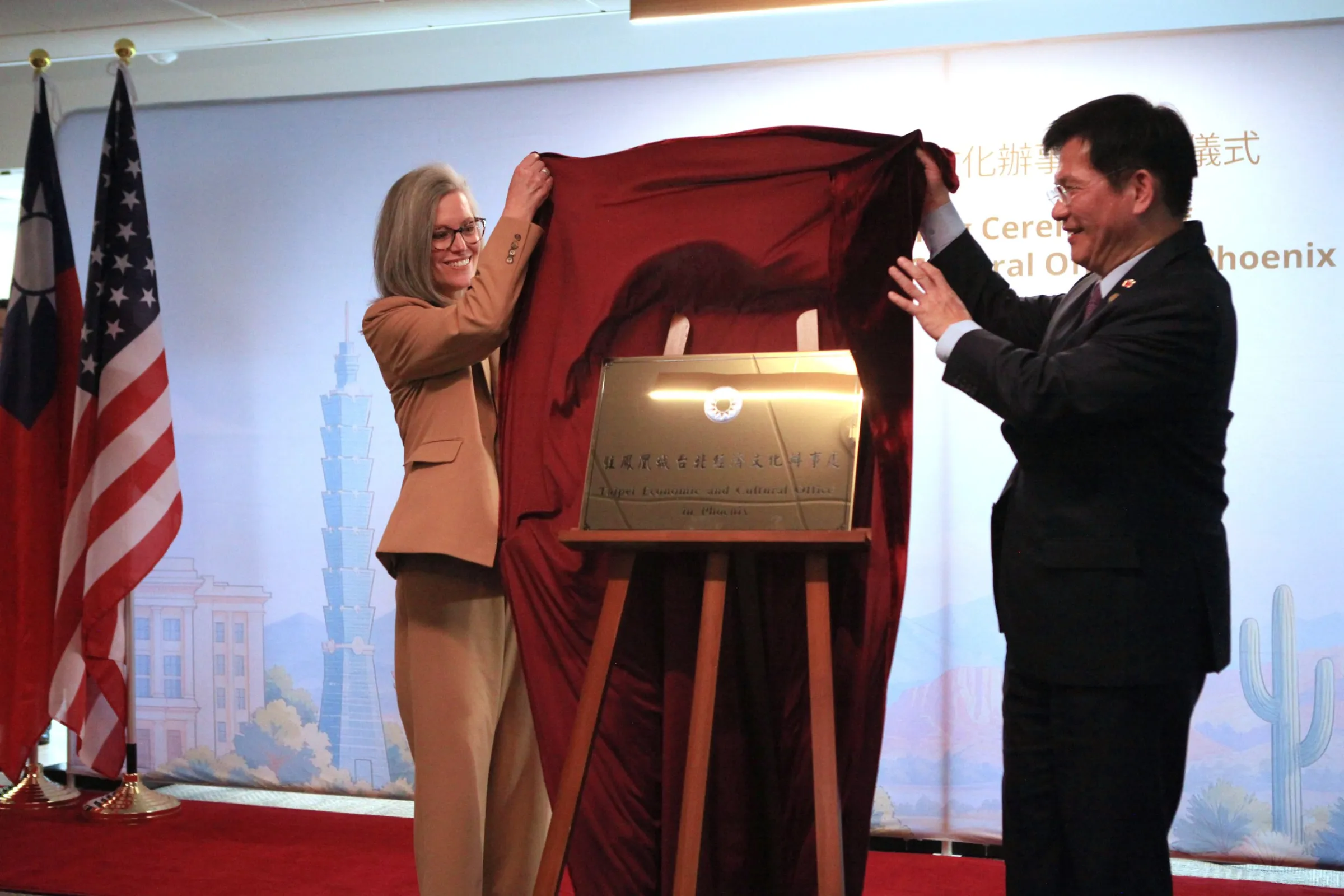
On October 5, Foreign Minister Lin Chia-lung (林佳龍) opened Taiwan's 14th office in the United States, in Phoenix, Arizona, wrapping up a 12-day tour of three countries in the Americas. The same day, former President Tsai Ing-wen (蔡英文) boarded a flight from Taipei and, after roughly 12 hours in the air, landed in San Francisco. Accompanied by Taiwan's representative to the United States, Alexander Yui (俞大㵢), and greeted by hundreds of Taiwanese Americans, she began her first trip to the US since leaving office.
The two visits were not a coincidence. Behind Tsai's speeches and public appearances, Storm Media has learned, the trip was coordinated with President Lai Ching-te's (賴清德) government and served a larger purpose: signaling that relations between Taipei and Washington remain steady at a moment of uncertainty.
Why Tsai Had Long Avoided The US Mainland
Since stepping down in May 2024, Tsai has made six public trips abroad as a former head of state, four of them to Europe, visiting the Czech Republic, France, Belgium, Lithuania, Denmark, Britain, Germany and Italy. In North America, she made a brief visit to Canada in late November 2024, but did not set foot on the US mainland until October 2026, even though she transited the country more than 10 times while in office. This time, she stayed only on the West Coast, far from Washington, for about a week.
Storm Media has previously reported that one reason Tsai concentrated on Europe was the need to respect the Lai administration's own plans and dealings with the United States. Since taking office, Lai has only transited Hawaii and Guam, in late November and early December 2024, and has yet to visit the US mainland. Tsai had reportedly turned down a range of American invitations out of deference to Lai. That raised an obvious question when she arrived in the US before him: what was the trip really for?
Timed For After The Second Trump Xi Summit
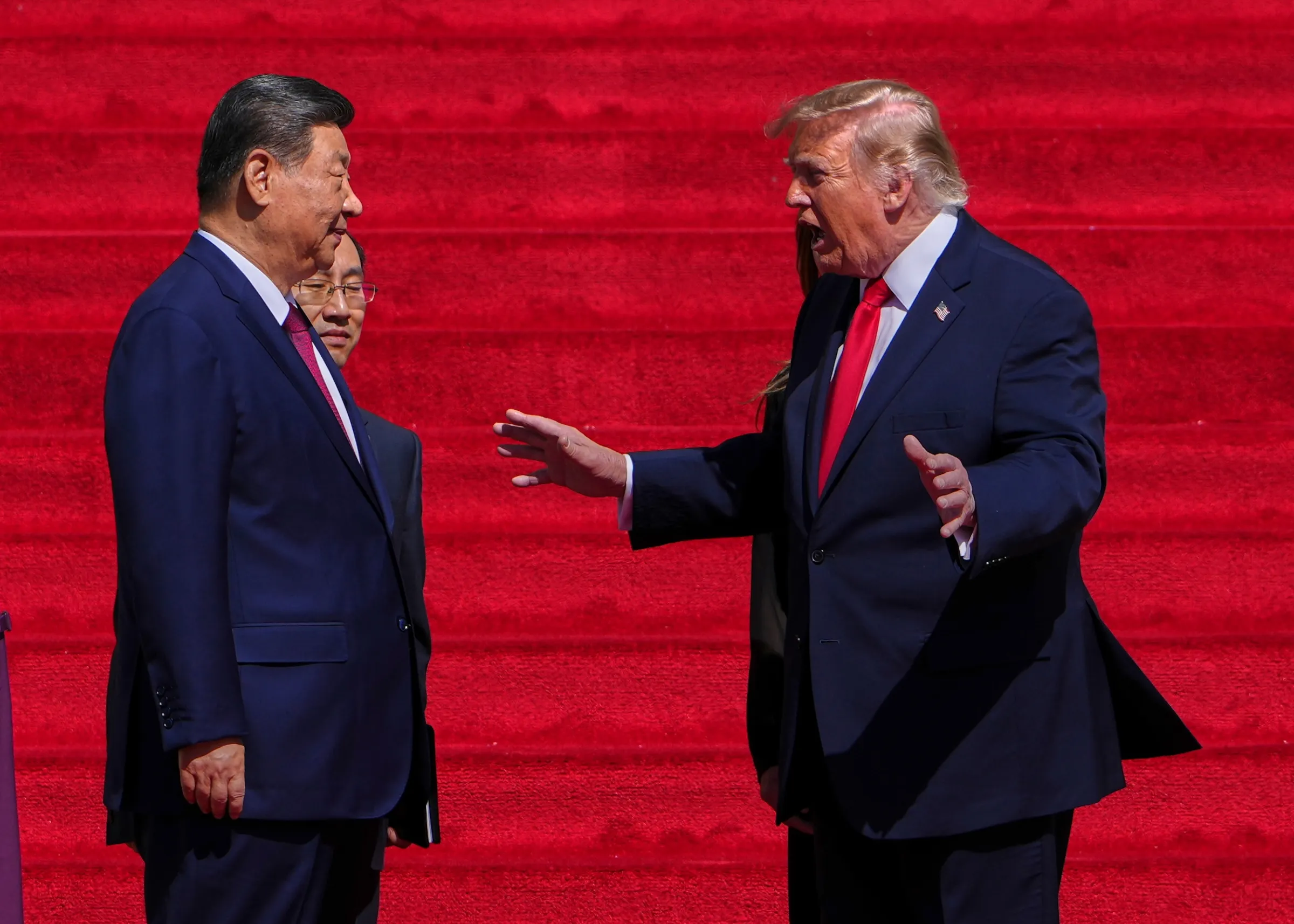
Both Lin's and Tsai's visits came shortly after Chinese leader Xi Jinping traveled to Washington in late September for his second summit of 2026 with President Donald Trump. Trips to the United States by senior Taiwanese figures typically take months of back and forth between the two sides to arrange. Trump had announced the date of the second summit as early as mid-May, when he visited Beijing, meaning the timing of Lin's and Tsai's trips, just after the summit, was worked out well in advance by Taipei and Washington.
After his Beijing visit in May, Trump told Fox News, "I don't want somebody going independent," and said he did not want to fly 9,500 miles to fight a war, comments that stirred debate in Taiwan. After the Washington summit four months later, China's state news agency Xinhua quoted Xi as saying he hoped the United States would continue to oppose Taiwan independence. Trump, asked about Taiwan, said only that "everything is very good right now" and that Xi understood how he felt.
A person familiar with foreign affairs said some in Taiwan worry that relations with the United States are slipping and that Trump might sell out Taiwan. Sending the foreign minister and a former president to the United States at this moment, the person said, was a way for both sides to show, by keeping established practices in place, that nothing has changed. "There is no major breakthrough, but there is no backsliding either. That is also a kind of assurance."
A Stalled Arms Package And An Unmet Stopover
Secretary of State Marco Rubio and other senior Trump administration officials have repeatedly said US policy toward Taiwan is unchanged. But after meeting Xi in Beijing in May, Trump himself, asked about the Six Assurances, a cornerstone of US Taiwan relations, remarked that 1982 was "a very long time ago." And while the administration approved a record arms package worth more than $11.1 billion in December 2025, a separate $14 billion package that the State Department submitted to Congress in January 2026 has seen no further movement since informal congressional review.
The person familiar with foreign affairs said that $14 billion arms sale and a Lai stopover on the US mainland are the two most important markers of the relationship right now. With the US midterm elections in early November, the APEC leaders' summit in Shenzhen in mid-November and the G20 summit in Miami in December, Trump and Xi could meet a third and even a fourth time, making progress on either marker unlikely in the short term. That, the person said, is a key reason Lin and Tsai traveled now.
Taiwan's foreign ministers, including Lin, have visited the United States before, and any visit by Tsai requires Washington's consent. These are the baseline of the relationship, the person said, and the back to back trips were meant to hold that baseline steady. An official familiar with the matter said close cooperation and smooth communication at every level are the reality of US Taiwan ties, with officials on both sides messaging each other the moment they hear of any development.
Lai Knew And Supported The Trip
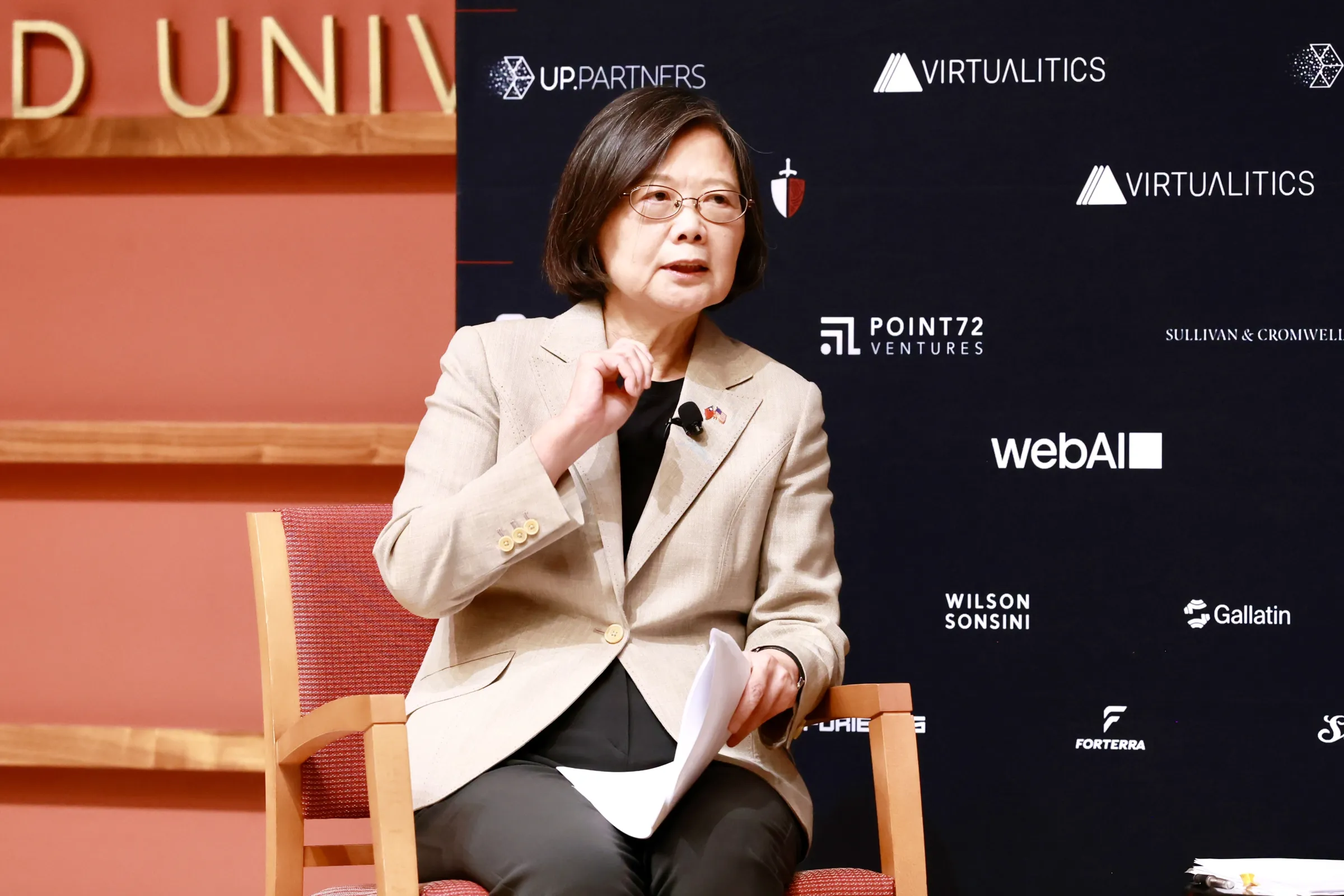
Though the trip's main purpose was to shore up relations, Tsai still had her own message to deliver. Compared with her speeches in Germany and Britain in 2025 and in Canada in 2024, her opening address at Stanford DEFCON's 2026 Technology & National Security Conference again touched on democratic resilience but also took up defense technology cooperation such as drones, stressing that Taiwan is an indispensable partner in the defense supply chains of the United States and its allies.
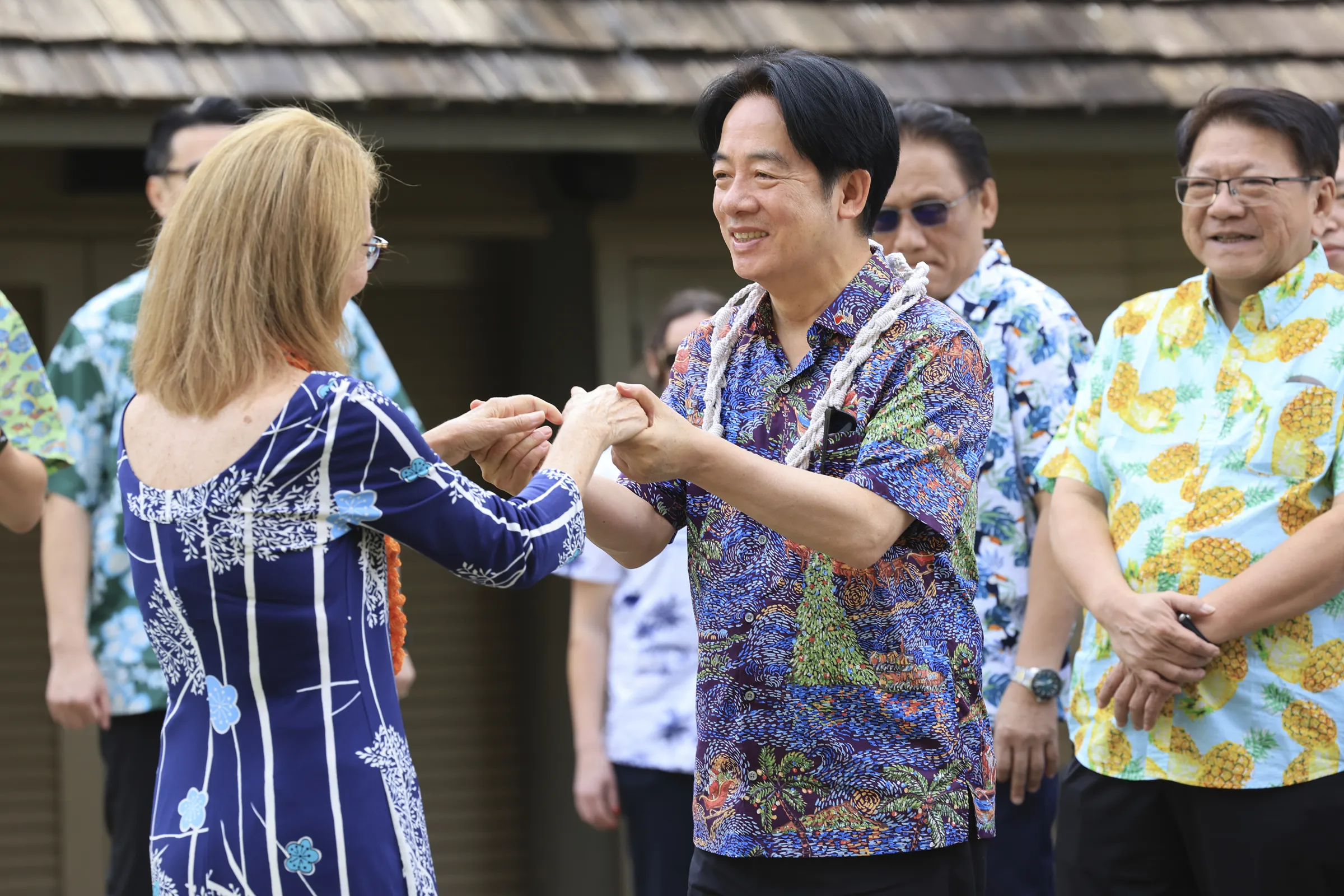
According to people familiar with the matter, Tsai worked out her itinerary with senior officials on the Foreign Ministry's fifth floor, coordinated with Lin, who was in Phoenix, and had Lai's prior knowledge and support. One source said that when Lai pushed for Vice President Hsiao Bi-khim (蕭美琴) to make her trip to Europe, he made clear that diplomacy is a team effort in which current and former presidents and vice presidents all play a part.
Notably, while Tsai was speaking at Stanford, Lai was receiving members of the US Senate and House of Representatives at the Presidential Office, and the two delivered similar messages on emerging technology and defense. Lai said Taiwan is bringing in artificial intelligence, unmanned vehicles and space technology to accelerate defense innovation for asymmetric warfare, and that he hopes to deepen defense cooperation with the United States, especially on drones, counter drone systems and AI assisted military decision making.
Why Tsai Stayed On The West Coast
Even so, Tsai's schedule showed that she was still careful not to overshadow Lai. Her stops, including a meeting with former House Speaker Nancy Pelosi, the Stanford conference, an event at the Hoover Institution, a gathering with Taiwanese entrepreneurs in Silicon Valley and a National Day reception hosted by Taiwan's office in San Francisco, were mostly confined to the Bay Area. She reportedly received many invitations from think tanks and institutions on the East Coast, but chose to visit only the West Coast, a sign of how carefully she calibrated the trip.
In the end, Tsai's first visit to the US mainland since leaving office was undertaken with deference to Lai, who controls national security policy, and in support of the current government's effort to stabilize relations with Washington. With a major arms sale and a Lai stopover on the US mainland still pending, keeping existing channels open and trust intact, so that frequent meetings between Trump and Xi do not shake the foundations of US Taiwan relations, was the unspoken message of Lin's and Tsai's back to back visits.