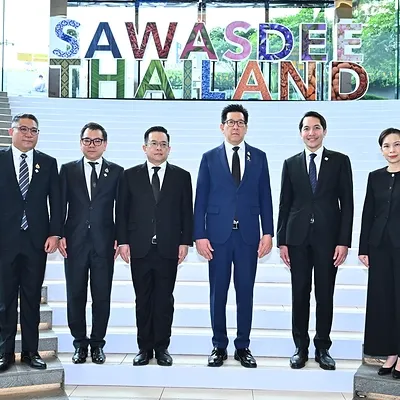
As Taiwan heads toward its nationwide local elections at the end of 2026, with the race for Taipei mayor heating up, prosecutors and police are cracking down on vote buying while national security agencies prepare for a different kind of threat. In late February, President Lai Ching-te (賴清德) told the National Security Bureau at its 71st anniversary that China would inevitably step up election interference this year through disinformation, fake polls and illegal betting on election outcomes, and he urged intelligence teams to guard against malicious cross-border operations.
Taiwan is not facing that threat alone. The United States has long been its most visible partner on election security, and Britain has issued public warnings. Storm Media has learned that another member of the Five Eyes intelligence alliance has also been quietly helping: Canada.
Foreign Envoys Sound The Alarm
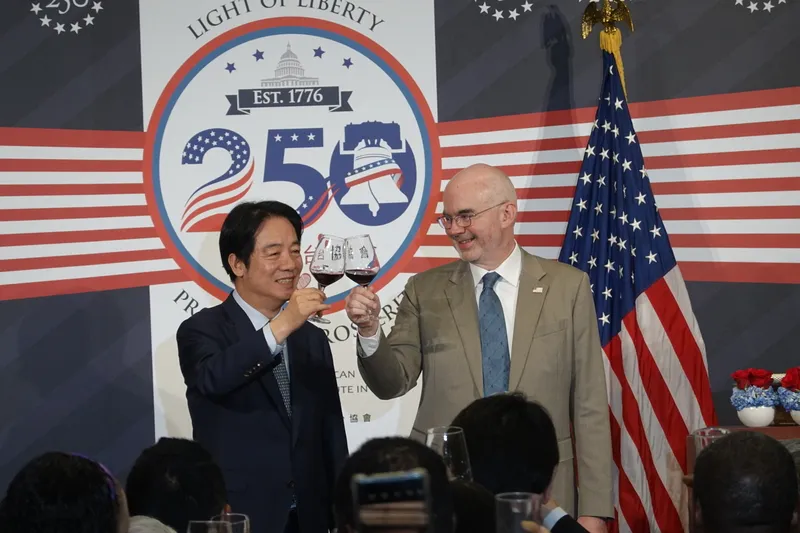
Warnings about outside meddling have come from foreign diplomats as well as from Lai. Raymond Greene, director of the American Institute in Taiwan (AIT), said twice in September that Taiwan must be ready for more sophisticated information manipulation powered by artificial intelligence. Lutz Güllner, head of the European Economic and Trade Office, and Ruth Bradley-Jones, Britain's representative in Taipei, have made similar points. Bradley-Jones said democracies everywhere face foreign interference in elections in the age of the internet and AI, but that Taiwan is the democracy "closest to the fire."
Storm Media previously reported that Washington had been investigating Chang An-lo (張安樂), the "White Wolf" who leads the China Unification Promotion Party, and had approached Taiwan's intelligence agencies about him before the Interior Ministry asked the Constitutional Court in late July to dissolve the party.
Canada Has Officers On The Ground In Taipei
In late May 2026, Marie-Louise Hannan, who had been Canada's representative in Taipei for just over six months, called on Premier Cho Jung-tai (卓榮泰) with senior staff from the Canadian Trade Office in Taipei. Most of the meeting focused on trade, but in reviewing bilateral cooperation, Hannan noted that Canada had stationed cybersecurity officials in Taiwan to work with Taiwanese authorities against foreign disinformation, and said Canada hoped to assist Taiwan with its local elections at the end of the year.
That kind of disclosure is rare. Multiple international studies, including a cross-national project led by Sweden's University of Gothenburg, have found that Taiwan has for years been the country most targeted by foreign disinformation. The United States has run large-scale cyber offensive and defensive exercises with Taiwan, known as CODE, since 2019. Canada, though also a member of NATO and the Five Eyes, has seldom publicized its cooperation with Taiwan.
A Taiwanese government official said most attention in Taiwan goes to the United States when it comes to North America, but cooperation with Canada on foreign information manipulation and interference (FIMI) and cybersecurity began two years ago. According to information obtained by Storm Media, the Canadian Trade Office in Taipei, which marks its 40th anniversary this year, has more than 50 staff, and since 2024 Ottawa has quietly posted cybersecurity officials there to deepen cooperation with the Taiwanese government on fighting hackers and disinformation and to exchange intelligence discreetly.

Why Ottawa Cares About Foreign Interference
Taiwanese officials familiar with diplomatic affairs say disinformation and foreign influence have long been priorities for the Canadian government. Canada's 2022 Indo-Pacific Strategy explicitly lists countering disinformation as an area for exchanges and cooperation with Taiwan. A review by Storm Media of visits by Canadian lawmakers, think tank scholars and national security delegations to the Presidential Office and the Foreign Ministry in recent years found that countering foreign information manipulation, democratic resilience and information security came up almost every time.
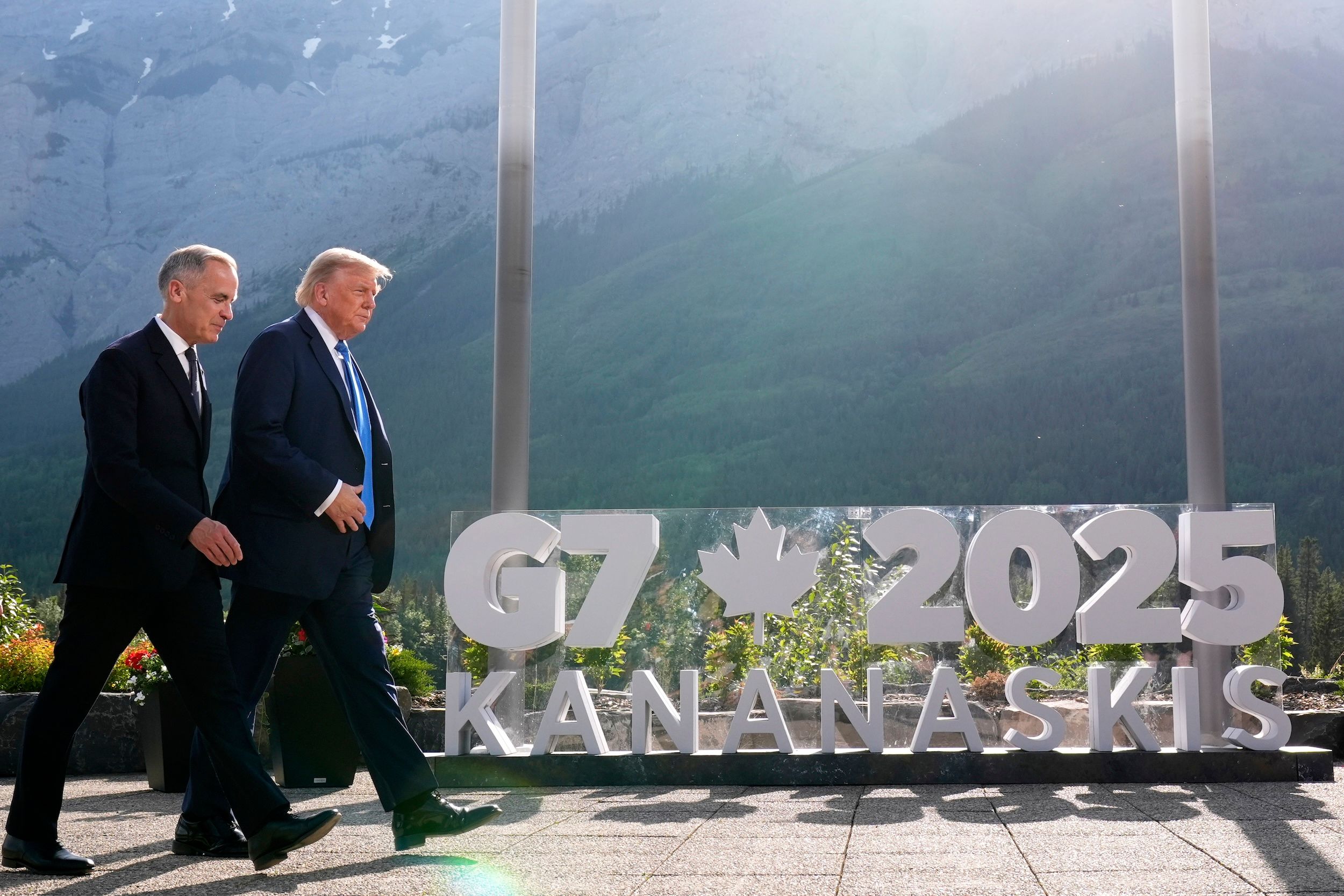
Since 2018, Canada has chaired the G7 Rapid Response Mechanism (RRM). Unlike the rotating G7 presidency, the RRM secretariat is permanently based in Canada, which serves as its permanent chair, coordinating responses to transnational repression and FIMI. In 2019, Canada also brought together its security intelligence service, its signals intelligence agency and Global Affairs Canada, which runs the RRM, to form the Security and Intelligence Threats to Elections (SITE) Task Force.
Like Australia, Canada is an immigrant society, and many diaspora communities keep ties with their countries of origin, making them prime targets for foreign interference. Documents released at 2024 hearings by the Canadian Security Intelligence Service showed that China interfered in Canada's 2019 and 2021 federal elections. During the governing Liberal Party's 2025 leadership race, the SITE Task Force also disclosed that former Deputy Prime Minister Chrystia Freeland had been targeted by a disinformation campaign linked to China.
Where Taiwan And Canada Work Together In Public
The specifics of intelligence sharing between Taiwan and Canada are sensitive and largely out of public view. One important channel is the Global Cooperation and Training Framework (GCTF), launched by Taiwan and the United States, which Canada formally joined in August 2024. Months earlier, in April 2024, Taiwan's representative office in Canada and the US Embassy in Ottawa partnered with the University of Ottawa to hold the first GCTF workshop in the Canadian capital, on building democratic resilience against disinformation, with several Canadian government officials attending.
When the GCTF held an international workshop in Taipei in September 2025 on the role of media literacy in defending the information space, Hannan, then newly arrived, delivered opening remarks. Saliou Babou, director of the RRM unit at Global Affairs Canada, also attended in person and moderated a panel on international cooperation against disinformation.

A Gap In Taiwan's Local Communications
The Presidential Office's Whole-of-Society Defense Resilience Committee also treats information and cognitive warfare as a core concern alongside civilian mobilization and supply distribution. But one committee member said foreign diplomats, think tanks and experts who observed Taiwan's urban resilience drills all noticed that public communication by local governments was essentially "empty," and they each urged Taiwan to keep improving its response to cognitive warfare and its communication with the public.
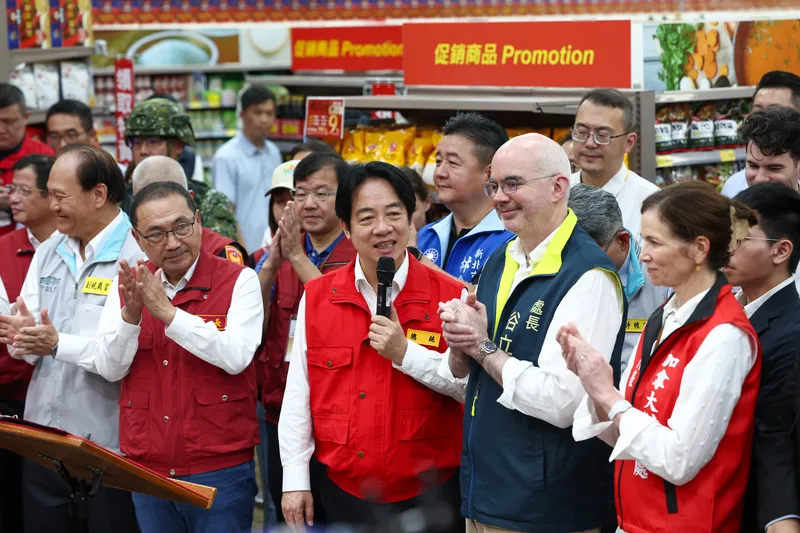
At the committee's drills and events, the US representative is always in the front row and the European Union's envoy attends almost every time, while countries Taiwan looks to as models of social resilience, such as Israel and Finland, are also invited. Off to the side, often out of camera range, Hannan can be seen in a red vest printed with "Canadian Office," craning her neck to watch the drills. She has also sat in the audience at the committee's international forum.
In August 2026, the civil defense think tank Forward Alliance (壯闊台灣)announced it would work with Canada on a social resilience program. A Taiwanese official said that while Washington has repeatedly and publicly declared support for Taiwan's societal resilience, even calling it a priority, Ottawa has not said so openly but is in practice backing the effort.
Why Canada Keeps A Low Profile
In late May 2026, just days before Hannan's meeting with Cho, a Royal Canadian Navy frigate sailed through the Taiwan Strait. It was the eighth Canadian warship transit since Ottawa released its Indo-Pacific Strategy in November 2022, which called China an "increasingly disruptive global power" and stated that Canada opposes unilateral actions that threaten the status quo in the Taiwan Strait. Earlier, in early September 2025, a Canadian frigate transited the strait alongside an Australian guided missile destroyer.
Taiwanese officials familiar with diplomatic affairs say middle powers such as Canada and Australia, unlike the United States, must weigh pressure from China when working with Taiwan, so they tend to keep cooperation quieter. Another official said European countries that send warships through the strait have not visibly stepped up traditional military exchanges with Taiwan, but have built up a great deal of behind the scenes cooperation on nontraditional security issues such as social resilience, information manipulation and cognitive warfare.
The question now is whether that cooperation can last. Since taking office, Prime Minister Mark Carney has moved to thaw long frozen relations with China. He visited Beijing in mid-January 2026, the two countries restarted their long suspended Canada China Defence Coordination Dialogue in early September, and his government is revising the 2022 Indo-Pacific Strategy. Whether Taiwan and Canada can keep sharing intelligence, or even deepen their cooperation, during the elections at the end of this year may prove to be a test of where the relationship is headed.