Beijing's official rhetoric on Taiwan may not reflect what ordinary Chinese people think. A survey of mainland Chinese conducted by the US-based Carter Center and Emory University found that Taiwan received the highest favorability rating of any country or region, at 61 points, that about 60 percent of respondents support resolving cross-strait issues peacefully, and that 37.2 percent believe Taiwan should not be unified by force under any circumstances.
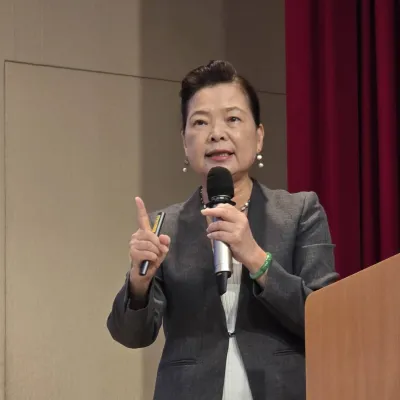
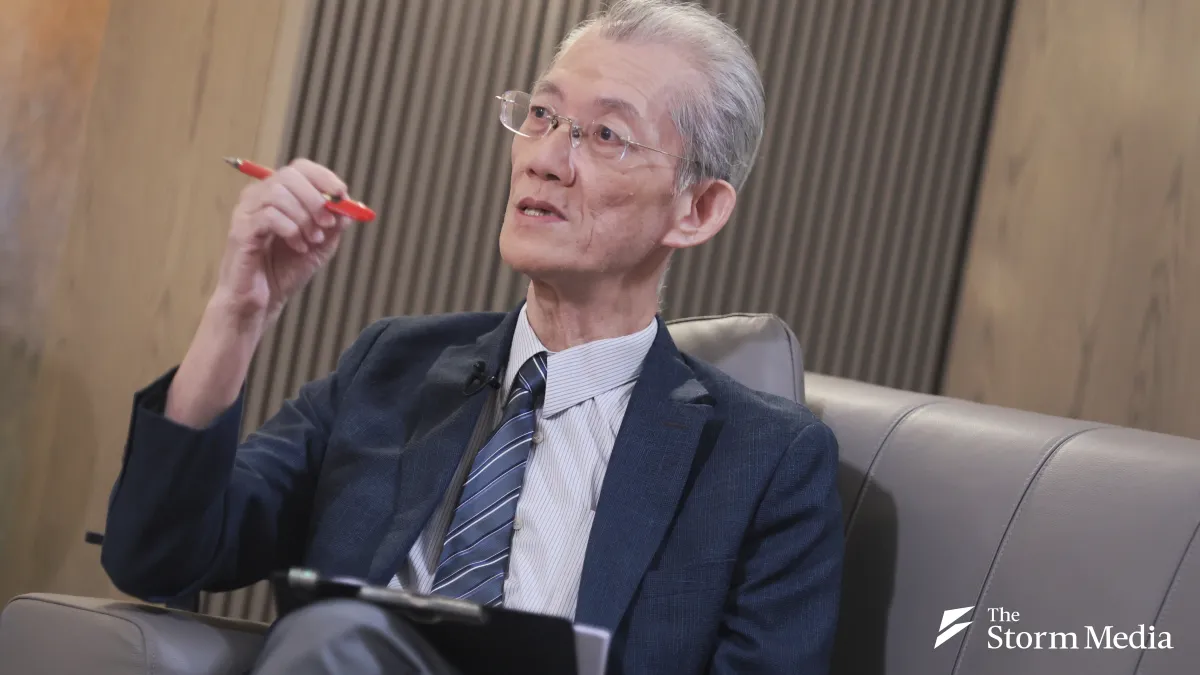
Ming Chu-cheng (明居正), professor emeritus of political science at National Taiwan University, said on Storm Media's talk show hosted by Huang Wei-han that, based on his years of exchanges with Chinese counterparts, he finds the poll credible, and that opposition to forced unification may in fact be even stronger than it shows.
How The Survey Was Conducted
The poll is part of the biannual China Pulse survey, with fieldwork carried out from April 16 to June 26 this year, the South China Morning Post reported. According to Ming, it covered all of mainland China and sampled 2,500 people, well above the roughly 1,000 respondents typical of most opinion polls, with quotas for region and gender set according to official Chinese data.
The researchers have cautioned that the preference for peace is conditional. Lead researcher Nick Zeller told the Post that if Taipei formally declared independence, he would expect a military response. Ming noted that in a scenario where Taiwan does not declare independence, support for using force against Taiwan stands at about 25 percent.
Why Ming Thinks Opposition To Force Is Undercounted
Ming drew a comparison with Taiwan's own history. In the early years after martial law was lifted, supporters of the Democratic Progressive Party (DPP) were often reluctant to reveal their political leanings, producing gaps between polls and actual votes as large as threefold. Those gaps narrowed over the following years. "Could this China poll also be underestimating opposition to forced unification?" he asked.
Even in China's current political climate, Ming said, some 60 percent of respondents still back a peaceful approach, so the true figure may be higher. That picture is completely at odds with the impression given by China's Taiwan Affairs Office and foreign ministry. He recalled that one Chinese government adviser known for a combative "wolf warrior" image had said he enjoyed spending a weekend in Taiwan and suggested Taiwan should become "China's Switzerland," a place where Chinese people could come to cleanse their souls.
Younger Chinese Are More Opposed To Force
The most striking finding, in Ming's view, is that the share of respondents who reject forced unification under any circumstances is even higher among young people, and still rising. He suggested this may stem from the legacy of the one child policy, which has left more Chinese parents unwilling to see their children go to war.
Goodwill Toward Taiwan Is Not Mutual
While many Chinese people view Taiwan favorably and support a peaceful relationship, most Taiwanese do not feel the same way about China, Ming said, and the reason is the Communist Party government. Taiwanese dislike China not because they have forgotten their roots, but because they reject its ruling party and political system. The founding spirit of the Chinese Communist Party, he argued, is not love or peace but hatred, and that is reflected in how people live in China.
He pointed to a Chinese woman who said in a short video about her trip to Taiwan that she had seen "a different face of Chinese culture" there. Many Chinese visitors, he added, would like to live in Taiwan long term because they do not have to worry about being arrested by the police.
On the question of independence, Ming noted that since the DPP adopted its Resolution on Taiwan's Future in 1999, the party has maintained support for the status quo, and that even if Taiwan wanted to declare independence, the United States would likely stop it.
(Related:
Is Beijing Doing Three Things To Take Taiwan? Chinese Think Tank Unveils Its Governance To Unification Framework
|
Latest
)