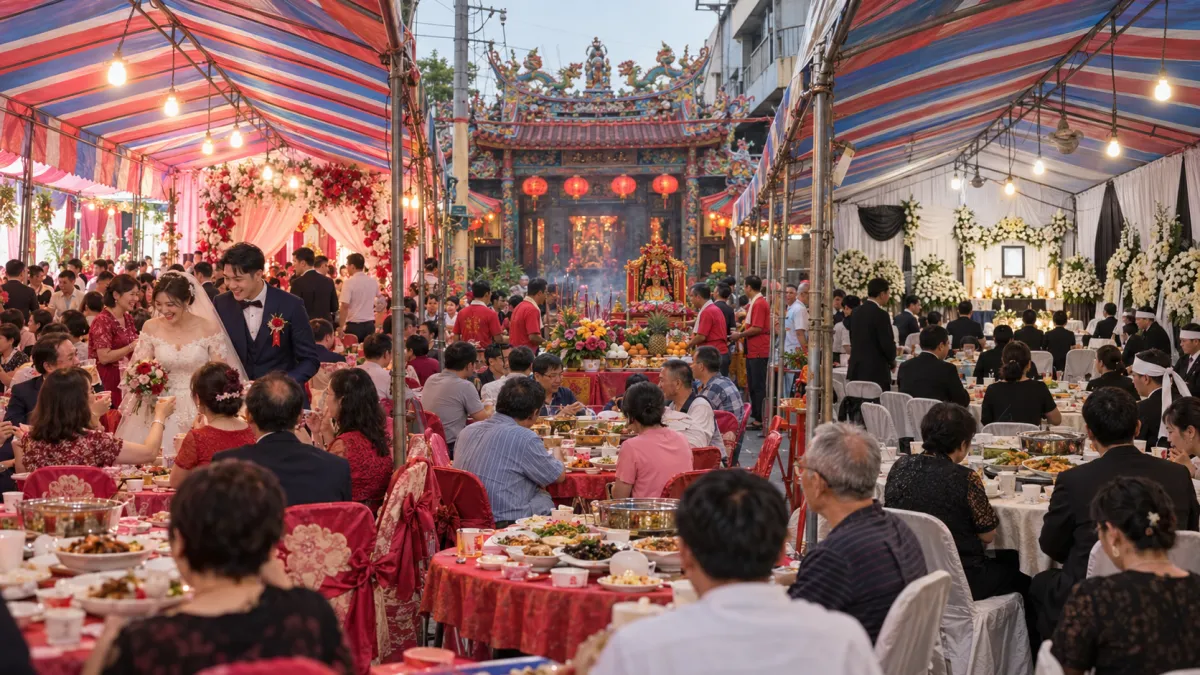
The roadside banquet known in Taiwan as banzhuo (辦桌, also romanized as pan-toh) is more than a century old, but it became a professional trade only from the 1960s, according to the National Museum of Taiwan History.
For generations, big moments in Taiwanese life came with the same scene: round tables set up on an empty lot or a temple courtyard, a canopy overhead, and a head chef, known as a zongpushi (總舖師), working a large stove out back while dishes were carried to guests. Weddings, a baby's first-month celebration, housewarmings, birthdays, temple festivals and even funerals all called for one.
The word itself is old. The museum says a Japanese survey of Taiwanese customs in 1902, when Japan ruled the island, included an essay titled "Miscellaneous Talk on Banquets and Dishes" that already recorded banzhuo, defining it as setting out tables, food and wine to host a feast. The museum infers that the term was in common use by the late Qing dynasty. A host would "banzhuo," while guests were said to "eat banzhuo."
Village Cooks Found Banquets Paid Better Than Farming
Banquet catering existed long before it became a career. The museum says that before the 1960s, restaurants in cities already handled outside catering, while in the countryside villagers with good cooking skills took on banquet jobs in their spare time. Most were not full-time chefs, and the host usually supplied the ingredients and equipment.
Around the 1960s, some of these part-time cooks noticed that banquet work paid better than farming and turned professional. Industrialization, migration and urbanization soon thinned out the relatives and neighbors a family could once call on at short notice, and by the late 1960s the number of dedicated banquet caterers was rising.
Neimen Shows How Kaohsiung Cooks Built an Industry
Neimen, a district in the southern city of Kaohsiung, is often cited as a leading example of that shift. Its chalky, alkaline soil is poor for farming, and when demand for its bamboo baskets fell in the 1960s, banquet catering grew into a main livelihood, Taiwan Panorama magazine reported in 2013.
According to the magazine, chefs Tang Sifu and Tang Zhujiao joined vegetable seller Guo Zhangqi in 1963 to start a banquet business called Guo San Tang, a name made by combining their surnames. They were the first in the trade to buy tables and chairs to rent out to customers and to supply all the cooking utensils and cutlery themselves, rather than relying on the host. Others in Neimen later copied the model.
The head chef was no longer just the person who cooked on the day. As Taiwan Panorama describes the role, he was responsible for the whole meal, from buying ingredients and designing the menu to cooking and timing the banquet. The National Center for Traditional Arts adds that local residents later invested in tables, dishes and other gear, building a full industry with a wide supporting cast of dishwashers, servers and knife-work specialists.
The trade boomed in the 1980s. Taiwan Panorama says Neimen's head chefs numbered about 150 at their peak in 2005, when roughly one in five local households made a living from banquet-related work. By 2013 only about 70 to 80 chefs remained.
Before Caterers, Neighbors Lent Tables and Pots
The earlier model looked very different. In Qing-era Taiwan, with limited resources, families holding a wedding, funeral or ritual usually prepared the food themselves with help from relatives and neighbors. Only larger feasts might bring a skilled cook into the home, and the arrangement lasted well into the agricultural era.
Hosts had to find tables, chairs, bowls and pots, which were typically borrowed from kin and neighbors, then recruit helpers to wash and chop vegetables, put up the tent, move furniture, serve dishes and clean up. A banquet was as much a mobilization of the family and the village as it was a meal.
Weddings, Temple Festivals and Funerals All Called for a Feast
The museum says the tradition spread across so many occasions because early banquets were a shared effort to prepare and to eat. Weddings, births, new homes and birthdays offered a way to share good news. Temple festivals tied the meal to worship and local belief. After a funeral, the family also needed to feed those who had helped and paid their respects.
Different occasions even had their own names. A birthday or wedding feast with an opera performance was called "eating theater wine." A temple festival banquet was "eating worship," and a post-funeral meal was "eating triangle meat." Merchants held a feast known as "touya" after honoring the Earth God early in the lunar year, and the final one of the year became "weiya," the year-end banquet still widely held today.
Hotels and Wedding Halls Made Roadside Feasts Rarer
The trade reached its heyday in the 1970s and 1980s. Banquets once tied to weddings, funerals, new homes, birthdays, festivals and year-end parties began to appear at events for the elderly, schools and tourism promotions.
Since then, restaurants, hotels and wedding venues have multiplied, and household size and lifestyles have changed. A scene of dozens of tables set up in a family yard, a temple courtyard or beside a road is now less common. Traditional banzhuo can still be seen at some weddings, funerals and temple festivals, but it is no longer the default for most families facing a major occasion.
Over more than a century, the format has moved from borrowed chairs to chefs who bring the whole kitchen. What has stayed constant is the moment the round tables fill up: people who live apart sit down together to celebrate, mourn or give thanks.
Original Article In Chinese (Related: How Taiwan's Divination Blocks Work, and How Dogs Use Them | Latest )