PALO ALTO, Calif., Oct. 7, 2026 /PRNewswire/ -- Taiwan is taking its Physical AI ambitions to Silicon Valley, bringing semiconductor companies and AI startups together with U.S. technology leaders to explore how AI can move from models and simulations into factories, machines and other real-world environments.

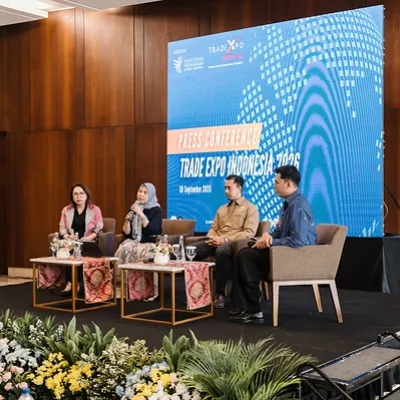
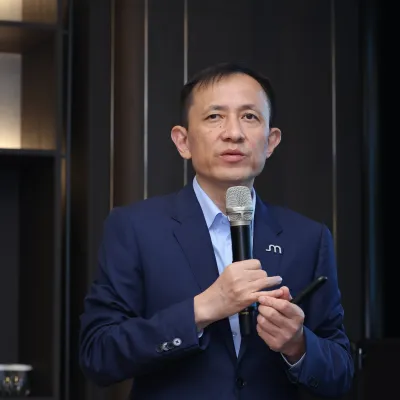
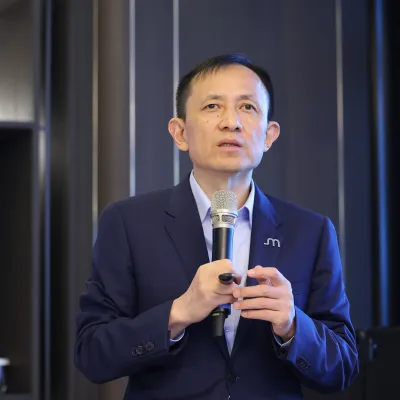
From left: David Lin, AVP of AI Enterprise & GTM at Phison; John Chang, Founder and CEO of JMEM TEK; and Sharon Ku, Solutions Development Head at NeuroShine, join Uly Su, Director and Head of Startup Island TAIWAN – Silicon Valley Hub, for the “From Silicon Up” fireside discussion.
Held around Taiwan Tech Week, the "Silicon to Steel: A Physical AI Stack Mixer" brought Taiwanese companies into conversation with leaders from Phison Electronics and Applied Materials. Co-hosted by Startup Island TAIWAN – Silicon Valley Hub and SparkLabs Taiwan, the event featured startups working across memory, semiconductor security, simulation, AI agents and enterprise AI.
Uly Su, Director and Head of Startup Island TAIWAN – Silicon Valley Hub, moderated the first fireside discussion, while SparkLabs Taiwan Founder and Managing Partner Edgar Chiu moderated the second.
"Most importantly, what does Physical AI mean and how can we turn that technology into something to be commercialized?" Chiu said.
Five Taiwanese startups, JMEMTEK, NeuroShine, metAI, MORALE AI and APMIC, participated in the discussions.
Building the Physical AI stack
The first discussion focused on the infrastructure required as AI moves beyond software.
Daniel Lin, AVP of AI Ecosystem & GTM at Phison Electronics, said AI is pushing the company beyond its traditional hardware role. "Phison is moving from silicon to system, to a total solution provider," he said, pointing to memory as a growing bottleneck for AI workloads.
Security and data control are also becoming critical as AI enters physical and mission-critical environments. JMEMTEK Founder and CEO John Chang highlighted semiconductor security and post-quantum cryptography, while NeuroShine Business Development Head Sharon Ko emphasized the importance of protecting enterprise data.
The second discussion examined the transition from simulation to the factory floor.
Daniel Wu, Co-Founder and CEO of metAI, said the company is working with TSMC to automate the creation of digital twins, reducing the time required to build detailed factory simulations.
But simulation has limits. Colette Wu, Chief of Staff at Applied Materials, said manufacturers still need real-world experimentation because existing data cannot always predict what happens at the technological frontier.
For startups, she added, strong technology alone is not enough. Companies need a clearly validated problem, an internal sponsor and an economic case for deployment.
Making AI work for manufacturers
MORALE AI Co-Founder and CEO Phil Kao said startups need to speak the language of manufacturing, demonstrating impact through metrics such as production efficiency, quality, downtime and overall equipment effectiveness rather than model accuracy alone.
APMIC CMO and U.S. General Manager Ian Chen highlighted another challenge: navigating the internal decision-making structures of large enterprises.
The conversations also underscored the importance of local networks for Taiwanese startups entering the U.S. market. Chang said startups need to actively participate in Silicon Valley ecosystems, while Ko said Taiwanese companies must shift from simply demonstrating technology to listening first and understanding U.S. customers' problems.
Together, the discussions highlighted a Physical AI stack extending from semiconductors, memory and security to simulation, domain expertise and deployment in real industrial environments.
For Taiwan, the emerging field offers a way to build on its semiconductor and manufacturing strengths while connecting with Silicon Valley customers, capital, software capabilities and global partnerships. (Related: Taiwan Factories Bet Big on Physical AI to Save Vanishing Expertise | Latest )
Startup Island TAIWAN – Silicon Valley Hub was established in Palo Alto in 2025 with support from Taiwan's National Development Council to help Taiwanese startups enter and expand in the U.S. market. SparkLabs Taiwan, part of the global SparkLabs investment network, has supported more than 80 AI and deep-tech founders since 2018.