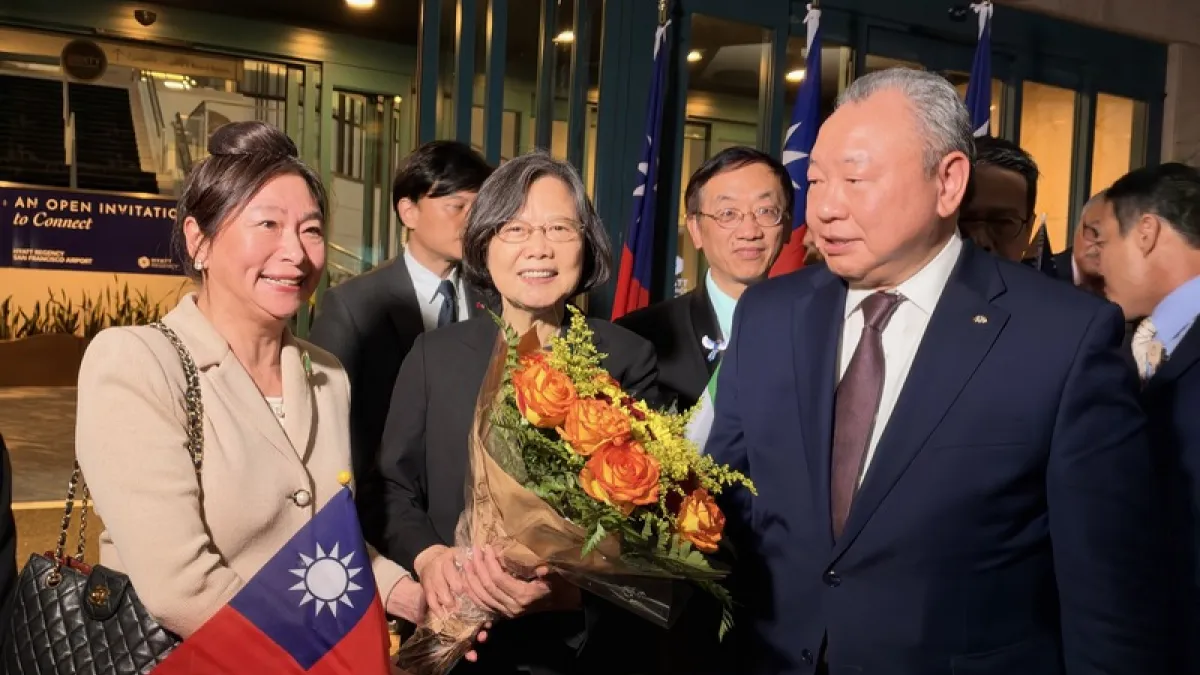
Former Taiwanese President Tsai Ing-wen (蔡英文) arrived in California on October 6, Taiwan time, ahead of a keynote at a Stanford University conference that brings together Silicon Valley investors, defense startups and senior Pentagon figures. Experts familiar with international affairs say the invitation recognizes Taiwan's democratic resilience and highlights the island's strategic weight in critical technologies, semiconductor supply chain security and defense cooperation with the United States.
Tsai's First US Visit Since 2024
The trip is Tsai's first to the United States since she stepped down in May 2024. She is scheduled to deliver the opening keynote at Stanford DEFCON's 2026 Technology & National Security Conference on October 7, the fourth edition of the annual event organized by Stanford's Gordian Knot Center for National Security Innovation. She is the first former Taiwanese leader to be invited.
Tsai announced her departure on Facebook late on October 5, telling friends in San Francisco she would see them the next day. After landing, she wrote that she had felt a warm welcome as soon as she stepped off the plane, thanked those who came to greet her and everyone who has supported Taiwan, and said she would use every opportunity in the coming days to meet more people and win more friends for Taiwan.
Why The Conference Matters
Experts say the conference is fast becoming one of the most closely watched strategic forums in defense technology because it gathers top Silicon Valley venture capitalists, fast growing defense unicorns, senior Pentagon officers, policymakers and international political figures in one place.
Its agenda tracks the shifts in global security and military technology, linking civilian innovation in artificial intelligence, autonomous vehicles and space technology with defense needs. The 2024 conference examined how Silicon Valley startups were breaking open the Pentagon's traditional procurement system, while 2025 focused on turning large language models and commercial satellites into defense advantages in an era of strategic competition. This year's theme centers on allied innovation and defense industrialization amid geopolitical competition, with a focus on autonomy in battlefield AI, asymmetric warfare and how partner nations can rebuild secure defense supply chains.
Who Is Expected To Attend
According to experts, participants from government and the military include former US Defense Secretary Mark Esper, former Indo-Pacific Command chief Adm. John Aquilino and Gen. Dan Caine, chairman of the Joint Chiefs of Staff. From industry and venture capital, the lineup includes a16z co-founder Marc Andreessen, Anduril Industries co-founder Trae Stephens and Anna Makanju, OpenAI's vice president of global affairs.
What Taiwan Brings To Defense Innovation
Experts say the close fusion of defense startups, national security and industrial development has pushed the global defense industry into a new phase. As one of the world's most efficient and capable high tech manufacturers, Taiwan stands to play a distinctive role, which gives Tsai's appearance special significance for defense innovation cooperation between Taiwan and the United States.
From Tsai's invitation to the involvement of young Taiwanese startups, experts say, the event shows where Taiwan's strength as a technology powerhouse meets its democratic resilience. As the organizers put it, Taiwan's experience sits at the intersection of technology, economic security and strategic competition. With its command of semiconductors and other critical supply chains, and the resilience it has shown in the face of complex geopolitics and new types of threats, Taiwan has become an indispensable partner for the United States and its allies as they strengthen security and defense supply chains.
As Stanford DEFCON increasingly acts as an accelerator for defense ventures, experts add, Taiwan's strengths in hardware manufacturing, chip design and agile software development are being linked with Silicon Valley defense capital and the needs of the United States and its partners. That, they say, is speeding up joint research and more resilient supply chain cooperation in next generation defense technologies such as unmanned vehicles and low Earth orbit satellite communications for the battlefield.