The New Zealand Film Commission will stop funding 10 screen industry organizations in June 2027, even as the government lowers the bar for screen production rebates, in a country whose South Island mountains stood in for Alaska in Brad Pitt's Heart of the Beast.
The commission, known as NZFC, announced on September 30 that its Core Funding Programme will end when contracts expire on June 30, 2027, according to its press release. The program has paid just over NZ$1 million a year to the organizations.
Film Commission Ends Core Funding In June 2027
Industry magazine IF reported that the affected groups are the directors' guild DEGANZ, Equity New Zealand, the New Zealand Writers Guild, SIGANZ, Ngā Aho Whakaari, the Pan-Asian Screen Collective, Pacific Islands Screen Artists, Script to Screen, the producers' guild SPADA, and Women in Film and Television New Zealand. According to IF, most received NZ$100,000 a year, while Ngā Aho Whakaari received NZ$120,000.
NZFC Chief Executive Annie Murray framed the move as a question of priorities. "Our responsibility is to regularly review our programmes, carefully prioritise public funding and make deliberate choices about where NZFC investment can have the greatest impact for New Zealand film," she said in the commission's release.
The commission is itself under pressure. ScreenHub reported that its funding was cut by 5% this financial year, after a 2% cut the year before, with another 5% reduction expected next year. The commission says it will redirect the money to targeted development funding. The former recipients can apply for it, and it has offered to host sector-led talks on future coordination.
Guilds Warn Of Weaker Bargaining Power
DEGANZ said the loss threatens seven years of work toward collective agreements on fair rates and conditions. "Weakened occupational guilds will find it more difficult to represent their members in any kind of negotiation, advocacy or lobbying," Executive Director Tui Ruwhiu said in a statement on October 1.
SPADA acknowledged the "considerable financial pressures" facing the commission but warned the impact "will be felt across the industry," IF reported. It also called for rules requiring international streaming platforms to support New Zealand content.
Budget 2026 Doubles Domestic Rebate Cap To NZ$12 Million
The cuts come as the government moves the other way on production incentives. From July 1, the domestic Screen Production Rebate, a 40% cash rebate on qualifying spending, lowered the minimum spend for feature films from NZ$2.5 million to NZ$1 million. The maximum rebate per project rose from NZ$6 million to NZ$12 million. The cap on above-the-line costs, which cover directors and principal cast, was removed, and the Additional Rebate was abolished.
The Screen Guild said the government set aside NZ$185.3 million over four years for the domestic rebate. "Lowering the entry threshold for feature films opens the door for more projects to get underway," NZFC Deputy Chief Executive Chris Payne said in the commission's announcement of the changes.
The Screen Guild noted that public agencies supporting the wider screen sector, including NZ On Air and the commission, "are also being asked to make savings." More production, it said, "does not automatically mean stronger crew rates or healthier departmental budgets."
International Rebate Now Starts At NZ$4 Million
Economic Growth Minister Nicola Willis announced changes to the International Screen Production Rebate on November 7, 2025, which took effect on January 1. The minimum spend for feature films fell from NZ$15 million to NZ$4 million, and the threshold for an extra 5% uplift dropped from NZ$30 million to NZ$20 million. The uplift now also covers post-production, digital, and visual-effects-only projects, 1News reported.
New Zealand's base international rebate is 20%, against 40% in Australia, 32% in Ireland, and 29% in both Britain and Canada. The government says the scheme returns NZ$2.40 for every NZ$1 invested. Productions that have used it include Avatar, The Hobbit, and Deadpool & Wolverine.
South Island Peaks Stood In For Alaska
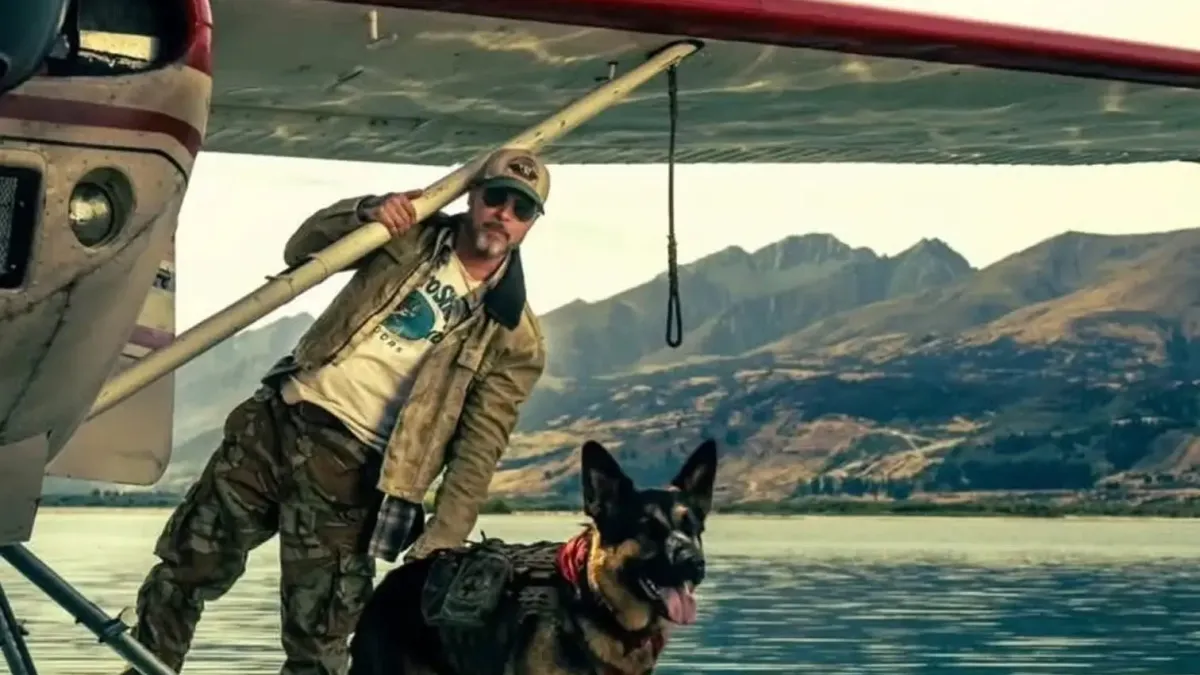
Heart of the Beast shows what a Hollywood shoot in New Zealand can look like. The Otago Daily Times reported that it was shot across Otago and Fiordland, including Lake Wakatipu near Queenstown, Glenorchy, Mount Aspiring National Park, and Milford Sound. One location reachable only by helicopter was limited to three equipment loads. The film's story is set in Alaska.
The Otago Daily Times reported in June that the film was scheduled for release in New Zealand cinemas on September 24.
Its canine lead also came from New Zealand. Trainer Andrew Simpson found Uber by auditioning dogs across both the North and South islands, the Motion Picture Association reported. (Related: Taipei's Pet Temple Runs With No Staff and an AI Oracle | Latest )
The screen sector supports about 24,000 jobs across more than 5,000 businesses and contributes NZ$3.5 billion a year to the economy, according to NZFC.