Taiwan's Presidential Office declared on October 1 that the island has never abandoned its democratic system under Chinese military pressure, responding to a Reuters report that found Beijing's odds of invading before 2028 have fallen even as the danger could climb sharply once Taiwan's next president takes office.

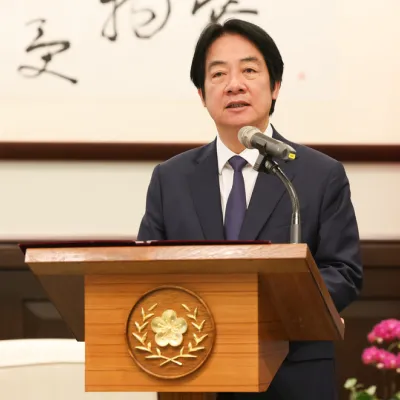
Presidential Office Spokesperson Karen Kuo said in a statement that China's campaign to intimidate Taiwanese voters into giving up their freedom and self-governance has continued without pause since the island held its first direct presidential election in 1996. In three decades of democratic rule since then, she said, Taiwan's people have never surrendered those values no matter the threat.
Kuo Links Pressure To Regional Alarm
Kuo said China has recently intensified military pressure on fellow democracies along the first island chain, spanning the Taiwan Strait, the East China Sea and the South China Sea, actions she described as reckless and destabilizing. She said the escalation has become the single largest source of uncertainty in the region, prompting the United States, Japan and South Korea to issue a joint statement opposing any unilateral attempt to change the status quo.
Lai Government Doubles Down On Deterrence
Under President Lai Ching-te, Kuo said, Taiwan will keep strengthening its own defenses and building what officials call “whole-of-society resilience,” while deepening security cooperation with the United States and other democratic partners. She said deterrence built on strength, not concessions, remains the surest path to peace, and that Taiwan will not trade away its people's freedom and prosperity for any military threat.
US Officials See A Narrowing Invasion Window
The response followed a Reuters report, citing multiple current and former U.S. officials, that said Chinese leader Xi Jinping has ordered the People's Liberation Army to be ready to take Taiwan by force by 2027. The news agency reported that a sweeping anti-corruption purge inside the Chinese military, combined with Beijing's apparent decision to wait for the outcome of Taiwan's 2028 presidential election, has led Washington to lower its near-term estimate of an invasion.
Officials Warn Risk Could Spike After 2028
Those same officials cautioned the calculus could shift dramatically once Taiwan's next president is sworn in. According to Reuters, if President Lai's Democratic Progressive Party wins reelection in the 2028 vote, Beijing's willingness to resort to force is likely to rise sharply, leaving cross-strait relations markedly more volatile in the years that follow.
Kuo's remarks reflect a consistent line from Taipei under Lai: pairing reassurance that Taiwan will not bend with calls for faster defense spending and deeper societal preparedness, a message aimed as much at voters at home as at allies in Washington, Tokyo and Seoul watching how the island navigates the back half of the decade.
(Related:
Eight More Nations Join The US Japan And South Korea In Defending The Taiwan Strait Status Quo
|
Latest
)