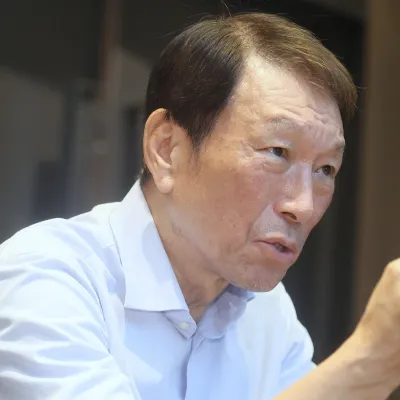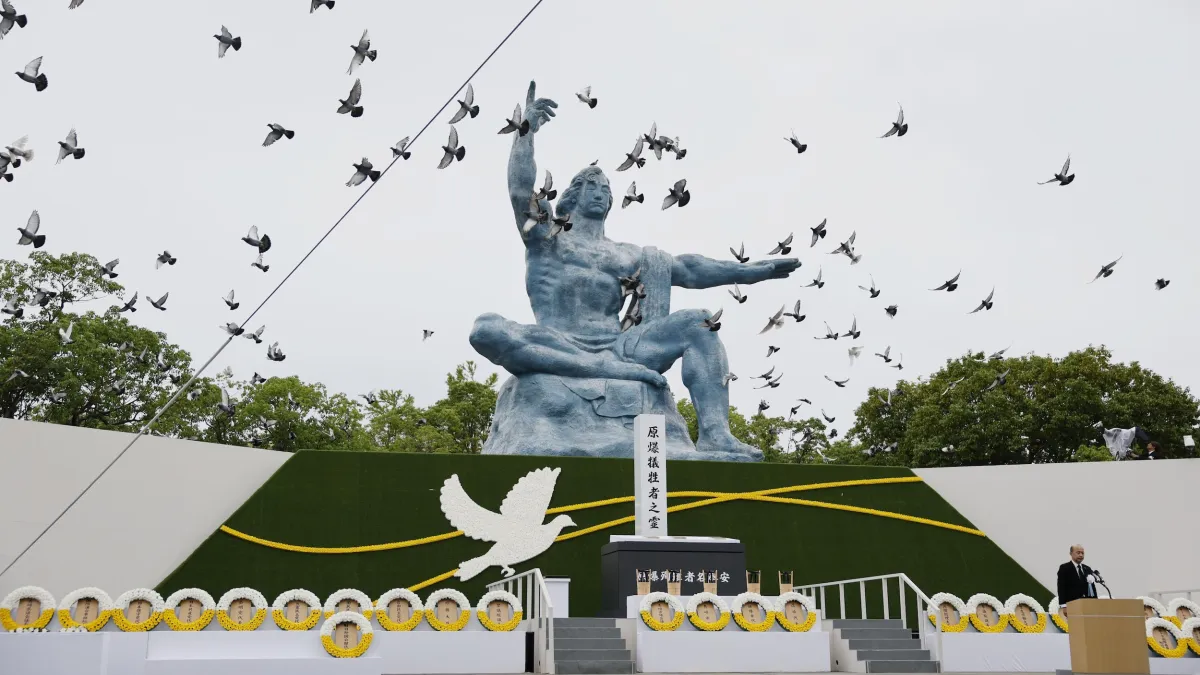
Isao Haramoto (張本勳), who spent decades as one of Nippon Professional Baseball's most celebrated hitters, died on September 9 at the age of 86. Known as the "Hit Machine," Haramoto was the only player in NPB history to accumulate 3,000 career hits — a record that still stands — and the only player ever to bat above .300 in 16 separate seasons. He held the NPB record for nine consecutive .300-average seasons. To Japanese baseball fans, he was an irreplaceable legend.
But Haramoto's significance extended well beyond batting statistics. Born in Japan to Korean parents — he was known by his Korean name Jang Hun (張勳) — he was a figure of deep respect in both Japan and Korea. His story was one of extraordinary hardship overcome: a second-generation Korean resident in Japan, growing up in grinding poverty during an era of overt ethnic discrimination, who went on to become one of Japanese professional baseball's defining stars. That narrative resonated powerfully in Korea, and understandably so.
I encountered a glimpse of that dual identity sometime in the 1990s, in a restaurant in Seoul. A baseball broadcast was playing on television, and the announcer referred to "장훈씨 (Mr. Jang Hun)." I looked up to find Haramoto seated in the commentary booth, conversing fluently in Korean — albeit with a slight Japanese accent. I later learned that he had honed the language through daily conversations with his mother, a first-generation Korean immigrant. The lesson stayed with me: a mother's influence is profound.
In his later years, Haramoto devoted much of his public life to speaking about something he had kept largely private during his playing career: his experience as an atomic bomb survivor. On August 6, 1945, a five-year-old Haramoto was at his family home in Hiroshima, approximately two kilometers from the hypocenter, when the bomb fell. His older sister, six years his senior, suffered severe burns over her entire body near the blast site and died within days. His mother was badly wounded by flying glass. The boy witnessed scenes of almost unimaginable horror — people burned beyond recognition, others leaping into drainage ditches to escape the heat.
For decades, the trauma was too raw to speak about — for him, and for his family. Japan's postwar society also harbored its own discrimination against atomic bomb survivors, compounding the silence. Haramoto did not begin to speak publicly about his hibakusha experience until around 2005. The trigger, by his own account, was watching a television street survey in which young Japanese showed near-total indifference to the war. Alarmed by what he saw, he decided he could no longer remain silent.
From that point on, Haramoto positioned himself as one of the last living bearers of direct testimony. In an NHK interview nine years ago, he said: "Every summer, without fail, I remember the moment the bomb fell. More than seventy years have passed, the war is over — but for us hibakusha, the war never ends. August is always a very painful month. The sixth, Hiroshima. The ninth, Nagasaki."
A Memorial Service Interrupted By Politics
The atomic bombings of Hiroshima on August 6 and Nagasaki on August 9, 1945 — carried out by the United States military — inflicted wounds on Japanese society that have never fully healed. The international debate surrounding the film Oppenheimer and its reception in Japan reflects that ongoing pain. To be clear: the devastation of Hiroshima and Nagasaki does not absolve the Imperial Japanese military of the atrocities it committed across Asia, the Pacific, and Okinawa during the war. But the indiscriminate mass killing of civilian non-combatants by the most destructive weapons ever deployed cannot be justified under any circumstances.
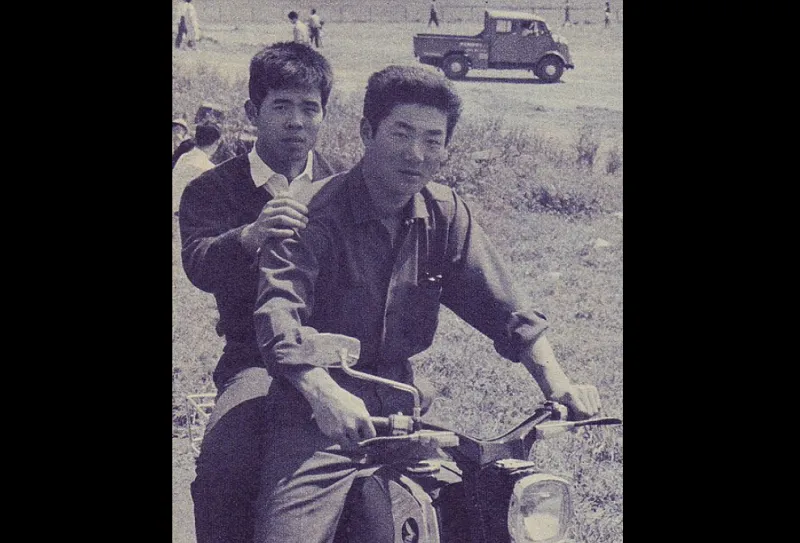
Each August in Japan, a series of commemorative events marks the end of the Second World War, culminating around August 15 — the anniversary of Japan's surrender. In Hiroshima and Nagasaki, annual ceremonies continue to honor the victims of the bombings and pray for lasting peace. These traditions persist even as public concern grows about the fading of historical memory and a broader rightward drift in Japanese society.
This year, Nagasaki held its Peace Memorial Ceremony on August 9, as it does every year. What should have been a solemn occasion of mourning and remembrance was unexpectedly drawn into cross-strait politics. Li Yi-yang , Taiwan's de facto ambassador to Japan and director-general of the Taipei Economic and Cultural Representative Office (TECRO) — the institution that manages Taiwan-Japan relations in the absence of formal diplomatic ties — announced on social media that he would not attend, citing his dissatisfaction with the seating arrangements made by the city of Nagasaki.
Li accused Nagasaki of being "pro-China" and of "following Beijing's wishes." He charged that the city had "failed to recognize its own mistaken decision" and had become "complicit in China's lawfare against Taiwan — a tool of China's claim that Taiwan is not a sovereign state but part of China."
TECRO published a formal statement on its website on August 10, elaborating Li's position in full detail.
Nagasaki City responded with a factual explanation. The city noted that Taiwan was not among the parties formally invited to the ceremony — as Taiwan has no embassy in Japan and no representation at the United Nations — but that Nagasaki had accommodated Taiwan's expressed wish to participate by preparing seats for its representatives. The city further stated that the seating arrangement was not discriminatory toward Taiwan based on its relationship with China, but had been made in accordance with diplomatic convention and the guest list provided by Japan's Ministry of Foreign Affairs.
To understand how this dispute arose, it is necessary to look at the sequence of events.
How Taiwan Gained Access To The Ceremonies
Taiwan's de facto authorities began attending the atomic bomb memorial ceremonies in Hiroshima and Nagasaki in 2025, but the two cities arrived at this decision through different processes.
Hiroshima designated 2025 — the 80th anniversary of the bombing — as a "Year of Prayer for Nuclear Abolition and World Peace," and changed its approach from formal invitations to an open-participation framework: any party that understood the ceremony's purpose and wished to attend could contact the city directly. This allowed Taiwan's representatives to participate without requiring a formal diplomatic relationship with Japan. Li Yi-yang attended the Hiroshima ceremony on August 6 as one of 121 "countries and regions" represented.
Nagasaki took a different approach. In 2025, the city expanded its notification list beyond embassies accredited to Japan to include countries and territories with representation at the United Nations. Taiwan, having neither an embassy in Japan nor a UN mission, did not initially fall within either category. After Taiwan expressed its desire to attend, Nagasaki accommodated the request — a gesture itself shaped by the significance of the 80th anniversary. The city's stated rationale was a return to the ceremony's foundational purpose: to mourn the victims and pray for permanent world peace, with as many countries and regions as possible present, regardless of diplomatic status or political differences.
In other words, Nagasaki deliberately separated two distinct questions: whether a diplomatic relationship exists, and whether a party may attend a peace memorial. Permitting Taiwan's representatives to attend was not an endorsement of Taiwan's statehood claim — it was a humanitarian gesture toward broader participation. Since both Hiroshima and Nagasaki began including Taiwan's representatives, the People's Republic of China has boycotted the ceremonies for two consecutive years. Beijing has offered no official explanation, but it is widely reported that China chose to absent itself rather than share the venue with Taiwan's representatives — a presence that Beijing feared could be read as tacit acceptance of "two Chinas" or "one China, one Taiwan." For Beijing, Taiwan is the "core of core interests," a question of sovereignty on which no compromise is conceivable.
The Sophistry Behind Taiwan's China Argument
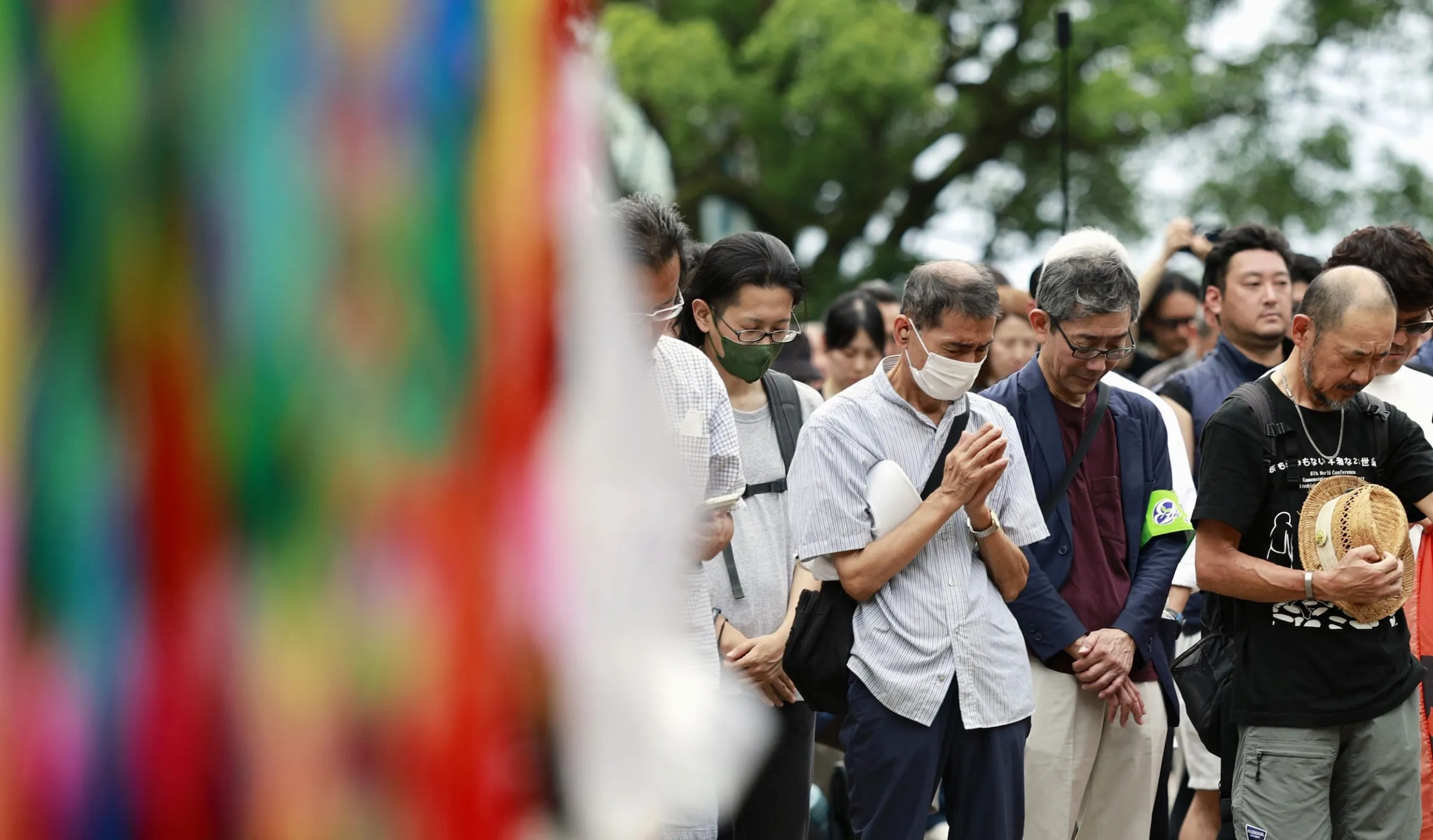
Li Yi-yang accused Nagasaki of "deliberately denying Taiwan's statehood and completely disregarding Taiwan's sovereignty and dignity," and of "bowing to China's wishes, diminishing Taiwan's status as a nation, and insulting Taiwan's dignity."
He also declared: "Taiwan is a sovereign independent country with no subordinate relationship to China (the People's Republic of China). China has not governed Taiwan for a single day. The Republic of China on Taiwan was founded before China, and Taiwan has never been part of China."
This argument, however, contains a critical logical sleight of hand — a deliberate blurring of what "China" means. The issue is complex, but it cannot be understood without confronting it directly.
Start with the name "Taiwan." Historically, there has never been a sovereign state called "Taiwan." (The Taiwan Republic declared in 1895, in opposition to the Qing dynasty's cession of Taiwan to Japan following the First Sino-Japanese War, was recognized by no government and ceased to exist within months.)
Li's formulation carefully specifies "China (the People's Republic of China)" when asserting mutual non-subordination, and then claims that "China has not governed Taiwan for a single day." That is factually accurate in a narrow sense: the PRC has never administered Taiwan. But the logical move that follows — restricting the definition of "China" exclusively to the PRC — is where the argument becomes misleading.
Since Japan's defeat in 1945, Taiwan has been governed without interruption by the Republic of China (中華民國). Is the Republic of China — ROC — not "China"?
The historical record is straightforward. After Japan's surrender, control of "China" — meaning the Republic of China established after the 1911 Xinhai Revolution — was contested between the Kuomintang and the Chinese Communist Party. The Chinese Civil War ended with the CCP driving the KMT government off the mainland; on October 1, 1949, the People's Republic of China was proclaimed in Beijing. The PRC is, in a meaningful historical sense, a successor state derived from the ROC — which is precisely why the government of Lee Teng-hui (李登輝) repeatedly insisted during the 1990s that "one China means the Republic of China."
Li's claim that "Taiwan has never been part of China" — made without clearly defining which "China" he means — is not a statement of historical fact. It is a rhetorical substitution that reflects the DPP government's political preferences, not a coherent legal or historical argument.
The evolution of Japan's diplomatic relationships with the two Chinese governments illustrates the point clearly. In 1952, Japan concluded the Treaty of Peace with the Republic of China, based in Taipei — legally restoring diplomatic relations between Japan and "China." When Japan normalized relations with the PRC government in Beijing in 1972, the process was described as "normalization of Japan-China diplomatic relations" (日中邦交正常化) — because Japan was switching its recognition from one Chinese government to another. Following normalization, Japan ceased to extend political recognition to the ROC government, and no formal diplomatic relationship has existed since.
A Japan-based scholar who follows Taiwan closely put it this way: "The DPP government has deliberately cultivated within Taiwan an illusion that something close to a formal diplomatic relationship exists between Taiwan and Japan. Japan's increasingly accommodating posture toward the DPP government, driven in part by deepening tensions with Beijing, has reinforced that illusion."
Economic Contributions Framed As Leverage
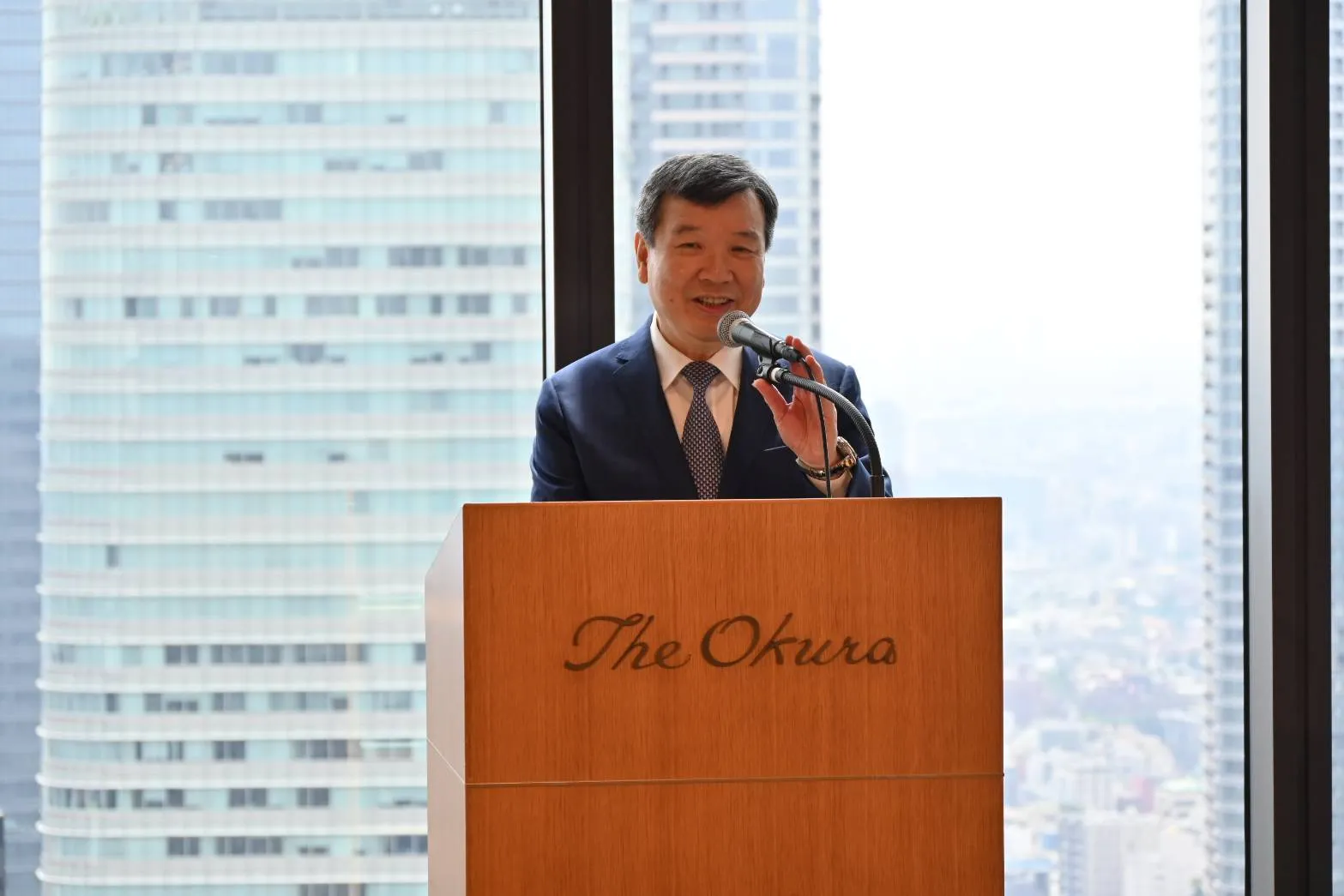
Li Yi-yang described the Nagasaki incident as "unprecedented in Taiwan's years of participation in central and local events in Japan" — making clear he expected Nagasaki to follow Hiroshima's lead. Under the principle of local autonomy, there is nothing inherently wrong with Nagasaki making its own judgment, provided it does not conflict with the central government's authority. The Nagasaki mayor's positions on issues such as the non-nuclear principles differ from those of Prime Minister Sanae Takaichi and her allies, which may partly explain why the DPP government was willing to direct sharp criticism at the city.
But foreign policy is the exclusive domain of the central government. Even under the Takaichi administration, Japan's "one China" policy has not changed. If Nagasaki followed the Ministry of Foreign Affairs' guest list — as the city explicitly stated — then targeting Nagasaki rather than the ministry looks like misplaced criticism.
More troubling was Li's rhetorical pivot. In his statement, he enumerated a series of economic and humanitarian contributions: TSMC's investment in a Kumamoto plant, projected to generate ¥23 trillion in economic benefits for the Kyushu region over ten years; Taiwan's donations following the Great East Japan Earthquake, the Noto Peninsula earthquake, and the Kumamoto earthquake, each time topping global rankings; the volume and spending of Taiwanese tourists visiting Japan; Taiwan's stock market capitalization and economic growth rate; and Taiwan's critical role in high-technology hardware manufacturing. He then demanded that Nagasaki recognize "the deep bonds of Japan-Taiwan friendship" and "not accommodate a China that threatens Taiwan."
He also argued that China — not Taiwan — is the real threat to the values that Nagasaki's peace ceremony represents: Beijing is expanding its nuclear arsenal, conducting frequent military exercises across the Indo-Pacific, and is "the greatest destabilizing force in the region." On those grounds, he concluded, the calls for nuclear abolition and permanent peace at the Nagasaki ceremony should be directed at China, not used as cover for sidelining a friendly Taiwan.
In Japanese online spaces, these arguments were widely amplified, particularly among those already sympathetic to Taiwan. Some Japanese commenters even apologized to Taiwan on Nagasaki's behalf. Li noted on August 10 that over 80 percent of the Facebook responses he had seen supported his decision.
Japan's general public opinion toward Taiwan is, at present, highly favorable. But it should be noted that a significant portion of that sentiment is driven not by Taiwan itself, but by opposition to the Chinese Communist Party and hostility toward China more broadly. For those commenters, "pro-Taiwan" and "anti-China" are two sides of the same coin. Taiwan, in their framing, is primarily a vehicle for anti-Beijing sentiment rather than an independent object of interest or affection.
A separate and more measured segment of online opinion accepted Nagasaki's explanation — that it had simply followed the Ministry of Foreign Affairs' list — as reasonable. And among those with direct ties to the atomic bomb survivor communities, some expressed frank irritation: "Who do you think you are? This is deeply disrespectful." And: "If you're not coming to honor the dead, don't come. What is Taiwan trying to achieve?"
Taken on their own terms, Taiwan's economic contributions to Japan — TSMC's investments, disaster relief donations, tourist spending — are genuinely appreciated. Japan's unease about the growth of China's military is also real. But read carefully, Li's statement has a transactional quality that sits uneasily with the solemnity of the occasion. The document reads, in part, like a ledger of past favors — a tally presented with the implicit expectation that debts be repaid. The ceremony's purpose is to mourn the dead and pray for peace. Li's statement instead lectures the host about seating order.
There is also a logical problem for those Japanese voices who invoke Taiwan's "enormous donations" as the basis for friendship. If the relationship depends on financial contributions, what happens when the contributions stop? Genuine friendship between neighboring peoples should not rest on a transactional ledger.
Cross Strait Rivalry Reaches A Solemn Ceremony
Statements made by a de facto ambassador on official social media channels should be read as reflecting government policy, not personal opinion. The relevant question is: why did Taiwan's authorities choose this moment, and this venue, to mount this kind of challenge?
One explanation that circulates among Taiwan observers is electoral. With unified local elections approaching in November, the DPP has reason to sustain and amplify its core "resist China, protect Taiwan" narrative. A visible confrontation over seating protocol at an atomic bomb memorial — with Taiwan cast as the aggrieved party — serves that purpose. Within Taiwan, the episode generated substantial media coverage, with DPP supporters largely backing Li's conduct, while opposition supporters expressed concern about the damage to Japan-Taiwan relations.
Some observers also suggested that the incident was a deliberate effort to perform the role of "Taiwan being bullied by China" for a Japanese audience — soliciting sympathy, and banking on the goodwill that has accumulated over years of careful public diplomacy.
There is a meaningful distinction worth drawing here. When Taiwan has been excluded from multilateral forums to which it has legitimate claim — international health assemblies, civil aviation bodies, and similar institutions — protests are substantively justified. But disrupting a ceremony dedicated to mourning atomic bomb victims — Japan's own dead — is a different matter entirely. It is difficult to avoid the conclusion that some who orchestrated or applauded this episode either do not understand the depth of the wound that Hiroshima and Nagasaki represent in Japanese society, or simply do not regard that wound as their concern.
A term has recently entered circulation in Korean internet culture: "victim cosplay" (被害者 Cosplay) — meaning the performance of victimhood by those who are not, in fact, victims, in order to extract sympathy or political advantage. The concept is worth examining in the Taiwanese political context.
As Taiwan democratized and martial law-era restrictions lifted, the history of "White Terror" — the KMT government's persecution of suspected communist sympathizers — became an increasingly prominent political issue. The DPP has systematically reframed that history as a story of "KMT oppression of Taiwanese people," positioning itself as the representative of the victimized and building a moral authority around that claim. The February 28 Incident of 1947 — a large-scale military crackdown that followed a popular uprising shortly after Japan's defeat — has become central to this narrative, with DPP-aligned sources citing death tolls of ten thousand or even tens of thousands. Some surviving families and researchers, however, after carefully examining the available records, have concluded that the actual figure was closer to 800 to 1,100 — and have called on the DPP government to reconsider its figures. In an environment where maximizing the perceived scale of victimhood yields political dividends, accurate accounting appears not to be the priority. The DPP has also largely avoided confronting the fact that many of those persecuted during the White Terror were communist-affiliated activists who supported unification under the CCP — a historical complexity that complicates the clean victim-oppressor narrative.
The Political Payoff Of Victim Cosplay
Read against this background, the Nagasaki episode begins to look like a performance of the same political logic: stage an incident in which Taiwan is visibly wronged, cast China as the perpetrator, and harvest sympathy from a Japanese public already primed to favor Taiwan and distrust Beijing.
Li Yi-yang argued that seating protocol at a memorial ceremony is a matter of national dignity — and he is right that questions of symbolic recognition matter deeply in cross-strait politics. They matter equally to Beijing, which since 2016 has interpreted the DPP government's trajectory as a move toward formal independence and has progressively tightened pressure on Taiwan in response. The international environment Taiwan navigates has grown genuinely more difficult year by year. That is a serious issue. But it does not make a peace memorial the appropriate venue to relitigate it.
The Nagasaki ceremony exists to honor the dead and comfort the surviving hibakusha and their families. Li's conduct was analogous to arriving uninvited at a funeral, then causing a scene because the incense-offering order or the placement of funeral wreaths did not reflect one's preferred status. Or perhaps — lost in the performance of victimhood — he simply did not notice.
More striking still is the reaction of some Japanese Taiwan supporters, who loudly condemned Nagasaki for its supposed discourtesy toward Taiwan while remaining entirely silent about the discourtesy Taiwan showed to a ceremony honoring Japan's own war dead. If these people are genuinely Taiwan's friends, a true friend would point out — clearly and directly — when Taiwan's behavior risks its own reputation. That kind of honest counsel, even when unwelcome, is what distinguishes genuine partnership from enabling.
My inquiries with people in Taipei familiar with Japan-Taiwan relations confirmed that Japan's side viewed Li's conduct with both confusion and barely concealed displeasure.
The episode brings to mind a 1982 book, Spoiled Korea: Kim Il-sungism and Japan, co-authored by Wada Yoichi and Hayashi Nobuhiro. Writing from a socialist perspective, the authors examined how Japan's postwar left had extended an almost unconditional deference to North Korea and Kim Il-sung's political system — indulging rather than critically engaging with it. The book was provocative at the time, when a kind of "North Korea is essentially good" sentiment pervaded left-leaning Japanese commentary.
Something similar appears to be operating today, only with the ideological polarity reversed. A "Taiwan is essentially good" sentiment now shapes a significant portion of Japanese public discourse about Taiwan. That sentiment has deepened in direct proportion to Japan's growing unease about China's rise — as anxieties about the PRC increased over the past three decades, enthusiasm for Taiwan rose correspondingly. Figures such as Lee Teng-hui, Tsai Ing-wen, and Lai Ching-te have systematically cultivated this goodwill through sustained public diplomacy directed at Japan. Unlike South Korea or Beijing, Taiwan has not demanded that Japan reckon with its colonial history or wartime responsibilities — an approach that has generated a genuine sense of relief and affinity in parts of Japanese society. But this dynamic may also have produced a degree of "spoiling": an unwillingness to hold Taiwan to the same standards of conduct expected of others.
The early months of the COVID-19 pandemic in 2020 produced an outpouring of commentary in Japan praising Taiwan's epidemic response. When that response later faltered, many of those who had praised it simply went quiet — without analysis or accountability. A Taiwan grown accustomed to this kind of treatment may have developed the implicit assumption that even behavior approaching disrespect toward atomic bomb victims will be overlooked by a Japanese public predisposed to sympathy.
If Japan and Taiwan have drifted into a mutually indulgent relationship — each enabling the other's blind spots, each reluctant to say what the other does not want to hear — the distortions that result will ultimately damage both sides.
One final thought about Haramoto Isao.
After retiring from baseball, Haramoto occasionally spoke about the ethnic discrimination he faced as a Korean resident in Japan, and about the discrimination suffered by atomic bomb survivors. His memory of those experiences was sharp and unambiguous. But he did not appear to have organized his entire life around them as a governing principle. At least in what he said publicly, there was no sense of victimhood converted into grievance. On the tensions between Japan and Korea, he was once quoted as saying: "Both sides should give a little ground where they can." His public voice was consistently one of warning against war and discrimination — not one of stoking ethnic division.
People in both Japan and Korea listened to Haramoto. Perhaps because what he embodied was a kind of resilience — the strength of someone who had moved beyond victimhood without erasing it. That is something altogether different from the performance of victimhood for political gain. The distance between the two is not small.
*The author is a veteran Japanese journalist and writer based in Taiwan.
(Related:
Exclusive | Diplomatic Firestorm: Inside Li Yi-yang’s Clash Over Nagasaki Memorial Seating
|
Latest
)