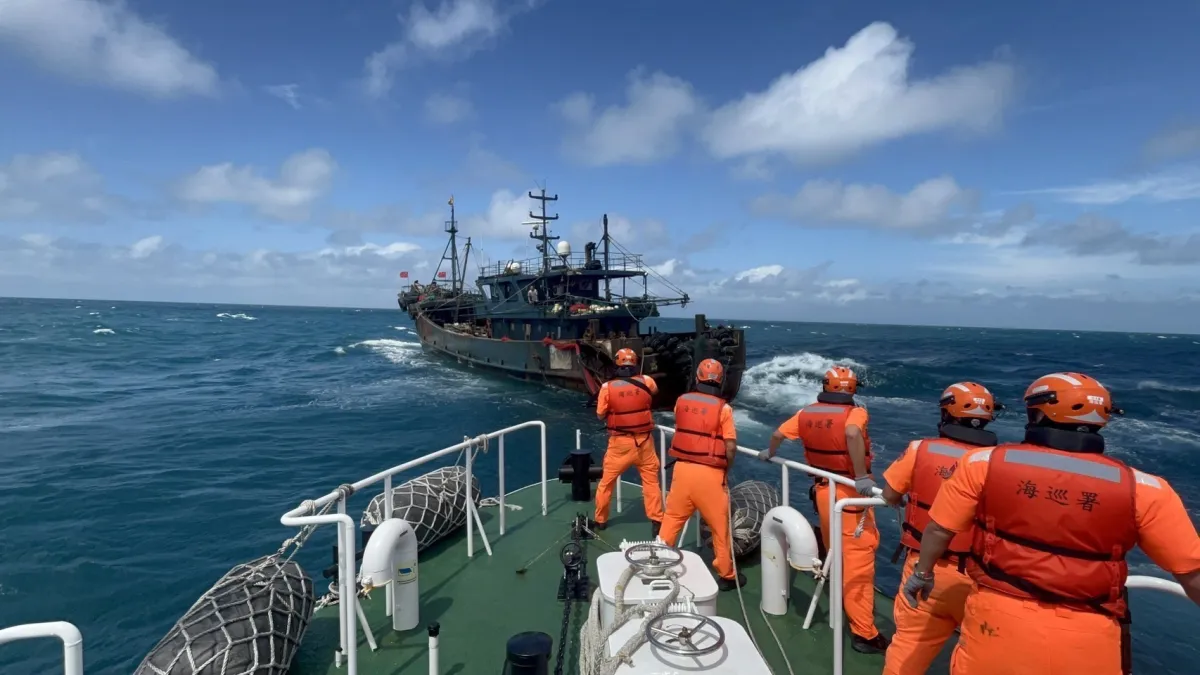
Taiwan's coast guard has become the island's front line against Chinese "gray zone" pressure, the harassment short of open war, yet a national audit found that more than nine in 10 of its ships were sailing short of crew.
Three coast guard insiders, who were not named, told Storm Media that generous pay has not been enough to fill the gap, because the job now means unpredictable deployments, standoffs with Chinese ships and a posting that is hard to leave.
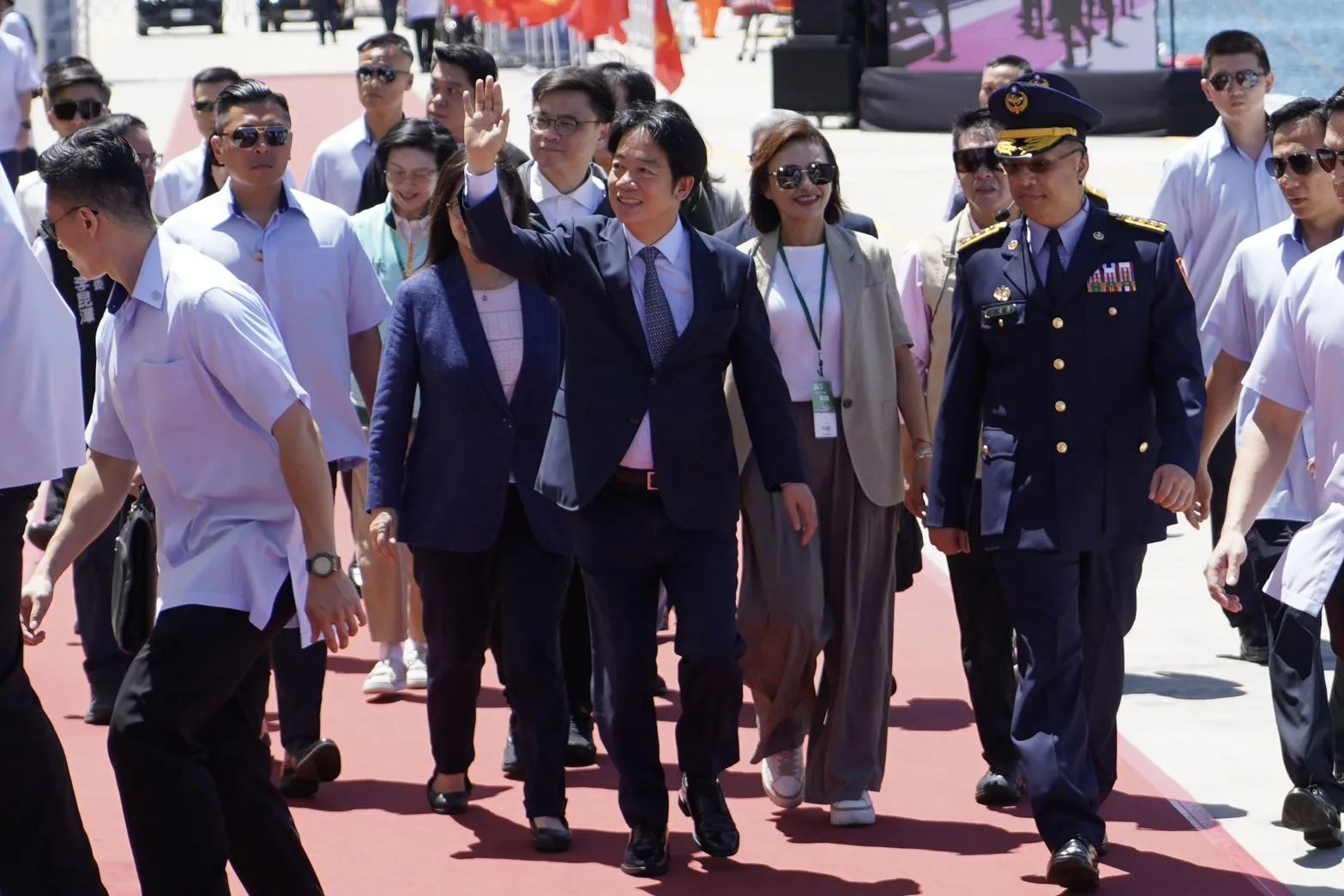
President Lai Ching-te has said the coast guard, which has transformed into a "second navy," is at sea when most people are resting and remains on the scene when the weather is at its worst. Premier Cho Jung-tai has promised to help improve working conditions for coast guard personnel.
The government's 2027 central budget sets aside NT$16.18 billion (about US$510 million) for coast guard personnel costs, including six categories of duty allowances. Staff who go to sea can reportedly earn more than NT$1 million (about US$31,000) a year once allowances are included.
Audit Finds Over 96% Of Ships Below Crewing Standards
A report from Taiwan's National Audit Office found that the Coast Guard Administration's Fleet Branch, which runs the agency's ships, is missing sailors on almost every vessel in service.
Under Fleet Branch rules, a ship needs between four and 50 crew members depending on its type and tonnage, and a minimum of three to 35 to go on duty. As of the end of June 2025, the branch had 108 vessels in service, ranging from 35 to 4,000 tons. Only four of them, or 3.70%, had their full complement. The other 104, or 96.30%, fell short, and 11 had fewer people than the minimum duty requirement.
Auditors warned that sailing at minimum strength could weaken the agency's ability to handle emergencies or reassign crew at short notice. The shortfall is also growing. The branch's average budgeted headcount rose 15.62%, from 2,733 in 2021 to 3,160 in the first half of 2025. Average vacancies climbed faster, from 252 positions (9.22%) to 427 (13.51%), a rise of 4.29 percentage points that the audit described as an increasing trend.
The gap matters because three shipbuilding programs are due to finish between the end of 2027 and 2033. They will add 181 vessels and six ocean patrol ships at a combined cost of more than NT$112.3 billion (about US$3.5 billion).
Pay Tops NT$1 Million But Recruits Stay Away
The people the agency lacks are its maritime police, who serve aboard ships and enforce the law at sea. The coast guard recruits them through the Central Police University, the Taiwan Police College and a special civil service exam for maritime police.
A candidate who passes the third-class exam enters the civil service at the sixth grade of the "recommended appointment" ranks, with a monthly salary of up to about NT$64,000 (about US$2,000). Insiders say that with allowances and overtime, anyone who serves aboard a ship can reach NT$1 million a year. By comparison, Taiwan's monthly minimum wage is NT$29,500.
The first insider, identified as Person A, said Taiwan's falling birthrate has shrunk the police schools' intake, which in turn limits the pool of new maritime police. Today's crews span "three generations," from 22-year-old graduates to veterans of 65.
The larger reason, Person A said, is the tempo of Chinese military exercises and gray zone operations. Because the coast guard is effectively Taiwan's second navy, personnel must rush back to their posts whenever China makes a move, even on leave. Some are on vacation in the morning and at sea by afternoon to face Chinese coast guard ships, which can cause friction at home when families are not understanding.
Deployments have also become unpredictable. In calmer years, a three-day duty meant exactly three days. Now crews often do not know when they will return to port, and a single trip can last the maximum 15 days, with poor phone signal at sea. Some spouses complain that their husbands are "as good as dead," Person A said.
Standoffs Inside One Nautical Mile Raise The Stakes
Over the past three years, Person A said, Chinese coast guard vessels and warships have repeatedly pressed against the 24-nautical-mile line around Taiwan. The Navy does not have enough hulls to match Chinese ships one for one, the insider said, so coast guard vessels of nearly every size class, including the 600-ton Anping class patrol ships, are sent out to meet them.
The usual practice is for a coast guard ship to shadow each Chinese coast guard ship one on one. When a Chinese warship appears, the coast guard watches it first and calls in the Navy. Both sides are wary of being blamed for the "first strike," so clashes are rare, but the aim is still to keep the other side outside 24 nautical miles.

Ships frequently end up very close, within one nautical mile (1.852 kilometers). The Anping class has a top speed of 44 knots, about 81 kilometers per hour. If two 600-ton ships closed on each other at that speed from one nautical mile apart, they could collide in well under a minute.
Person A recalled an incident in which a senior officer ordered a ship to block a Chinese vessel's path with its hull, betting that the other side would turn away. It did, and the mission succeeded. Looking back, the insider said, the slogan "the ship stays, so do we" carries an unspoken second half, "the ship is lost, so are we," and the memory still unsettles the insider.

Vessel Pilots Are The Hardest Posts To Fill
A second insider, Person B, said the dangers at sea are only part of why people avoid the service. The bigger complaint is the loss of personal freedom. When Chinese ships outnumber the coast guard crews on duty, personnel are told to cut their leave short immediately.
Person B added that Taiwan's coast guard vessels are often outweighed by their Chinese counterparts, and described the insistence on matching Chinese ships one on one as partly a matter of face.
Person B said the agency's most acute shortage is in vessel pilots. Huang Hsuan-kai, the director-general of the Fleet Branch, carries several intent forms in his bag. When he meets a promising colleague at the agency's offices, he asks whether they would consider becoming a vessel pilot, and if the answer is yes, he hands over a form. "Good, we've been waiting for you," he tells them.
Most still hesitate to sign. Colleagues joke that once you board a ship you never get off, and that the form is a "life-and-death waiver" that sells your whole career to the sea.
The reason, Person B explained, is the career path. Vessel pilots hold positions equivalent to the sixth to eighth civil service grades. Moving ashore at the same grade would mean becoming at least a section chief, but pilots are recruited young, have little administrative experience and struggle to command authority when they return. Shore posts are also scarce, so many pilots end up staying aboard until they retire at 65.
Drones Cannot Yet Replace Crews On The Front Line
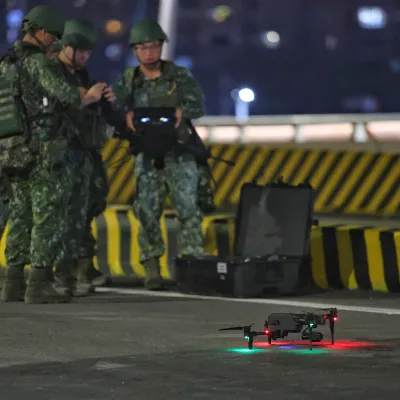
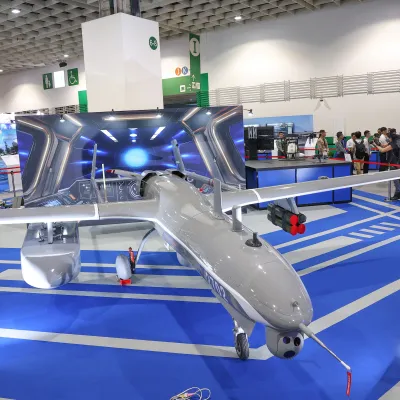
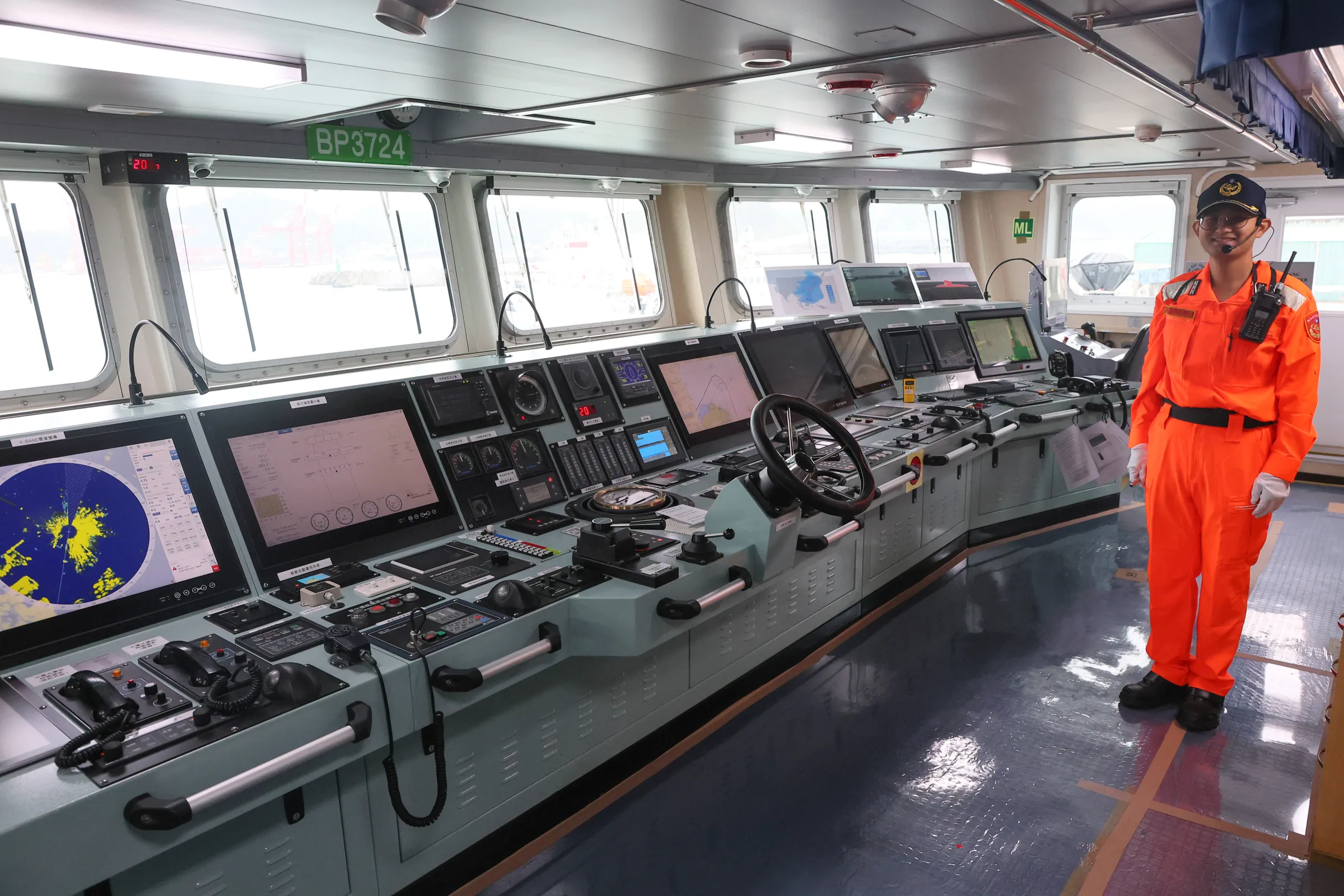
Taiwan has been adopting unmanned vessels in recent years, but a third insider, Person C, a veteran of the service, said they do not solve the manpower problem. Standoffs at sea still require crewed ships, he said. Most unmanned boats are small and mainly used for monitoring, so they cannot confront a ship with people aboard. Their value lies in better surveillance and shorter reaction and preparation times.
Meanwhile, Person C said, crews are under heavy psychological strain. The physical toll is also high. Ships need watchkeepers around the clock, usually in teams of four who each stand a watch of three to four hours, so a sailor may work three hours and then return to duty nine hours later. With no fixed rest period, sleep patterns are erratic, and running at minimum strength makes the rotations harder.
The Coast Guard Administration responded to the audit by saying that shipbuilding, pier scheduling and sea duty staffing are being advanced in step according to schedule, and that crew allocation and berthing are normal. It said it is steadily adding staff each year through commissioned training at the Central Police University and the Taiwan Police College, special exams and other recruitment channels.