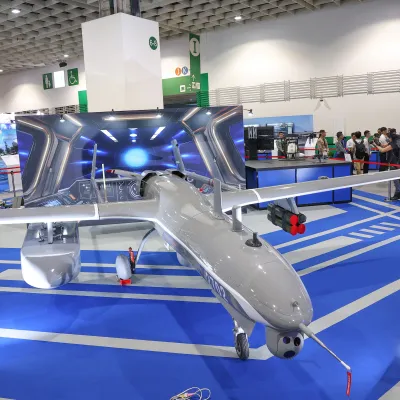
Putting a "Made in Taiwan" label on a drone is easy. The hard part is what happens when you take it apart and ask where the battery cells, cathode and anode materials, graphite, rare earth magnets and flight control components actually came from. A "non red" supply chain, one free of Chinese components, is a genuine national security need. But without a clear definition, a realistic replacement timeline and a market big enough to sustain it, a blanket push to strip out every Chinese part risks sending costs soaring without meaningfully reducing risk.
Take A Drone Apart And Non Red Becomes A Parts List
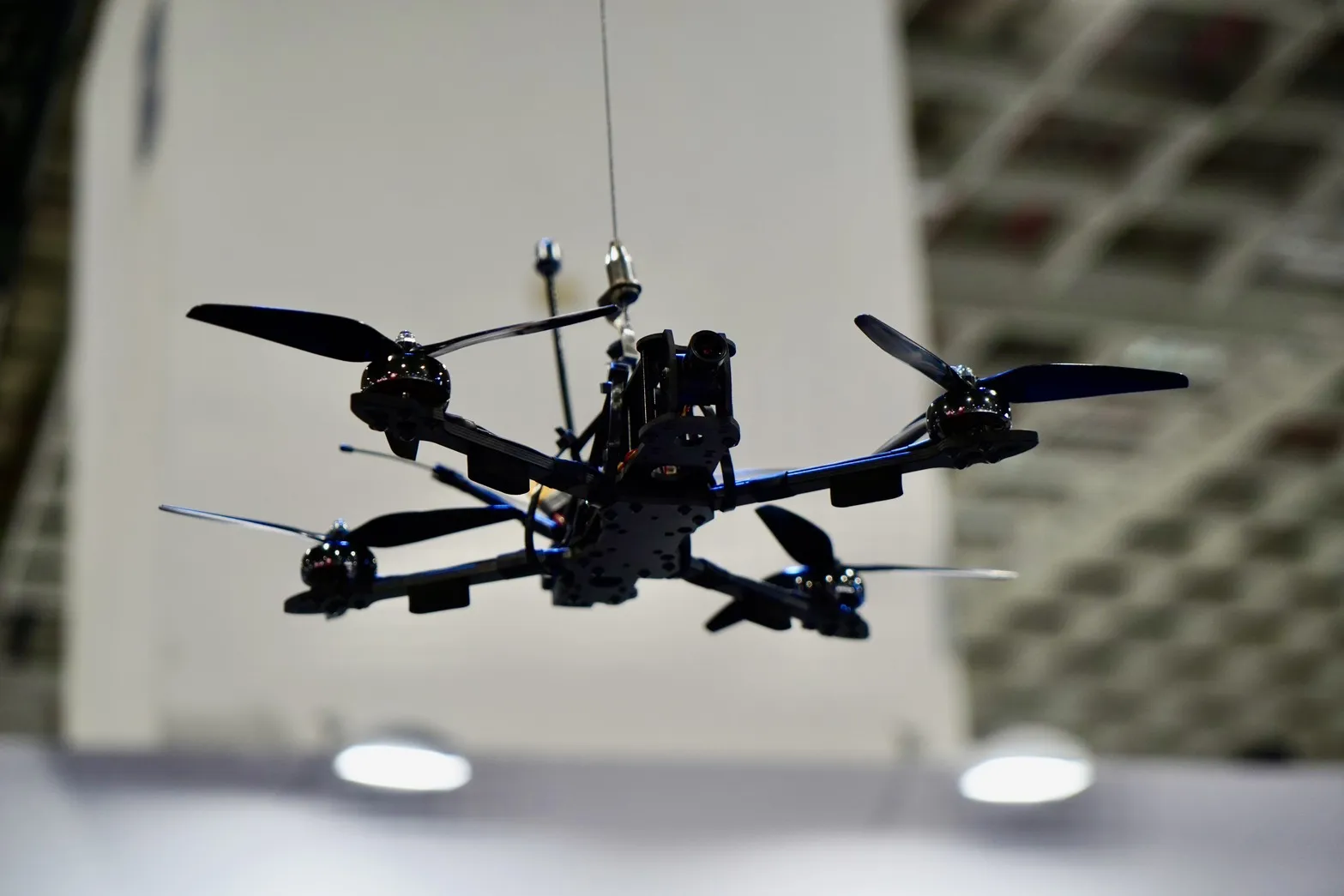
Even a simple looking quadcopter, once disassembled, contains at minimum a frame, propellers, brushless motors, electronic speed controllers, a battery, a flight controller, satellite positioning, an inertial measurement unit, a data link, a remote controller, a camera and a ground station. A military system adds encrypted communications, jam resistant navigation, infrared imaging, a mission computer and a warhead. Behind each of those parts sits its own chain of materials, chips, firmware, software and production equipment.
That means a "non red drone" can be defined in very different ways: the complete aircraft cannot be built by a Chinese company; the flight control, communications and data cannot be in the hands of Chinese systems; no critical component can come from China; or China is excluded entirely, from the raw minerals and materials all the way to final assembly. Those four standards carry completely different national security benefits, costs and feasibility, yet they are routinely lumped together under the same "non red" label.
"If Taiwan insists from day one that every single component exclude China, it is almost impossible to build an industry that is competitive on cost and scale in the short term," one industry insider said. The point, he stressed, is not opposition to localization, but to treating an all at once purge of Chinese parts as a policy achievement before alternative supply chains are mature. Should a non critical part like a propeller really need to be non red from the start, he asked? "When you open one mold to make a few hundred units, and a Shenzhen manufacturer opens one mold to make tens of thousands, the cost gap is enormous."
Behind DJI Sits An Entire Ecosystem
China is widely regarded as the world's most complete and largest scale drone manufacturing base. Complete here means a chain running from rare earth separation, permanent magnets, and lithium battery materials and cells, through brushless motors, speed controllers, flight controllers, inertial measurement units, camera lenses, video transmission, antennas, connectors, carbon fiber and plastic molds, all the way to final assembly, testing, logistics and end markets. Other countries may be more advanced in individual sensors, chips or military systems, but China's edge lies in being able to source most parts within a single manufacturing network and scale up output quickly and cheaply.
That industrial chain spans upstream materials, midstream components and downstream finished aircraft. Upstream are rare earth refining, neodymium iron boron magnets, lithium battery cathode and anode materials and cells. Midstream are motors, speed controllers, flight controllers, communications modules, lenses, gimbals and radio frequency parts. Downstream are brands such as DJI (大疆), a large pool of contract manufacturers and module suppliers, and markets ranging from surveying and agriculture to logistics, inspection and consumer use. A huge domestic market lets new products be flight tested and revised at home first, before mature components are exported worldwide.

Drones Cannot Avoid Chinese Supply Chains As Beijing Takes Its Low Altitude Economy Abroad
That concentration has been tested most directly on the battlefield in Ukraine. A 2025 study by the Center for Strategic and International Studies found that nearly every system used by both Russia and Ukraine, from small quadcopters to long range loitering munitions, contains materials and parts originating in Chinese factories or refining networks. Research by Massachusetts Institute of Technology investigators likewise found that the overwhelming majority of components in commonly used battlefield FPV drones are made in China. Even when final assembly happens in Ukraine, Russia or elsewhere, batteries, motors, controllers, video transmission and magnets frequently loop back to Chinese supply chains.
China's advantage is no longer just about factory density; it is turning into global market scale. Citing Chinese customs data, Nikkei Asia reported that China exported 2.42 million drones in the first half of 2026, up 26 percent from a year earlier. Over the same period, Chinese drone exports to the United States fell by more than 40 percent, but rising demand from emerging markets more than filled the gap. Those figures count complete drones, not components, and show that US restrictions have not been enough to shake the global scale of China's drone industry.
The destination data also show China fusing its "low altitude economy" with its Belt and Road Initiative into a single overseas expansion strategy. In the first half of 2026, Chinese drone exports to the Philippines rose 68 percent, exports to Germany and Malaysia more than doubled, exports to Pakistan jumped thirteenfold, and exports to Cambodia surged 163 times over. Beijing's playbook is to ship complete aircraft and build logistics networks in Southeast Asia, supply pipeline inspection drones to the Middle East, and push agricultural and cargo drones into Africa. By the end of June 2026, more than 700,000 DJI agricultural drones were in use worldwide, double the number three years earlier. Those vast agricultural, surveying, logistics and infrastructure inspection markets keep giving Chinese suppliers room to cut prices, iterate and expand capacity.
Ukraine Builds Its Own Drones Yet Still Imports Most Complete Aircraft From China
The same advantage shows up clearly in Ukraine's own import data. According to Ukraine's customs service, the country imported 540 metric tons of complete unmanned aerial vehicles in 2023, of which 490 tons, or 90.7 percent, came from China. In 2024 the total rose to 1,376 tons, with China accounting for 1,300 tons, or 94.5 percent. From January through August 2025, imports had already reached 1,443 tons, more than all of 2024, with China still supplying 1,297 tons, or 89.9 percent, and Taiwan ranking second with 43 tons, or 3 percent. These figures are measured by weight rather than unit count and cover complete aircraft only.
Ukraine's rapid expansion of domestic assembly and manufacturing and its continued heavy imports of complete Chinese drones are not actually contradictory. Wartime demand is counted in the millions, leaving room for domestic production lines, imported aircraft and foreign components all at once. More significant is that China commands both export scale for complete aircraft and a large share of battery, motor, flight controller, video transmission and magnet supply, while its civilian market spreads the cost of research, tooling, production lines and after sales service across the whole system. That is the hardest barrier Taiwan and the United States face in building a non red supply chain: what they need to replace has never been just one DJI drone, but an entire industrial ecosystem that sustains itself through the market.
Building a non red supply chain is therefore far harder than switching out one aircraft brand. Taiwan or the United States can find non Chinese batteries, motors and flight controllers one by one, but still have to rebuild the specification coordination between suppliers, rapid prototyping, quality validation and high volume delivery. Missing a single key connector, a high discharge cell or a specific magnet material can stall an entire production line. "So the real challenge of going non red is rebuilding, outside China, an industrial network whose pieces fit together, keep getting cheaper and can be redesigned quickly," one industry insider said.

The Battery Risk Runs Deeper Than CATL
In batteries, China's CATL (寧德時代) is one of the world's largest makers of power batteries. Within the industry, a common claim holds that 85 percent of the world's drone batteries come from CATL, and one drone supply chain insider went further: "Ninety nine percent of battery cathode material comes from China."
Data from the International Energy Agency show that in 2025 China accounted for more than 80 percent of global electric vehicle battery cell production, about 85 percent of cathode active materials and over 90 percent of anode active materials. Those figures describe the EV battery supply chain and cannot be read directly as drone battery market share, but they are enough to show how heavily lithium battery materials, graphite, chemical processing and cell manufacturing are concentrated in China, and that upstream concentration risk is real.
Industry players say Taiwan can produce battery modules, power management and packaging, and can design for drone specific needs such as high discharge rates, cold weather performance or safety standards, though at limited volumes. If the upstream cells, cathode and anode materials and graphite still come from China, however, it is hard to claim the supply chain is fully non red. Worse, alternative sources tend to produce smaller volumes at higher prices, and must requalify through lifespan, safety and flight testing. That is the first cost wall any blanket non red push runs into.

Motors Look Like An Opening For Taiwan But Magnets Still Lead Back To China
Beyond batteries, drone motors look like an area where Taiwan's traditional electromechanical industry could step in immediately, but the devil is in the details. High power density brushless motors require rare earth permanent magnets such as neodymium iron boron, and magnet performance directly affects weight, efficiency, range and payload. Motors can be designed, wound, machined and assembled in Taiwan, but rare earth magnet materials still lead back to China.
According to the International Energy Agency, China accounted for about 94 percent of global sintered permanent magnet production in 2024. The agency's 2025 Global Critical Minerals Outlook also found that China is the top refiner of 19 out of 20 key strategic minerals, with an average market share of around 70 percent. That dominance comes not just from mines, but from industrial clusters built up over many years across separation, refining, alloying, magnet powder, sintering and equipment.
That also means simply announcing a national motor team is not enough for Taiwan. Without stable rare earth sources, recycling capacity and safety stockpiles, domestic motor production could still grind to a halt if China restricts exports. Real self reliance, in other words, does not have to mean mining every mineral in Taiwan, but it does mean diversified sources, traceable materials, second suppliers for critical specifications, and a clear sense of how long Taiwan could hold out if supply were cut off.

China's Edge Is Not Cheap Labor But How Fast A Missing Part Can Be Replaced
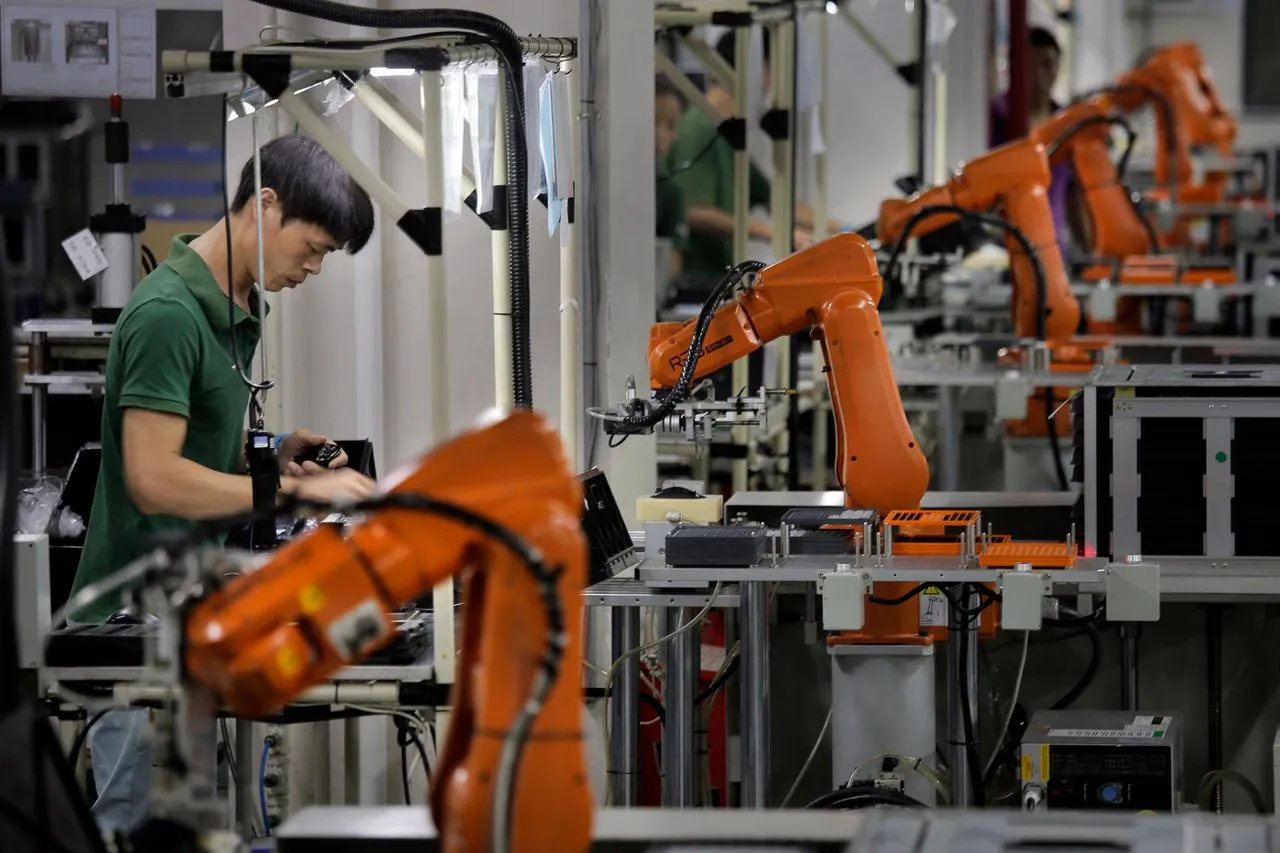
Overall, the hardest part of China's drone industry to replicate is not any single company or flight controller, but the complete ecosystem that has formed in Shenzhen and the Pearl River Delta. Industry insiders say Shenzhen's drone supply chain, spanning batteries, motors, magnets, speed controllers, lenses, communications modules, plastic parts and final assembly, is concentrated within a relatively short distance. When a design needs revising, engineers can quickly find substitute parts, and small batch prototyping and mass production can be linked within the same network.
Taiwan has strengths in chips, printed circuit boards, servers and precision manufacturing, but its range of components, pricing and delivery speed may not match Shenzhen's. If policy only subsidizes a handful of complete aircraft makers without also addressing cells, magnets, bearings, sensors, connectors, communications and firmware, the result could be an awkward version of "domestic production": housing, assembly and branding done in Taiwan, while the parts that actually determine cost and supply security are still imported.
That leaves the industry facing two very practical questions. First, how can Taiwanese drones compete with Chinese products on price? Second, once government procurement ends, where will they be sold? If Chinese products sell for less than Taiwanese manufacturers' production costs, the government can use national security budgets to maintain a certain level of capacity, but it will struggle to build a global market on subsidies alone. For a non red supply chain to work, Taiwan must first accept that security comes at a premium, and then decide how much the country is willing to pay to offset which risks.
Washington Wrote Decoupling Into Law But Non Red Does Not Mean Zero Chinese Material
The US push to decouple from China has a clear national security basis. The American Security Drone Act of 2023 was folded into the National Defense Authorization Act for fiscal 2024, restricting federal agencies from procuring or operating drones made or assembled by certain foreign entities. In 2025, the White House issued an executive order on "Unleashing American Drone Dominance," calling for a stronger domestic industry and less reliance on foreign sources. The Pentagon's Defense Innovation Unit also runs the Blue UAS program, which vets hardware, software, cybersecurity and supply chains.
In practice, however, US rules include defined scopes, exceptions and waivers, with uses such as research, testing, electronic warfare and cybersecurity analysis eligible for exemptions under specific conditions. That reflects an important reality: a trusted supply chain is a risk management system, not an inspection of which country every atom came from. Flight control, communications, data transmission and firmware carry direct risks of remote takeover or data leaks, and should be prioritized for replacement well ahead of ordinary screws, housings and other low sensitivity parts.
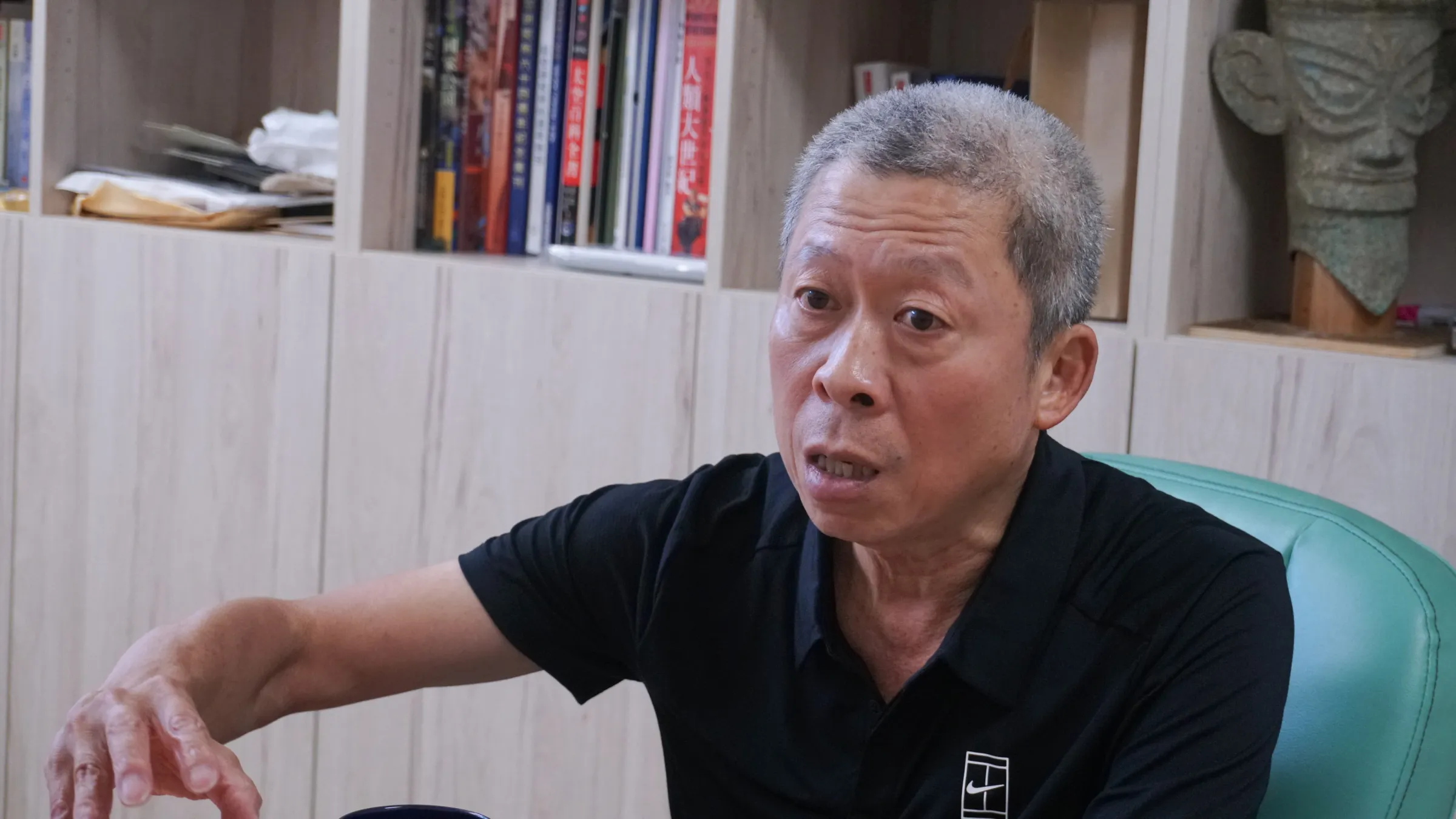
What Taiwan needs is a fleet designed in layers for coastal defense, cross strait operations, reconnaissance, communications relay and long range strike. Chi Li-ping (齊立平), former director of the aeronautics research division at the National Chung Shan Institute of Science and Technology (中科院), argues that non red requirements should likewise be tiered by mission risk, with the strictest standards applied to systems that actually enter combat networks or handle classified data, while pure training and early stage testing could use isolated environments and transitional rules.
Borrowing Arrows As A Transitional Strategy Toward A Four Stage Supply Chain
Some in the industry suggest Taiwan adopt a strategy of "borrowing arrows with straw boats," a reference to a famous Three Kingdoms era ruse in which a commander used the enemy's own arrows against it. In practice, that means using mature, cheap and readily available products for now to train operators, test environments and validate tactics, then gradually replacing the components that carry national security risk. The logic is sound: drone combat power depends on accumulated flight hours and lessons learned from failure. If the domestic supply chain is not yet mature and a blanket non red push makes training aircraft too expensive and too scarce, units may not even be able to start basic training.
But borrowing arrows needs an end point. The first stage should prioritize removing cybersecurity risks from flight control, communications, navigation, data storage and ground stations. The second should build alternative sources and safety stockpiles of battery cells, magnets, infrared and key sensors together with allies. The third should sustain domestic production lines through common specifications, long term procurement and second supplier requirements. The fourth should use certifications such as Blue UAS to enter allied markets, so that an independent supply chain does not have to rely on the Taiwanese government as its only buyer forever.
If Taiwan only prints "non red" on presentation slides without listing parts sources, replacement progress, cost differences and export hurdles, an independent supply chain can easily remain a political slogan. Conversely, if the government is willing to turn non red into a transparent risk map, spelling out which parts must be replaced immediately, which can have a transition period and which require international cooperation, and backs minimum production capacity with real orders, it can become a genuine national strategy.
Taiwan cannot replicate Shenzhen's drone manufacturing base overnight, nor does it need to pursue isolated self sufficiency in every material. Real self reliance means knowing whom you depend on, how much, and whether there is another way to keep drones flying when supply is cut off.
(Related:
Taiwan Could Be America's Next Trusted Drone Factory But Three Supply Chain Mountains Stand In The Way
|
Latest
)