A dispute over how spectators supporting Taiwan are being treated at the Aichi Nagoya Asian Games has spread online after two separate incidents at the baseball venue within 48 hours. On September 25, staff told fans holding towels reading "Taiwan" to put them away during a game between Chinese Taipei and China. The very next day, signs went up at the stadium entrance for the Chinese Taipei versus Japan game listing the Republic of China flag alongside Japan's Rising Sun flag as banned items. By the third place game on September 27, the sign was gone, and organizers have since apologized for one part of it while staying silent on the rest.
Staff Order Fans To Put Away Their Taiwan Towels
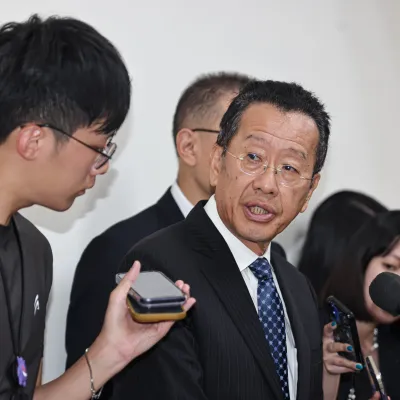
The first incident came during the September 25 baseball game, which Chinese Taipei won 9 to 1. Partway through, on site staff approached Taiwanese fans in the stands who were holding up towels printed with the word "Taiwan" and asked them to stop displaying them. According to Taiwan's Central News Agency, a Japanese speaking female spectator told staff that Taiwanese fans did not consider the word "Taiwan" a political statement and asked them to point to the specific rule being enforced. Staff reportedly repeated that, under the event's rules, the towels had been judged to constitute political expression. Fans nearby began chanting "Team Taiwan," and staff raised the possibility of ejecting spectators if the disruption continued, though no one was ultimately removed.
The Games' organizing committee later confirmed to Japanese outlet J-CAST News that on site staff had asked fans to refrain from displaying towels naming any country or region other than the official designation of the participating National Olympic Committee, which for Taiwan's delegation is Chinese Taipei. The committee said the request was meant to avoid friction with other spectators and to let everyone watch safely. The event's published rules do ban flags of non competing nations and banners or flags larger than one by two meters, and separately prohibit items expressing political, ideological, or religious claims or violating public order and morals, but nothing in the publicly listed rules explicitly bans merchandise printed with the word "Taiwan." Some social media users pointed out that Chinese national flags were visible elsewhere in the stands during the tournament, questioning whether the towel policy was being applied evenly.
A Day Later, Entrances Post Signs Banning The ROC Flag And The Rising Sun Flag
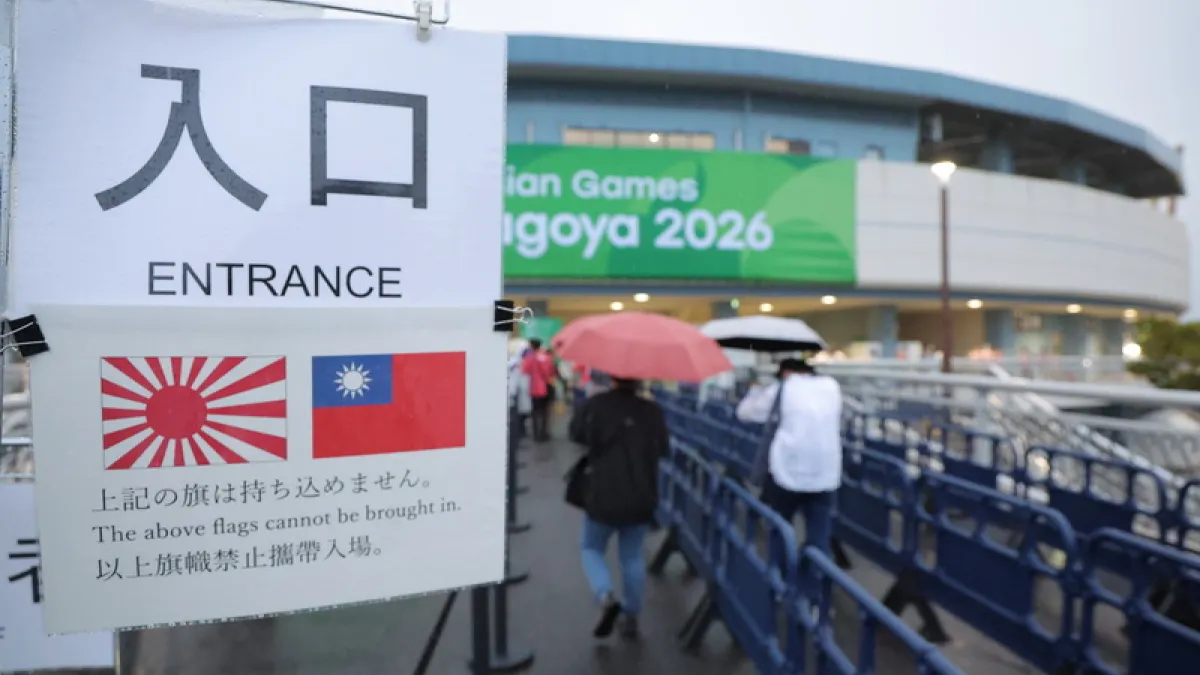
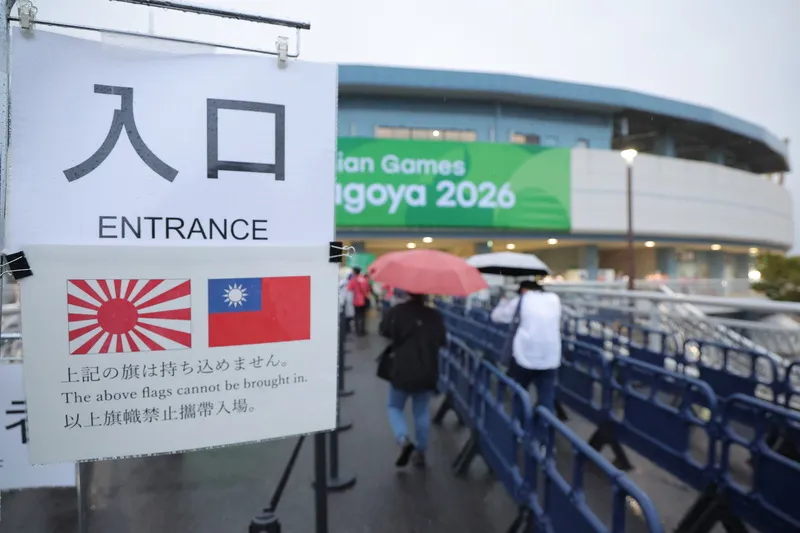
At the September 26 game between Chinese Taipei and Japan, signs at the entrance to Okazaki Chuo Sogo Park Baseball Stadium displayed images of the Republic of China flag next to Japan's Rising Sun flag, with text in Japanese, English, and traditional Chinese stating that both flags could not be brought in. No such sign was reported at the September 27 third place game between Chinese Taipei and China.
On September 28, the organizing committee posted an apology on its official website, but only for including the Rising Sun flag, which it said had been listed due to "a mistaken judgment on site" rather than any actual ban. The committee apologized for causing spectators discomfort and said it would make sure the correct policy was communicated at every venue. The statement made no mention of the Republic of China flag, and the committee has neither retracted nor apologized for its handling of the "Taiwan" towels either.
A Video Of A Fan Being Warned Not To Wave The Flag Adds Fuel Online
As the debate continued, a separate video began circulating on X on September 28 that appeared to show a staff member warning a Taiwanese spectator not to wave the Republic of China flag. The user who posted it, identified as Yuasa Tadao, said he was sharing it with permission from a South Korean friend who had attended the Games, though the exact date, venue, and sport shown in the clip were not disclosed and could not be independently confirmed from the footage. His post is embedded below:
アジア大会を見学した韓国人の友人から
— 湯浅忠雄 YUASA TADAO (@GrwaNnKqMn5nG68)September 28, 2026
許可をもらって配信します。
アジア大会のスタッフが、台湾人の観客に
台湾の国旗を振らないように注意している
動画です。
これは日本人のスタッフでしょうか?
それとも中国人のスタッフでしょうか? https://t.co/eGlXi5meW4pic.twitter.com/C1kCzJsH2u
The incidents drew commentary from Japanese public figures. Upper house lawmaker Haruo Kitamura of the Japan Conservative Party pressed organizers to explain how staff arrived at their judgment in the first place, writing that he could not shake the suspicion that Chinese staff might have been running the checkpoint, an allegation for which no public evidence has surfaced:
「現場の誤った認識」と言うが、何故そうした認識が生まれたのか説明してほしい。現場を仕切っていたのが中国人だからではないのか、との疑念が払拭出来ない。 https://t.co/efSX1rt9GQ
— 北村晴男 (@kitamuraharuo)September 28, 2026
Kitamura separately called the handling of the event "genuinely embarrassing as a Japanese person" and asked, "since when did Aichi Prefecture become China?"
この運営は日本人として本当に恥ずかしい。 https://t.co/EAGajK2grV
— 北村晴男 (@kitamuraharuo) September 27, 2026
Commentator Yoshiharu Koyama noted that North Korea, a country Japan also does not diplomatically recognize, had its flag flown openly at the Games, while Taiwan's flag was banned and even a plain towel reading "Taiwan" was stopped as political expression, calling the disparity hard to justify:
ちょ、マジで憤りを禁じ得ない。
— 古山よしはる(豊橋市/暮らしと絆を守る。郷土の誇りと価値を高める。) (@furuyama4486)September 27, 2026
日本が国家承認していない北朝鮮。その国旗は堂々と掲げられた。
一方、同じく日本が国家承認していない台湾は、国旗を禁止。それどころか、「Taiwan」と書いただけのタオルまで「政治的主張」と制止したという。
「Chinese… https://t.co/wPKHN1jLfQpic.twitter.com/p4IrwmDDOU
Former Sankei Shimbun reporter Gentaro Saigusa wrote that the Games had managed to alienate Taiwan, a friendly partner to Japan, entirely:
愛知県は今回、国際親善どころか、友好国である台湾までも敵に回してしまった。こんな大会はやるべきではない。スペインに落札させたものを2倍の値で中国に再受注させるとか、わけのわからないことばかりやって…。最悪の大会。 https://t.co/4eYA8DcGgb
— 三枝 玄太郎 (@SaigusaGentaro) September 29, 2026
A Kobe City Councilor Petitions Japan's Education Minister
The controversy has also reached Japan's national government. Kobe City Council member Norihiro Uehata said on September 27 that he had submitted a written request to Education, Culture, Sports, Science and Technology Minister Yoshihiro Seki, calling for respect toward Taiwan and consideration for the dignity of Taiwanese people. His post announcing the request is embedded below:
今回、愛知県名古屋市で開催されている第20回アジア競技大会2026は日本にとって大切な友好国である台湾の方々を失望させる史上最悪の大会であるといっても過言ではありません。こんな大会であるならば開催する必要は無かったです。… pic.twitter.com/tjxv7XzhTF
— うえはた のりひろ神戸市会議員@東灘区選出 (上畠寛弘) (@NorihiroUehata)September 27, 2026
Uehata said he understood the Olympic Council of Asia's rules on naming conventions and flags, but argued that enforcing them should never go so far as to harm Taiwanese people's dignity or identity, or make them feel their goodwill toward Japan was being dismissed. His request asked the government to verify what actually happened to Taiwanese athletes, staff, and spectators at the Games, review the intent and scope of the relevant rules, and press organizers and the Olympic Council of Asia not to impose blanket restrictions on legitimate cheering or expression by Taiwanese fans.
Where Political Expression Ends And Cheering Begins Remains Undefined
At the center of the dispute is the gap between the "Chinese Taipei" framework Taiwan competes under at international sporting events and rules meant to keep political statements out of competition venues. Organizers have explained why they intervened on the towels and have apologized for one flag but not the other, while the venue's own publicly posted rules do not spell out a clear line between ordinary fan support and prohibited political expression. For now, organizers have not said where exactly that line falls, leaving the question open as the Games continue.
(Related:
Could Japan Pass a Taiwan Relations Act? Kitamura And Seki Hei Visit Taiwan To Push For It
|
Latest
)