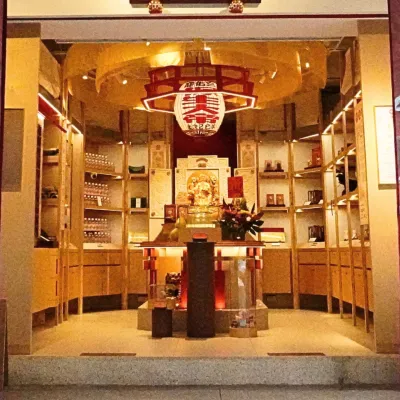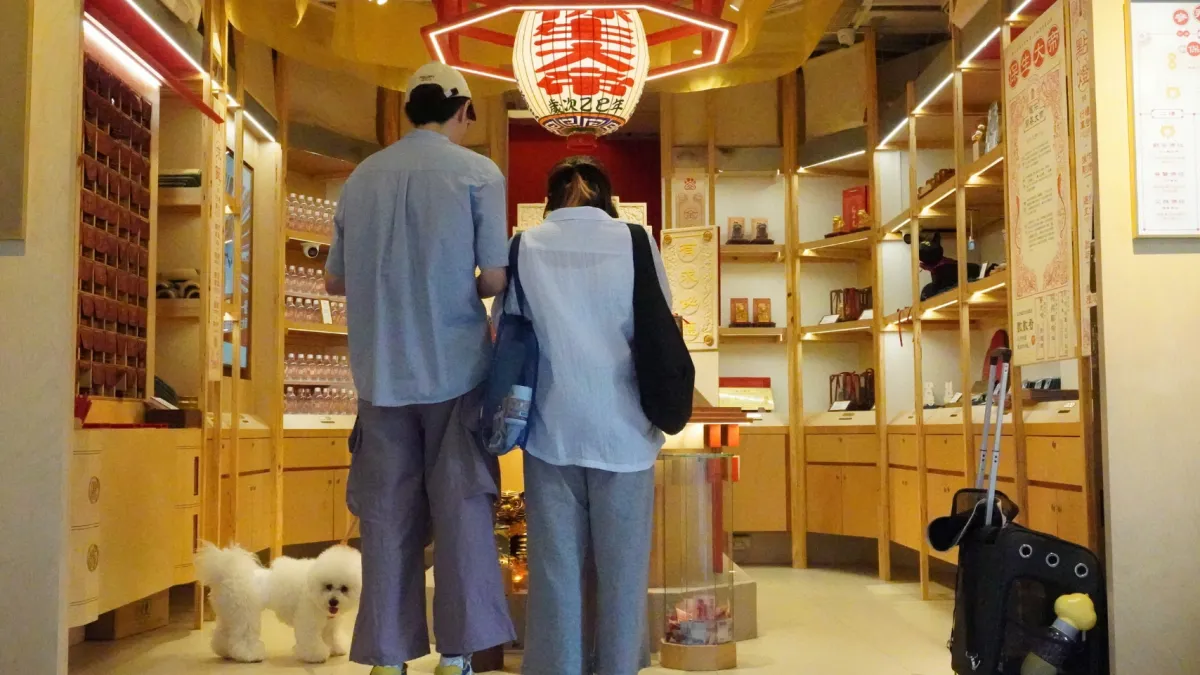
At 9 a.m. the steel shutter on a Dihua Street shopfront rolls up by itself. The air conditioning comes on. A robot vacuum sets off across the floor. Nobody has arrived to open up, and on most days nobody will. Cho Yuu Temple, Taipei's temple for pets, runs itself.
The plaque over the door reads "preparatory office," which is what it legally is: registering a temple in Taiwan takes eight to 10 years. Everything else about the building is finished. More than 20 cameras cover it. A vending machine dispenses amulets and blessing lamps. The lamp registry, in most Taiwanese temples a clerk with a ledger, is digital: type in a phone number and your lamp lights up on the rack so you can find it. Oracle poems come with a QR code that returns an AI reading in modern language.
"Whatever can be automated, we automate," said Boz Lu, who founded the temple. A reporter who first visited alone, before any interview was arranged, said her first thought was that the whole building might be unstaffed by design. It is.
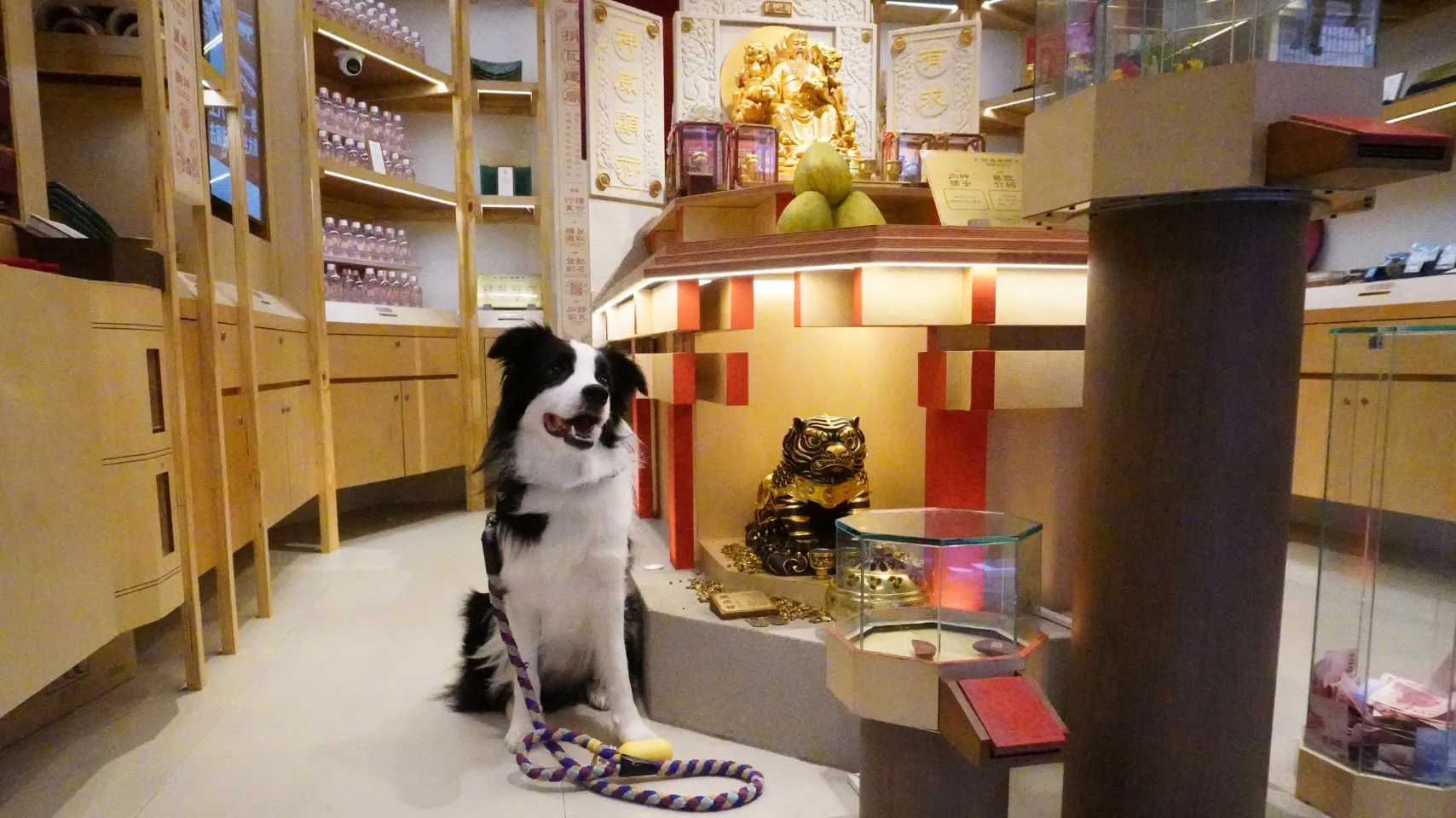
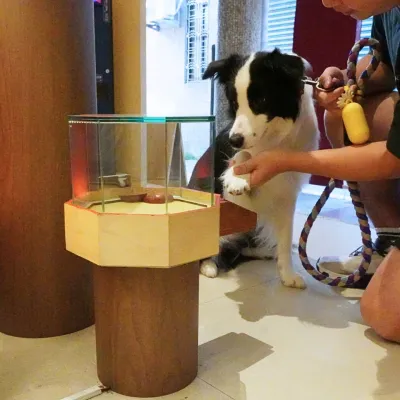
Not everyone walks straight in. A middle-aged woman with a large dog stood outside with a friend on a recent afternoon, studying the entrance for a while before going any closer. She declined to give her name and said she had come out of curiosity: she wanted to see what a temple that blesses dogs actually looks like. Her verdict, once inside: very modern. Very new.
She had found it on Instagram. So had the couple with the bichon frise, who said they came across the temple on Facebook. Neither had heard about it from anyone they knew.
A third visitor, a man who lives nearby and brings his two border collies after their riverside walk, has been coming long enough to notice the change. There are more people here lately, he said. It must be getting famous.
The One Thing Machines Cannot Do Is Take Payment
Where the automation stops is money, and that is where foreign visitors get stuck. Amulets sit out in the open on an honor system, beside a donation box for items priced by donation rather than by tag. Visitors who cannot find anyone to pay often take nothing. "A lot of Taiwanese don't dare either," Lu said. Some stand in the temple and message its Instagram account to ask what to do.
The temple's signage, all in Chinese, is thorough enough that most foreign visitors simply photograph it and run it through a translation app. Some phrases defeat the apps entirely. The one used for donation-priced items means roughly "as your heart is willing, and gladly," and no machine translation renders it usefully. A multilingual QR audio guide, like a museum's, is planned.
An Old-Fashioned Answer To Theft
Asked whether an unstaffed temple gets robbed, Lu said it does, and his answer is the least high-tech thing in the building.
"If someone is genuinely in financial difficulty and takes it home to pray for their own animal, I think that's fine. If they're taking it to resell, that's between them and the god. The law may not reach them, but they'll carry it. They did it under the gods' eyes."
Facial recognition is next on the list for the camera system.
Designed For Animals, Not Incense
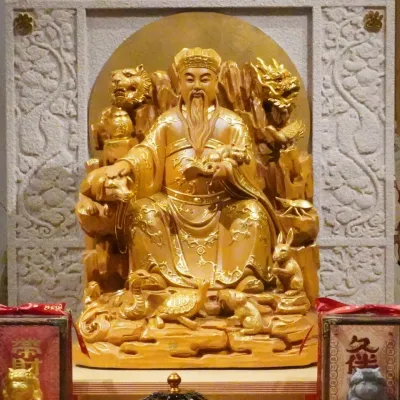
The automation is not the only thing built around the animals. The temple says it will bless lizards, tortoises, parrots, rabbits, hamsters, snakes and hedgehogs, on the grounds that its patron god once cured a tiger and a dragon. The temple lists three things it refuses to do, and all three are things a busy Taiwanese temple does as a matter of course: no carrying incense, no burning paper money, no firecrackers. They are also the three things most likely to make a temple unbearable for a nervous animal. Worshippers press their palms together instead.
A burner does stand before the main altar, and the temple has explained on social media what to do with it and why. Carry your amulet over and circle it three times, clockwise. Clockwise, the temple says, means moving with heaven rather than against it. Three is for heaven, earth and humanity: the three realms of Taoist cosmology, and so a blessing from all of them.
Leashes are not required, though the temple asks for them. Online blessing services are due before the end of this year, in Taiwan first; lamps can already be lit from overseas.
At 9 p.m. the shutter comes down again. Nobody needs to be there for that either.
This is one of four reports from Cho Yuu Temple published as Taiwan at Prayer, a Storm Media series introducing Taiwanese folk religion through the animals people bring to it.
Taiwan at Prayer: All Reports
Starting with Cho Yuu Temple, Taipei's temple for pets, our Taiwan at Prayer series introduces Taiwanese folk religion through the animals people bring to it. This page collects every report and is updated as new ones are published.
► Read every report in the Taiwan at Prayer series