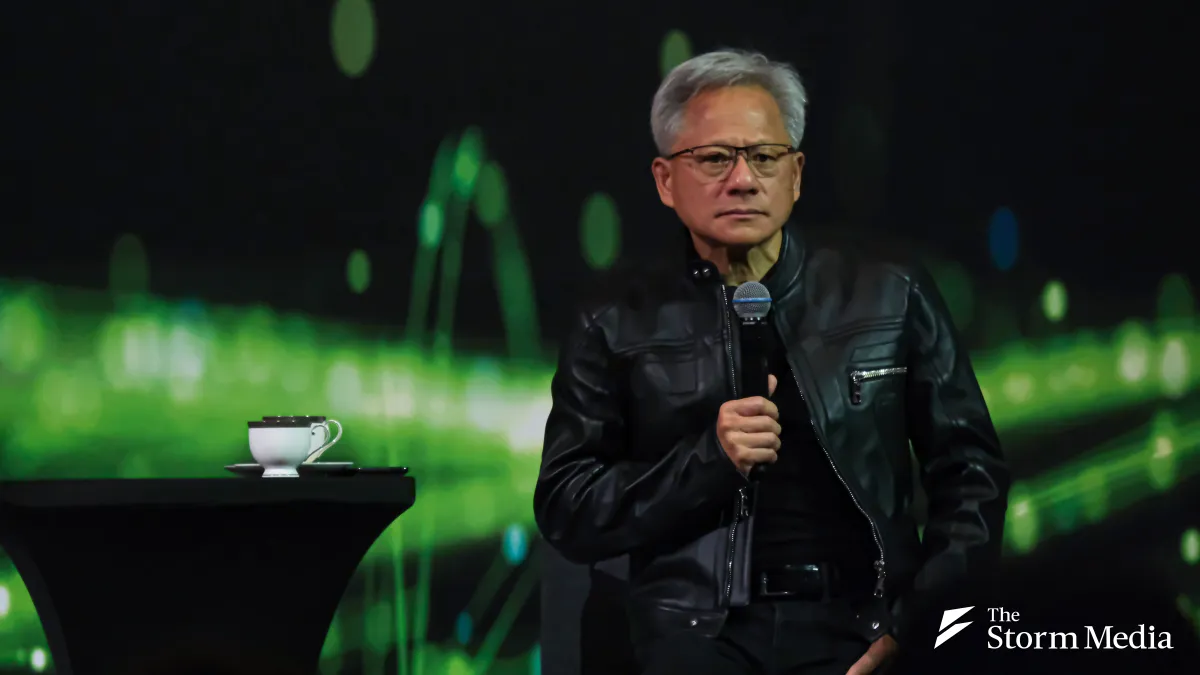
Nvidia's board has approved a $150 billion increase to the company's stock buyback program, pushing its total unused repurchase authorization to $235 billion, the company said on September 28.
The increase is the largest single expansion of Nvidia's buyback authorization in its history, and the company said it expects to execute the remaining plan before the end of its 2028 fiscal year. The $235 billion figure is a ceiling the board has cleared, not cash Nvidia has already committed to spend; the timing, price and volume of any purchases will depend on market conditions, working capital needs and other investment opportunities.
Huang Points to Cash Flow Behind AI Bets
Nvidia founder and CEO Jensen Huang said artificial intelligence and accelerated computing have triggered a generational shift in computing platforms that is driving the company's growth. He said Nvidia's cash generation lets it keep funding the technology behind that shift while also returning capital to shareholders, calling the expanded authorization a reflection of management's confidence in the company's long-term market opportunity.
This is the second time this year Nvidia has substantially raised its buyback ceiling. The board approved an additional $80 billion in authorization on May 18, and as of July 26 the company still had $99.3 billion of that available. Adding $150 billion on top of that remaining balance brings the total to $235 billion.
First-Half Buybacks Already Top $39 Billion
In the six months that ended July 26, the first half of its 2027 fiscal year, Nvidia had already spent $39.8 billion buying back about 203 million shares. That included $19.7 billion for 94 million shares in the fiscal second quarter alone, more than double the $9.7 billion it spent on repurchases in the same quarter a year earlier.
Nvidia entered the current buyback cycle with a large cash cushion. As of July 26, the company held $56.6 billion in cash, cash equivalents and marketable debt securities, plus another $42.8 billion in marketable equity securities, for a combined $99.4 billion in liquid assets. Operating cash flow for the same six-month period reached $74.42 billion, up about 74% from $42.78 billion a year earlier.
Buyback Ceiling Dwarfs Nvidia's Cash on Hand
The new $235 billion authorization is about 4.2 times the cash, cash equivalents and marketable debt securities Nvidia held at the end of July, and roughly 2.4 times its total liquid assets once equity securities are included. Because the plan is designed to run across multiple quarters, whether Nvidia can complete it as outlined will hinge less on the cash already on its balance sheet than on whether its AI business keeps generating cash at its current pace.
If fully executed, the buybacks would shrink Nvidia's share count, support earnings per share and offset some of the dilution created by employee stock compensation. For the market, a company still pouring money into AI chips, software, its developer ecosystem and its supply chain announcing its largest-ever buyback authorization underscores just how much cash the AI computing boom is generating for Nvidia.
An authorization is not a guarantee, however. Nvidia has not disclosed a quarterly repurchase target, a price range or a specific share count, saying only that it intends to complete the plan before its 2028 fiscal year ends. Repurchasing shares at elevated valuations would also invite closer scrutiny of how efficiently the company is deploying its capital, and analysts will be watching both the pace of buybacks and how Nvidia balances them against spending on research, its supply chain and strategic investments.
Taiwan's Chip Supply Chain Has a Stake in the Payout
Nvidia's ability to fund both an aggressive AI infrastructure buildout and a record buyback program matters well beyond its own shareholders. Much of Nvidia's chip production runs through Taiwanese manufacturers, including contract chipmaker TSMC, meaning sustained cash generation at Nvidia also points to continued capital spending flowing into Taiwan's semiconductor supply chain, from foundries to packaging and testing houses.