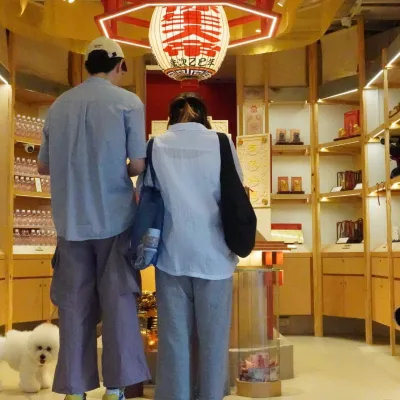
A man kneels on the floor of a Taipei temple beside a border collie, lifts the dog's front paw and holds it over a pair of crescent-shaped wooden blocks. He lets them fall. How they land is the god's answer.
He lives in the neighborhood and comes often, usually after walking his two border collies along the riverside park nearby. He declined to give his name. Stopping in to pay his respects, he said, leaves him feeling settled.
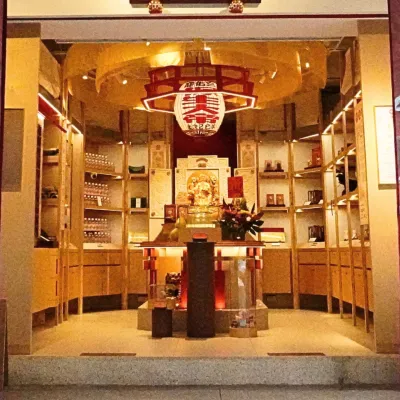
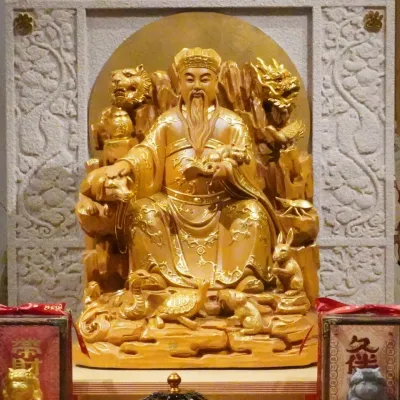
It is the most common sight at Cho Yuu Temple, the pet temple on Taipei's Dihua Street (still formally a preparatory office, since registering a temple in Taiwan takes eight to 10 years), and it requires no knowledge of Taiwanese religion at all. That is deliberate. The temple has rewritten its rituals so that a first-timer, or a foreign tourist, or a dog, can take part.
Three Answers, Now In Plain Language
The blocks are used at temples across Taiwan to put yes-or-no questions to the gods, and the three possible results mean the same thing everywhere. What differs here is the labelling: the traditional names are ones plenty of younger Taiwanese could not define, so this temple rewrote them.
- The god nods (sheng jiao): one curved side up, one flat side up. Yes.
- The god shakes his head (yin jiao): both curved sides up. No.
- The god laughs (xiao jiao): both flat sides up. Your question is vague, or he would rather not say, or he is simply amused.
The laugh is the one visitors love. Ask whether the god enjoyed today's snacks, said Boz Lu, who founded the temple, and a laughing throw just means he is pleased.
The Oracle Needs Two Yeses
Drawing an oracle lot is not a matter of pulling a stick from a tube. The god has to agree twice.
- 1. State your name, your pet's name and your question.
- 2. Throw the blocks: "Will you give me a lot?" One yes lets you continue.
- 3. Draw a stick, note the number, put it back, then ask whether that number is the one he meant. One yes; otherwise draw again.
- 4. Find the matching drawer and stamp your poem yourself.
The temple's advice is to phrase everything as yes or no. Not "how will my pet's surgery go" but "will my pet's surgery go well." The blocks only say yes and no, as the temple puts it, so the clearer the question, the easier it is to answer.
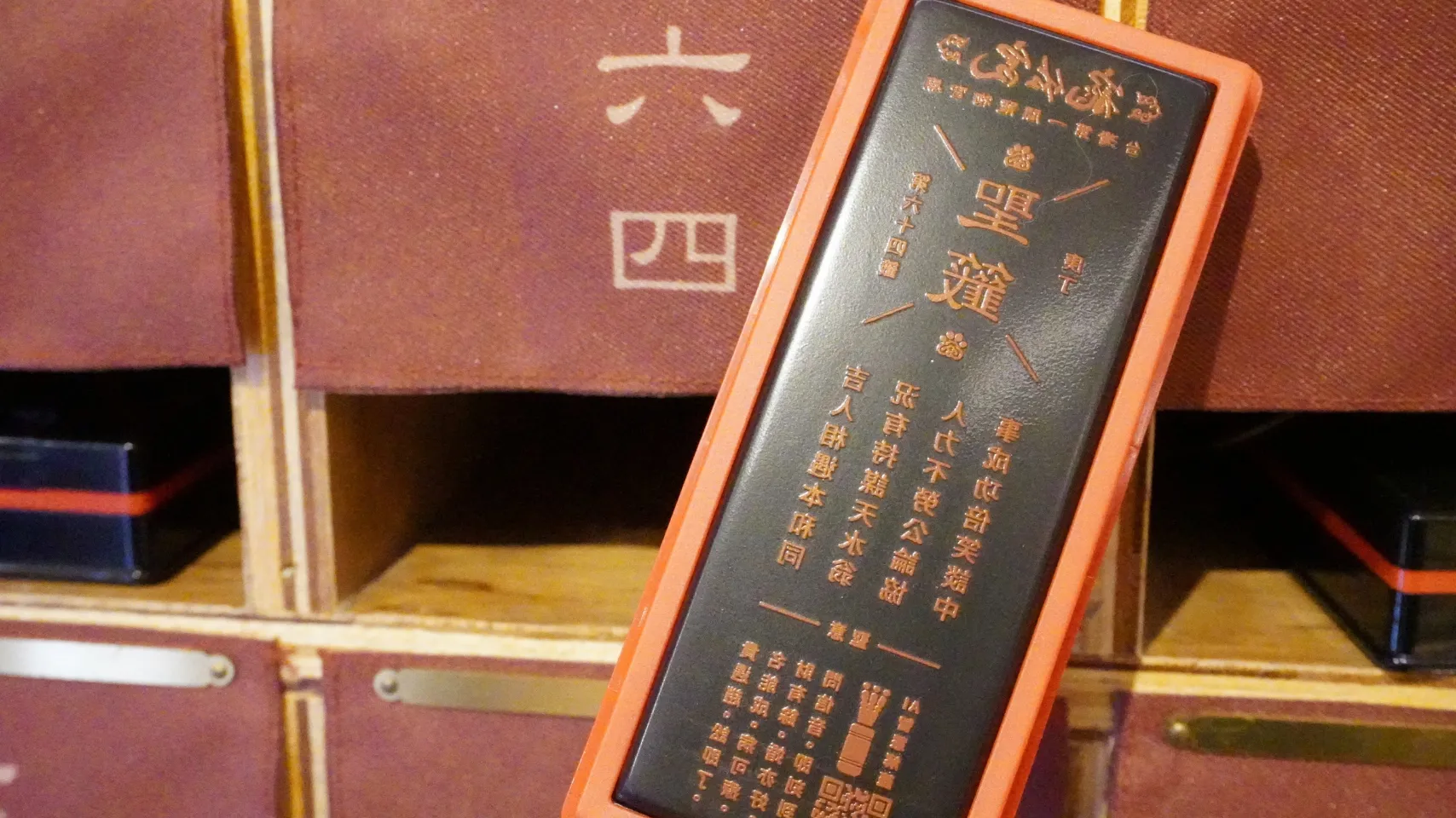
The verses come from the Lei Yu Shi set of 100 poems, more often used at temples to Guan Yu or Guanyin. Lu said he knew nothing about oracle sets, so he opened an online catalog and threw blocks on each one until the god chose. Every number has its own small drawer in a wooden rack, holding an engraved plaque rather than a paper slip, and visitors stamp their own copy to take home. For anyone who cannot read the classical Chinese, a QR code returns an AI reading in modern language, the temple's stand-in for the volunteer interpreters older temples keep on hand.
Where The World Leaves Its Wishes
Behind the main altar hang rows of prayer cards cut in the shape of a cat or a dog, tied on with red string. They work much like Japanese ema: a wish written by hand and left behind. Once a year the temple takes them all down, scans them, and its Taoist priest burns them in a ritual so the wishes reach the gods.
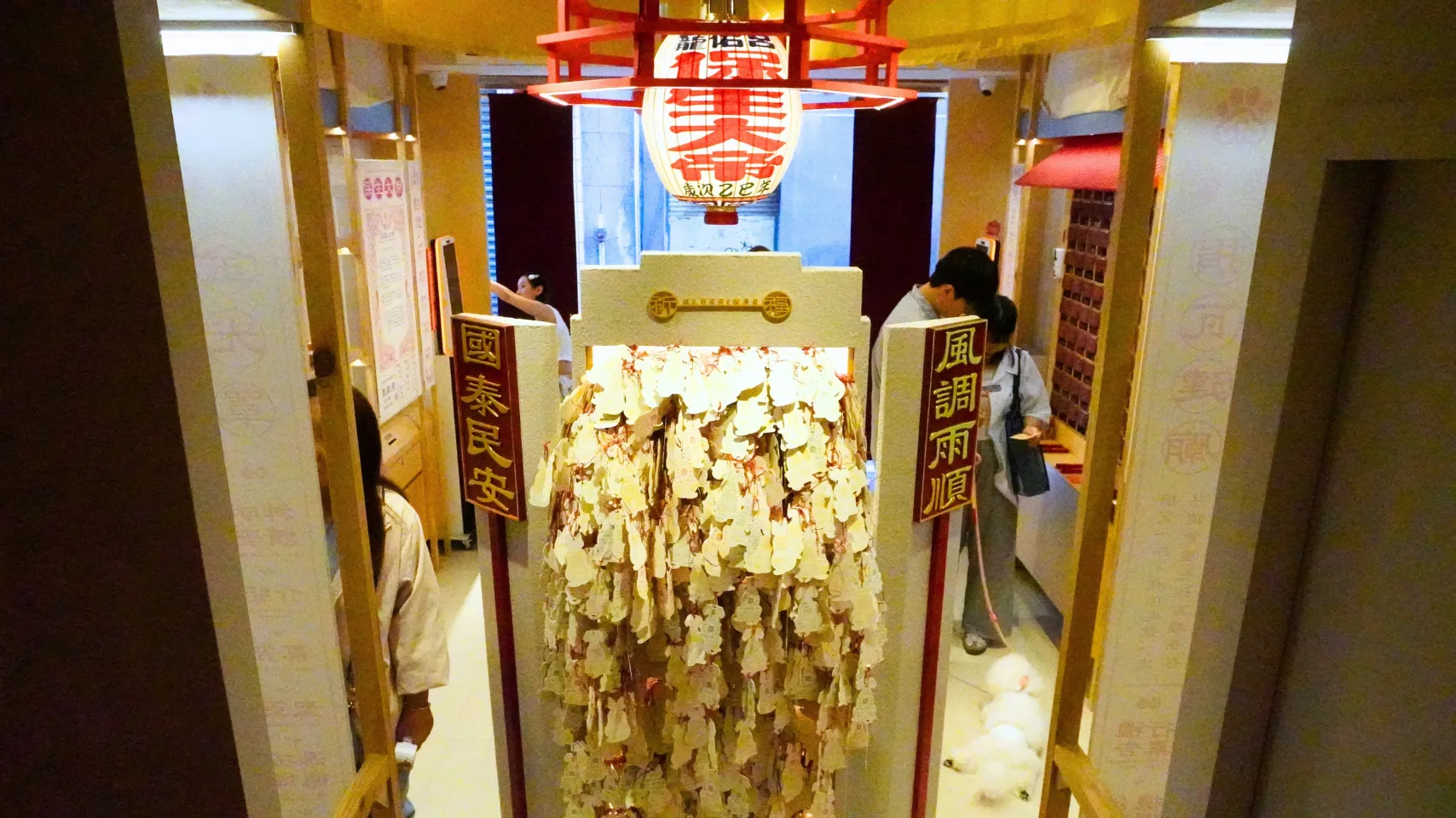
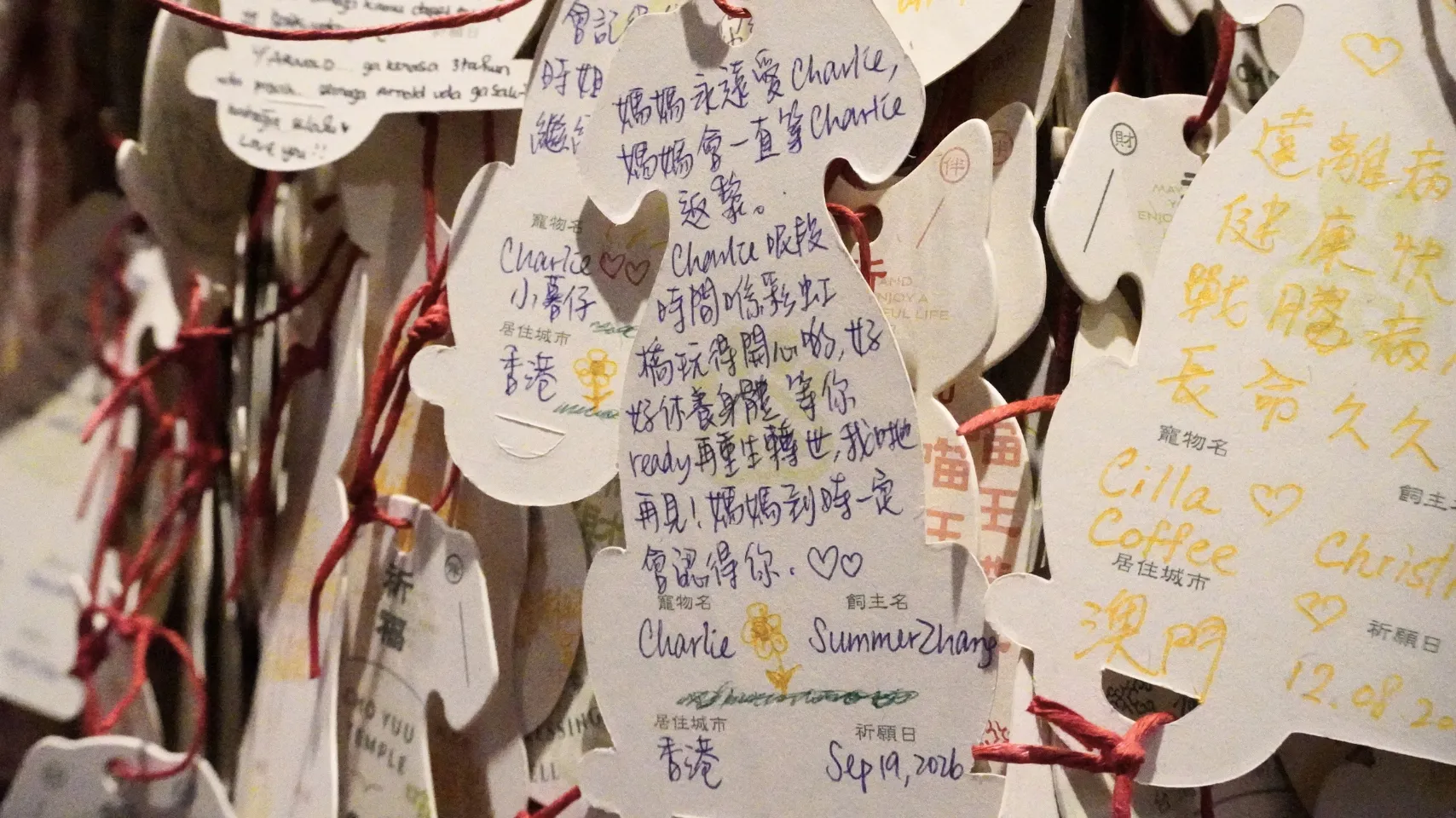
Each card has four printed fields (pet's name, owner's name, city of residence, date), so the wall doubles as a map. On a single visit this reporter found cards from Hong Kong and Macau, one in Indonesian, and a number in English. Lu said the collection also carries names from Malaysia, several American cities, Australia and South America.
A young couple sat down to fill one out for their bichon frise on a recent afternoon, having walked the dog through a divination throw first. The wish they settled on covered all three of them: keep us safe.
What they ask for is nearly uniform: health, and more time. Some are written while the animal is in surgery. Many are for cats and dogs that have already died, and those read less like prayers than letters. One, in Cantonese, tells a cat named Charlie that his mother will always love him and will wait for him to come home, to play happily on the rainbow bridge, and when he is ready to be reborn, she will know him.
"Sometimes I come and read through them and the pressure just grows," Lu said.
This is one of four reports from Cho Yuu Temple published as Taiwan at Prayer, a Storm Media series introducing Taiwanese folk religion through the animals people bring to it.