Sushiro drew 29,080 online mentions in Taiwan in the month to September 16, more than any other Japanese restaurant chain and the only brand in the category to clear 20,000, according to buzz data compiled by Taiwanese analytics outlet DailyView.
Japanese chains occupy an outsized share of Taiwan's dining-out market. Conveyor-belt sushi counters, deep-fried beef specialists, shabu-shabu buffets, single-diner grills and udon shops turn up in almost every commercial district and department store food hall, at prices running from a few coins a plate to well over NT$1,000 for an all-you-can-eat spread. The density of choice has made these brands a permanent fixture of Taiwanese social media, where diners trade price comparisons, queue times and complaints in roughly equal measure.
The ranking measures the volume of online discussion — posts, replies, news coverage and forum threads — collected by the KEYPO Big Data Engine between August 18 and September 16, 2026. It captures attention rather than revenue or store counts, which means a brand can climb the table on controversy as easily as on praise.
Only One Brand Cleared 20,000 Mentions
| Rank | Brand | Online mentions |
|---|---|---|
| 1 | Sushiro (壽司郎) | 29,080 |
| 2 | Kura Sushi (藏壽司) | 18,675 |
| 3 | Sushi Express (爭鮮) | 12,873 |
| 4 | Sunrise (旭集 和食集錦) | 5,175 |
| 5 | Kyoto Katsugyu (京都勝牛) | 3,441 |
| 6 | Tokiya (陶板屋) | 3,181 |
| 7 | Chien Yeh Hot Pot (千葉火鍋) | 2,933 |
| 8 | Shabu-yo (涮乃葉) | 2,816 |
| 9 | Yakiniku Smile (燒肉Smile) | 2,655 |
| 10 | Marugame Seimen (丸龜製麵) | 2,645 |
| Source: DailyView, KEYPO Big Data Engine, August 18 to September 16, 2026 | ||
Sushiro Leads On Volume And On Complaints
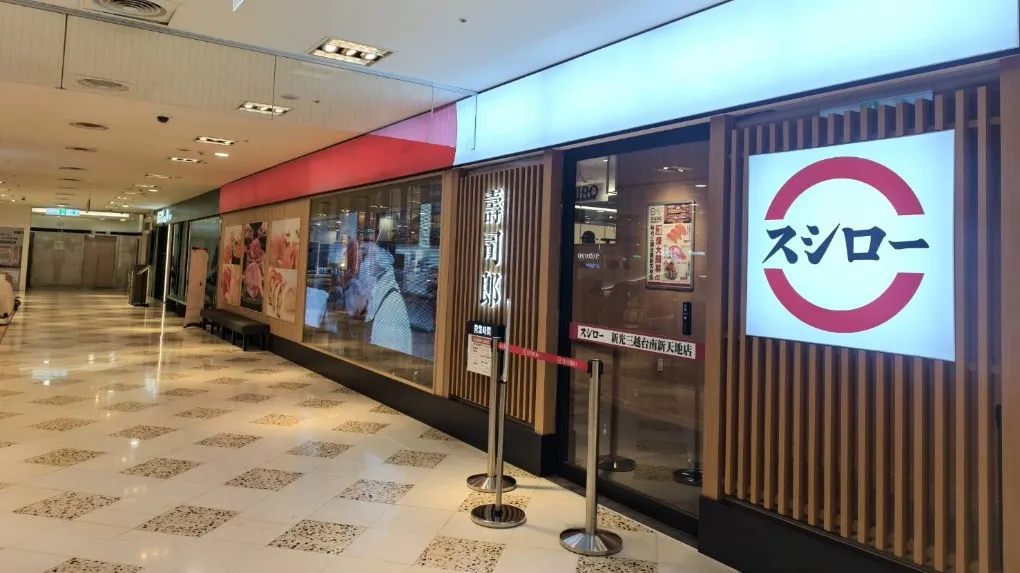
Sushiro (スシロー), the Japanese conveyor-belt chain that has expanded aggressively across Taiwan, finished first by a margin of more than 10,000 mentions. Analysts at DailyView attributed its lead to three things: a menu that turns over quickly, a plate-pricing structure diners find easy to read, and a steady run of anime and pop-culture tie-ins, including a recent collaboration with "JoJo's Bizarre Adventure."
That visibility came at a cost. Sushiro also recorded the highest share of negative sentiment in the top three at 35%, driven by long peak-hour waits, a gap between app-issued queue numbers and actual seating times, and limited-edition merchandise and dishes that sell out early.
Diners who praised the chain tended to focus on consistency. "Sushiro really does beat the others. The vinegared rice and the fish are far more consistent, and the sashimi is cut thick, which feels generous," one commenter wrote. Another said the chain had become "a dessert shop held back by sushi," adding that "the ice cream sundae and the custard mille-feuille are must-orders every time, and I look forward to them more than the main dishes."
Praise also landed on items that have little to do with sushi. "The chawanmushi is packed. There is a big prawn and a scallop in it, and the broth is sweet. It is the first thing I order whenever I take the children," one diner wrote. Another said the chain's ramen "is much better than I expected. The sea bream broth soy sauce ramen is rich and the noodles have bite. For a conveyor-belt sushi place, the value is high."
Kura Sushi Turns Capsule Toys Into Social Media Fuel
Kura Sushi (くら寿司) took second place with 18,675 mentions. The chain has concentrated its Taiwan expansion in department stores and high-traffic shopping districts, and leans on a capsule-toy lottery that turns the meal itself into a game, a mechanic that has proved unusually effective with families and students.
Frequent crossovers with anime titles and other licensed properties reliably spike discussion, but they also generate the frustration behind the chain's 34% negative sentiment. Complaints cluster around waits at busy hours, seating estimates that do not match reality, and limited-run collaboration capsules that disappear within days of launch.

Sushi Express Draws The Fewest Complaints In The Top Three
Sushi Express (爭鮮), the homegrown chain that introduced much of Taiwan to conveyor-belt dining, placed third with 12,873 mentions. Its advantage is reach rather than spectacle: outlets sit near train stations and in neighborhood shopping streets nationwide, and its takeaway formats suit diners who want a meal in minutes.
That positioning produced the lowest negative sentiment of the top three at 17%, with "generous" emerging as the most frequently associated term. Successive price increases have nonetheless prompted some diners to question whether portions still justify the cost. The chain's continued five-figure mention count, without the marketing spend of its Japanese rivals, points to how deeply it is embedded in everyday eating habits.

Buffet And Set Menu Brands Crowd The Middle
Sunrise (旭集 和食集錦), the premium Japanese buffet run by Taiwanese group Feastogether, ranked fourth with 5,175 mentions. Its stores are divided into nine themed stations serving sashimi cut to order, seared nigiri, wagyu and charcoal-grilled eel, a format that has kept reservations scarce since the brand launched in 2019.
Kyoto Katsugyu (京都勝牛) followed in fifth with 3,441 mentions. The Kyoto-born specialist deep-fries beef cutlets for roughly 60 seconds at high heat, leaving the center rare, and serves them with a rotating set of dipping sauces.
Sixth place went to Tokiya (陶板屋) with 3,181 mentions. Operated by Taiwanese restaurant group Wowprime, the chain builds Japanese-inflected multi-course set menus around a Western-style main, and has become a default choice for family gatherings.
Chien Yeh Hot Pot (千葉火鍋) placed seventh with 2,933 mentions, and Shabu-yo (涮乃葉) eighth with 2,816. Both compete on volume: Chien Yeh with a Taiwanese buffet spread covering hot dishes, seafood, made-to-order drinks and desserts, and Shabu-yo with a Japanese shabu-shabu format built around an unlimited vegetable bar and matcha soft-serve.
Udon And Single Diner Grills Close Out The Ten
Yakiniku Smile (焼肉スマイル) ranked ninth with 2,655 mentions. Brought to Taiwan by local operator Chu Chien Group, the chain gives each diner an individual grill and a set menu, removing the group-dining requirement that has long defined Japanese barbecue.
Marugame Seimen (丸龜製麵) closed the ranking in 10th with 2,645 mentions. Founded in Japan's Hyogo Prefecture and now the world's largest Sanuki udon chain, it makes noodles on site and lets customers add tempura and rice balls from a self-service counter.
Taken together, the month's data suggests scale and marketing reliably buy attention in Taiwan's Japanese dining segment, but not goodwill. The two chains that generated the most discussion also generated the most complaints, and both sets of grievances pointed at the same bottleneck: service capacity that has not kept pace with the crowds their campaigns bring through the door.
Source: DailyView "Japanese chain" buzz ranking, with data analysis provided by the KEYPO Big Data Engine. Analysis period: August 18 to September 16, 2026.