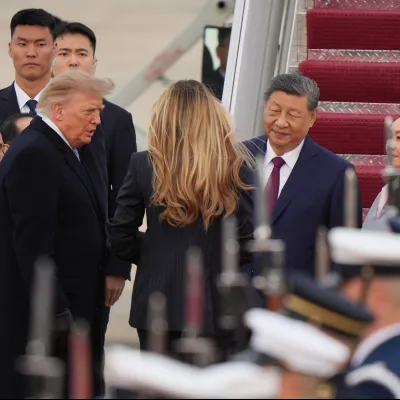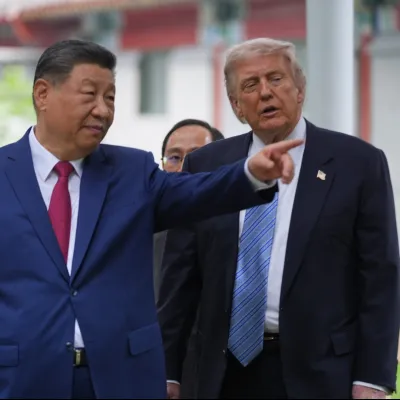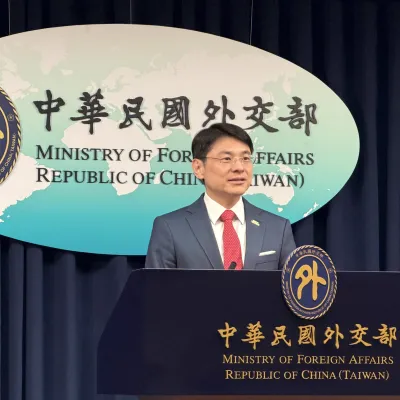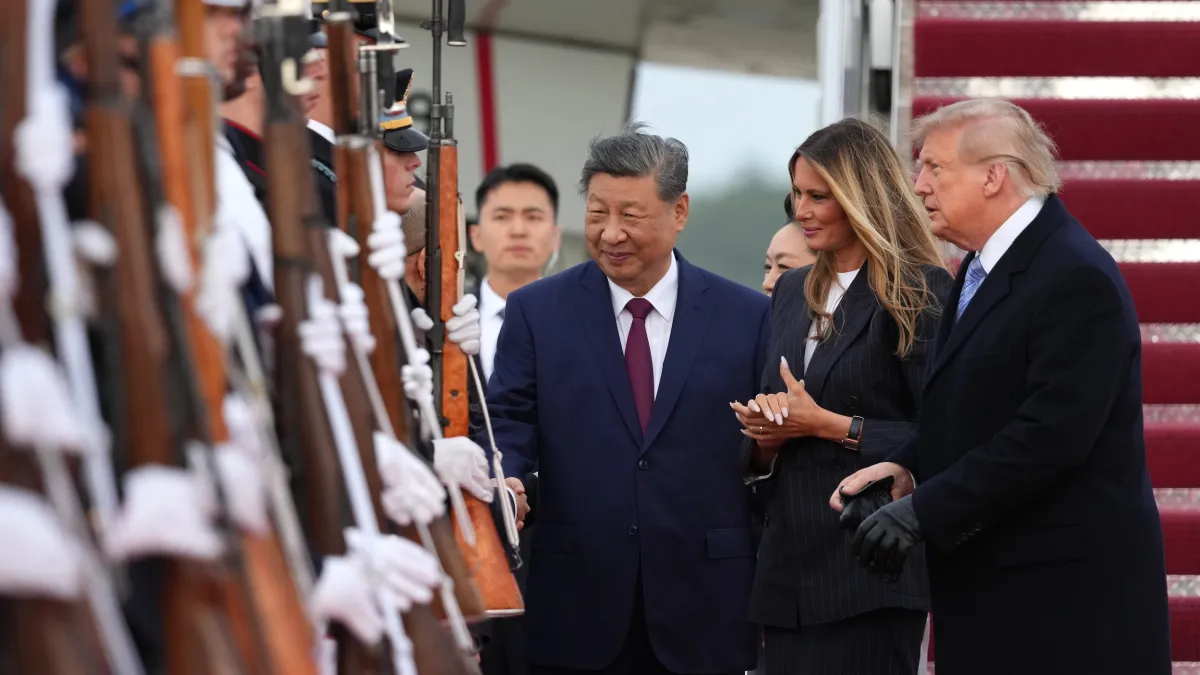
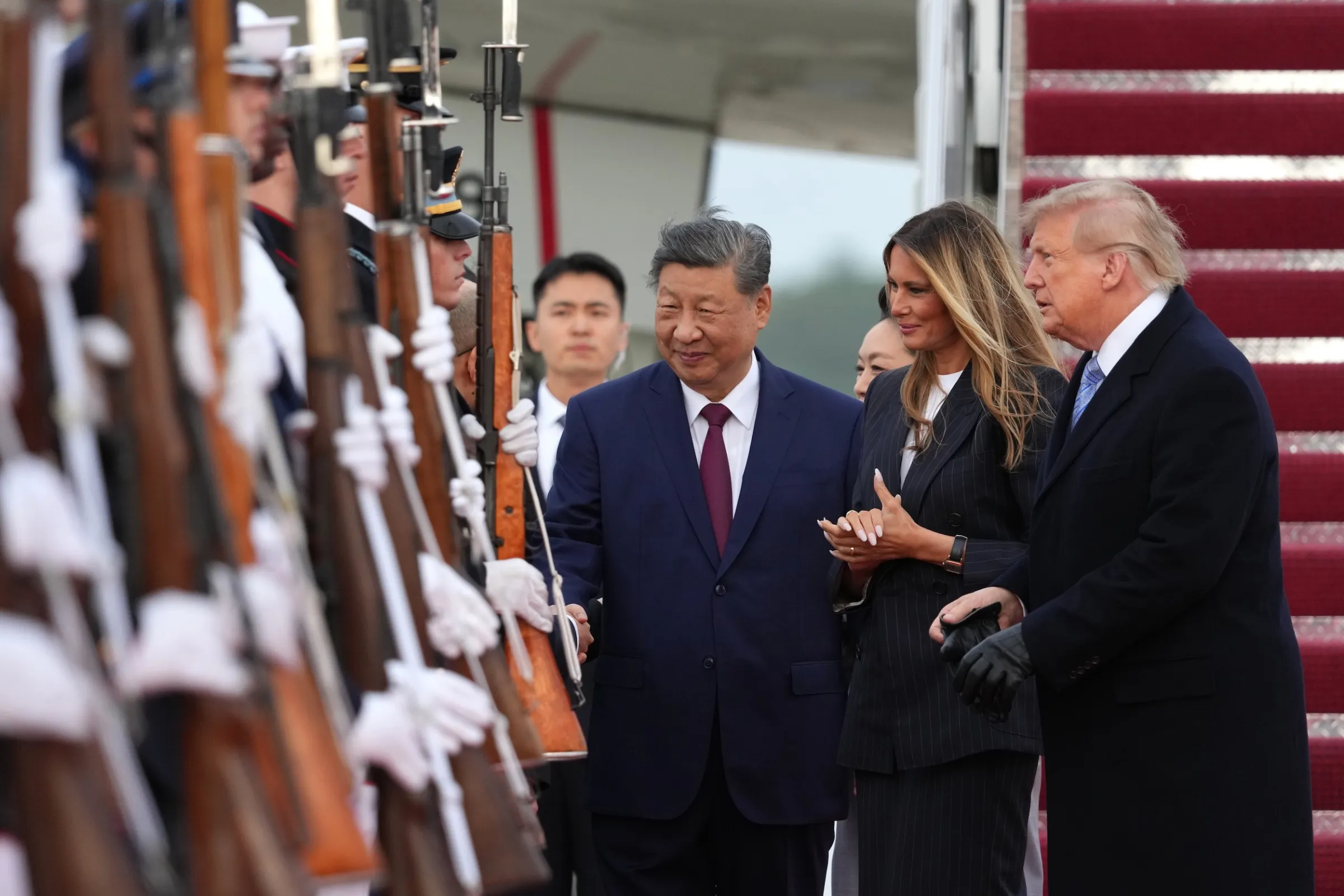
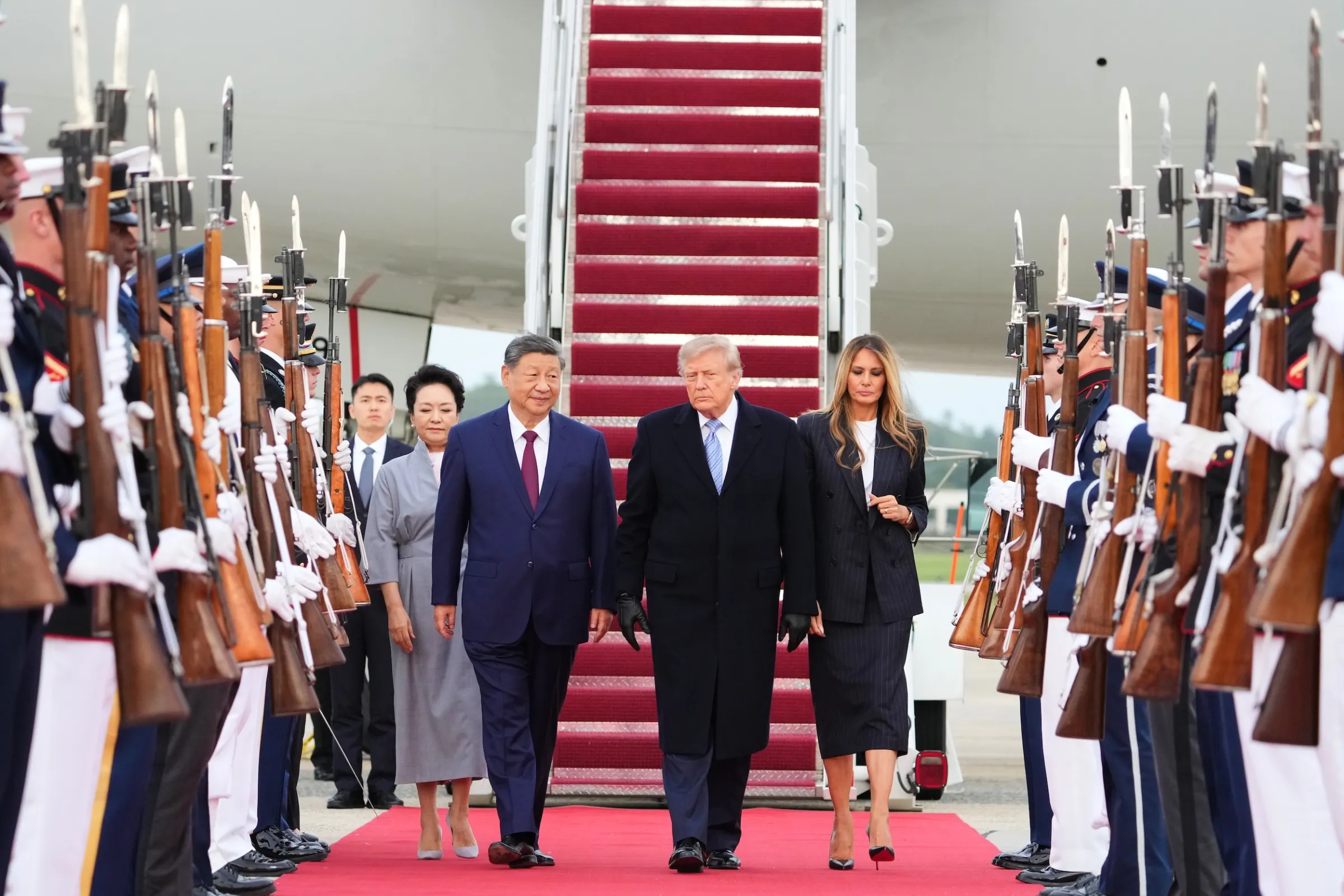
Chinese leader Xi Jinping arrived in Washington on September 23 for a state visit that broke with diplomatic convention from the moment his plane touched down, with President Trump personally greeting him on the tarmac and preparing to host him at a formal state dinner. The lavish treatment has landed badly on Capitol Hill, where lawmakers from both parties, and especially hawkish Republicans, are warning the administration not to trade away Taiwan's security or human rights concerns for the sake of a friendly photo op with Beijing.
Republicans Say A State Dinner Is No Place For A Dictator
Trump has repeatedly called Xi a personal friend in public remarks and has played down Chinese economic and intelligence support for Iran, on top of the red carpet welcome at Joint Base Andrews. Senate Armed Services Committee Chairman Roger Wicker did not hold back. "Quite frankly, had the White House asked me for advice, I would have suggested the president not invite Xi Jinping to Washington, let alone give him such a grand welcome," Wicker said. He added pointedly that somewhere between the chardonnay and the cabernet at the state dinner, Trump ought to be confronting Xi directly about Chinese naval harassment of Philippine fishermen and sailors, and about threats to Taiwan.
Wicker argued that as commander in chief, Trump needs to remember, in every minute he spends with Xi, that "his guest is a brutal, unelected, and oppressive dictator who seeks to dominate his neighbors, and whose massive military arsenal is aimed directly at the United States."
This is CCP propaganda at its finest. There is no “win-win cooperation” with the world’s biggest opponent of freedom and liberty. Here’s the real truth behind Xi Jinping’s agenda @ChineseEmbinUS. https://t.co/A1AfDadeijpic.twitter.com/b7fTdEOKPX
— Select Committee on China (@ChinaSelect)September 23, 2026
The House Select Committee on the Chinese Communist Party released a video ahead of Xi's arrival tracing his consolidation of power back to 1974 and describing him as the world's foremost enemy of freedom. Secretary of State Marco Rubio defended the administration's approach, arguing that with the US and China the world's two largest economies and likely its two strongest militaries, a leader to leader meeting is simply "a responsible way to run statecraft," and that refusing to engage at the top level would be the truly irresponsible choice.
Senate Republicans Demand Taiwan Arms Sales Be Unfrozen Immediately
The sharpest, most specific pushback centers on Taiwan. Four Senate Republicans, Mitch McConnell, John Cornyn, Lisa Murkowski, and Thom Tillis, sent a joint letter on September 23 to Secretary of State Rubio and Defense Secretary Pete Hegseth demanding the administration immediately unfreeze more than 15 billion dollars in security assistance and arms sales for Taiwan. The letter identifies three specific holds: 300 million dollars in foreign military financing that Congress has already appropriated but the State Department has not moved forward, 1 billion dollars in assistance the Pentagon has yet to obligate, and a roughly 14 billion dollar foreign military sale to Taiwan that the White House continues to delay approving.
The senators pointedly quoted Rubio and Hegseth's own past statements back at them, noting Rubio has previously said deterring an invasion of Taiwan "must be America's top priority" and Hegseth has vowed the US will "never allow allies and partners to be subjugated and intimidated." They expressed alarm at Trump's public description of Taiwan as a "very good negotiating chip" in dealings with Xi, warning that "if the price of keeping up diplomatic appearances is denying our partners key deterrent capabilities, it is difficult to imagine how the United States might credibly project influence in the Indo-Pacific" afterward. Rubio, responding to the pressure, pointed instead to the overall balance of America's defense industrial capacity: "I know everyone is focused on Taiwan, but I'd ask people to look at this globally too. If we sell the equipment, we won't have it ourselves anymore. Maybe we can build more of it eventually, but we don't have it in hand right now."
Democrats Focus Their Fire On Chip Controls And Iran
Congressional Democrats are pressing the administration from a different angle. Senate Democratic leader Chuck Schumer and three fellow senators held a news conference warning Trump not to loosen export controls on advanced semiconductor chips and chipmaking equipment to China in pursuit of any compromise with Xi. Loosening those controls, Schumer argued, would erode the US lead in artificial intelligence, and he criticized what he called the administration's cavalier approach to AI oversight: "We have to maintain restrictions on technology transfers to China while putting up the right guardrails, not fall into the false choice Trump keeps presenting us with."
Xi Jinping is Iran’s number one enabler in its ongoing war against the United States. Watch this video to learn how China is fueling Iran’s attacks on U.S. military assets. pic.twitter.com/0IEazLz9sI
— Select Committee on China (@ChinaSelect)September 12, 2026
On the Iran front, Senate Foreign Relations Committee ranking Democrat Jeanne Shaheen used floor remarks to demand Trump confront Xi directly over Chinese support for Tehran. "If we want to bring this war to an end, we need to cut off the outside support that is letting Iran keep fighting, and that has to start with China," she said. Citing US officials, the New York Times has reported that Chinese firms have continued supplying Tehran with satellite imagery and spy satellite access since the war began, directly aiding Iranian strikes on American military assets.
Human Rights Advocates Fear They Will Be Left Off The Agenda
Beyond security issues, rights groups and lawmakers worry the summit's diplomatic choreography will crowd out human rights entirely. Reuters has reported that Trump is expected to press Xi to release two American citizens held in China, Chinese American former North Korean nuclear test analyst Youlin Chen, detained since late 2024, and scholar Min Zin, held since June. It remains unclear whether the White House intends to raise Tibet, the treatment of Uyghurs in Xinjiang, or China's newly passed Ethnic Unity Progress Law at all.
Democratic Representative Jim McGovern accused Trump of treating human rights as disposable in a wholly transactional approach to diplomacy: "We cannot abandon human rights in our foreign policy. China's human rights record is beyond dispute, and it is a very bad one." Advocacy groups including Freedom House and the International Campaign for Tibet have called on Trump to confront Beijing head on over what they describe as transnational repression of dissidents and activists abroad. For his part, China's ambassador to Washington, Xie Feng, used a party newspaper column to draw what Chinese officials call four red lines that Washington should not cross: Taiwan, democracy and human rights, China's political system, and its right to development. Caught between a wall of congressional opposition at home and red lines drawn in Beijing, how Trump balances the optics of friendship against the substance of the relationship has become the real story of this Washington summit. (Related: Trump Rolls Out The Red Carpet For Xi While Taiwan Watches Nervously From The Sidelines | Latest )