Chinese leader Xi Jinping landed in Washington on Wednesday evening for his first state visit to the United States in more than a decade, and President Trump broke with decades of protocol to meet him plane-side rather than wait for a White House ceremony. Hours later, Treasury Secretary Scott Bessent confirmed that a trade truce originally set to lapse in November had been pushed back to January 10, effectively settling the summit's central economic question before Trump and Xi had even sat down together.
A Ceremony Built To Repay Beijing's Hospitality
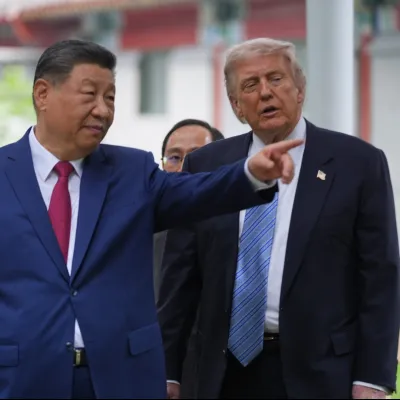
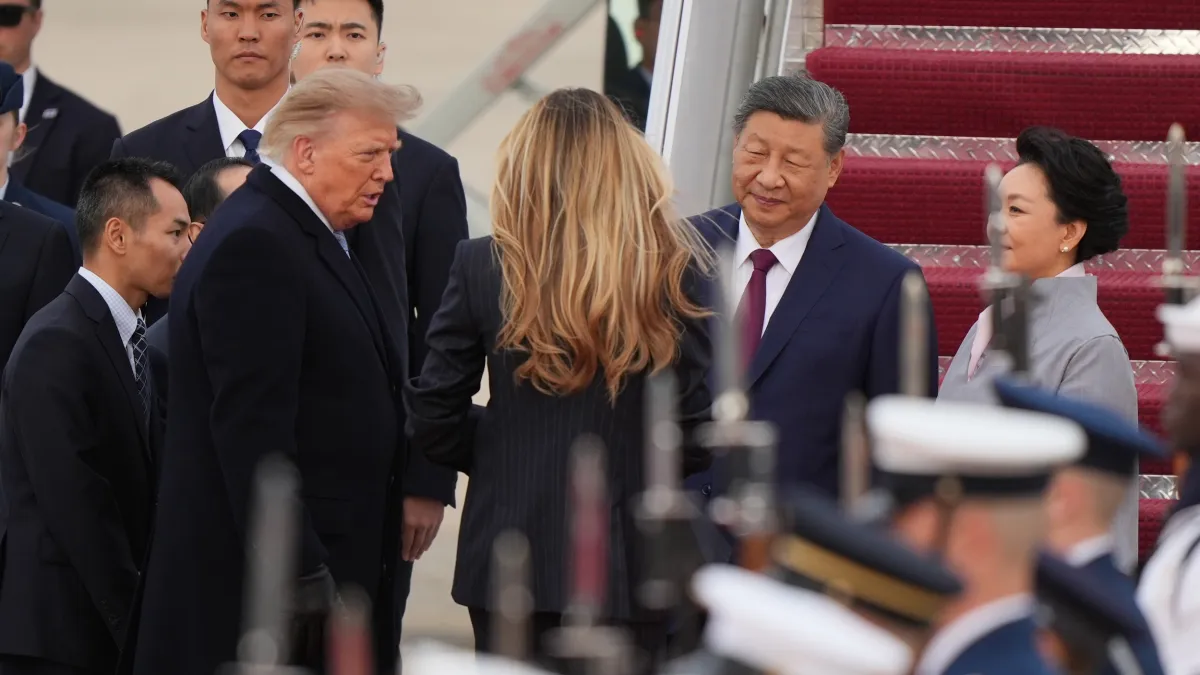
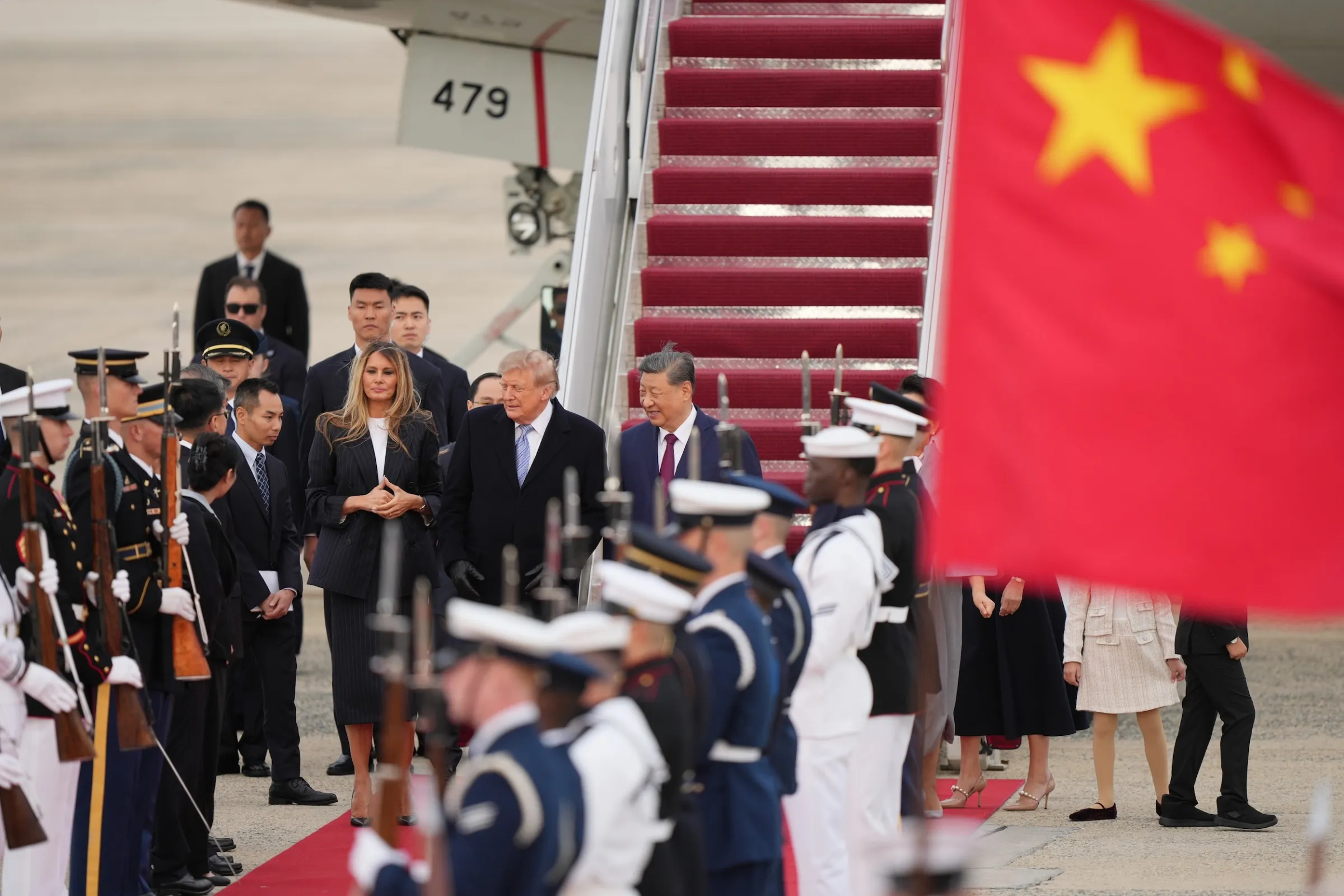
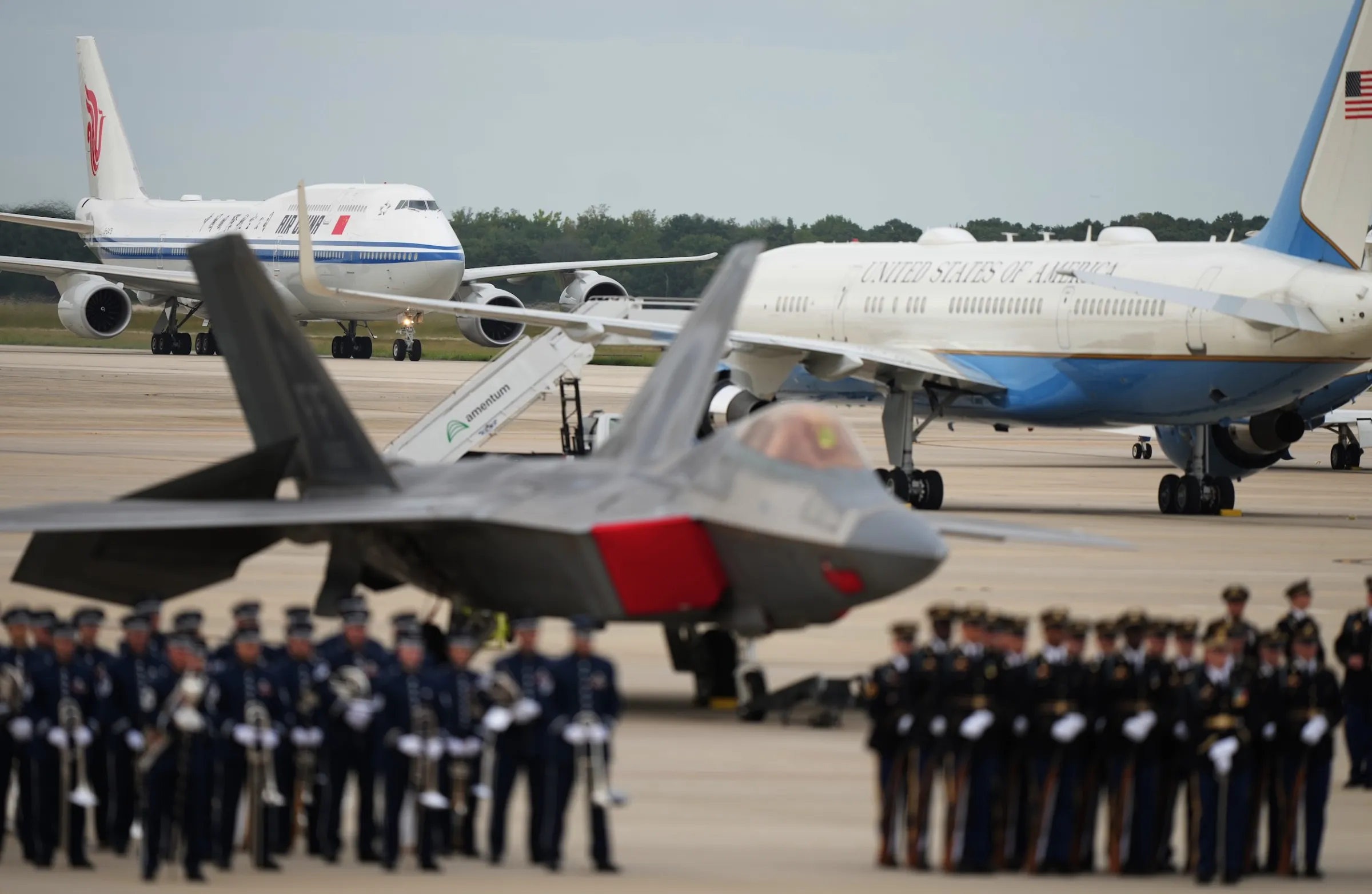
Xi's plane touched down at Joint Base Andrews in Maryland to a 100 foot red carpet flanked by US service members, a flyover by two B-1 bombers, and a formal presentation of both countries' flags and national anthems. US presidents typically receive foreign leaders at the White House, but Trump and First Lady Melania Trump traveled to the military base outside Washington instead, personally shaking hands with Xi and his wife, Peng Liyuan, as they stepped off the plane. The Guardian reported that the one discordant note in an otherwise carefully staged arrival came when Trump visibly winced at the sound of a low military jet flyover while standing beside Xi during the anthem; Xi remained impassive, as did both wives. The moment was caught on the White House's own livestream but left out of the edited highlights Trump's aides released afterward, and was widely mocked online. Melania later told Fox News the couple wanted to extend "the most respect" because Xi "is coming on our soil."
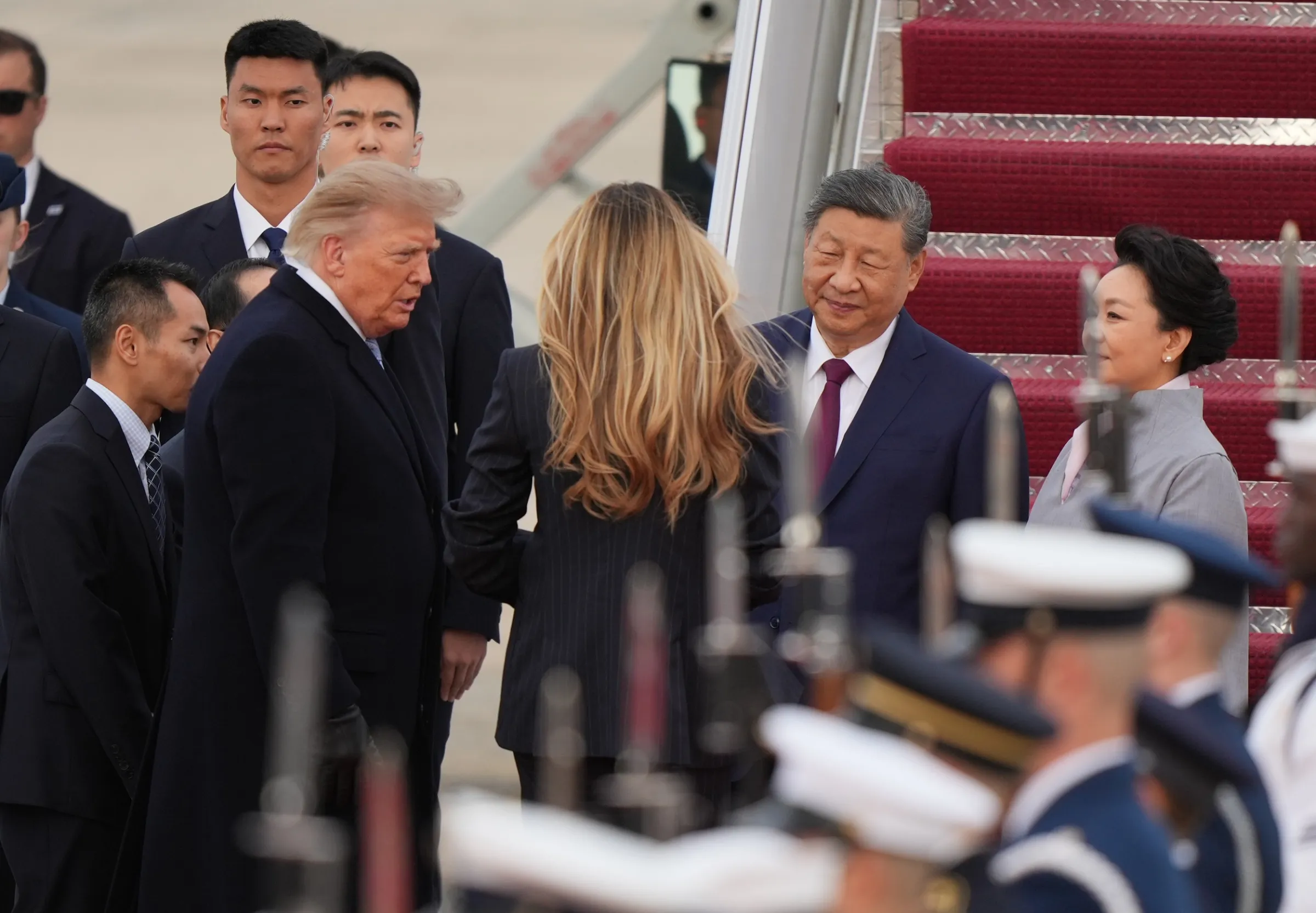
The gesture is widely read as payback for the reception Beijing gave Trump when he visited China in May. The pageantry continues Thursday with a formal state welcome on the White House's South Lawn and a black tie state dinner expected to draw tech executives from OpenAI, Apple, xAI, Microsoft, Nvidia and Meta, including Nvidia's Jensen Huang and Apple's Tim Cook, both of whom also attended the Beijing leg in May. Friday is reserved for a private tea with the Trumps and a tour of the National Archives.
Two Rounds Of Trade Talks Settle The Summit's Big Question Early
NBC News noted that the main question hanging over Thursday's summit, whether Washington and Beijing would extend their fragile trade truce, was resolved before the two leaders ever sat down together. The groundwork was laid in two separate rounds of talks. On Sunday, Bessent and US Trade Representative Jamieson Greer spent roughly 12 hours with Chinese Vice Premier He Lifeng at JPMorgan Chase's global headquarters in New York, a session Bessent called successful and in which the two sides agreed to launch a communications "hotline" for notifying each other of AI related safety incidents, though China's Xinhua news agency confirmed only that AI had been discussed.
Then, a day before the summit, Bessent held a second and unscheduled meeting with He, this time in Washington, lasting about 90 minutes. Reuters reported Bessent described the sit down as clearing up "unfinished business" ahead of the summit, and afterward told Fox News that the two countries had agreed to extend the trade truce struck in Busan, South Korea in May, and due to expire November 10, by two months to January 10. "We met today to see if we could do a bigger deal as opposed to just a series of smaller things," Bessent said, adding the extra time would let both sides "see what we can do on the economic front."
Beijing had floated the idea of a larger trade deal during Sunday's talks without detailing its scope, and Bessent said it remains unclear whether such a deal can be reached by January. In the meantime, Washington is pressing China to "be a bit more fulsome" on its existing commitments: Beijing is on track on its pledge to buy 25 million tons of soybeans but is lagging on a separate 17 billion dollar commitment for other agricultural goods, and US officials say promised rare earth shipments are behind schedule as well. Because Thursday's meeting is only the second of up to four Trump Xi encounters expected this year, with further sessions penciled in for Shenzhen and Miami, Bessent suggested there was no rush to lock in more than the status quo: "we're open to the idea of just continuing the Busan arrangement or examining the bigger deal... we're going to do what's best for the American people." He said Thursday could still bring announcements on removing tariffs from about 30 billion dollars of non critical goods, along with progress on financial services and agricultural purchases, building on a Busan truce that had already pulled bilateral tariffs down from the triple digit rates reached during last year's tit for tat retaliation.
Taiwan Becomes The Hardest Bargain On The Table
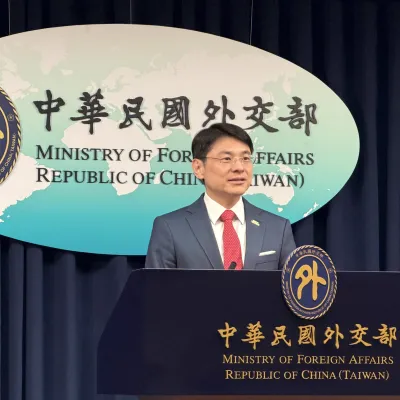
Taiwan remains the visit's most sensitive undercurrent. Trump has described a pending 14 billion dollar Taiwan arms package as a potential "negotiating chip" with Xi, a framing that has drawn bipartisan alarm in Congress. Senate Republicans Mitch McConnell, John Cornyn, Lisa Murkowski, and Thom Tillis wrote to Secretary of State Marco Rubio demanding the release of 1.3 billion dollars in stalled military aid and approval of the frozen arms package before the summit, warning that it is "difficult to imagine how the United States might credibly project influence in the Indo-Pacific if the price of keeping up diplomatic appearances is denying our partners key deterrent capabilities." A senior administration official told NBC News that Trump would decide on a new Taiwan arms package "in a fairly short time," noting that Trump had already approved 11.1 billion dollars in Taiwan arms sales in December, the largest single package Taiwan has received, and that he approved more Taiwan arms sales during his first term than any other US president.
Beijing's read on the standoff is more satisfied than not. Zhao Hai, vice president of the Chinese Institute of Hong Kong, a think tank affiliated with the Chinese Academy of Social Sciences, said China would ideally like Washington to end Taiwan arms sales altogether and formally oppose Taiwan independence, but added, "we're realistic." "So far, the outcome has been quite good for China, which is the pause on U.S. export of military equipment," he said. "If we can extend that pause and even cancel some of the more offensive weaponry, that would be better." China's ambassador to Washington, Xie Feng, used a People's Daily column published ahead of Xi's arrival to name Taiwan as one of what Chinese officials describe as the country's four red lines, alongside democracy and human rights, its political system, and its right to development. A Pentagon spokesperson countered that the administration and Congress "have repeatedly reaffirmed support for Taiwan's self-defense capability," and a joint statement issued Monday by the US, Japan, and South Korea likewise reiterated support for Taiwan alongside the allies' own defense commitments.
The AI Race Adds One More Flashpoint To A Fragile Truce
Artificial intelligence has become one of the few areas where Washington and Beijing are competing rather than negotiating. The Guardian noted that the rivalry has intensified as American AI executives warn about the risks of unchecked development, warnings Trump has brushed aside in favor of more investment to keep the US ahead. "There is a SICK conspiracy going on against AI and Data Centers, and the only one that is happy about it is China," Trump wrote on Truth Social in the days before Xi's arrival. "WHOEVER WINS AI, WINS! We are leading China, and all others, and will continue to do so." The AI safety hotline agreed at Sunday's talks in New York is the closest the two sides have come to cooperation on the technology, and Reuters cited analysts who said expectations for anything deeper remain low given the mutual distrust and neither government's real appetite for slowing down.
That dynamic sits inside a broader debate, aired in NBC's reporting, over which side is negotiating from strength. Trump, who has called the US and China the "G2" and Xi his "good friend," shares an easy rapport with him that Orville Schell of the Asia Society's Center on US China Relations called "quite astounding" after their May meeting in Beijing. But Schell argued the underlying leverage has shifted toward Beijing, citing China's dominance of rare earth minerals and electric vehicle technology: "The United States doesn't hold all the cards, in fact, maybe not even the preponderance of the cards." Cornell's Allen Carlson said Trump arrives at this summit weaker than he was four months ago, weighed down by inflation, sliding approval ratings, and an unpopular war with Iran, a conflict the Iran war's critics say has strained US munitions stockpiles and deepened American reliance on Chinese controlled minerals to replenish them. The White House disputes that reading; spokeswoman Anna Kelly said "the United States Military has more than enough munitions, ammo, and stockpiles to serve all of the Commander-in-Chief's strategic goals and beyond."
Why Neither Side Feels Pressure To Strike A Bigger Deal Now
Part of the reason this week's summit carries relatively low stakes, NBC reported, is that Trump and Xi are already expected to meet twice more this year, once in November when China hosts the Asia Pacific Economic Cooperation summit and again in December when the US hosts the Group of 20. "I think best case scenario is it's a blip, and we move on, and the broader sort of issues that both countries are confronting continue to unfold," Carlson said. Some incremental progress is still visible on the margins: Greer said this week that China is moving ahead on its May pledge to buy 200 Boeing jets, the plane maker's first major Chinese order in nearly a decade, though little has come of the broader "board of trade" and "board of investment" the two leaders agreed to set up in May. Zhao said Chinese firms remain eager to invest in the US but see little room to commit without firmer political guarantees, while polling released this week by the Chicago Council on Global Affairs found that more than half of Americans, including four in ten Republicans, now support deeper cooperation with China even as unease persists in Congress over questions like whether Chinese automakers should be allowed to build cars on US soil.
(Related:
Beijing Watch | What Xi And Trump Will Really Be Negotiating At Their Washington Summit
|
Latest
)