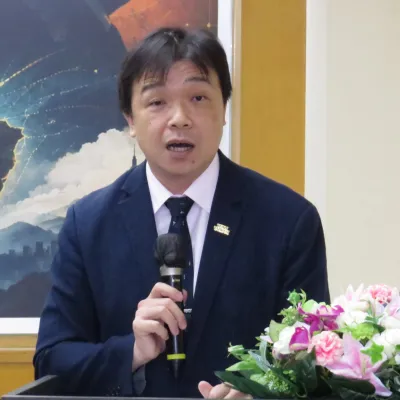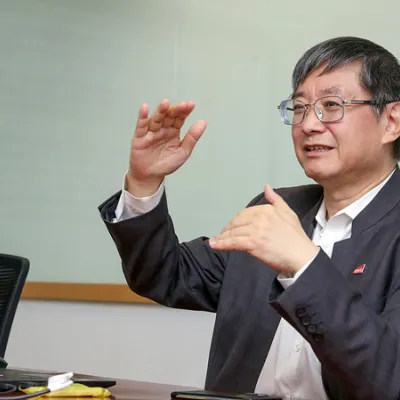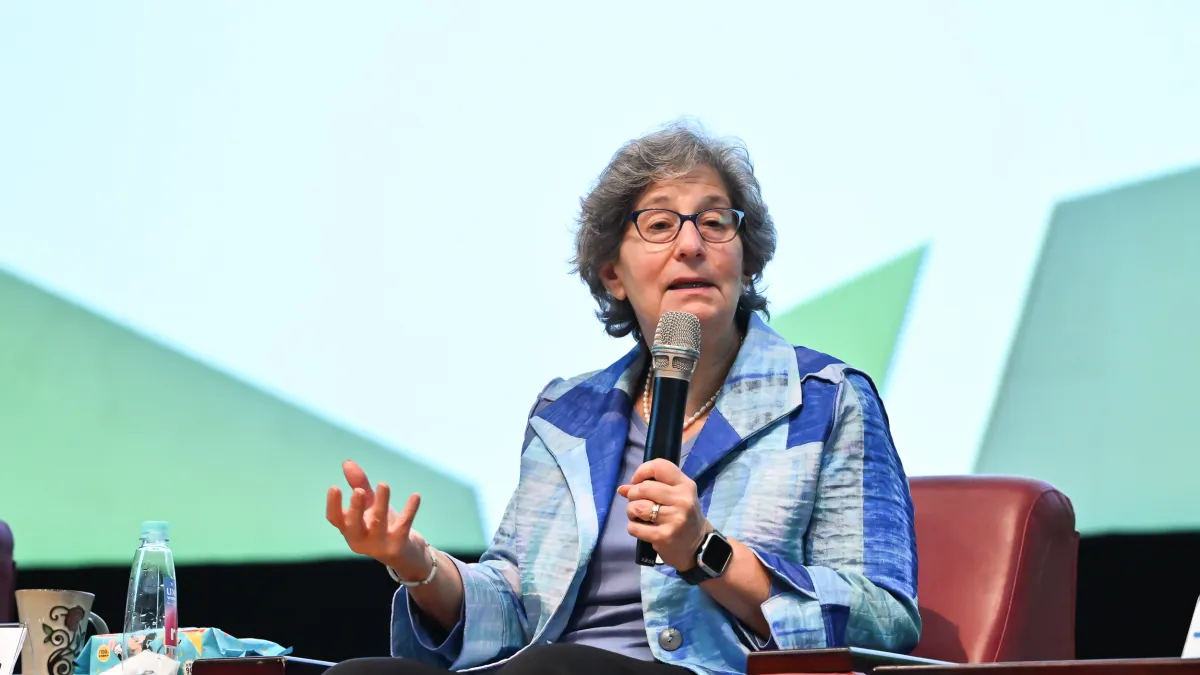
Susan Solomon spent the 1980s chasing an answer in one of the harshest places on Earth, leading research expeditions to Antarctica to measure what was destroying the ozone layer. On September 22 the Massachusetts Institute of Technology atmospheric chemist brought that same insistence to Kaohsiung, in southern Taiwan, telling students and faculty at National Sun Yat-sen University (NSYSU) that climate change has stopped being a projection and become a daily experience.
Solomon is the 2026 laureate of the Tang Prize in Sustainable Development, the Taiwan-based award given every two years in four fields and widely followed in Asia as a bellwether for the Nobel Prize. Her keynote, "Climate Change and Getting Past Climate Gridlock," anchored a daylong program co-organized by NSYSU and the Tang Prize Foundation under the title "ALOHA! Solomon Sustainability Day."
She moved through climate signals, the long atmospheric lifetime of carbon dioxide, extreme events and cumulative emissions before turning to technology, policy and public choice, summing up the shift in two words: "Personal. Perceptible." NSYSU President Chih-Peng Li said the Tang Prize, which covers Sustainable Development, Biopharmaceutical Science, Sinology and Rule of Law, recognizes substantive contributions to the international community.
Antarctic Fieldwork That Forced A Global Treaty
Solomon's authority rests on what she measured herself. Working in the cold and half-light of the Antarctic, she and her teams recorded reactive chlorine compounds in the atmosphere directly, supplying the evidence that linked chlorofluorocarbons to the Antarctic ozone hole. That evidence became a scientific foundation of the Montreal Protocol on Substances that Deplete the Ozone Layer, still the most effective environmental treaty the world has produced.
At the Tang Prize Sustainable Development Master's Forum, now in its seventh edition, she retraced the route a scientific finding travels: from laboratory work to public awareness, then to an international agreement, and finally to action on a global scale.
Taiwanese Scholars Test The Ozone Model Against Climate
Chia C. Wang, a professor in the NSYSU Department of Chemistry and director of its Aerosol Science Research Center, moderated the forum. She was joined by Kopin Liu and Pao-Kuan Wang, academicians of Academia Sinica, Taiwan's top research institution, and by Huey-Jen Su, professor emeritus at National Cheng Kung University in the southern Taiwanese city of Tainan.
Liu connected molecular-scale reactions to planetary conditions through chemical kinetics and dynamics, while Pao-Kuan Wang weighed both the insights and the limits of ozone governance as a template for climate policy. Su, speaking from public health, described how gender and social inequality shape exposure, vulnerability and the capacity to adapt. Chia C. Wang also asked Solomon to reflect on the place of women scientists in the climate debate and on what she hopes for the generation coming after her.
Oceans, Forests And Human Health In One Frame
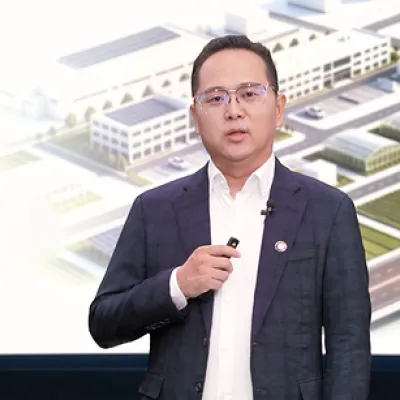
An afternoon session, the "ALOHA! One Health Sustainability Forum," widened the frame. Pao-Kuan Wang examined climate and environmental change; Chia-Ying Ko of National Taiwan University (NTU) in Taipei spoke on marine biodiversity; Rebecca Chia-Chun Hsu of Taiwan's Ministry of Agriculture addressed forests, biodiversity and climate resilience; and NTU professor Chang-Fu Wu analyzed environmental exposure and human health. Chia C. Wang introduced the concept of the "Aerosphere," treating aerosols as an interface among atmosphere, ocean, land, ecosystems and human activity.
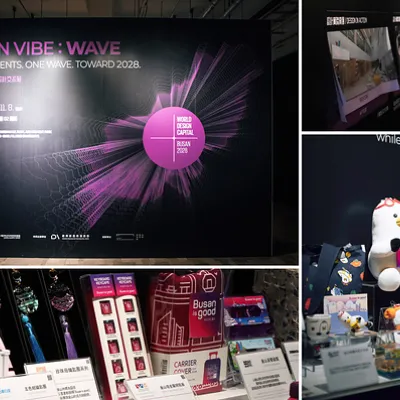
Organizers said ALOHA stands for All Life, One Health, Action. Two exhibitions ran alongside the forums: "Her Story: Tang Prize Women Laureates in Sustainable Development" and the "NSYSU ALOHA! Breathing Civilization Showcase." The event was co-organized by the Taiwan Kaohsiung IDG Hub for SDGs, Taiwan Women in Science and Technology (TWiST) and the Chinese Women's Business Association Kaohsiung Branch.