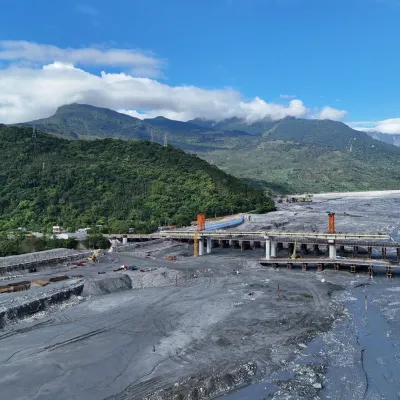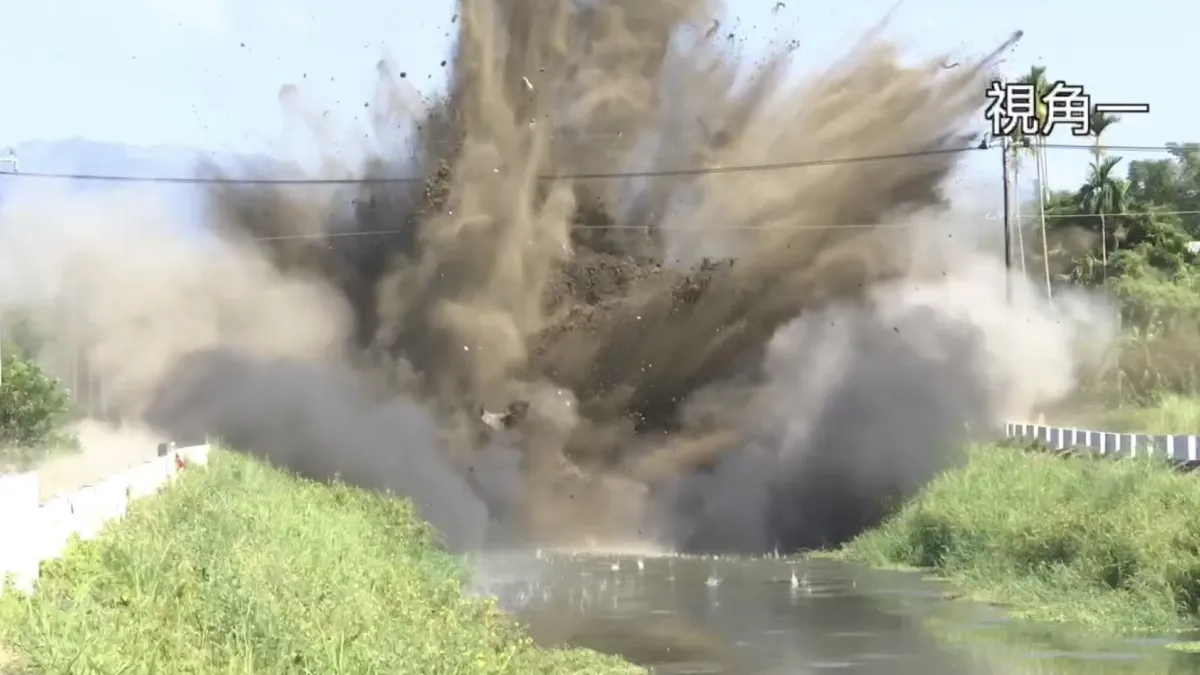
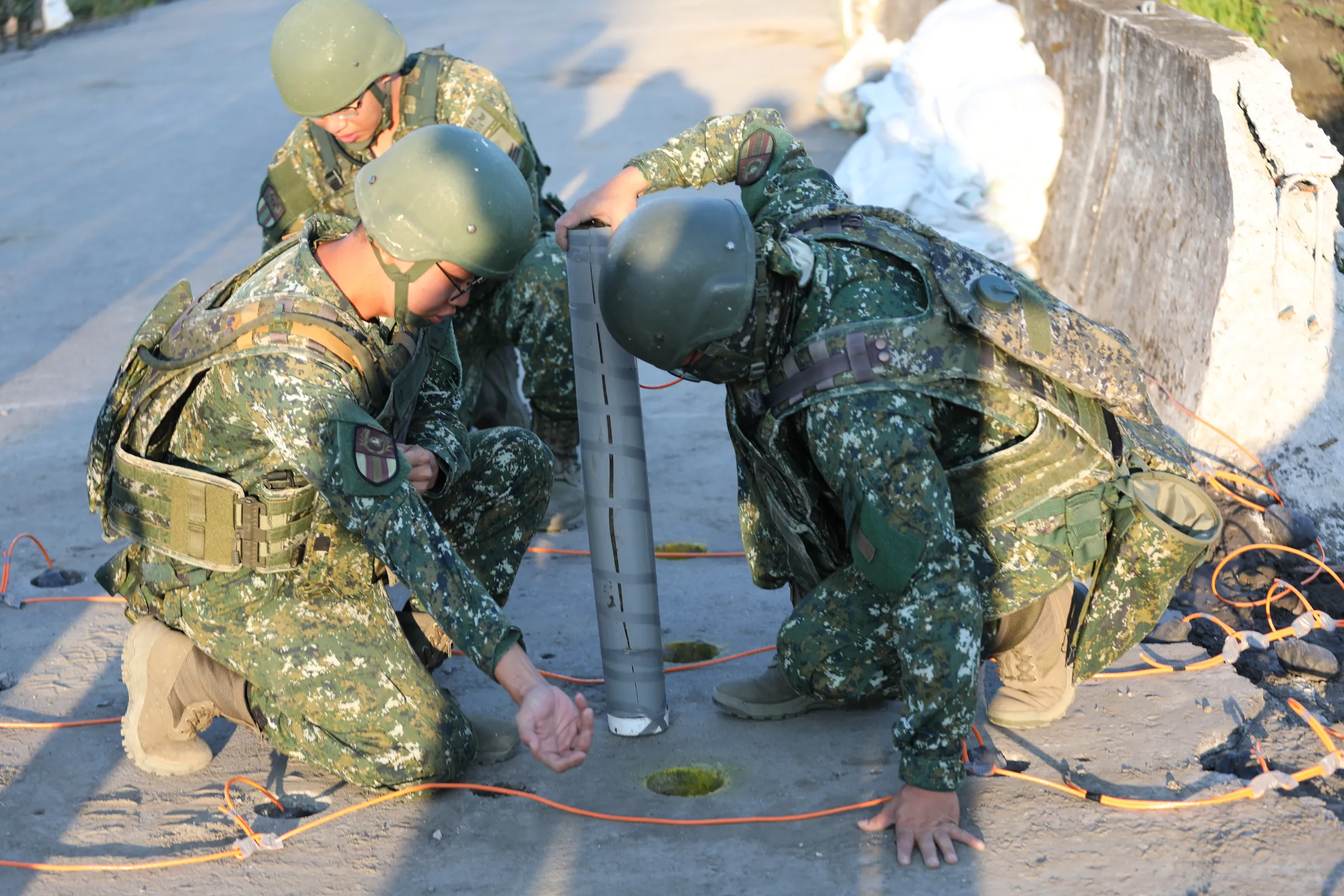
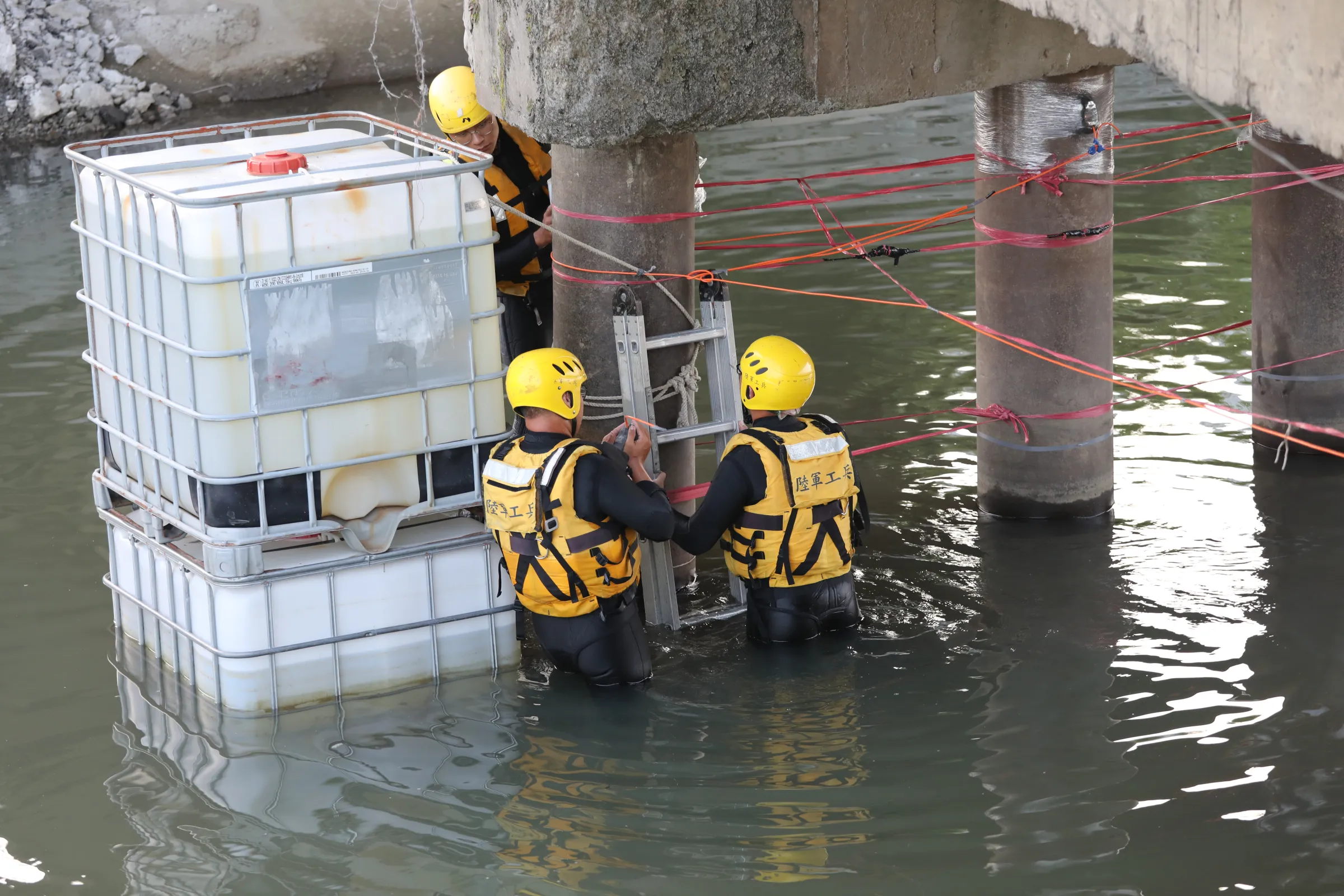
Taiwan's army destroyed a condemned highway bridge in northeastern Yilan County on September 22, turning a local government's demolition contract into live practice for one of the tasks combat engineers would be expected to perform in a war.
The blast was carried out by the 53rd Engineer Group and timed to the reconstruction of the Xizhou No. 3 Bridge in Yuanshan Township. Instead of the county hiring a commercial demolition firm, military engineers were handed the span and told to bring it down themselves.
Second Attempt Succeeds After Engineers Rewrote The Charge Plan
Army Command said the operation was the second of its kind this year. The first did not go entirely as planned, and parts of the result fell short of what commanders had expected. The unit reviewed what went wrong, adjusted its approach, and tried again.
Col. Shih Chia-chuan, who commanded the task force, said the team went back over every variable before returning to the site.
"From the bridge structure, the surrounding environmental conditions, the quantity of explosives required and where to place them, to the safety measures and the operating procedures, everything went through a comprehensive review," he said. The bridge came down as intended this time, he added, which he described as valuable experience for engineer units.
Condemned Civilian Bridges Now Double As Army Training Grounds
The army began approaching local governments last year to identify bridges already slated for demolition and offer its engineer units as the ones to take them down. The arrangement gives soldiers something a classroom cannot: a real structure, real load-bearing behavior, and real consequences for a miscalculated charge.
Demolition is standard work for combat engineers, who are trained to destroy or disable infrastructure to slow an advancing force. Until recently, much of that instruction in Taiwan rested on published figures and tabletop calculations rather than on detonations against actual spans.
Army Says Finding Flaws Is The Point Of Realistic Training
Army Command said hands-on exercises of this kind matter less for the result than for what they expose. Combat skills cannot be left at the level of theory or dry runs, it said, because problems surface only when troops execute for real, and solving those problems is what moves capability forward.
It drew a parallel with the live-fire requirements attached to conversion training on newly fielded equipment, where units are made to shoot rather than simulate.
The service was blunt about what realistic training is not. It is not about the appearance of a flawless score, Army Command said, but about surfacing shortcomings and defects while there is still time to correct them. Doctrine and theory supply the foundation, it added, and only verification in the field turns that foundation into usable combat power.
The army has spent recent years reorganizing its exercise program around what it calls the four principles of real terrain, real troops, real conditions, and real execution, part of a broader push to close the gap between what units practice and what they would actually face.