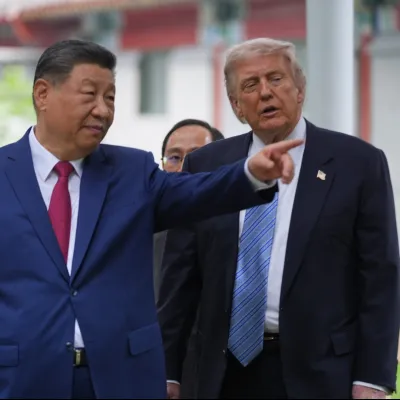
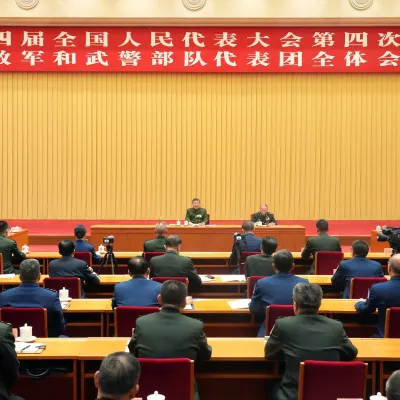
China's Communist Party has locked in the dates for its most politically loaded plenum in years, and for once the headline is not the five year plan. On September 21, the Political Bureau, chaired by Xi Jinping, confirmed that the fifth plenary session of the 20th Central Committee will run from October 26 to 29 in Beijing, filling in a date that had been left open since a July 30 announcement promised only a meeting sometime in October.
The same meeting decided to send a draft decision on continuing to advance full and rigorous self-governance of the party to the full session for deliberation, a text that has already circulated for comment inside and outside the party and will be revised again before the plenum opens. On paper, that sounds like routine party housekeeping. In practice, it is arriving alongside the deepest purge of the People's Liberation Army's senior ranks in decades, and the two are increasingly hard to separate.
A Discipline Document Takes The Place Usually Reserved For Economic Planning
Fifth plenums are traditionally where the party signs off on the framework for its next five year plan. That slot has already been filled: the recommendations for the 2026 to 2030 plan were settled at the fourth plenum back in October 2025, leaving this October's session free to focus on something else entirely.

A provincial level party organization official, speaking anonymously because of the sensitivity of the subject, told Storm Media the timing reflects two realities. Economic planning has effectively already been worked out in other forums, and with the 21st Party Congress due in 2027, reconfirming the loyalty and structure of the leadership has become far more urgent than any growth blueprint.
That urgency is not new. The Central Commission for Discipline Inspection made full and rigorous self-governance and anti-corruption enforcement its top priorities at its own plenary session back in January, with an emphasis on political oversight and discipline. What has changed since then is the sheer scale of the personnel fallout now waiting to be formalized.
Seven In Ten Military Central Committee Members Have Now Been Punished
Roughly 19 Central Committee members have been removed, expelled, or stripped of their National People's Congress seats over the past year, and military officers make up more than half of them. Add in officials who disappeared from public view without explanation or left their posts under murky circumstances, and the plenum could plausibly work through close to 30 cases in a single sitting.
The military's share of that toll is what stands out. The October 2025 plenum had already confirmed the party expulsions of Central Military Commission figures He Weidong and Miao Hua. This January, investigators opened cases against Vice Chairman Zhang Youxia and Joint Staff Department chief Liu Zhenli, and by August the National People's Congress had quietly stripped both men of their state military posts, without yet announcing any party discipline against them.
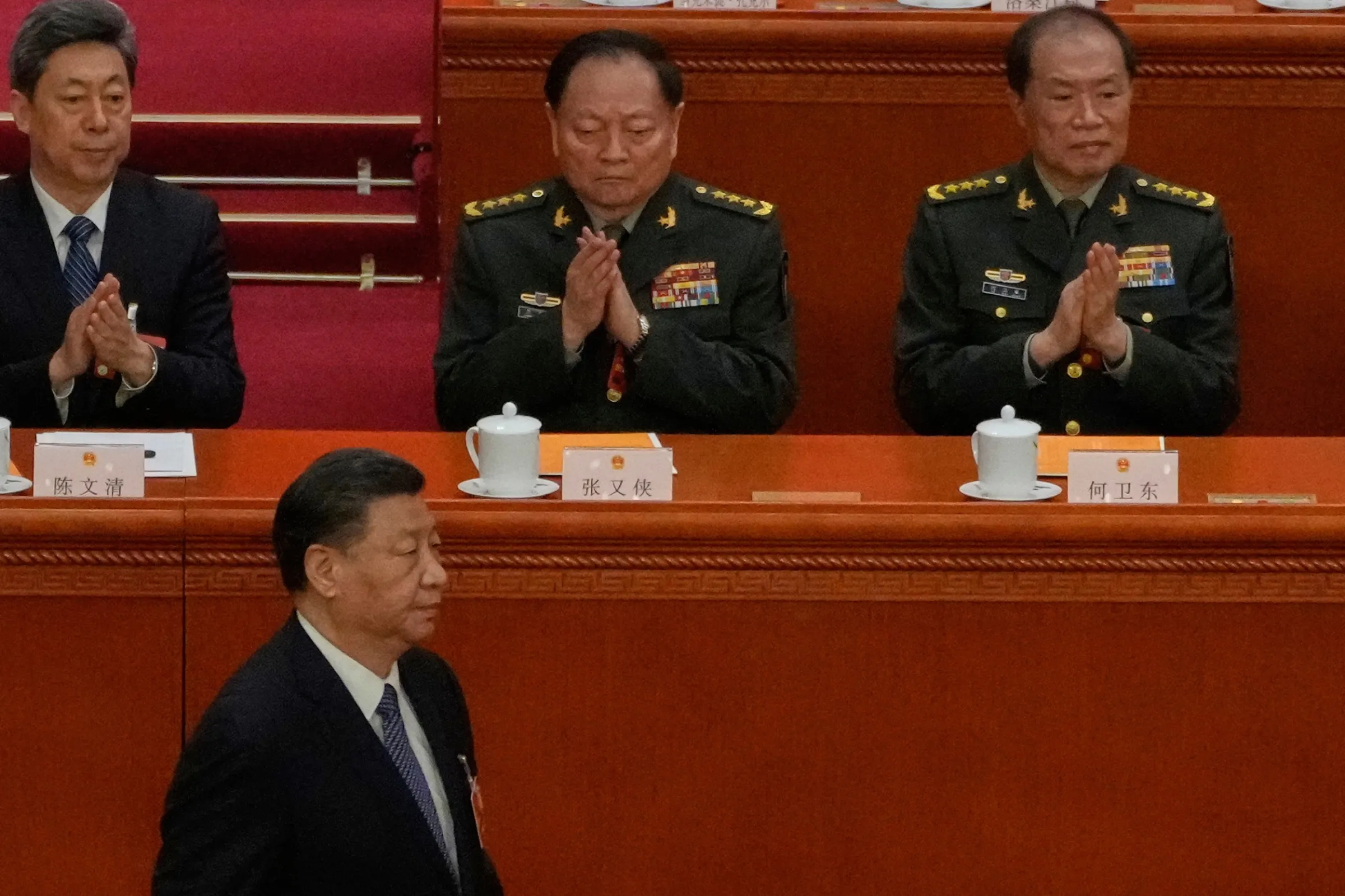
Of the seven officers named to the Central Military Commission at the 20th Party Congress in 2022, only Xi and Vice Chairman Zhang Shengmin remain untouched. Across the wider Central Committee, more than seven in ten of the 44 uniformed members from the current term have now been expelled, removed, or disciplined, a scale of turnover that cuts across every theater command and service branch rather than isolated cases. Plenums are traditionally where the party makes such changes official, and who is missing, who is promoted, and who is quietly replaced usually says more about where power actually sits than the communique that follows.
A Quieter Purge Is Also Moving Through Academia And Industry
Away from the military, discipline investigators have taken down dozens of officials across academic, technology, health care, and financial institutions in recent months, many of them disclosed only through local social media notices or routine personnel announcements rather than formal statements. That pattern makes the current wave considerably harder to track from outside China than previous anti-graft campaigns.
The strain of that pressure is now an acknowledged problem inside the system itself, with officials increasingly described as risk averse, passive, or reluctant to make decisions for fear of becoming the next case. The plenum's discipline document is widely read as an attempt to find a workable balance between tightening control and keeping the bureaucracy functional, framing anti-corruption less as a string of individual scandals and more as a matter of the party's own political security.
The Real Test Comes After The Plenum Closes
None of this is happening in a vacuum. Next year marks the PLA's centenary, a milestone Beijing has tied to its military modernization goals, and cross strait tensions show no sign of easing. A command structure that has lost most of its senior tier in barely two years is harder for outside observers to read and, potentially, harder for Beijing itself to rely on if a crisis with Taiwan were to unfold.
Analysts will be watching whether new cases after the plenum stay concentrated among top generals, which would suggest the military purge still has room to run, or whether the party pivots toward institutional rule making and routine discipline enforcement, which would suggest Beijing is shifting from punishing individuals to rebuilding the system around them. Either way, placing party discipline ahead of economic planning at a session historically built for the latter is itself a signal: for now, regime security is winning out over growth targets.