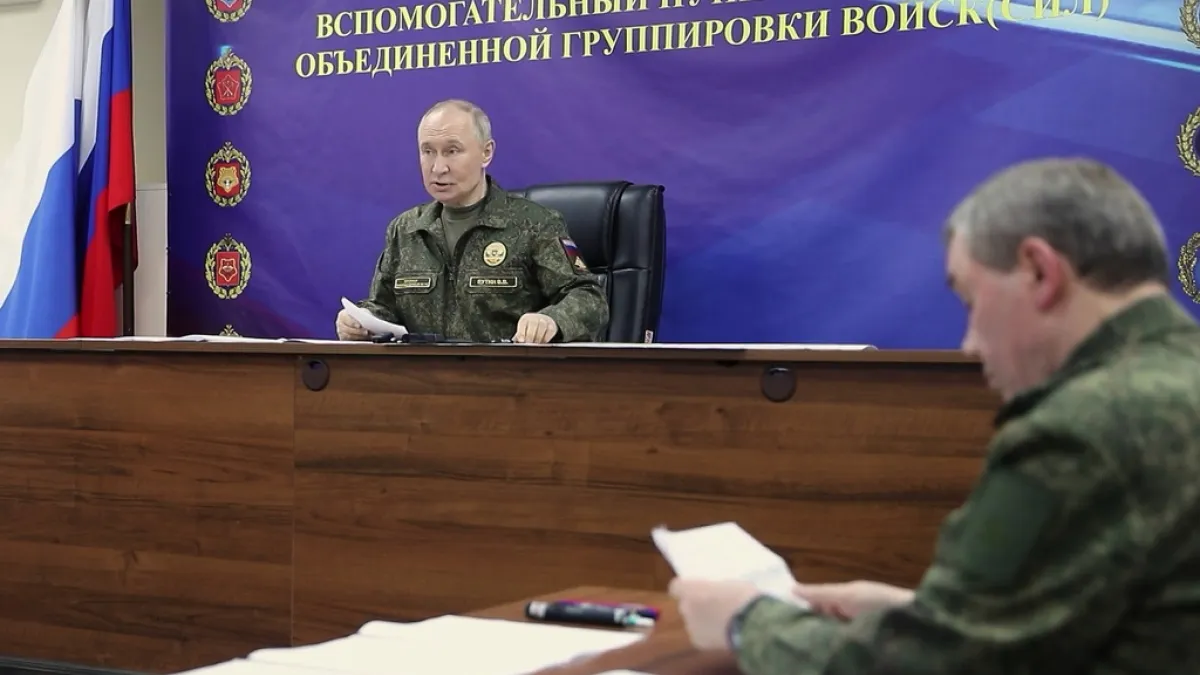
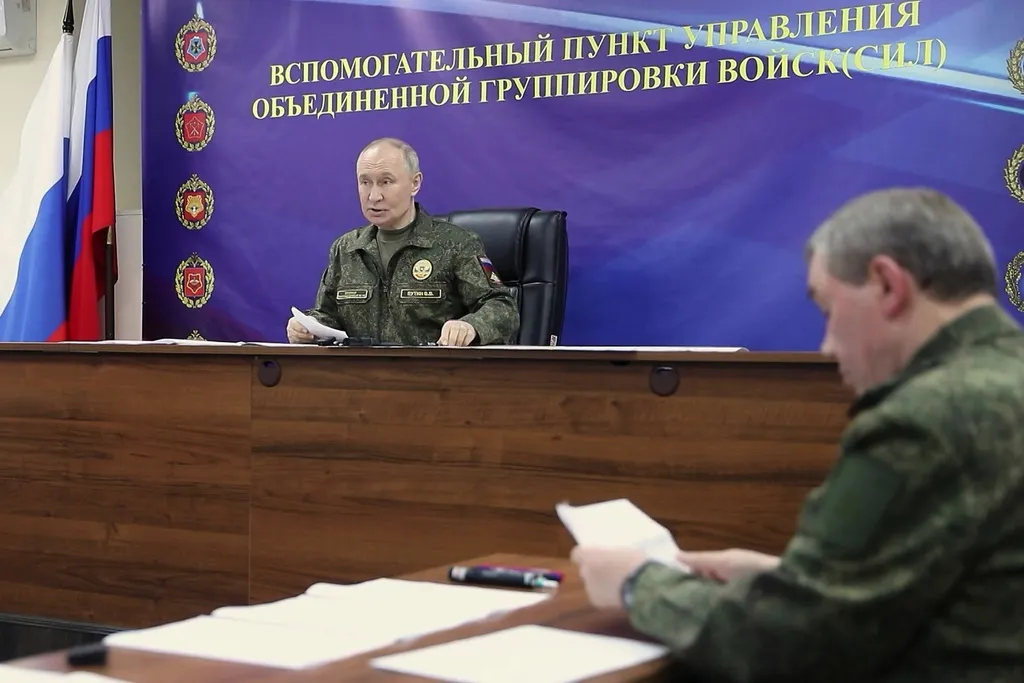
For the first time in Lithuanian airspace, a NATO fighter jet shot down a suspected armed drone overnight, tracking it for roughly 30 minutes before destroying it over open ground near the village of Pratkunai, some 60 miles from the capital, Vilnius. It was, as PBS NewsHour reported, only the latest in a lengthening string of drone incursions and sabotage attempts along NATO's eastern flank, and it has sharpened a question European officials have been asking with growing urgency: is Vladimir Putin deliberately testing how far he can push the alliance before it fights back.
A Drone Over Lithuania Signals A Widening Pattern
Lithuanian officials said the drone likely carried explosives and had entered from Belarus, a close Russian ally that borders both Lithuania and the Kaliningrad exclave. "It is not yet clear whether this was a drone that had been diverted and lost its way, as has often happened in our recent history, or whether it was a deliberate provocation," said Laurynas Kasciunas of Lithuania's National Security and Defense Committee. Defense Minister Robertas Kaunas was blunter about what lies ahead: "If we do not force Russia to negotiate for peace, then unfortunately such incidents in the Baltic region may become more frequent."
The incident followed a string of others: suspected Russian drones previously intercepted over Estonia and Latvia, a Russian warship accused of firing flares near a Danish military helicopter, and a foiled plot to fly an explosive-laden drone into a German airport. The European Union's top diplomat, Kaja Kallas, said the pattern was no accident. "We have seen Russia's dangerous, reckless [conduct on] full display [the] past 48 hours," she said. "One thing is very clear. Putin will not stop unless he's stopped." Doug Lute, a retired US Army lieutenant general who served as Washington's ambassador to NATO, told PBS the drone incidents sit alongside years of cyberattacks, disinformation campaigns and the severing of undersea cables in the Baltic Sea, all part of what he called a campaign to "both test NATO and distract NATO" from its support for Ukraine, one that plays on European doubts about how committed Washington still is to the alliance.
Spy Chiefs Warn Moscow Could Act Within Months
Intelligence chiefs across the region describe a similar, unsettling window. Michal Koudelka, head of the Czech Republic's BIS security service, told the Guardian that Russia could attempt "a limited incursion, false flag provocations, a massive influence campaign" against NATO territory bordering Russia, and that such a scenario could unfold in "months, not years." He described Moscow's approach as "escalate to de-escalate," aimed at convincing European publics that continued support for Ukraine isn't worth the risk. Latvia's state security chief, Normunds Mežviets, was more measured, saying he saw "no indications of an imminent attack" but conceded there were "signs that Moscow was preparing for more decisive action in Europe." Estonian officials pushed back on what they called "panic on social media," while Sweden's intelligence chief, Thomas Nilsson, called a recent armed-drone incident at Germany's Leipzig airport, blamed on Russian intelligence, a "gamechanger" precisely because it showed Moscow's rising tolerance for incidents that could cost lives.
Polish Prime Minister Donald Tusk has taken the most public stance, warning parliament that Russia could send drones or missiles into NATO territory within "the next few months" as part of an effort to prove that NATO's Article 5 mutual defense guarantee "is more theoretical than practical." According to Politico's reporting from Brussels, French President Emmanuel Macron called Tusk's warning "sound and well-documented" and convened an emergency meeting of French party leaders, while Dutch Prime Minister Rob Jetten said "it is no coincidence" Tusk spoke out so forcefully and Finnish President Alexander Stubb urged his country to mentally prepare "for something to happen." NATO's own count of hybrid incidents across Europe rose from 60 in the same period last year to 100 between January and August this year, according to the Ukraine-based Sahaidachnyi Security Center, though one senior NATO official said the real figure was "easily 200 plus," not counting the thousands of monthly cyberattacks aimed at NATO's Brussels headquarters alone. CIA Director John Ratcliffe made an unpublicized trip to Moscow last month specifically to warn Russian officials against testing NATO's Baltic members, even as NATO itself maintains there is "no imminent threat of attack."
Why Europe Is Bracing For A War Bigger Than Ukraine
Much of this week's alarm centers on the Suwałki Gap, the roughly 65-mile strip of Polish-Lithuanian territory that is the only land link between the Baltic states and the rest of NATO, where Belarusian forces have just staged large military exercises. In a CNN analysis, longtime US national security official Brett McGurk laid out how a Russian move into the corridor might unfold: Moscow frames it as a limited, deniable incident, warns that any NATO response risks nuclear war, and forces the alliance to answer an uncomfortable question it has never had to answer for real — would 32 member states actually fight to recover a strip of land in Lithuania. NATO Secretary General Mark Rutte has said the alliance regularly rehearses exactly this scenario and would respond "devastatingly," but McGurk noted that with Washington "at loggerheads with its closest allies, including Canada," it is far from certain Putin believes him.
European governments are preparing as though he might not. Britain has told citizens to stockpile canned food and water and its defense chief has called this the country's "most dangerous" period in decades. Germany is readying hospitals for mass-casualty scenarios and its chancellor, Friedrich Merz, has spoken of "decisive moments" for the continent's freedom and peace. Even neutral Switzerland has adopted a new national security strategy built around resilience, while the United States is moving ahead with a permanent Army base in Poland on top of Ratcliffe's warning trip to Moscow. NATO has also released new resilience requirements covering everything from energy and food supply to hospitals and communications during "crisis and conflict," explicitly drawing on lessons from how Ukraine has kept essential services running under years of Russian bombardment. "Preparedness itself becomes part of deterrence," McGurk wrote.
Part of what is driving Europe's urgency, according to McGurk's analysis, is that American power is stretched thinner than it has been in decades: the United States is simultaneously deployed across Europe, engaged against Iran in the Middle East, and working to deter China in the Indo-Pacific, meaning its air defenses, naval forces and munitions "cannot be everywhere at once." That overstretch is exactly why a crisis that starts in the Suwałki Gap would not stay confined to Europe. Any American response to a widening war with Russia would draw on the same finite pool of forces, attention and political will that Washington is simultaneously trying to keep pointed at Beijing, meaning a test of NATO's resolve in the Baltics would double as a test of how far American commitments can stretch across two fronts at once. As McGurk put it, deterrence ultimately depends on what Putin believes, and Europe's sudden rush to prepare suggests a growing fear that he may believe it will work.