Taiwan will not accept Beijing's "one country, two systems Taiwan plan" as the entry ticket to negotiations, but it is willing to look for an opening inside the existing peaceful status quo, a senior official at the island's top China policy body said on September 21.
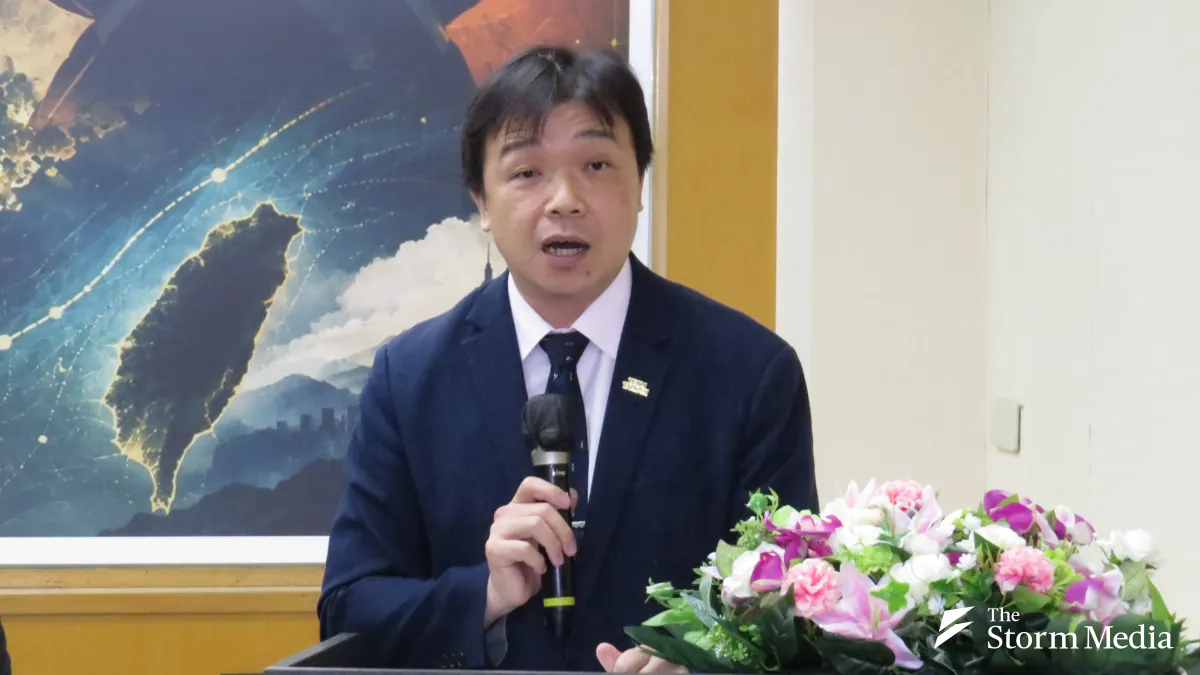
Shen Yu-chung, deputy minister of the Mainland Affairs Council, the cabinet agency that sets Taiwan's policy toward China, made the remarks at a forum in Taipei hosted by the Cross-Strait Policy Association. Later the same day, China's Foreign Ministry confirmed that President Xi Jinping will make a state visit to the United States from September 23 to 25 at the invitation of US President Donald Trump.
Ministry spokesperson Guo Jiakun said the two leaders' reciprocal visits within a six-month period carry "historic, milestone significance," and that Xi would hold in-depth exchanges with Trump on major issues in the bilateral relationship as well as on world peace and development, Reuters reported. The timetable puts Taipei's reading of the summit on a very short clock.
In his opening address, Shen said Taipei would keep working to stabilize what he called the "autonomy of cross-strait relations" along with "the Republic of China's voice." The phrase was unfamiliar enough to draw questions, and Shen spelled out what lies behind it in an interview with Storm Media after the session.
Key Points Of Shen Yu-chung's New Cross-Strait Policy Signals
| Dimension / Theme | Type Of Signal | Core Content And Policy Implications |
|---|---|---|
| Core concept "Autonomy of cross-strait relations" | Core signal |
|
| Searching for an opening to dialogue | Basis for dialogue |
|
| Operational strategy (Case by case) | Practical handling |
|
| The wider backdrop (Three constants) | Framework positioning | Ahead of the second Trump-Xi meeting, the overall picture is assessed to hold to three constants: the nature of US-China competition will not change, US policy toward Taiwan will not change, and the Republic of China's determination to maintain the peaceful and stable status quo in the Taiwan Strait will not change. Within that stable framework, Taiwan actively exercises its own autonomy. |
Shen Says One Country Two Systems Blocks Talks
Beijing has long tied any resumption of official contact to Taipei accepting a political framework it calls the "one country, two systems Taiwan plan," a formula that would place the island under Chinese sovereignty with a measure of local self-rule. Shen said that condition is precisely what keeps the two sides from talking.
"Our call has not changed. We hope we can restore the existing dialogue mechanisms, or put it another way, hold dialogue on equal and dignified terms with no preconditions," Shen said. "We also hope Beijing can understand that the dialogue framework and precondition they have set in the past, namely the 'one country, two systems Taiwan plan,' is currently not accepted by Taiwan's mainstream society. So we still hope that Taiwan can put forward our own views on cross-strait relations."
Taipei Frames The Status Quo As Beijing's Interest
The other half of Shen's argument is pitched at Beijing's own calculations rather than at a Taiwanese audience. Rather than presenting the status quo as a position Taiwan is defending against China, he presented it as something China currently benefits from too.
"Maintaining the peaceful and stable status quo is not only a consensus between Taiwan and most democratic countries. We also hope Beijing can understand that, at this stage, it is in their interest as well," he said.
"Within this peaceful and stable status quo, we want to see whether a breakthrough can be won in the future, and whether the two sides can resume dialogue on that basis."
Mainland Affairs Council Plans Case By Case Adjustments
Asked whether Taipei would change how it handles cross-strait affairs in practice, Shen said no broad shift is coming, and described an approach that moves issue by issue rather than by declaration.
"At this stage we are still making rolling adjustments according to the state of cross-strait relations, and for now there will be no change in the overall direction. As for how it is actually done, that will be case by case," he said. "For example, Taiwan and Beijing were able to have reasonably good interaction at APEC this time, so new possibilities and new models of interaction may emerge in future."
The reference is significant because the Asia-Pacific Economic Cooperation forum is one of the few international bodies in which Taiwan holds a seat alongside China, participating under the name "Chinese Taipei." It is therefore one of the rare venues where officials from both sides can meet without either government conceding anything on sovereignty.
Three Constants Shape Taipei's Reading Of The Summit
On the Washington talks themselves, Shen said Taipei's working assumption is that three things will hold regardless of the outcome: the nature and structure of US-China competition will not change, US policy toward Taiwan will not change in any fundamental way, and the determination of the government of the Republic of China, Taiwan's official name, to maintain peace and stability in the Taiwan Strait will not change.
It is against that backdrop, he said, that Taiwan intends to keep asserting the autonomy of cross-strait relations and the Republic of China's own voice, instead of waiting to learn what Washington and Beijing decide between themselves.