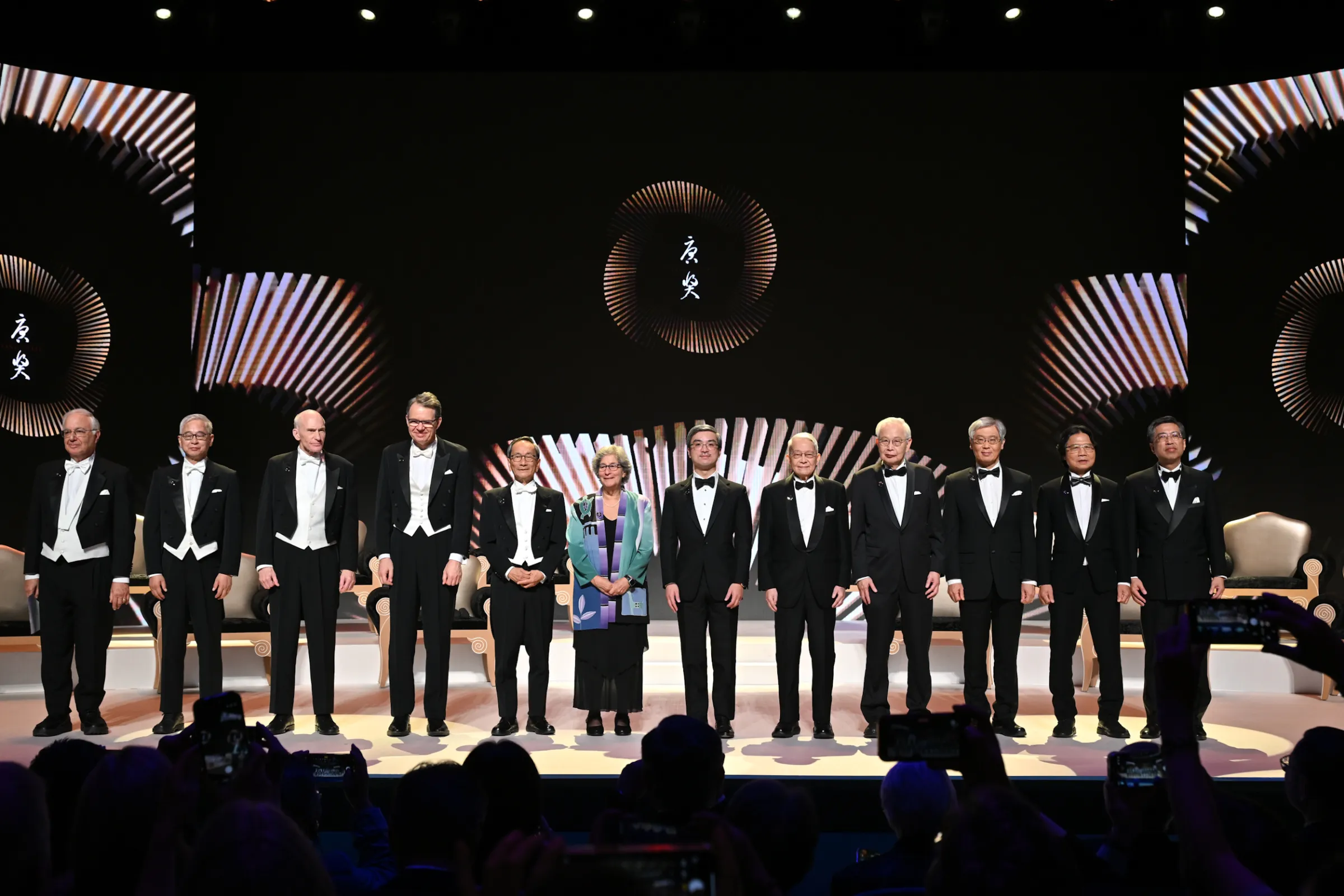
Six scientists and scholars received the 2026 Tang Prize at a ceremony in Taipei on September 18, the first staged since the death of the award's founder, Taiwanese businessman Samuel Yen-Liang Yin.
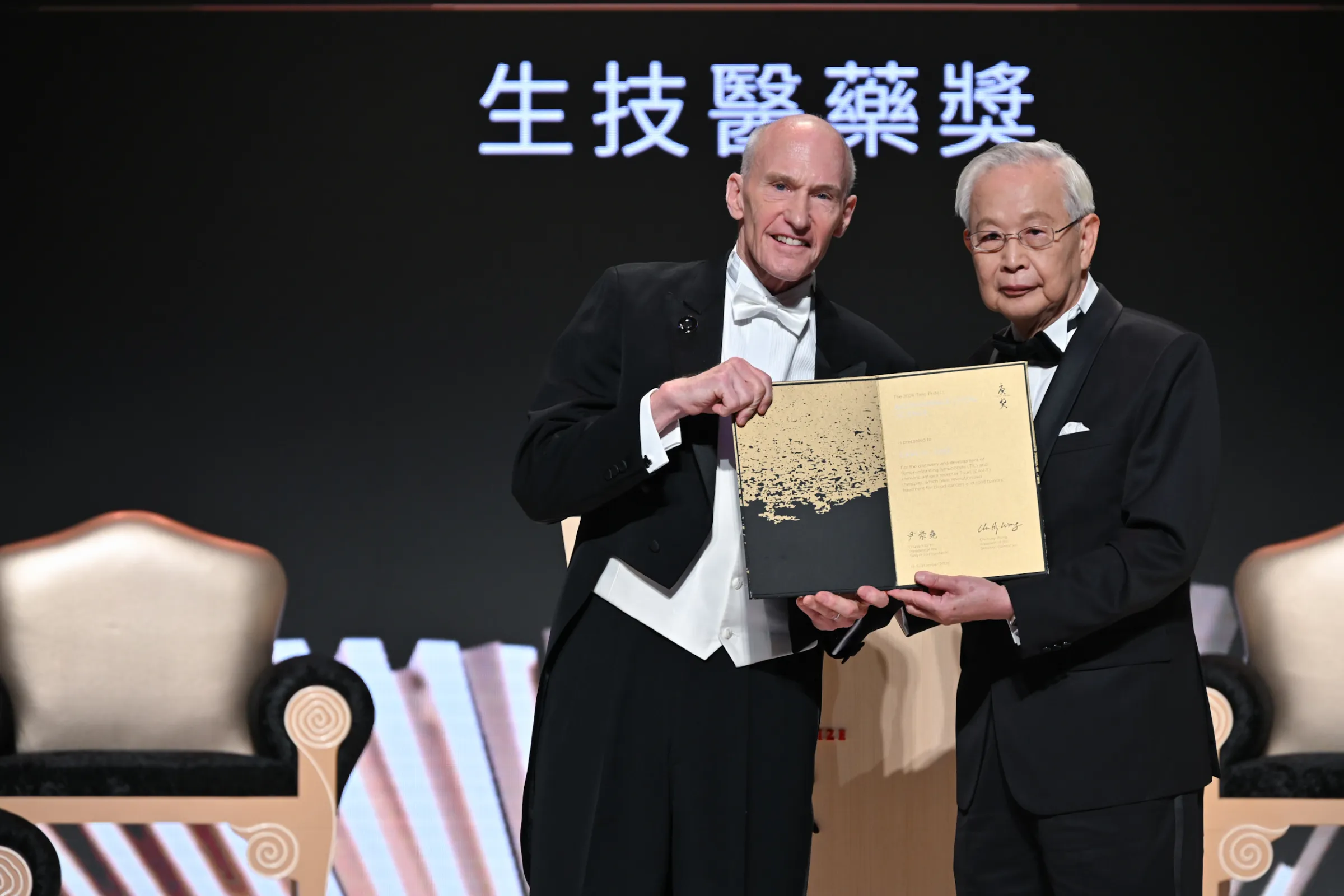
Five laureates collected their awards in person at the Taipei Performing Arts Center before an audience of more than 700, while Steven A. Rosenberg, one of three winners in Biopharmaceutical Science, joined remotely and had his award accepted on his behalf by Academia Sinica academician Andrew H.-J. Wang. The ceremony was carried live online. Honored alongside Rosenberg were Michel Sadelain and Carl H. June in Biopharmaceutical Science, Susan Solomon in Sustainable Development, Ge Zhaoguang in Sinology, and Bruce Ackerman in Rule of Law.
Established in Taiwan in 2012 and awarded every two years in four categories, the Tang Prize has become the island's most internationally visible academic honor.
A First Ceremony Without The Prize's Founder
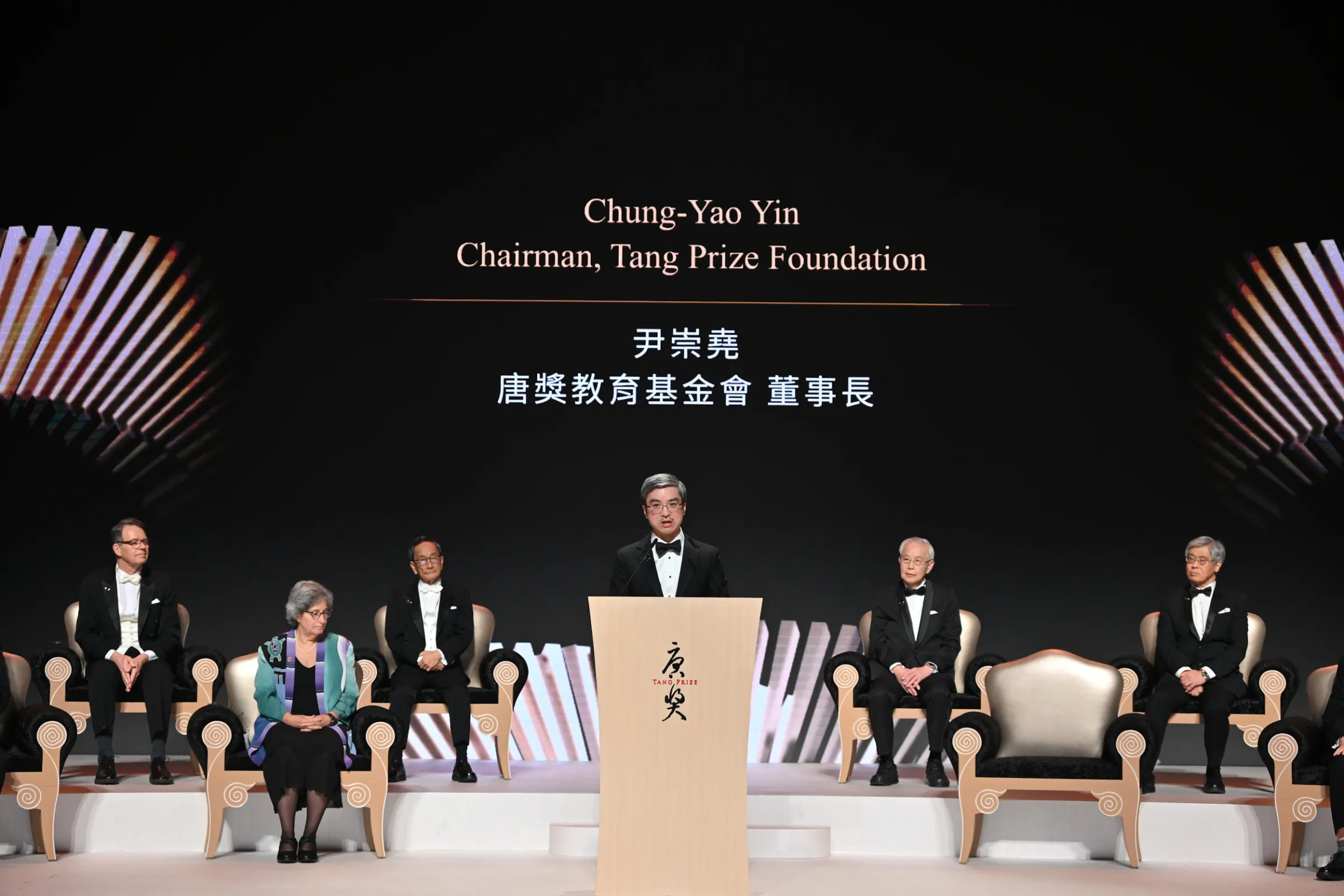
A commemorative video opened the evening in memory of Yin, who died in May. His son, Tang Prize Foundation Chairman Chung-Yao Yin, told the audience the prize had been the great dream of his father's life, built on the conviction that the world's best minds could be brought together to work on its hardest problems.
"The Tang Prize began with one man's dream, but its mission belongs to all of humanity," he said, adding that his father had imagined a world in which knowledge serves conscience.
Academician Chi-Huey Wong, president of the Tang Prize Selection Committee, said the four selection panels had applied objective and professional standards, and that this year's recipients continue to shape human health, environmental sustainability, scholarship, and social justice.
Solomon Casts The Ozone Recovery As A Precedent
Solomon, whose fieldwork identified the chemistry behind the Antarctic ozone hole discovered in 1985, used her remarks to argue that seemingly unsolvable environmental problems have been solved before. The Montreal Protocol was eventually ratified by all 197 members of the United Nations, and "the ozone hole is indeed starting to slowly recover, just as expected," she said.
What broke the deadlock then, she argued, was a combination of "science, public engagement, industry participation, and wise policy." She closed by voicing hope that humanity would again pull off "the moonshot of safeguarding our environment instead of destroying it."
Cell Therapy Pioneers Say Access Defines Success
Rosenberg recalled that when he entered the field four decades ago, no effective cancer immunotherapy existed for human patients. His team showed that tumor infiltrating lymphocytes grown from melanoma patients and returned to them could shrink tumors, proving that "the patient's own lymphocytes could be used as a living drug to treat their disease." That finding opened the way to therapies built on T cell receptors and chimeric antigen receptors.
Sadelain said his proposal in the 1990s to aim CAR T cells at the CD19 antigen was dismissed by most of academia and industry, leaving him to "do it yourself." His team treated its first patient in 2007, and the U.S. Food and Drug Administration approved the first CD19 targeted CAR therapies in 2017. He reserved particular thanks for "the brave ones who risked their careers when this work was labelled 'science fiction.'"
June framed the same science from the patient's side. For people in the earliest trials, he said, the question was never whether the idea was elegant, but whether it would buy them time: "Time with a spouse. Time to see a child grow up. For a child, time simply to grow up." Patients who had run out of options and entered lasting remission, he said, "trusted us when there was far more uncertainty than reassurance. We owe them a debt that no prize can repay." He warned that reach matters as much as efficacy: "Access must be part of our definition of success."
Ge And Ackerman Trace Scholarship To Its Origins
Ge, who has spent nearly half a century moving from Chan Buddhism and Daoism to Chinese intellectual history and then to "viewing China from its periphery," described his work as a running attempt to answer the question "What is China?" in an age of upheaval. Scholars of his 1980s generation, he said, worked under hardship but with high ideals, giving the study of traditional China a period of unusual vitality. Sinology is now a global discipline, he added, with perspectives from different countries acting as mirrors held at different angles, and its future lies in "the synthesis of East and West, together with pluralism and openness."
Ackerman, a constitutional theorist at Yale Law School, traced his career to a childhood in one of New York City's poorest neighborhoods in the 1950s, in a family that had fled anti-Semitic persecution in Europe. Public schools shaped by John Dewey's progressive philosophy taught him to think independently and eventually carried him to Harvard, where he studied under John Rawls. "Without his vision of progressive education, I would not have had the opportunity to propel myself beyond my impoverished neighborhood in New York and begin my search for a meaningful scholarly existence," he said of Dewey. He continues to work with colleagues on the causes of the worldwide crisis facing the rule of law. (Related: Tang Prize Week 2026 Opens; Six Laureates to Converge in Taiwan | Latest )
The Taipei Philharmonic Orchestra closed the ceremony with Dmitri Shostakovich's Festive Overture, Op. 96, Shu-Si Chen's "Tung Flower" Suite, and Pyotr Ilyich Tchaikovsky's Marche Slave, Op. 31.