Chinese military research institutes are mining two late 20th century conflicts, the 1982 Falklands War and the Kosovo War, for operational lessons that could shape a future attack on Taiwan, a U.S. scholar of cross-Strait affairs said in Taipei on September 9.
Julia Famularo, a lecturer in the Department of Asian Studies at the University of Hawaii at Manoa who researches cross-Strait relations and Chinese legal warfare, said the People's Liberation Army has drawn conclusions from both wars on maritime logistics, air superiority, island blockade and counter-blockade, and the weight of technology and training.
She was speaking at the 2026 Taipei Security Dialogue, the annual flagship conference of the Institute for National Defense and Security Research, a think tank funded by Taiwan's Ministry of National Defense. Famularo was one of five panelists in a morning session on strategic lessons from the wars in Ukraine and the Middle East.
Her broader point was about method. Inside the Chinese Communist Party system, she said, scholars and research institutes have little latitude to assess the PLA's own combat record critically. What they publish about foreign wars of the 20th century therefore becomes one of the few open sources revealing how Chinese planners are thinking about a Taiwan contingency.

PLA Analysts Praise British Sea And Air Integration
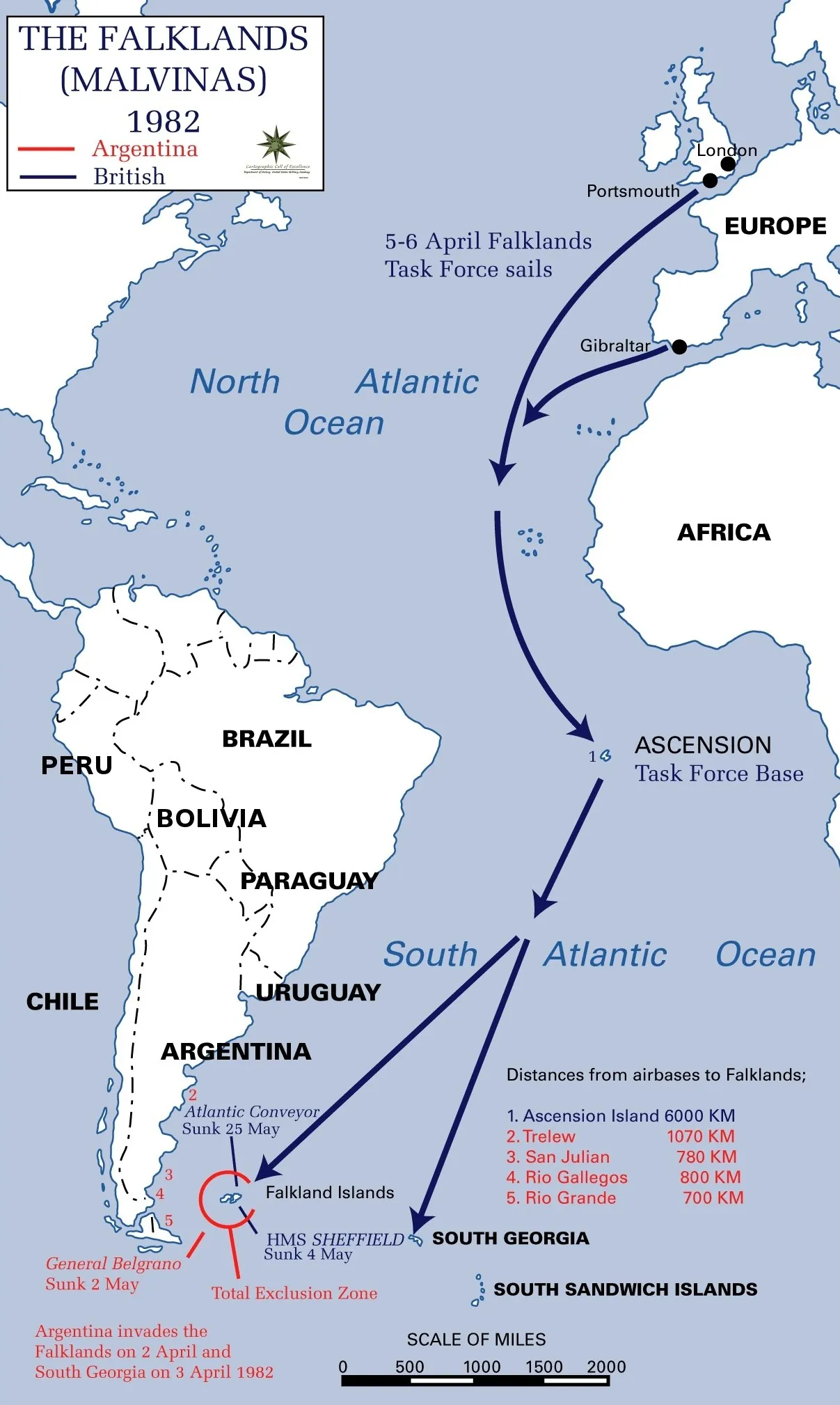
Beijing backed Argentina's sovereignty claim over the Falkland Islands in 1982, and still does. That did not stop PLA research units from rating Britain's conduct of the 74-day campaign highly at the tactical, operational and strategic levels, Famularo said.
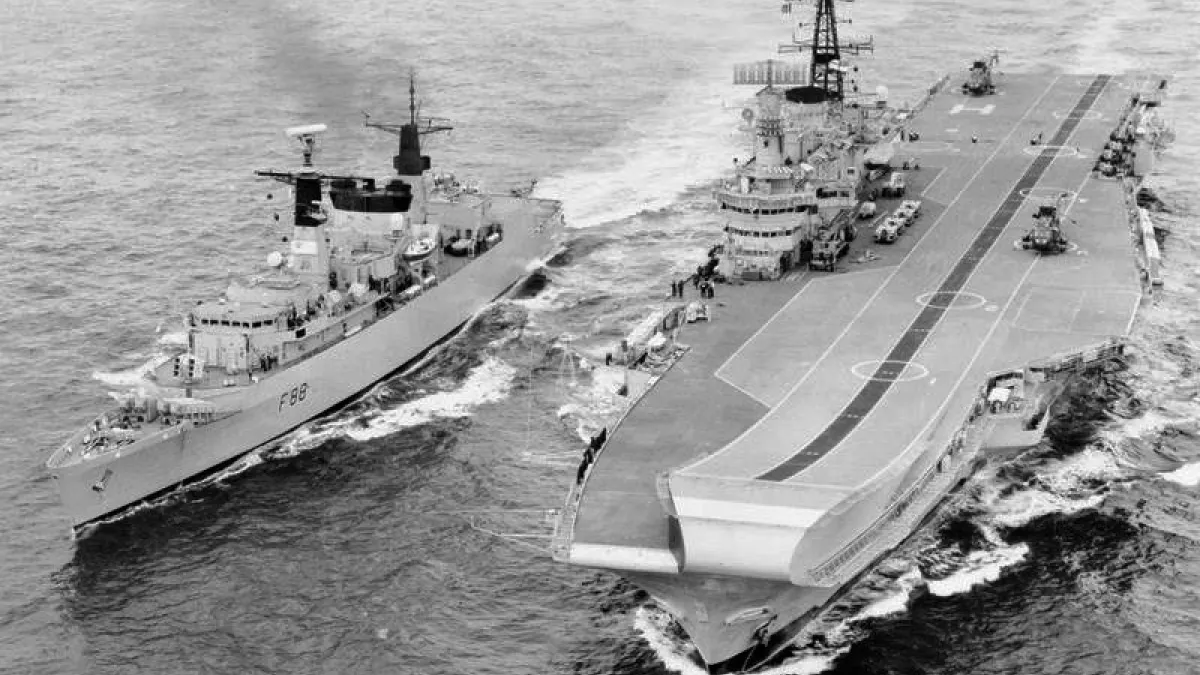
Chinese studies single out the strength of British carrier aviation and expeditionary forces, the ability to fuse naval and air units into a single fight, and the effective blockade Britain imposed on islands that Argentine troops had occupied. Britain dispatched its naval task force south within three days of the war's opening.
Famularo grouped the PLA's Falklands findings into three conclusions.
The first concerns logistics at sea. Britain's maritime logistics capacity, Chinese analysts concluded, underwrote both long-range power projection and the defense of nearby waters.
The second is doctrinal. The campaign shaped how the PLA came to think about air power, and fed into its doctrine on command and control, force projection, and the counter-intervention and denial strategy Beijing would later build against outside forces.
The third is political. Winning a war requires a clear strategic policy, Chinese researchers argued. Applied to a future maritime campaign, that means Beijing believes it must integrate ground, naval and air forces, and even space forces, before it can control the surface, subsurface and air environments at once.
Kosovo Alarms Beijing Over A Secession Precedent
The Kosovo War, which began at the end of February 1998 and ran for more than a year in the Balkans, drew Chinese attention for reasons that were political before they were military.
One of the war's triggers was Kosovo's drive during the 1990s to break free of Serbian control, Famularo said, and Beijing feared the case could create a precedent it did not welcome. Kosovo declared independence in early 2008 and has since been recognized by more than 100 countries. China is not among them, and it claims Taiwan as part of its territory even though the People's Republic has never governed the island.
NATO's Precision Strikes Impressed Chinese Military Researchers
On the military side, PLA research units credited the NATO-led coalition with advanced weaponry, precision bombing, penetrating munitions and network-driven information warfare, Famularo said. Logistics support, reserve mobilization, psychological operations and communication with civilian populations drew similar praise.
"Most important, the research papers emphasize the importance of technology and training, and that can explain why NATO forces' operations were so successful," she said.
Three Competing Schools Now Shape PLA Modernization
The Kosovo campaign left three distinct currents inside the PLA, according to Famularo.
One argues that China should build combat power aggressively and make itself a peer competitor of the U.S. military. That view has gained ground within the Chinese system in recent years.
A second holds that China should lean harder on low-cost weapons and asymmetric warfare techniques. A third looks backward, to the "people's war" tradition, and stresses how much any campaign depends on support from civilian society.
All three continue to shape thinking at the top of the PLA, Famularo said. The force is improving its combat capability while drawing on the Chinese Communist Party's revolutionary history and traditions, with the stated aim of building a military with Chinese characteristics.
Original Article In Chinese (Related: Taipei Security Dialogue | Expert Warns of Likely Limited Blockade Against Taiwan | Latest )