Britain's former defense secretary said Taiwan's military buildup cannot move quickly enough, telling The Storm Media in a September 14 interview in Taipei that Western governments have finally shed two decades of wishful thinking about China.
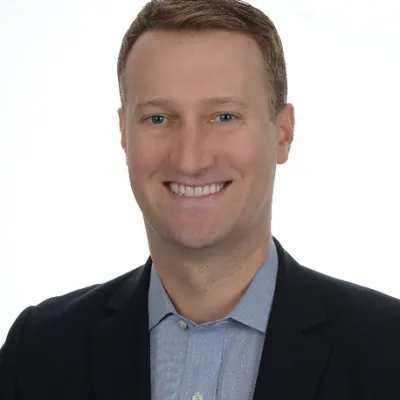
Sir Gavin Williamson, who ran the U.K. Ministry of Defence from 2017 to 2019 and ordered the Royal Navy's first South China Sea freedom of navigation transit in a generation, now sits in Parliament as the Conservative member for Stone, Great Wyrley and Penkridge and serves on the Joint Committee on the National Security Strategy. For Europe, he argues, the shift in threat perception is a correction arriving late. For Taiwan, the binding constraint was never perception. It is time.
Why Europe Misread China For Twenty Years
Williamson traces the change to a harder reckoning with what war actually costs. "The conflicts we are seeing have a very real impact on people, and a devastating effect on economies," he said. "But compared with a conflict between the People's Republic of China and Taiwan, these are nothing at all, whether in terms of the impact on global markets or on trade flows."
He was blunt about why the reckoning took so long. "For too long, countries like the United Kingdom, and many other European countries, were unwilling to analyze this threat in a fair and sufficiently pragmatic way, partly because they wanted to do business with the People's Republic of China," he said. "That probably gave them a form of optimism bias."
That period is over, in his assessment, with pragmatism now rooted "not just in the United States, not just in London, but in Berlin, Paris, Rome, and many other places." He framed the shift as conflict avoidance rather than provocation: "You cannot avoid conflict by ignoring the threat."
Beijing Will Be Angry Whatever Taiwan Does
Asked whether stronger Western support for Taiwan risks angering Beijing, Williamson rejected the premise outright. "Beijing will be unhappy about anything," he said. "The only way to keep Beijing from getting angry is to do nothing, or to go along entirely with what it wants. That is not a way forward."
He treats military spending as an investment rather than a cost. "Every pound spent on defense is a major investment in deterrence, and an investment in making sure conflict is avoided," he said. "That should not be overlooked."
Taiwan Cleared 3% Of GDP But Not The Clock
Williamson has publicly argued that Taiwan should lift defense spending to 3% of GDP. That line has already been crossed. The Cabinet approved a record defense budget of NT$1.1225 trillion on August 21, and Premier Cho Jung-tai confirmed it would bring spending to 3.32% of GDP in 2026. What Williamson questioned in the interview was not the accounting but the pace at which capability actually arrives.
He acknowledged the increase over previous years while calling it insufficient relative to where Taiwan sits. "Considering you are completely on the front line, it cannot be fast enough," he said.
What Ukraine And Iran Teach Taiwan About Asymmetric War
Asymmetry is the core of his military argument. Taiwan is not a small country, he said, but measured against the source of the threat it is "an extremely small nation," and any strategy that tries to match Beijing on scale is doomed.
"You have to think in an extraordinarily imaginative way about not fighting on the battlefield your opponent wants you to fight on, because you cannot win on numbers," he said. "You have to fight in a completely different way, and think about how you can impact a much larger opponent in ways they're not expecting."
He pointed to two live conflicts as source material. The war in Ukraine has shown how a smaller force can impose sustained costs on a vastly larger one. The U.S. confrontation with Iran carries a more uncomfortable lesson: despite overwhelming American advantages in numbers and technology, Iran has still been able to "create quite considerable impacts on the wider global economy." Taiwan, he said, "has to look across those different battlefields and draw out what those lessons are."
Taiwan's Chip Dominance Is Turning Into A Risk
On one question unrelated to hardware, Williamson and his fellow interviewee found common ground. Taiwan's concentration in semiconductors is an advantage that is slowly turning into a vulnerability.
"Everyone talks about semiconductors, semiconductors, semiconductors, but Taiwan is not just a semiconductor story," Williamson said.
Broadening the economic base, in his view, is a security measure and not merely a commercial preference. "The more Taiwan can punch above its weight in many areas beyond semiconductors, the more secure it will be, and the more resilient its economy will be," he said. He added a competitive warning: "If you completely dominate a single industry, you can guarantee everyone else is chasing you and trying to overtake you. You don't want to be a one-trick pony."
Asked to name Taiwan's largest underdeveloped asset, his answer was immediate: "Simply, people." He attributed that to what he called the creativity, work ethic, and resilience of Taiwanese society.
Why Trade Dependence Doubles As Taiwan's Physical Defense
Pressed on what Taipei should do if it could take only one action in a year to raise Taiwan's international standing, Williamson rejected the idea of a single sweeping reform. He argued instead for cumulative positioning, citing Qatar as a case study in how a small state converts economic linkage into diplomatic weight.
"I wouldn't say, try to change the world in a year," he said. "I would say: how do you make the next decade your decade?"
The payoff, he argued, is not only commercial. "Economically, the more connected you are to the world, the stronger you are, and the more every nation depends on you," he said. "That delivers not just economic security but physical security."
He returned to the point later in the conversation. "Trust me, if other countries have interests in Taiwan, they will want to protect those interests. Interdependence creates mutual security." (Related: Exclusive | Taiwan Is MSCI's Top EM Market But Foreign Money Is Stuck | Latest )
Williamson will deliver a lecture in the Global Leaders Lecture Series at National Sun Yat-sen University on September 21 at 4:30 p.m. in Huali Hall, titled "How Power Shapes Markets: Geopolitics, Policy and Investment Decisions." Orina Chang (張綺真), chair professor and associate dean of the university's International College of Finance, was interviewed alongside him; her assessment of Taiwan's capital markets appears in a companion report.