Chubu Electric Power Co. withdrew its applications to restart two reactors at the Hamaoka nuclear plant on September 15, 2026, abandoning a safety review that had run for more than a decade after investigators concluded the utility had handed regulators earthquake data that made the site look steadier than its own records supported.
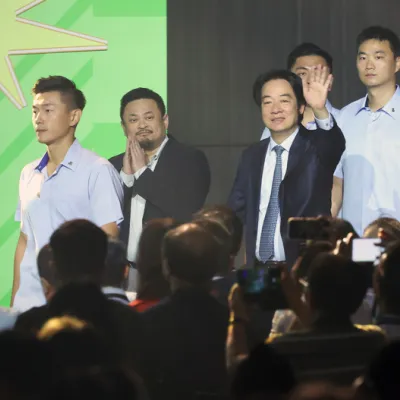
The withdrawal covers Hamaoka units 3 and 4 in Omaezaki, Shizuoka Prefecture, about 200 kilometers west of Tokyo. President Kingo Hayashi began the day at 8 a.m. at the Omaezaki city hall, bowing in apology to Mayor Masaru Shimomura, then called on Shizuoka Governor Yasutomo Suzuki and spent the afternoon visiting the neighboring cities of Makinohara, Kikugawa and Kakegawa. A day earlier, at a news conference in Nagoya, the company said Hayashi and Chairman Satoru Katsuno would step down on September 30 to take responsibility.
Everything turns on a single figure: the design basis ground motion, the strongest shaking a plant is assumed to face at its site. That number is the starting point for every seismic calculation that follows. Set it too low, and the pumps, pipes, cables and containment structures are all qualified against a quake smaller than the one the ground may actually deliver.
Investigators Traced The Pressure Back To Restart Targets
A panel of outside lawyers commissioned by the company found that staff in its nuclear civil engineering division selected observation records that favored a lower result, producing a ground motion estimate smaller than a neutral reading of the data would have yielded. An early restart had been written into Chubu Electric's management objectives, and the panel concluded that schedule pressure shaped the judgments of the engineers doing the work.
The panel did not find that executives took part in the manipulation. It did find that their criticism of the licensing team's slow progress created pressure, and that the division never passed on to senior management how demanding the regulator's requirements were or what problems the review had run into. Warnings raised inside the company went unresolved. According to the investigation, the practice dates back to around 2012, and internal complaints in 2019 and 2021 were dismissed.
Chubu Electric coined its own term for the mindset: a theory of self justification, in which employees convinced that Hamaoka was fundamentally safe gradually rationalized improper handling of the data. The company acknowledged that management had failed to build a culture placing laws and rules first. Shimomura pressed Hayashi on exactly that point on September 15, telling him, according to Shizuoka Broadcasting System, that a workforce collectively persuaded of its own correctness pointed to a deep problem.
Japan's Regulator Had Already Signed Off On The Number
The Nuclear Regulation Authority examined the same ground motion estimate and judged it broadly appropriate in 2023, according to Chunichi Shimbun. The falsification surfaced only through an outside tip. Meeting minutes released by the Makinohara city government show that someone contacted the regulator's secretariat in February 2025; the secretariat asked Chubu Electric to investigate from May; the utility found irregularities while reviewing its files and did not report them until December, when screening was suspended.
Aichi Television reported that the subsequent inquiry also uncovered documents created after the fact, and that some of the explanations the company gave the regulator once the problem became public did not match what had occurred.
Tokyo's New Energy Plan Made Restarts A Corporate Goal
The scandal broke while Japan is deliberately enlarging the role of nuclear power. The seventh Strategic Energy Plan, approved by the Cabinet in 2025, struck the long standing commitment to reduce dependence on nuclear energy as far as possible and replaced it with maximum use, setting a target of roughly 20% of generation from nuclear by fiscal 2040. Data centers and semiconductor fabrication plants are driving what the government expects to be the first sustained growth in national electricity demand in about two decades.
Chubu Electric, Japan's third largest utility, has no reactors in operation and depends heavily on thermal generation, which kept Hamaoka's restart near the top of its corporate agenda. Rising demand does not by itself corrupt a safety review, and no comparable case has emerged at other Japanese utilities. What the Hamaoka report documents is narrower and harder to dismiss: once a restart date becomes a management objective, the pressure can travel all the way to the desks where safety margins are calculated.
Taiwan's Maanshan Review Is Entering Its Final Stage
Taiwan is running a restart clock of its own. Taipower applied at the end of March to renew the operating license for the Maanshan plant, the island's No. 3 nuclear station, on the southern tip of Pingtung County. The Nuclear Safety Commission said early this month that technical review of the restart plan was finished and that the case had moved into its final administrative approval step.
Approval will not bring the reactors back online. Under the sequence the commission has published, regulators must then verify how the plan is being carried out and review an integrated aging assessment, a time limited aging analysis and a seismic safety evaluation, followed by on-site inspections, before an operating license is granted. Seismic risk has been the most contested element of the review since geologist Chen Wen-shan warned that the plant sits roughly one kilometer from an active fault.
Schedule pressure has already appeared in Taiwan. The Ministry of Economic Affairs originally expected review of Taipower's self inspection documents to conclude by the end of 2028. In an August report, the National Audit Office noted that the contract periods for Taipower's five self inspection packages run to July 2029 and described the original target as highly uncertain. The commission's chairman said in April that the review could not be accelerated and had to confirm compliance one step at a time.
Regulators See Processed Results, Not Raw Observations
Maanshan and Hamaoka differ in reactor design, regulatory structure and review procedure, and the two cases cannot be treated as equivalents. The overlap lies in method. Hamaoka's ground motion figure passed through a regulator that applies some of the strictest seismic requirements in the world, and the data screening behind it still went undetected for years, because what a regulator receives is a processed result. Which observation records were used, which were set aside and which assumptions were adopted all remain in the operator's hands.
Taiwan's seismic safety evaluation will be produced the same way, calculated by the original plant vendor under contract to Taipower and then submitted to the commission for review.
Chubu Electric has set no date for refiling its Hamaoka applications. In Taipei, the Nuclear Safety Commission is expected to announce its decision on the Maanshan restart plan shortly, with the aging and seismic reviews still to come. The question Hamaoka leaves behind is not whether the final number looks defensible. It is how any regulator confirms that the raw observations, the filtering and the assumptions underneath that number were sound in the first place.