China's legislature has quietly rewritten a defense law that could let the state seize private property, patents and even data almost anywhere, at almost any time, not only during war. A Taiwanese scholar says the change is a stark reminder of how differently authoritarian and democratic legal systems constrain the exercise of state power.
In late August, the Standing Committee of China's 14th National People's Congress passed revisions to the National Defense Mobilization Law, set to take effect on October 1. The revised law emphasizes four themes: closer coordination between the military and local governments, faster transitions between peacetime and wartime footing, writing data collection and contingency planning directly into statute, and expanded obligations placed on businesses and society at large.
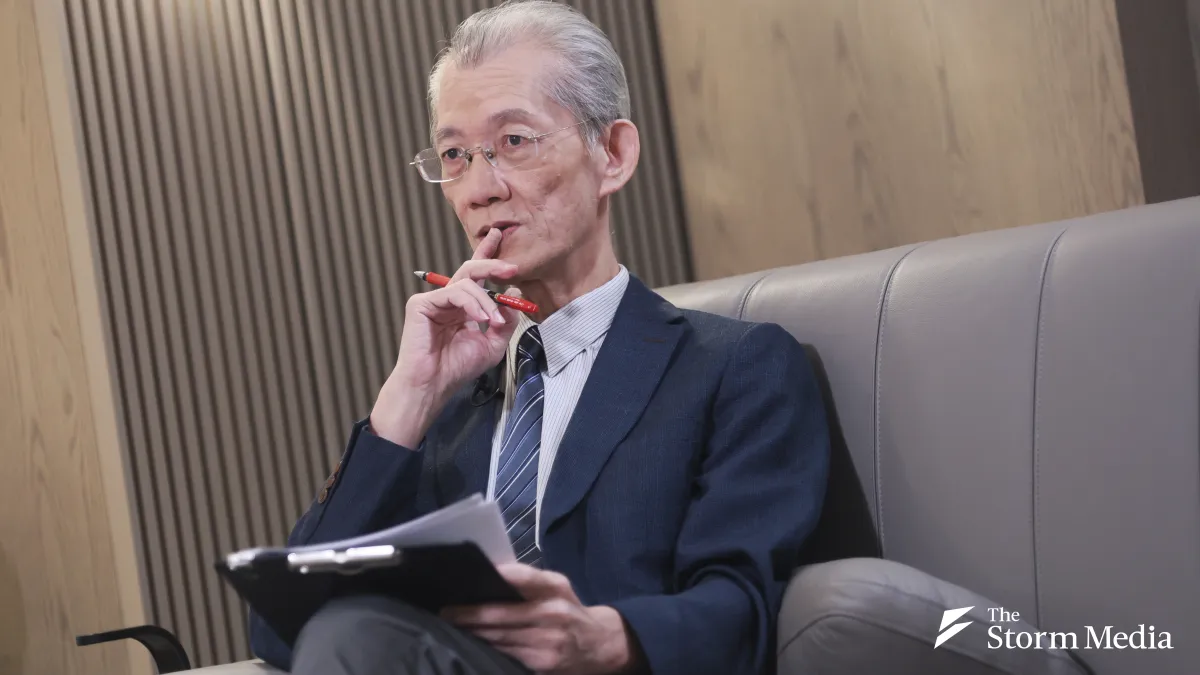
Ming Chu-cheng, professor emeritus of political science at National Taiwan University, said in a recent interview with Storm Media that the revised law hands Beijing's central government far greater power to confiscate private assets, tightening restrictions on ordinary citizens' rights once again.
A Legal System That Only Binds The People
Ming's central critique is a distinction between legal systems: in democracies, the law restrains both citizens and the government, but in communist systems, the law binds only the people, leaving the government's own power essentially unchecked.
Under the revised statute, "national defense mobilization" is now defined to guarantee a rapid switch between peacetime and wartime footing, bridge the military and civilian sectors, and convert China's economic and social capacity directly into military capacity.
From Requisition To Expropriation
The most consequential change, Ming said, comes down to a single swapped word. Earlier versions of the law referred to the "requisition" of resources, language that implied the state would eventually return what it took. The revised text instead uses "expropriation," meaning ownership itself can change hands permanently.
The law also states explicitly that defense mobilization work must uphold Communist Party leadership and implement "Xi Jinping Thought on Strengthening the Military," while "safeguarding national development interests." Combined with the shift to expropriation, Ming said, that language gives the Central Military Commission and the State Council a far freer hand over civilian resources, one that in his view is not necessarily limited to wartime at all.
That expropriation authority extends well beyond factories or equipment. The law also covers data, technology and even patents. Ming said ordinary Chinese citizens are unlikely to push back, given that separate statutes, including a national unity law and China's counter-espionage law, already discourage public criticism of state authority. As he put it, Chinese law in practice exists mainly to regulate ordinary people, not the government.
Private Tech Firms Have Little Real Say
Rapid advances in commercial technology are part of why Beijing rewrote the law now, according to Ming. Private companies in China increasingly operate satellites and rockets, and with artificial intelligence, unmanned systems, cyberspace capabilities and big data now folded into the legal definition of national defense, authorities gain broad discretion to direct private-sector research toward military ends.
Under the revised system, Ming said, if China's National Development and Reform Commission or the Central Military Commission decides a company's research and development output should serve military purposes, that company has essentially no choice but to comply, regardless of the commercial consequences.
Ming closed by turning a familiar Communist Party talking point back on itself. Beijing has long criticized China's imperial and feudal past as exploitative, he said, describing it as a system that "ate people without spitting out the bones." But even feudal rulers who confiscated private homes generally offered some form of compensation, Ming argued, a courtesy he said the current system no longer guarantees.
(Related:
From Military Threats to Legal Warfare: Inside Xi Jinping’s Four-Step Plan for Taiwan
|
Latest
)