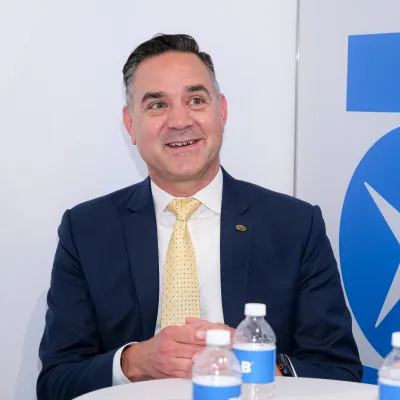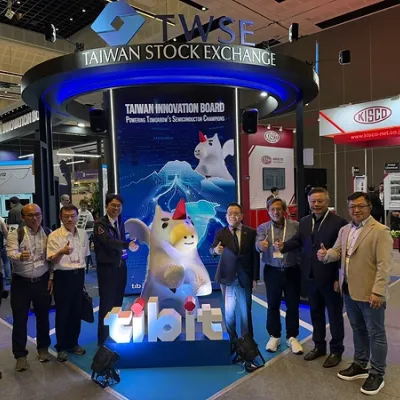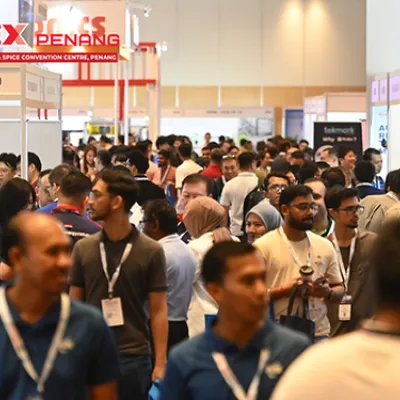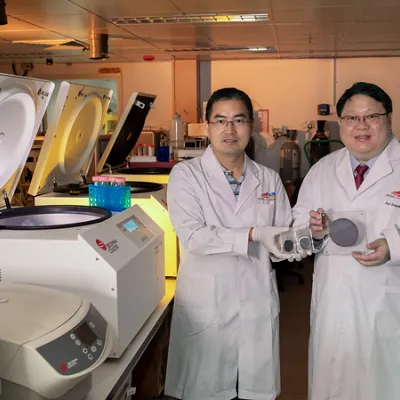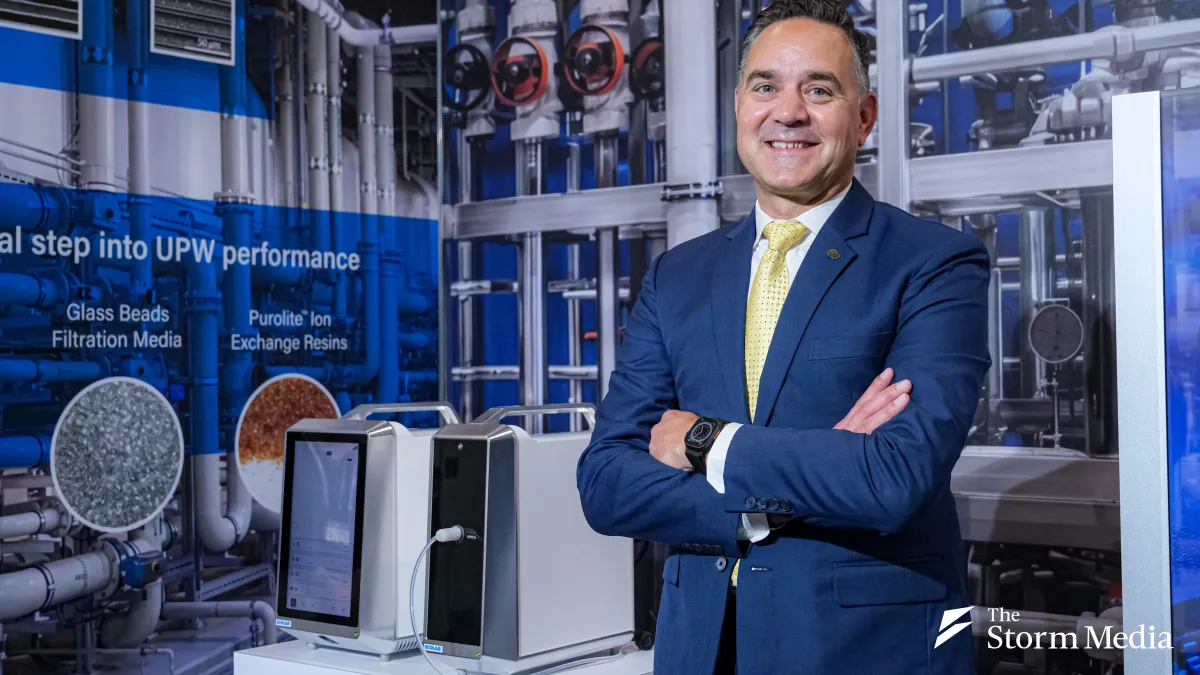
The water that rinses a cutting-edge semiconductor wafer must be purer than anything found in nature. A single grain of salt dissolved into the entire volume of Lake Geneva — roughly 89 cubic kilometers of water — would already exceed the contamination threshold for some advanced semiconductor processes. In an exclusive interview with Storm Media at SEMICON Taiwan 2026, Ecolab Global High Tech EVP Josh Magnuson explained what that standard means in practice, and why water has quietly become one of the most consequential variables in the AI chip supply chain.
"The more advanced the process node, the more cleaning cycles a wafer requires, and the more water demand grows — in both volume and quality," Magnuson said. In some leading-edge fabs, a single wafer may undergo more than 300 cleaning cycles before it is complete. As geometries shrink below 5 nanometers, even trace concentrations of particles, metals, ions or dissolved gases on the wafer surface can introduce defects. Sub-5nm processes require roughly three times as much ultra-pure water as mature nodes — and the purity threshold rises with every generation.
At those levels of cleanliness, conventional measurement tools struggle to detect what remains in the water. Magnuson noted that fabs sometimes have to work backward — identifying defects on finished wafers and inferring from the pattern whether a water quality issue may be the source. Ultra-pure water systems must use non-metallic pumps and wetted components, with multiple treatment stages designed to eliminate particles, metals and dissolved gases at concentrations far below what standard industrial water treatment targets.
One Company, 280 Ultra-Pure Water Systems, and the Full Semiconductor Water Cycle
Water in a wafer fab serves two distinct purposes. Process water — ultra-pure water — carries chemicals and cleans wafers across dozens of manufacturing steps. Facility water covers the chilled water circuits, cooling towers and process cooling systems that regulate temperature, humidity and equipment stability throughout the building. Both affect chip quality and production uptime, yet they have traditionally been managed separately, often by different vendors.
Ecolab has spent the past year assembling coverage across both. Long established in industrial water treatment through its Nalco Water arm, the company acquired Ovivo Electronics in December 2025, adding semiconductor ultra-pure water production, water recovery and wastewater treatment. The June 2026 acquisition of CoolIT extended the portfolio into data center direct liquid cooling. The result is a system spanning the full water cycle inside a semiconductor facility — from raw water entering the gate through ultra-pure water production, process and cooling use, water recovery and final effluent treatment.
Ecolab has installed more than 280 ultra-pure water systems globally, with a combined output capacity exceeding 51,000 cubic meters per hour, along with 85 water recovery systems and 88 effluent treatment systems. "Now we can offer semiconductor customers an end-to-end water system," Magnuson said. "Fabs no longer need to treat incoming water, process water and wastewater recovery as three separate problems."
Segregate Wastewater at the Source, Not the Drain
Once ultra-pure water has cleaned a wafer, it carries whatever it cleaned away — acids, alkalis, silicon dioxide, surfactants, trace metals and organic compounds. The conventional approach routes all of this to a large centralized treatment facility. Magnuson argues that sequence is inefficient and misses an opportunity.
"Water should not be treated as waste," he said. "If you can sort, treat and recover it at the process equipment level, you do not need to wait until everything is mixed together before building a larger treatment plant to deal with it." The alternative is point-of-use segregation: compact treatment units installed close to individual process tools, removing specific contaminants from each waste stream before they combine, and routing the treated water back toward the front end of the ultra-pure water supply loop.
Ecolab's target for this approach is to return 70 to 80 percent of treated water directly back into the ultra-pure water system. Magnuson is careful to frame this as a design objective rather than a universally achieved outcome. He also flags the trade-off plainly: recovering more water requires more filtration, pumping, chemical treatment and energy. Pursuing higher recycle rates without accounting for those additional inputs can shift the environmental burden rather than eliminate it.
Saving Water Often Means Using More Energy. Ecolab Is Working on Both.
That interdependency is what Magnuson calls the water-energy nexus. Chiller systems in a typical wafer fab account for 25 to 30 percent of total energy consumption, second only to the manufacturing equipment itself. Improving cooling water management — reducing scale buildup and corrosion, optimizing chemical dosing, maintaining heat transfer efficiency — can directly cut chiller power draw. The energy recovered can then help offset the additional power that higher water recycling rates demand.
Ecolab's 3D TRASAR platform provides continuous online monitoring of water quality, corrosion rates and system conditions, with automatic chemical dosing adjustments and real-time alerts when parameters drift. The ECOLAB3D system and the company's Global Intelligence Centers layer in remote analytics and round-the-clock support. Magnuson described the next phase as applying AI models to shift water systems from real-time visibility into predictive and automatic optimization — anticipating issues in ultra-pure water, cooling and wastewater systems before they affect wafer yield or uptime.
How NXP Slashed Corrosion by 93 Percent by Recycling Process Water Into Cooling Towers
The practical stakes of getting water reuse wrong become concrete in a case Ecolab detailed involving NXP Semiconductors' wafer fab in Austin, Texas. NXP wanted to reduce its reliance on municipal water by routing process-recovered water into the fab's central cooling tower circuit. The recovered water carried phosphates, fluorides, sulfates, chlorides, ammonia, silica and hardness minerals including calcium and magnesium. When that water quality fluctuated, corrosion, biological growth and scale in the cooling system became risks the existing treatment program was not built to manage at volume.
Nalco Water deployed its 3D TRASAR cooling water technology alongside upgraded chemical delivery, automated control systems, real-time corrosion monitoring and 24-hour remote oversight. The cooling tower's concentration ratio — a measure of how many times water can be cycled before discharge — rose from 7 to 15. Corrosion rates fell by 93 percent, and the system could now flag anomalies before they escalated into equipment damage or unplanned downtime.
The numbers translate directly into water and cost. NXP now conserves 7.2 million gallons (approximately 27,300 cubic meters) of municipal water annually and discharges 8.5 million fewer gallons (about 32,200 cubic meters) of wastewater each year. Water and discharge cost savings reach roughly $70,865 annually; including labor optimization and reduced program costs, the total annual value amounts to approximately $114,865, equivalent to about NT$3.64 million at current exchange rates.
Magnuson underscored that the NXP case addresses routing process-recovered water into cooling towers, not converting it into ultra-pure water for direct wafer contact. The distinction matters: even intermediate reuse carries significant technical risk without real-time monitoring, chemical expertise and responsive controls. Closing that loop safely, at scale, is precisely where Ecolab positions its value.
Water Is No Longer an ESG Metric. It Is a Condition for Expansion.
Taiwan experienced its worst drought in 56 years in 2021. The semiconductor industry has not forgotten. As AI chips demand more ultra-pure water in both volume and purity, water recycling is shifting from a sustainability commitment to an operational prerequisite — a condition for whether a fab can expand at all, in Taiwan and in the overseas markets where the island's chipmakers are now building.
Ecolab opened a research and development center at the Southern Taiwan Science Park earlier this year, focused on water chemistry, monitoring, purification and management technology. Its mandate is to localize solutions from the United States and other markets for Taiwan's specific water conditions, regulations and process requirements — and to validate them in the most demanding fab environments in the world so they can travel with the supply chain wherever it builds next.
"The AI industry — from power generation to chip manufacturing to data center cooling — cannot function without water at every step," Magnuson said. "We want to help power facilities do more with less water, help fabs increase recovery and reuse, and help data centers reduce their water and power footprint through more efficient cooling."
Water, in that framing, is no longer a utility that fabs consume in the background. It is infrastructure — as strategic as the power grid, and as carefully managed as the processes it supports.
Note: U.S. dollar figures converted to New Taiwan dollars at approximately NT$31.7 per dollar, the rate in effect on September 4, 2026.