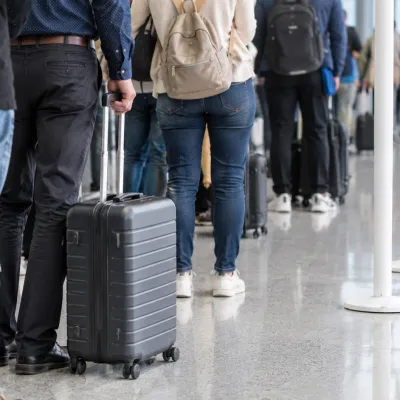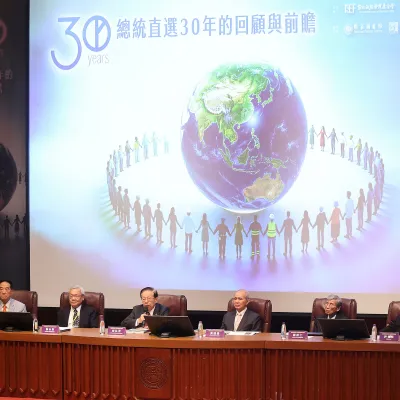
A revised set of Chinese exit and entry regulations takes effect on September 15, and Taiwanese officials say the change could leave a specific slice of the island's population exposed the next time they cross the Taiwan Strait. Taiwan's Mainland Affairs Council (MAC) has already flagged five categories of people it considers most likely to run into trouble, while a national security adviser has separately warned that the update could touch everything from personal phones to company trade secrets.
The regulation itself, formally titled the State Council's Regulations on Exit and Entry Administration, does not mention Taiwan by name. But Taiwanese officials argue its practical reach extends well beyond mainland Chinese citizens, and that is where the concern begins.
What China's New Exit And Entry Rules Actually Change
Under the revised regulation, Chinese citizens who violate export control rules in ways authorities judge could endanger national industrial or technological security can be barred from leaving the country. It is a narrow legal hook, but one that Taiwanese officials say carries outsized consequences once it intersects with how Beijing views Taiwanese travelers.
That is because China does not recognize the Republic of China passport. Taiwanese visitors instead enter the mainland on the Mainland Travel Permit for Taiwan Residents, commonly known as the Taiwan Compatriot Permit. Some officials in Taipei argue that because Beijing treats permit holders as Chinese nationals for administrative purposes, the new exit restriction could, in practice, apply to Taiwanese travelers as well.
Why A Travel Permit Could Complicate Things For Taiwanese
Not everyone agrees the legal exposure is as direct as it sounds. Kuei Hung-cheng, a Peking University-trained legal scholar who chairs the Democracy and Civics Education Foundation, told Storm Media that the Taiwan Compatriot Permit is simply a travel document, and holding one does not make its bearer a citizen of the People's Republic of China.

Even so, the ambiguity itself is the problem MAC is trying to get ahead of. Rather than wait to see how the rule is enforced, the council has already started warning specific groups of Taiwanese to think carefully before their next trip across the strait.
The Five Groups Now Considered Most At Risk
MAC Minister Chiu Chui-cheng has named three categories of Taiwanese he considers most exposed to arbitrary enforcement: Taiwanese business owners operating in China, executives and managers at Taiwanese-invested companies there, and workers in the technology and semiconductor sectors. Deputy Minister Shen Yu-chung added two more groups on separate personal safety grounds: civil servants and religious figures traveling to the mainland.
Taken together, the five groups span much of the Taiwanese population that still has regular business or professional reason to travel to China, from factory owners to engineers to churchgoers, which is part of why the warning has drawn attention well beyond typical cross-strait policy circles.
A Full Travel Guide Is Coming, But Not Anytime Soon
MAC and the Ministry of Economic Affairs are now working together on a broader review before they issue anything close to a comprehensive travel guide. Officials say the review will examine more than 30 Chinese laws enacted since 2014, including its counter-espionage legislation, alongside newer measures such as the Ethnic Unity and Progress Promotion Law and the exit and entry rules themselves, both of which Taiwanese officials say directly reference or target Taiwan.
Given the scope of that undertaking, officials have cautioned that a finished "Guide to Visiting China" is not something the public should expect in the short term.
Concerns Grow Over Phone Searches And Company Secrets
National Security Council adviser Huang Chung-yen, speaking in an interview on the online program Ziyou Zhui Xinwen, said the new entry and exit framework is not limited to Chinese nationals and will affect non-Chinese citizens, Taiwanese included. He said multiple government agencies have already heard concerns from the public, including from technology-sector engineers and others who travel to China regularly for work.
Huang noted that China's authority to decide who may enter or leave the country now comes paired with expanded device inspection measures covering phones and other electronics, raising fears that sensitive data, particularly corporate secrets, could be exposed during a border check. Some travelers, he said, have already started leaving personal phones at home and carrying only company-issued devices when visiting the mainland, while some foreign firms are preparing dedicated travel devices used only for China trips.
Huang said MAC, the Ministry of Economic Affairs and related agencies are working to issue practical guidance soon so that travelers have concrete ways to reduce their exposure, even as the fuller legal review continues in the background.